The Strategic Importance of Surveys in Data Collection: Methods and Impact in 2026
Surveys are essential because they provide a structured, scalable, and cost-effective framework for gathering primary data directly from target populations. By quantifying subjective experiences, opinions, and behaviors, they enable or...
Surveys are essential because they provide a structured, scalable, and cost-effective framework for gathering primary data directly from target populations. By quantifying subjective experiences, opinions, and behaviors, they enable organizations to make evidence-based decisions, track longitudinal trends, and validate hypotheses with statistical precision across diverse academic, commercial, and governmental fields.
Contents
The Foundational Role of Surveys in Empirical Research
Surveys represent a cornerstone of empirical research, functioning as a primary vehicle for capturing the "human element" within data science. While big data and automated tracking provide insights into what actions are taken, surveys are uniquely positioned to explain why those actions occur. In 2026, despite the proliferation of passive data collection via IoT and web analytics, the survey remains the most reliable method for accessing internal cognitive states—such as motivations, beliefs, and satisfaction levels—that cannot be observed through external behavior alone.
The methodology involves the systematic collection of information from a sample of individuals, designed to be representative of a larger population. This allows researchers to make generalizations about a group without the logistical impossibility of questioning every member. The importance of this method lies in its ability to standardize the data-gathering process. When every respondent is asked the same question in the same way, the resulting data is comparable, quantifiable, and subject to rigorous statistical analysis.
Key Advantages of Surveys as a Data Collection Method
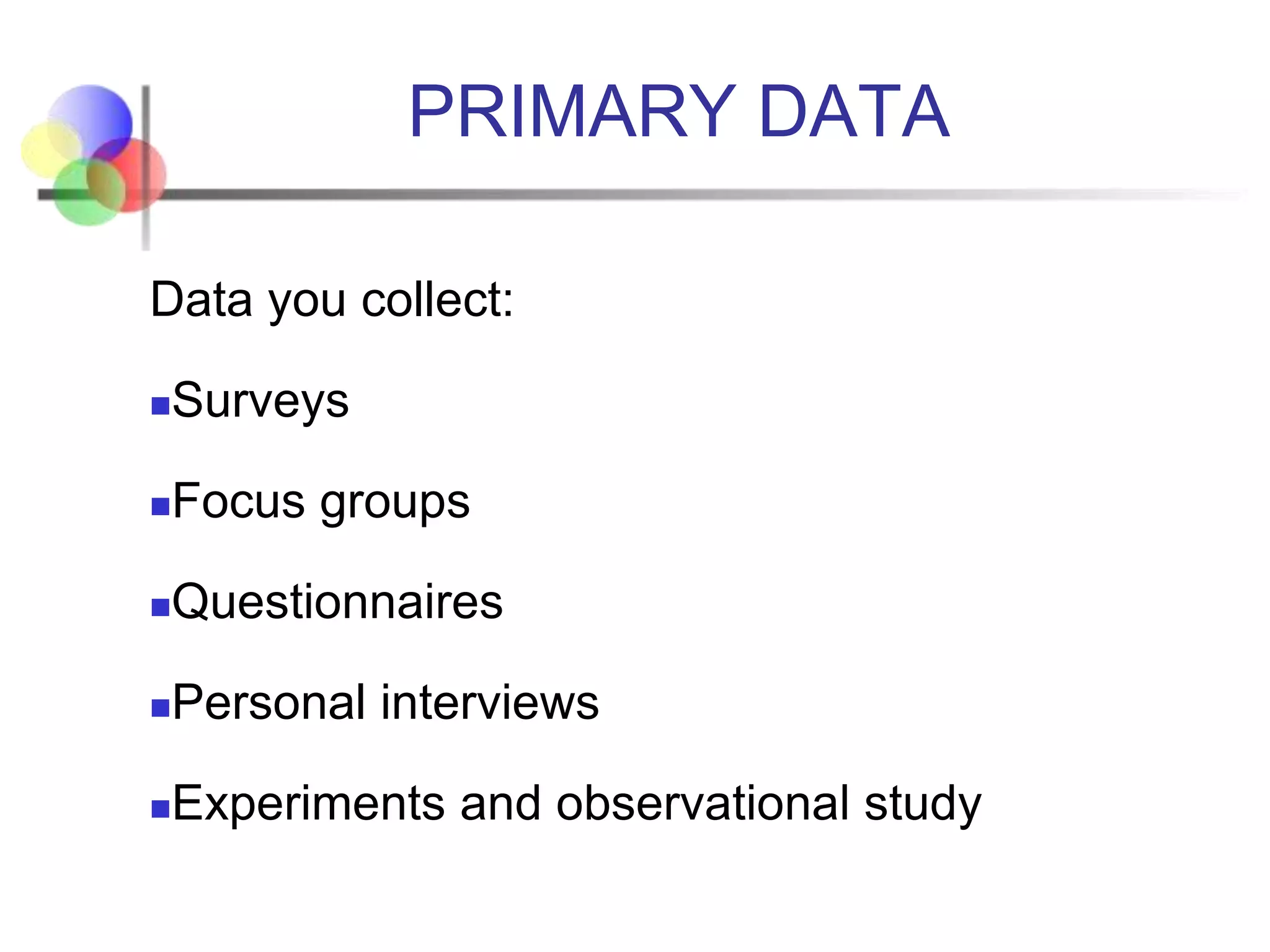
To understand why surveys matter, one must look at the specific operational advantages they offer compared to alternative methods like one-on-one interviews, focus groups, or purely observational studies.
Scalability and Global Reach
In the current landscape of 2026, digital infrastructure allows for the near-instantaneous distribution of surveys to global audiences. Unlike qualitative interviews, which are time-intensive and geographically limited, a well-designed online survey can gather responses from thousands of participants simultaneously. This scalability is vital for large-scale public health initiatives, international market research, and longitudinal social studies where high "N" (sample size) is required to achieve statistical power.
Cost-Effectiveness and Resource Efficiency
Surveys offer a high return on investment (ROI). Traditional data collection often required significant expenditures on travel, physical documentation, and manual data entry. Modern survey platforms automate the distribution, collection, and initial cleaning of data. This allows organizations with limited budgets—such as non-profits or startups—to conduct sophisticated research that would have previously been cost-prohibitive.
Anonymity and Reduced Social Desirability Bias
One of the most significant psychological advantages of surveys, particularly those administered digitally or via mail, is the perception of anonymity. In face-to-face interviews, respondents often succumb to social desirability bias, where they provide answers they believe are more acceptable to the interviewer. Self-administered surveys mitigate this pressure, leading to more honest data regarding sensitive topics like workplace culture, personal health habits, or political affiliations.
The Evolution of Survey Technology in 2026
As of 2026, the technology supporting surveys has moved beyond simple web forms. The integration of artificial intelligence (AI) has refined how data is handled, making the method more robust than ever.
- Adaptive Branching and Logic: Modern surveys use sophisticated "skip logic" to ensure respondents only see relevant questions. This reduces survey fatigue and improves completion rates by tailoring the experience to the individual's previous answers.
- Real-Time Data Processing: Gone are the days of waiting weeks for data processing. Current systems provide real-time dashboards that allow decision-makers to see trends as they emerge, enabling faster pivots in strategy.
- Automated Quality Control: AI algorithms now scan survey responses in real-time to identify "speeders" (people answering too quickly) or "pattern-fillers" (people choosing the same answer for every question), automatically flagging or removing low-quality data to preserve the integrity of the results.
Methodological Rigor: Reliability and Validity
A survey only matters if it is accurate. The effectiveness of the method depends on two core concepts: reliability and validity. Reliability refers to the consistency of the results—if the survey were repeated under the same conditions, would it yield the same data? Validity refers to the accuracy—does the survey actually measure what it claims to measure?
In 2026, professional researchers prioritize psychometric testing of survey instruments. This involves pre-testing questions to ensure there is no ambiguity. For instance, a question about "income" must specify whether it refers to gross or net, individual or household, and over what timeframe. Without this level of technical depth, survey data becomes "noise." The transition from raw data to actionable insight requires a deep understanding of these methodological safeguards.
Comparative Analysis of Data Collection Methods
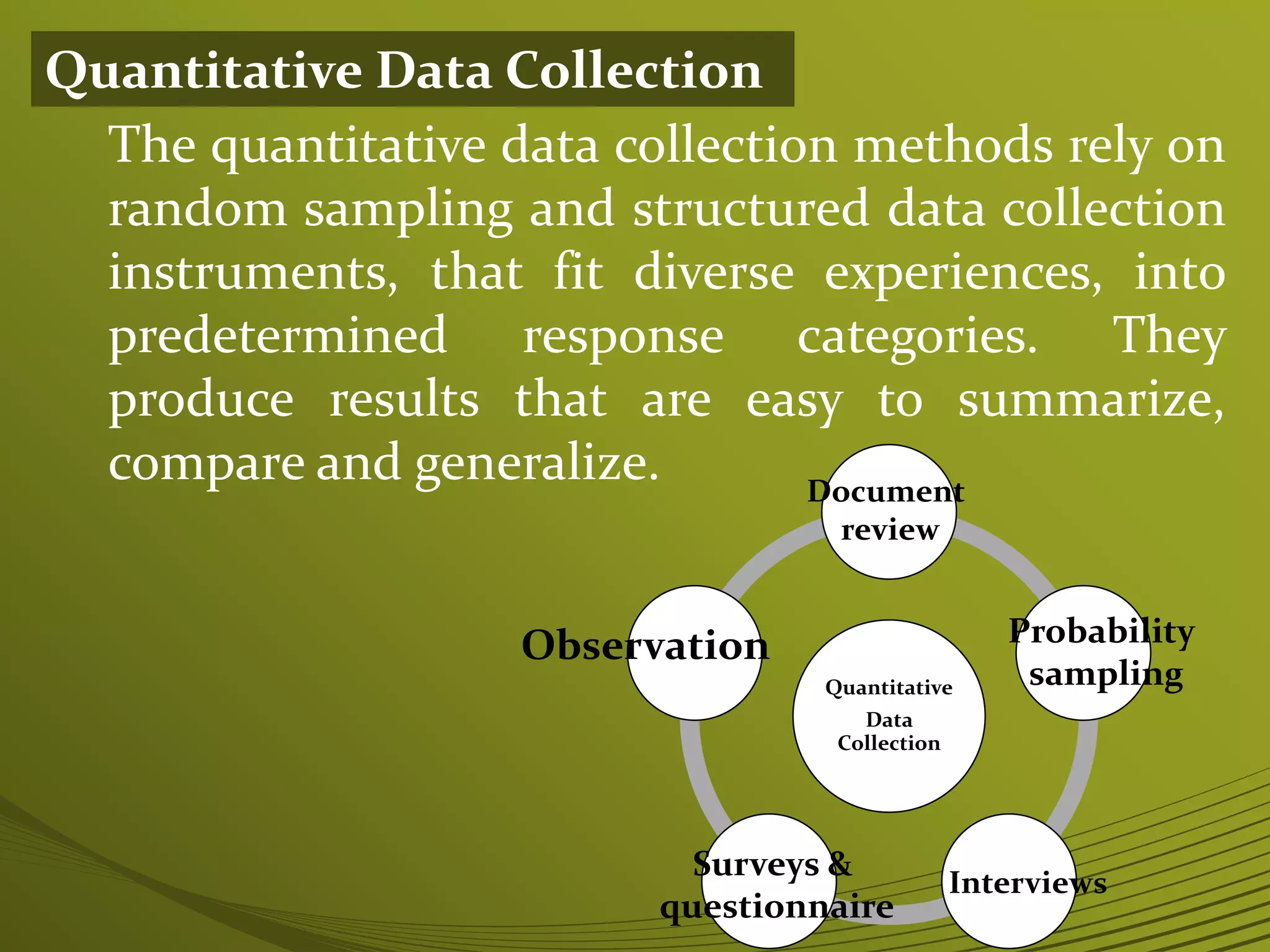
Choosing the right method depends on the research objectives. The following table compares surveys against other common data collection strategies to highlight where surveys excel.
| Feature | Surveys | Interviews | Focus Groups | Observation |
|---|---|---|---|---|
| Primary Goal | Quantify trends/opinions | Deep individual insight | Group dynamics/ideas | Behavioral facts |
| Sample Size | Large (100 - 10,000+) | Small (5 - 30) | Medium (6 - 10 per group) | Variable |
| Cost per Response | Low | High | Medium/High | Medium |
| Data Type | Mostly Quantitative | Qualitative | Qualitative | Quantitative/Qualitative |
| Speed of Collection | Fast | Slow | Moderate | Slow |
| Bias Risk | Non-response/Question bias | Interviewer bias | Groupthink/Dominance | Observer bias |
Strategic Applications Across Different Sectors
The versatility of surveys is demonstrated by their ubiquitous use across various industries. In each case, the survey serves as a bridge between the organization and its stakeholders.
Customer Experience (CX) and Market Research
Corporations use surveys to map the customer journey. Net Promoter Scores (NPS) and Customer Satisfaction (CSAT) surveys provide the metrics used to evaluate brand health. In 2026, these are often triggered by specific events, such as the completion of a purchase or a support interaction, providing immediate feedback loops that drive service improvements.
Employee Engagement and Organizational Culture
Human Resources departments rely on "Pulse Surveys" to monitor morale. Unlike the traditional annual review, pulse surveys are shorter and more frequent, allowing leadership to identify issues like burnout or toxicity before they lead to high turnover rates. This proactive approach to data collection is a hallmark of modern enterprise management.
Public Policy and Academic Research
Governments use surveys to assess the needs of the population, from infrastructure requirements to the efficacy of social programs. Academic researchers use them to explore correlations between variables—for example, the relationship between social media usage and mental health. In these contexts, the ability of surveys to provide a "snapshot" of a specific moment in time is invaluable for longitudinal analysis.
Common Challenges and Mitigation Strategies
While surveys are powerful, they are not without flaws. Understanding these challenges is critical for anyone looking to implement this method effectively.
- Survey Fatigue: In 2026, the average person is over-surveyed. To combat this, researchers must prioritize brevity and provide clear value propositions to the respondent.
- Sampling Bias: If a survey is only distributed via social media, it excludes those not on those platforms. Professional researchers use stratified random sampling to ensure that subgroups (age, gender, location) are represented proportionally.
- Non-Response Bias: This occurs when the people who choose not to take the survey differ significantly from those who do. Mitigating this requires follow-up reminders and, occasionally, incentives to encourage a broader range of participants.
Best Practices for Effective Survey Design
To maximize the impact of survey data, certain technical standards must be met. Effective design starts with clear objectives. A common mistake is including "nice to know" questions that do not serve the primary research goal, which increases respondent burden and lowers data quality.
- Use Validated Scales: Whenever possible, use established scales (like the 5-point Likert scale) that have been proven in previous research to be effective at capturing nuance.
- Avoid Leading Questions: Questions should be neutral. Instead of asking "How much did you enjoy our excellent service?", ask "Please rate your experience with our service."
- Mobile Optimization: By 2026, the vast majority of surveys are completed on mobile devices. Ensuring that the UI/UX is seamless on small screens is no longer optional; it is a requirement for data validity.
- Pilot Testing: Always run the survey with a small control group before a full launch. This helps identify confusing phrasing or technical glitches in the skip logic.
Frequently Asked Questions
Why are surveys better than interviews for large populations?
Surveys are superior for large populations because they provide statistical generalizability. While interviews offer depth, they cannot practically reach the thousands of people needed to determine a "majority opinion" with a low margin of error. Surveys standardize the input, making it possible to aggregate data and identify broad trends that are mathematically significant.
How do I determine the right sample size for my survey?
The sample size depends on the total population size, the desired confidence level (usually 95%), and the margin of error (usually 5%). In 2026, most researchers use automated sample size calculators. For a very large or infinite population, a sample size of approximately 385 is often sufficient to achieve a 5% margin of error, though larger samples provide more granular insights into sub-segments.
What is the difference between open-ended and closed-ended questions?
Closed-ended questions provide predefined options (e.g., Multiple Choice, Yes/No), which are easy to quantify and analyze statistically. Open-ended questions allow respondents to answer in their own words, providing qualitative context. A balanced survey often uses closed-ended questions for the bulk of the data and one or two open-ended questions at the end to capture unanticipated insights.
How has AI changed survey data collection by 2026?
AI has primarily changed the backend of survey methodology. It is now used for Natural Language Processing (NLP) to instantly categorize and theme thousands of open-ended responses. Additionally, AI-driven "synthetic users" are sometimes used in pilot phases to test for logical flaws in complex survey paths before they are sent to real humans.
What are the ethical considerations in survey data collection?
Ethics in 2026 focus heavily on data privacy and informed consent. Respondents must be told how their data will be used, whether it will be anonymized, and who will have access to it. Compliance with regulations like GDPR or CCPA is mandatory, requiring researchers to implement strict data encryption and "right to be forgotten" protocols.
Final Recommendation for Implementation
For organizations looking to leverage surveys as a primary data collection method, the first step is to clearly define the actionable outcome. Do not collect data for the sake of collection. Identify exactly what decision will be made based on the results. Once the goal is clear, invest in a professional-grade survey platform that supports advanced logic and AI-driven analytics. Start with a small pilot, refine your questions based on the feedback, and ensure your sampling strategy is inclusive enough to reflect the diversity of your target audience. In the data-driven landscape of 2026, the survey remains the most direct line of communication between an organization and the reality of the people it serves.
Image Gallery