Understanding Term Life Insurance: Which Option Is Not a Cash Value Life Insurance Plan
When navigating the landscape of life insurance products, consumers and students of financial literacy often encounter questions designed to test their understanding of how different policies accumulate value. A common exam or insuranc...
When navigating the landscape of life insurance products, consumers and students of financial literacy often encounter questions designed to test their understanding of how different policies accumulate value. A common exam or insurance assessment question asks: which of the following is not a cash value life insurance plan term life? The direct answer to this classification challenge is term life insurance. Unlike permanent policies, term life insurance provides pure death-benefit protection for a specified period and does not build cash value, savings, or equity over time.
Contents
To fully grasp why term life insurance stands apart from cash value alternatives, it is essential to examine the mechanics of the broader life insurance industry. Financial products in this sector generally divide into two primary categories: temporary protection and permanent accumulation. Understanding the distinctions between these categories helps policyholders select coverage that aligns with their long-term financial objectives, budget constraints, and estate-planning needs.
The Fundamental Divide: Term Versus Permanent Life Insurance
Life insurance serves as a financial safety net designed to replace lost income, pay off debts, and cover final expenses upon the insured person's death. However, the methods insurance companies use to achieve this goal vary significantly.
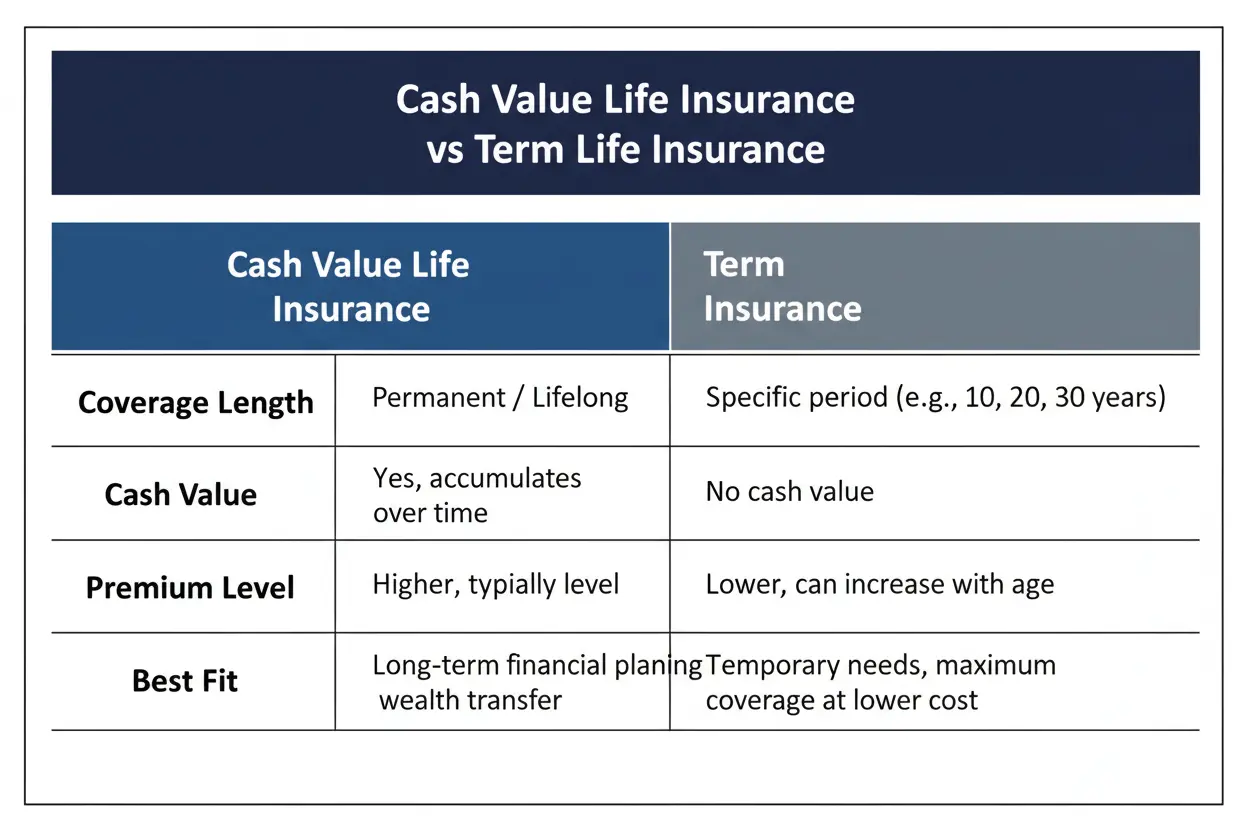
Temporary protection, commonly known as term life insurance, functions much like an auto or homeowners insurance policy. You pay a premium for a specific duration—typically 10, 20, or 30 years. If the insured passes away during that window, the beneficiaries receive the income-tax-free death benefit. If the term expires and the insured is still living, the coverage ceases, and no payout occurs. Because there is no investment component or savings account attached, premiums remain relatively low, especially for younger, healthier applicants.
Conversely, permanent life insurance is designed to last the entire lifetime of the insured, provided premiums are maintained. These policies feature an embedded savings vehicle known as the cash value account. A portion of each premium payment goes toward the cost of insurance, while the remainder is deposited into this cash reserve. Over time, the cash value grows on a tax-deferred basis, allowing policyholders to borrow against it or withdraw funds under specific conditions.
Defining Characteristics of Term Life Insurance
To clearly isolate why term life is not a cash value plan, we must look at its core structural traits:
- Pure Protection: Term policies offer a death benefit only. There are no living benefits tied to cash accumulation.
- Expiration Date: Coverage terminates at the end of the specified term unless renewed at a significantly higher rate or converted to a permanent policy.
- Fixed or Level Premiums: For level-term policies, the monthly or annual premium remains constant throughout the duration of the term.
- Affordability: Because the insurer's liability is limited to a specific window, term life is generally the most cost-effective way to secure high coverage amounts during high-liability years, such as when raising children or paying a mortgage.
Exploring Cash Value Life Insurance Plans
To answer exam questions or evaluate financial products accurately, it is equally important to recognize what does qualify as a cash value life insurance plan. Permanent insurance encompasses several variations, each managing the accumulated cash reserve differently.
Whole Life Insurance
Whole life insurance is the most traditional form of permanent coverage. It guarantees a level premium, a guaranteed death benefit, and a guaranteed rate of return on the cash value component. The insurance company manages the investments behind the scenes, ensuring the cash value grows according to a fixed schedule regardless of market performance.
Universal Life Insurance
Universal life (UL) introduces greater flexibility compared to whole life. Policyholders can often adjust their premium payments and death benefits within certain limits, provided the accumulated cash value is sufficient to cover internal administrative costs and the cost of insurance. The cash value typically earns interest based on prevailing market rates, often subject to a guaranteed minimum interest rate.
Variable and Variable Universal Life Insurance
For policyholders seeking direct exposure to financial markets, variable life and variable universal life (VUL) policies allow the cash value to be invested in sub-accounts resembling mutual funds. While this opens the door to higher potential returns, it also transfers investment risk directly to the policyholder, meaning the cash value—and sometimes the death benefit—can decrease if the underlying investments perform poorly.
Comparing Term and Cash Value Structures
To solidify the distinction, comparing the structural attributes of term life against cash value alternatives highlights why term insurance is excluded from the cash value category.
| Feature | Term Life Insurance | Whole Life Insurance | Universal Life Insurance |
|---|---|---|---|
| Duration | Temporary (10, 20, 30 years) | Lifetime | Lifetime |
| Cash Value Component | None | Yes (Guaranteed growth) | Yes (Market-linked or interest-bearing) |
| Premium Cost | Low and affordable initially | Higher, fixed | Flexible, adjustable |
| Loan/Withdrawal Options | Not available | Available | Available |
| Primary Purpose | Income replacement during peak earning years | Estate planning, lifelong coverage, forced savings | Lifetime coverage with flexible premium options |
Why Term Life Excludes Cash Accumulation
The absence of cash value in term life insurance is deliberate and serves a specific consumer base. Insurance actuaries calculate term premiums based strictly on the statistical probability of mortality during the specified years. Because the insurer does not need to manage a long-term investment portfolio, maintain complex accounting for cash sub-accounts, or guarantee returns over decades, administrative overhead remains low.
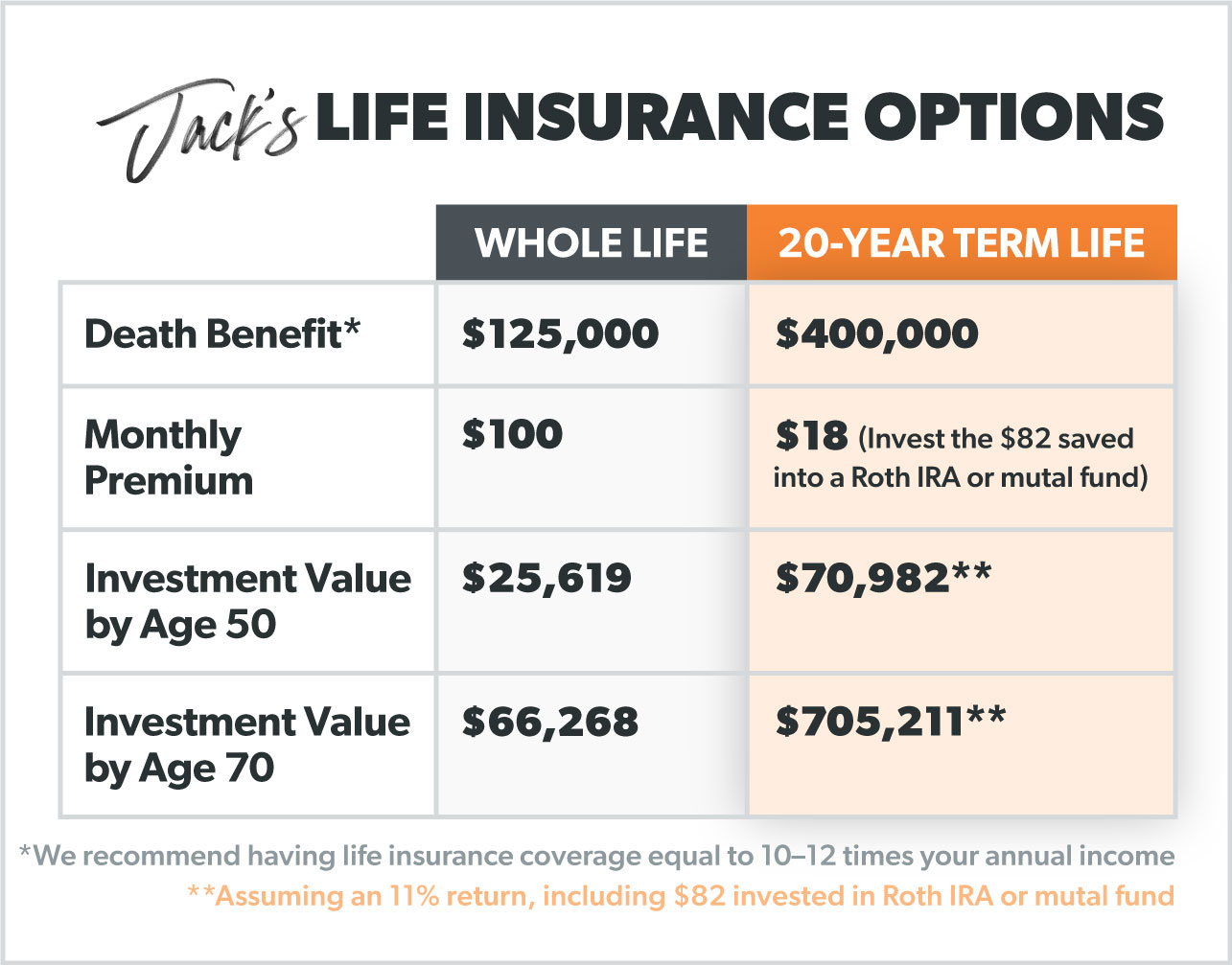
If term policies accumulated cash value, the premiums would necessarily be much higher to fund that growth. For individuals who want to keep insurance costs manageable while protecting dependents during their working years, term life provides an efficient mechanism. Financial advisors often recommend a "buy term and invest the difference" strategy for individuals who prefer to keep their insurance and investment portfolios separate, utilizing mutual funds or retirement accounts for wealth accumulation.
Common Misconceptions and Exam Pitfalls
When encountering questions regarding cash value plans on licensing exams or financial literacy quizzes, test-takers frequently trip over policy riders and conversion options.
- Convertible Term Riders: Some term policies include a rider that allows the policyholder to convert the term insurance into a permanent cash value policy without undergoing a new medical exam. However, the term policy itself remains a non-cash-value plan until the conversion is formally executed.
- Return of Premium (ROP) Term: An ROP term policy refunds all premiums paid if the insured survives the term. While this returns money to the policyholder, it is still classified as term insurance rather than cash value life insurance, as the returned funds do not represent an investment-driven cash value growth model with policy loans and variable compounding.
Practical Guidance for Policy Selection
Choosing between term and cash value life insurance depends on an individual's financial timeline and goals.
- Choose Term Life If: You need high coverage amounts to protect young children, cover a 30-year mortgage, or replace income during your working years, and you prefer to keep your monthly budget lean.
- Choose Cash Value Life If: You have a lifelong dependent (such as a child with special needs), require permanent estate liquidity to handle future estate taxes, or have already maximized traditional retirement accounts like 401(k)s and IRAs and seek additional tax-advantaged accumulation vehicles.
Disclaimer: This article is for informational and educational purposes only and does not constitute financial, legal, or tax advice. Insurance regulations and product availability vary by jurisdiction. Consult a licensed insurance professional or financial advisor before purchasing any insurance policy.
Frequently Asked Questions
What makes term life insurance different from whole life insurance?
Term life insurance provides temporary coverage for a specific number of years and has no cash value component. Whole life insurance provides permanent coverage for the insured's entire life and includes a savings element—known as cash value—that grows over time and can be borrowed against or withdrawn.
Can a term life insurance policy build cash value over time?
No. Standard term life insurance policies do not build cash value. All premium payments go strictly toward paying for the mortality risk and administrative costs associated with the death benefit during that specific term.
What happens to a term life policy at the end of the term?
When the term expires, the coverage typically ends. The policyholder can often renew the policy on an annual renewable basis at a significantly higher rate, convert the policy to a permanent plan if a conversion rider is present, or let the coverage lapse completely.
Are premiums for term life insurance higher than cash value insurance?
No. Term life insurance premiums are substantially lower than permanent cash value insurance premiums for the same amount of coverage. This affordability makes term insurance ideal for temporary, high-need financial obligations.
Why is term insurance referred to as "pure" insurance?
Term insurance is called pure insurance because it separates risk protection from investment. It performs only one function—paying a death benefit if the insured dies within the term—without mixing in savings accounts, investment sub-accounts, or cash accumulation features.
Image Gallery