How to Grill Fish on the Grill: A Complete Step-by-Step Guide
To grill fish successfully without sticking or falling apart, preheat a thoroughly cleaned grill to medium-high heat (400°F to 450°F), heavily oil the grates, and pat the fish completely dry. Oil the fish directly, cook skin-side down...
To grill fish successfully without sticking or falling apart, preheat a thoroughly cleaned grill to medium-high heat (400°F to 450°F), heavily oil the grates, and pat the fish completely dry. Oil the fish directly, cook skin-side down first over direct heat, and allow it to sear undisturbed until it naturally releases before flipping.
Contents
Selecting the Right Fish for the Grill
Grilling seafood can seem intimidating due to the delicate protein structure of aquatic life compared to beef or poultry. However, understanding how different fish species respond to high heat allows you to select the ideal cut and preparation method for your outdoor cookout.
- FIRM & FATTY (Best for Direct Grate Grilling)
- Salmon (King, Sockeye, Coho)
- Swordfish & Tuna (Steaks)
- Mahi-Mahi & Halibut (Thick Cut)
- DELICATE & LEAN (Best for Planking, Baskets, or Foil)
- Cod, Haddock, & Flounder
- Tilapia & Sole
- Trout (Thin Fillets)
Firm vs. Delicate Fish Species
Fish are generally categorized by their muscular density and oil content. Firm, hearty species hold together under high direct heat and flip cleanly.
- Firm and Oil-Rich Fish: Salmon, swordfish, tuna, mahi-mahi, and halibut steaks are the easiest to grill directly on grates. Their high fat content lubricates the muscle fibers, while their dense texture prevents them from flaking into the fire.
- Delicate and Lean Fish: Flounder, sole, cod, tilapia, and haddock contain less intramuscular fat and feature fragile flake structures. When exposed to direct grate contact, these species tend to tear or stick. Delicate fish thrive when grilled in a fish basket, atop cedar planks, or wrapped in heavy-duty aluminum foil packets.
Fillets, Steaks, and Whole Fish
The anatomical cut of the fish determines how heat transfers through the protein:
- Skin-On Fillets: The skin acts as a natural protective barrier against intense heat. It crisp up under direct flames while insulating the tender flesh above, preventing overcooking and sticking.
- Fish Steaks: Cut perpendicularly across the spine, fish steaks (such as swordfish or tuna) behave similarly to beef steaks. They feature high structural integrity and tolerate high-heat searing easily.
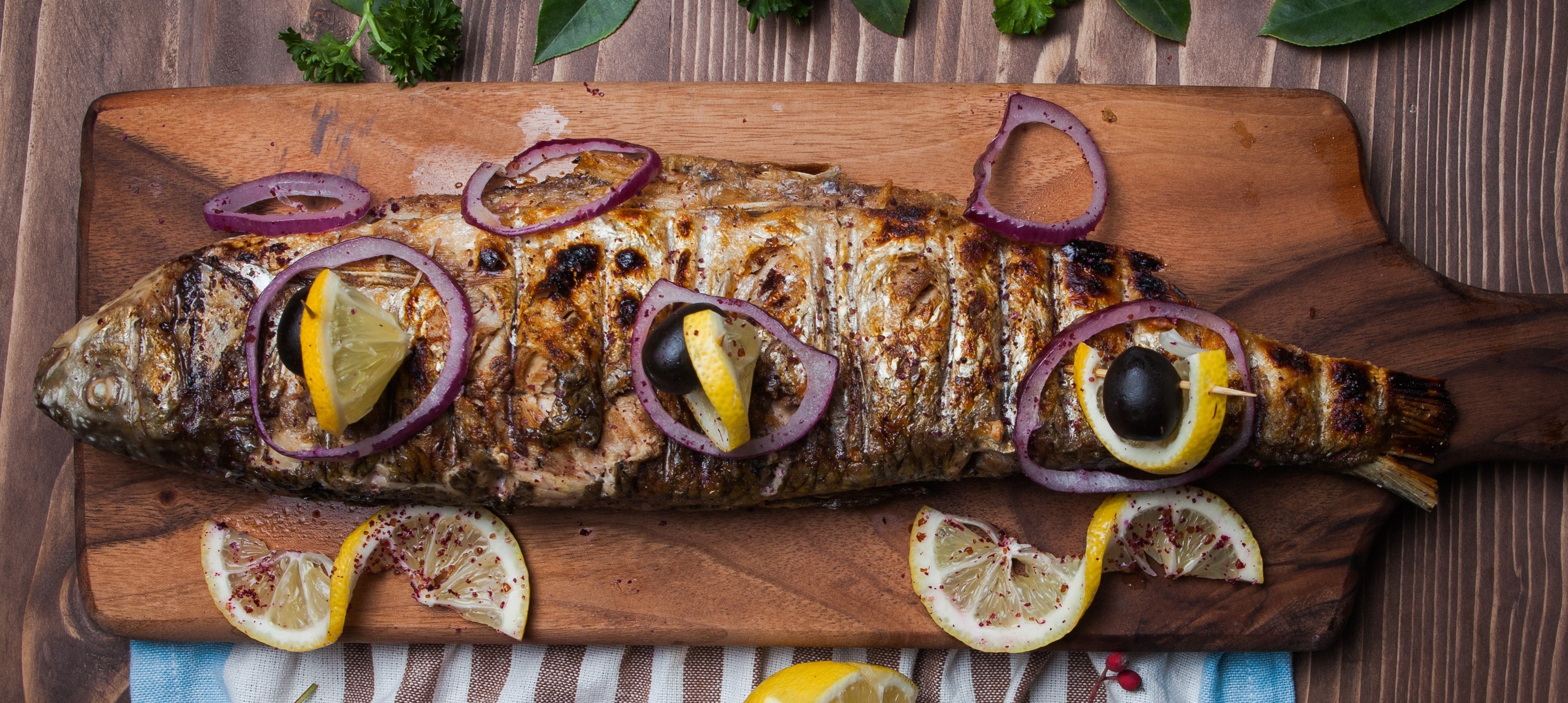
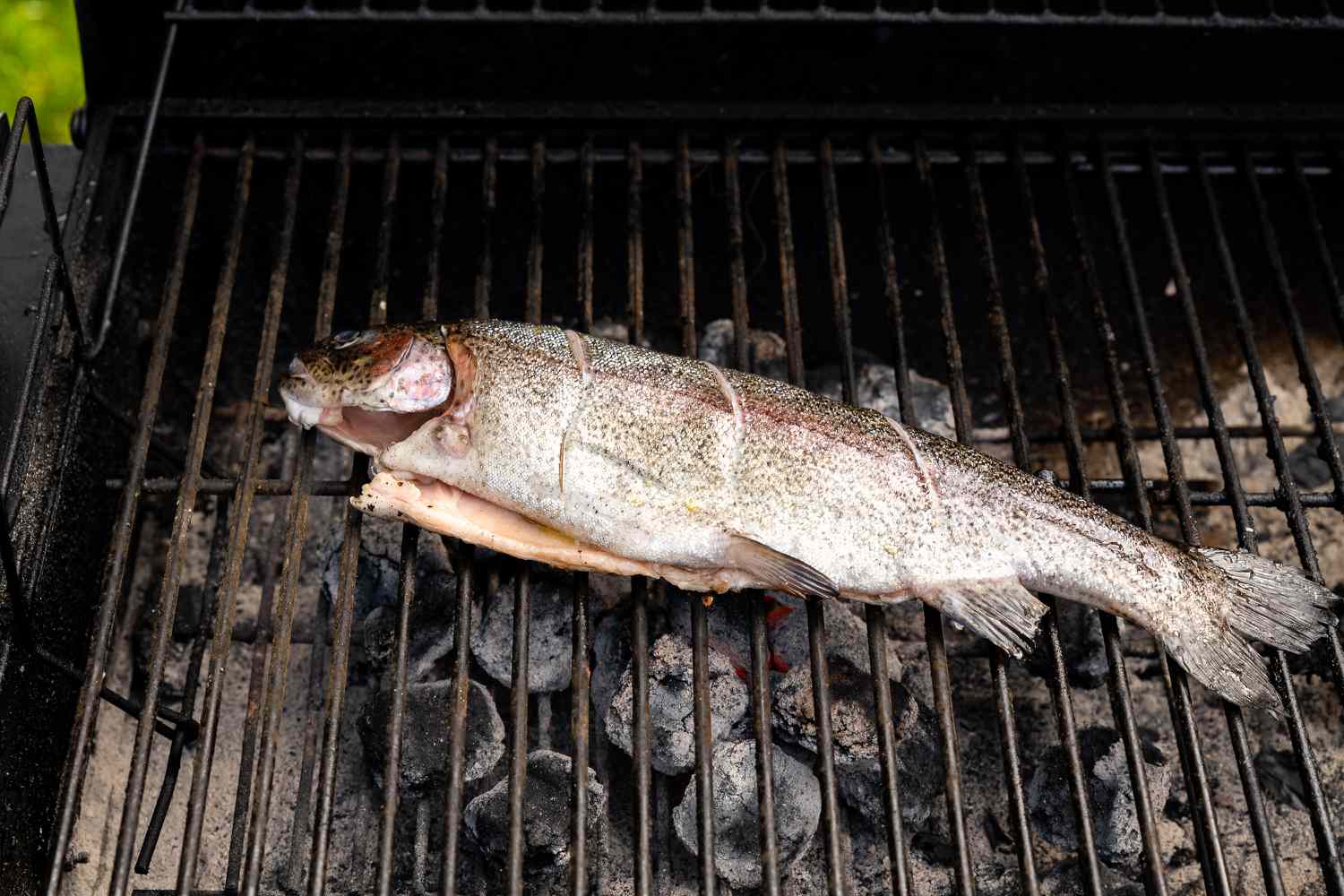
- Whole Round Fish: Grilling a whole gutted fish—such as sea bass, trout, or red snapper—protects the meat with skin and bones. The bones retain internal moisture, yielding juicy flesh with crispy, flavorful skin.
Essential Equipment and Grill Setup
Achieving professional results when grilling fish requires specific grill preparation and temperature zoning. High thermal energy creates the quick sear needed to release proteins from metal surfaces, while two-zone setups prevent burning.
Heat Zones: Direct vs. Indirect Setup
Whether using a gas grill or a charcoal kettle, establishing a two-zone fire is critical:
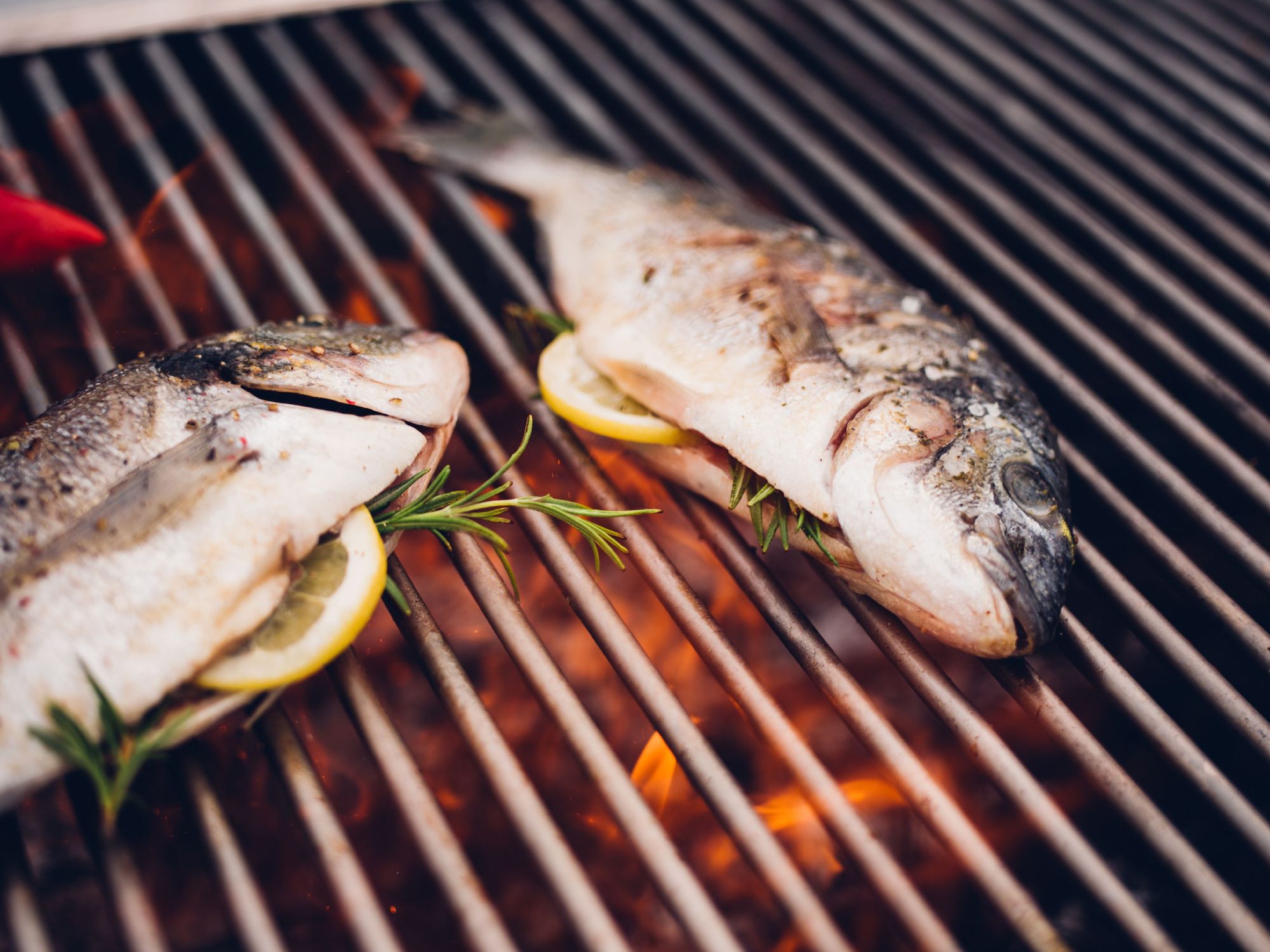
- Direct Heat Zone: Position burners on medium-high or bank charcoal to one side of the grill floor to create an intense cooking area ranging from 400°F to 450°F (204°C to 232°C). This zone is utilized for searing skin and setting initial sear lines.
- Indirect Heat Zone: Leave one section of the grill with no active burner or charcoal beneath it. This cool zone permits thick fillets or whole fish to cook through via gentle ambient convection heat without scorching the exterior.
Cleaning and Seasoning the Cooking Grates
Protein sticking occurs when muscle albumin bonds chemically with microscopic pits on metal grates at low temperatures. To eliminate this issue:
- Scrape Thoroughly: Fire up the grill to maximum temperature for 10 to 15 minutes to carbonize leftover debris. Clean the grates aggressively with a stainless steel wire brush or coil scraper.
- Oil the Grates: Hold a tightly folded paper towel with long-handled tongs, dip it in a high-smoke-point oil (such as canola, avocado, or grapeseed oil), and rub it over the hot grates 3 to 5 times until the metal glistens.
Specialized Tools for Grilling Fish
While direct grate grilling works exceptionally well for thick cuts, specialized accessories make cooking thin or fragile fish virtually foolproof:
- Flexible Stainless Steel Fish Spatula: Features a thin, offset, bevel-edged blade that easily slides between hot grates and delicate fish skin without tearing the fillet.
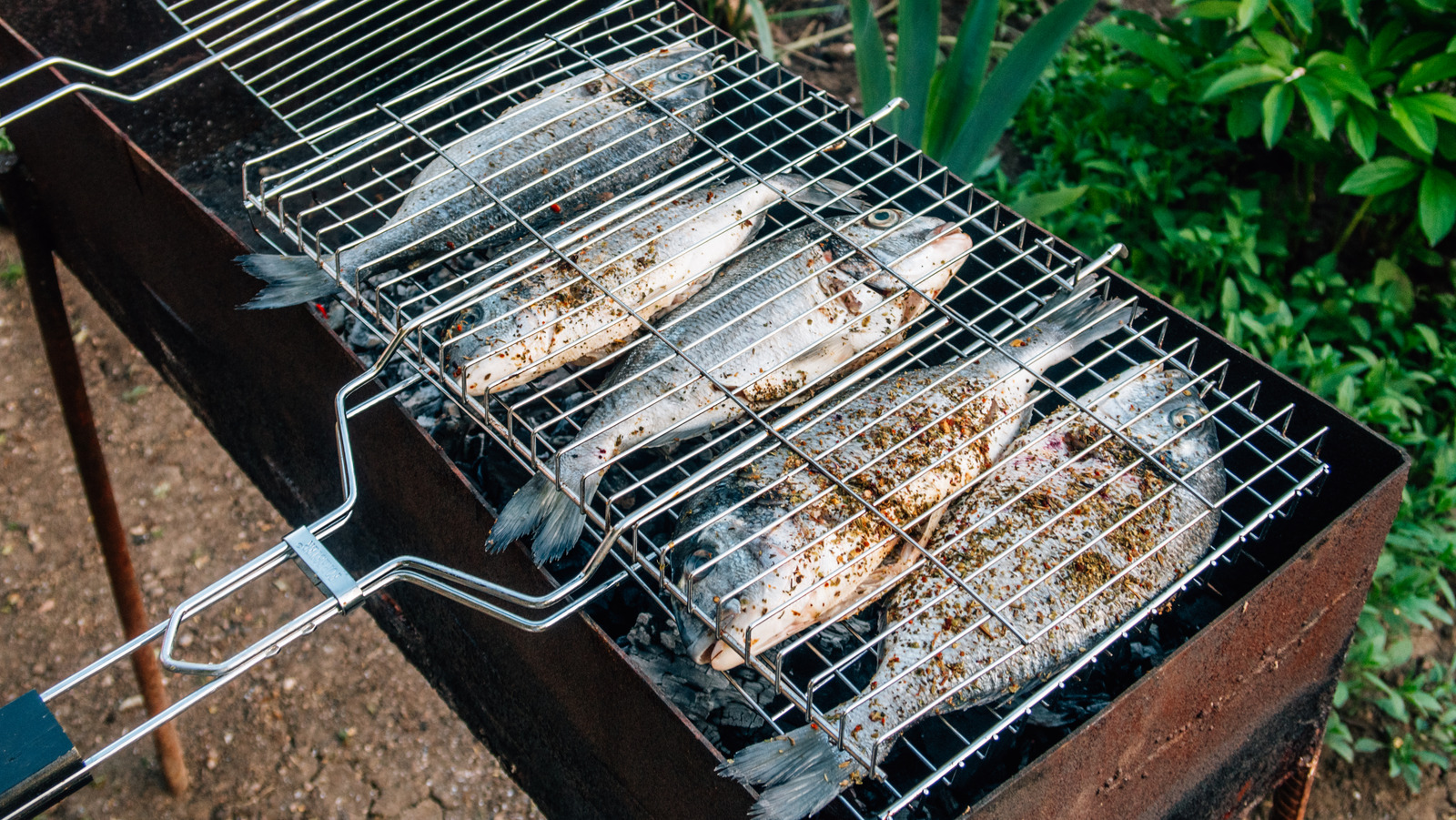
- Hinged Fish Basket: Clamps whole fish or fragile fillets securely between two metal wire frames, allowing you to flip the entire basket rather than touching the fish itself.
- Untreated Cedar Planks: Impart a rich smoky flavor while completely eliminating grate contact. Planks must be soaked in water for at least 30 to 60 minutes before cooking to prevent charring.
Preparing Your Fish for High-Heat Cooking
Proper pre-cook prep work ensures crisp skin, even thermal conductivity, and optimal flavor development.
- Pat Dry with Paper Towels
- Brush lightly with High-Smoke Point Oil
- Season generously with Kosher Salt & Dry Spices
Moisture Control and Drying
Water is the enemy of a crisp crust. Moisture on the surface of raw fish causes steam to build up when it touches hot metal. Steam lowers the grate temperature, prevents the Maillard reaction (browning), and forces the fish to stick.
Before cooking, pat every side of the fish thoroughly dry using paper towels. For optimal skin crispness, place skin-on fillets uncovered on a wire rack in the refrigerator for 30 to 60 minutes prior to grilling to dry out the skin surface.
Oil Application: Oil the Food, Not Just the Grate
While oiling the grill grates creates a slick surface, oiling the fish directly creates a continuous barrier against sticking. Lightly coat all sides of the dry fish fillet or whole fish with avocado or canola oil. Avoid extra virgin olive oil for high-heat direct searing, as its low smoke point can create bitter off-flavors under intense flames.
Seasoning and Marinade Rules
- Salting Timing: Apply salt just before placing the fish onto the grill. Salting fish too far in advance (over 15 minutes prior) draws internal moisture to the surface via osmosis, creating unwanted surface wetness.
- Handling Acidic Marinades: Citrus juices, vinegars, and wine denature fish proteins, essentially "cooking" the exterior as in ceviche. Limit acidic marinades to 15 to 30 minutes maximum. Alternatively, apply fresh lemon or lime juice immediately after removing the fish from the fire.
4 Master Methods for Grilling Fish
Different types of fish call for specific cooking techniques to maximize texture and flavor.
| Grilling Method | Ideal Fish Cuts & Types |
|---|---|
| Direct Grates | Salmon, Swordfish, Tuna, Mahi-Mahi, Whole Sea Bass |
| Hinged Basket | Flounder, Sole, Cod Fillets, Delicate Small Fish |
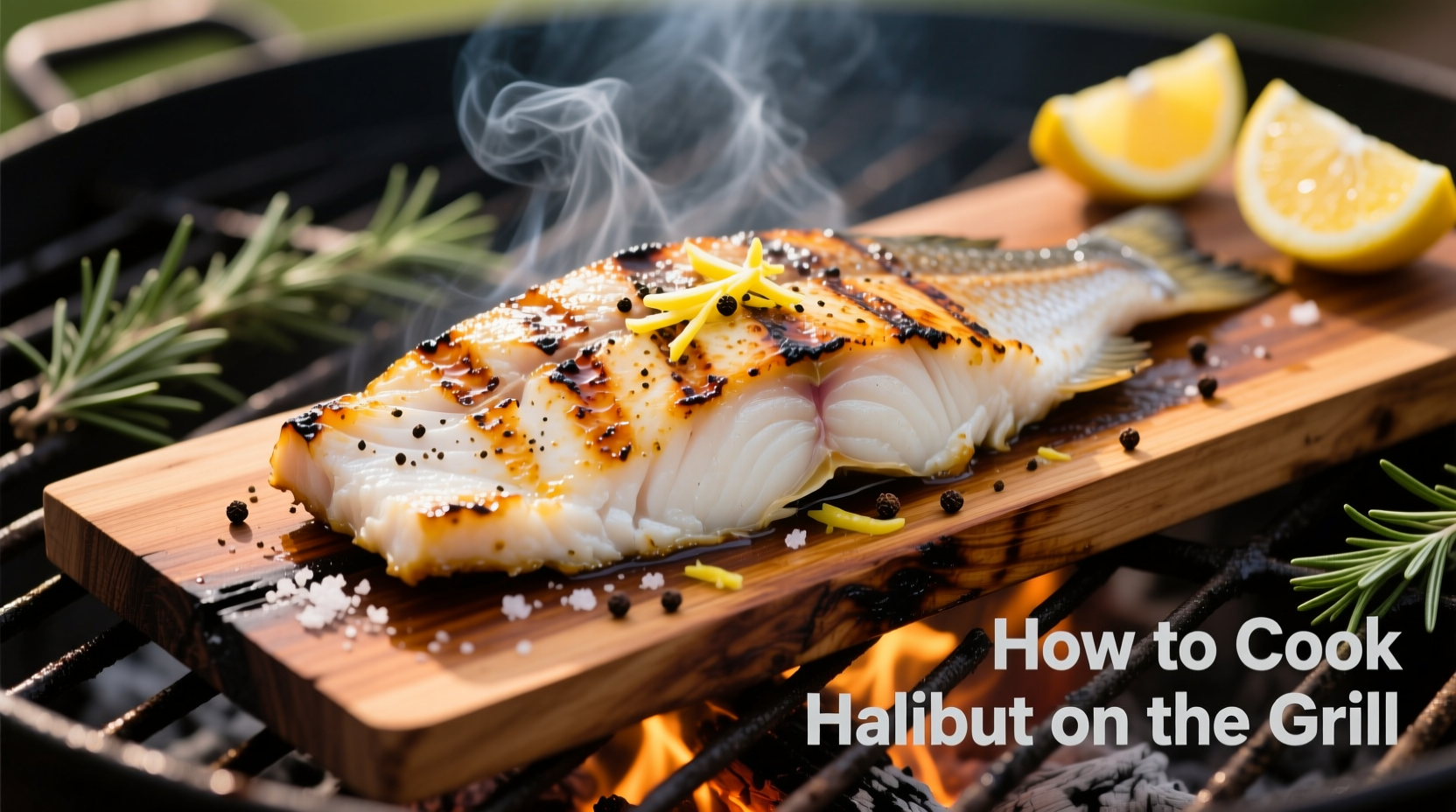
| Cedar Plank | Salmon Side, Trout, Halibut Fillets |
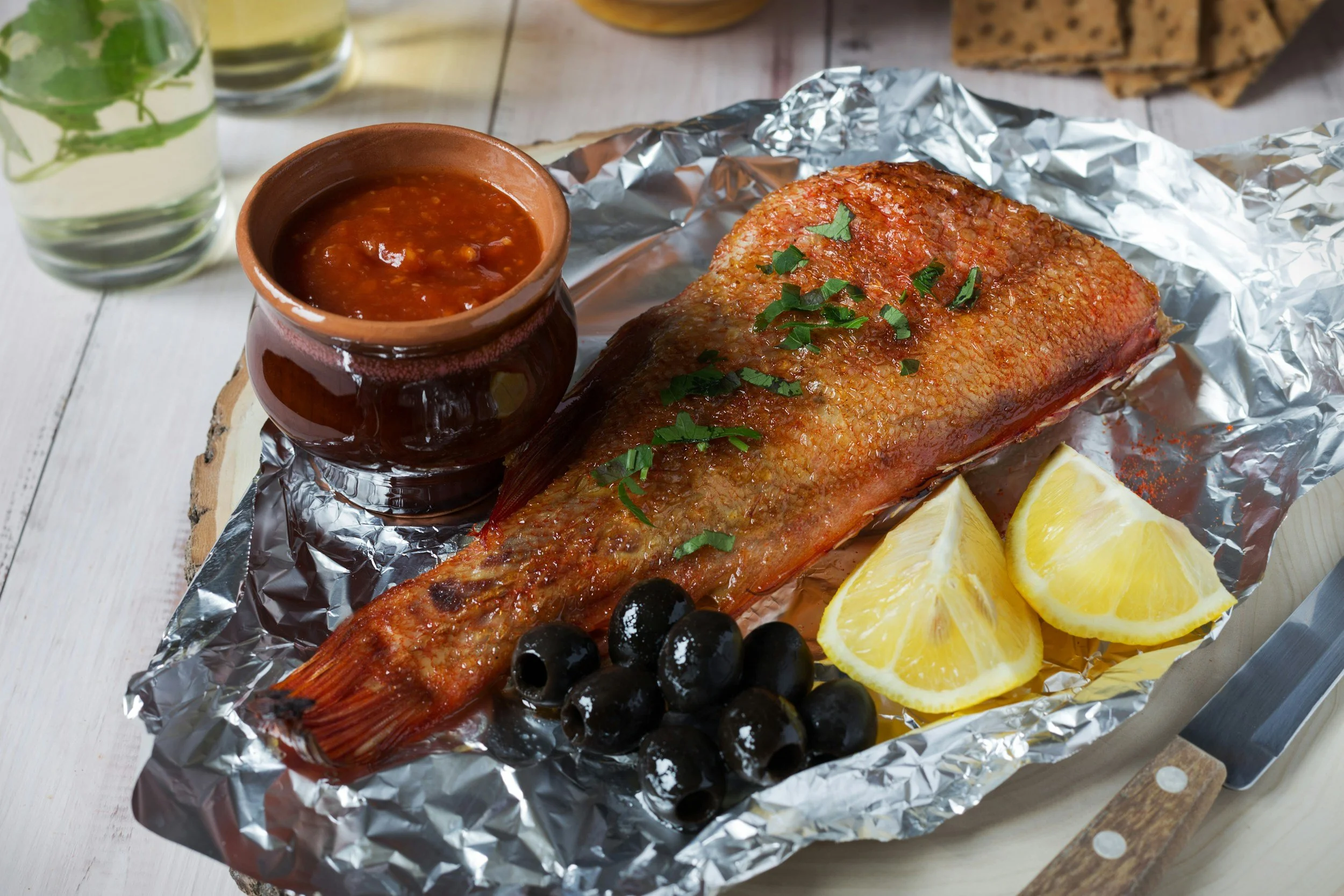
| Foil Packet | Thin White Fish, Tilapia, Red Snapper with Vegetables |
Method 1: Direct Grate Cooking
Direct grate cooking provides distinct grill marks and smoky char. It works best for firm fish cuts and skin-on fillets.
- Bring the grill to 400°F–450°F. Clean and oil the grates thoroughly.
- Lay the oiled fillet diagonally across the grate bars, skin-side down (or presentation-side down if skinless).
- Allow the fish to cook undisturbed over direct heat for roughly 60–70% of its total estimated cooking time.
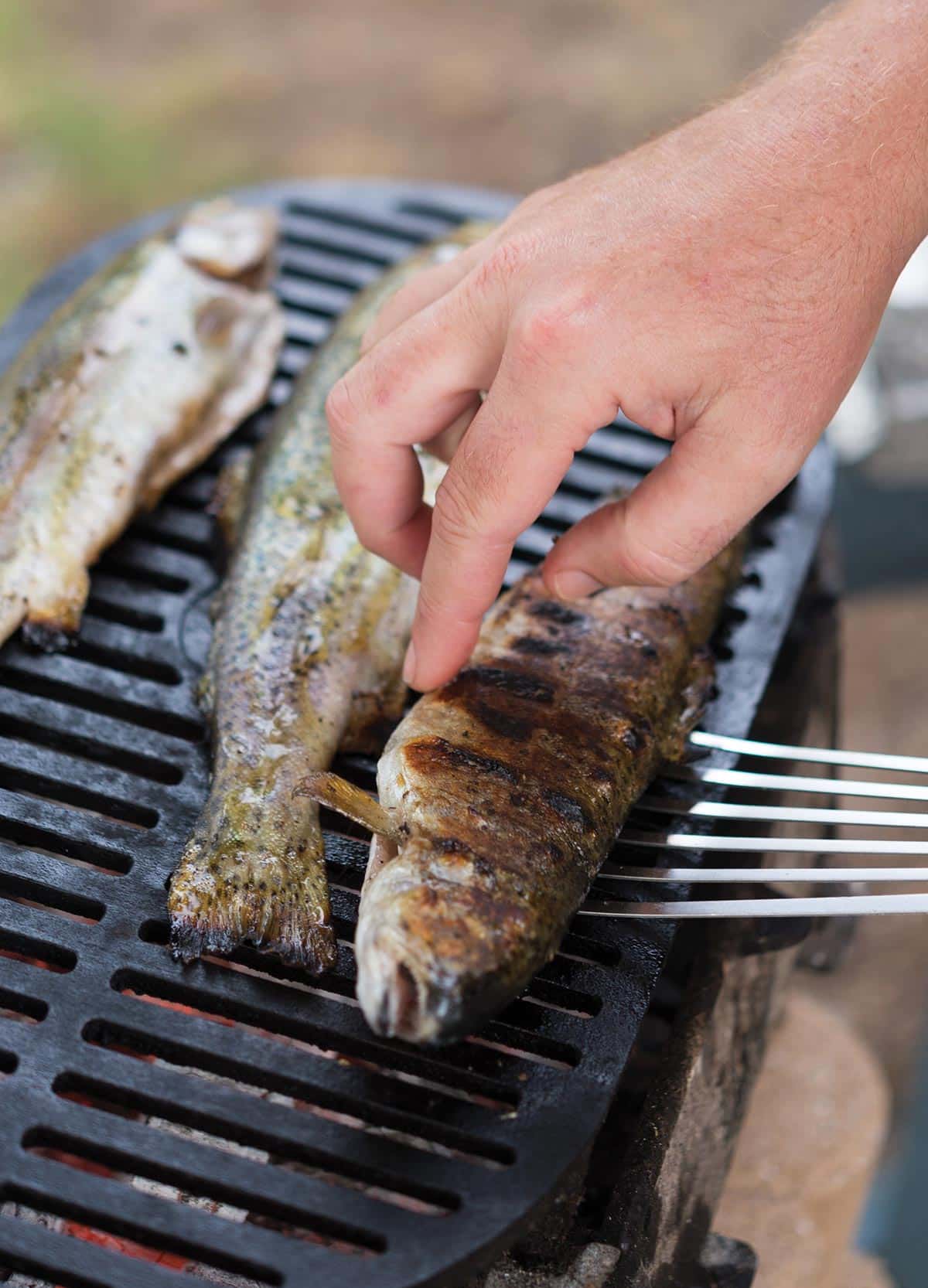
- Carefully slip a thin fish spatula under the fillet. If it resists, give it another 30–60 seconds; the fish will naturally release once a solid crust forms.
- Flip gently to the indirect side or keep on direct heat for 1–3 minutes to finish cooking.
Method 2: The Hinged Fish Basket
A hinged wire basket prevents delicate white fish from falling through the grates into the fire.
- Preheat the grill to medium heat (350°F to 400°F).
- Generously spray or coat both the inside wire of the basket and the seasoned fish with high-heat oil.
- Lock the fish inside the basket securely.
- Place the basket directly over the heat source. Flip the entire tool midway through cooking using the long handle.
Method 3: Cedar Plank Grilling
Plank cooking uses conductive steam and indirect smoke heat to cook seafood gently while infusing wood aromas.
- Submerge untreated cedar planks in water for at least 1 hour.
- Place the wet plank on direct grill heat for 3–5 minutes until it begins to smoke lightly and crackle.
- Flip the plank over, place the seasoned fish on the toasted side, and move the plank to the indirect heat zone.
- Close the grill lid and cook at 375°F to 400°F until the fish reaches the desired internal doneness.
Method 4: Foil Packets (En Papillote)
Foil packet cooking seals in moisture, steaming fish alongside aromatic vegetables, herbs, and butter.
- Cut a sheet of heavy-duty aluminum foil approximately 12 by 18 inches.
- Place a bed of vegetables (such as sliced zucchini, cherry tomatoes, or asparagus) in the center, and top with seasoned fish, a knob of butter, and fresh herbs.
- Fold the edges of the foil upward and double-crimp all sides tightly to trap steam inside.
- Place the packet over direct medium heat (400°F) for 10 to 12 minutes with the grill lid closed.
Step-by-Step Instructions for Grilling Skin-On Fillets
This standard direct technique works for widely available species like salmon, trout, and red snapper.
Step 1: Preheat and Clean the Firebox
Preheat your gas or charcoal grill with all burners on medium-high until the hood thermometer reads 400°F to 450°F. Brush off residual carbon on the grates using a wire brush, then apply oil using a saturated paper towel held by tongs.
Step 2: Prep and Oil the Fillet
Pat the skin and flesh dry with paper towels. Lightly brush all sides with avocado oil or canola oil. Season the flesh side with kosher salt, cracked black pepper, and garlic powder just before cooking.
Step 3: Lay the Fish Down (Skin-Side Down First)
Place the fillet on the hot grates diagonally to the grate bars, skin-side down. Lay the fish down away from your body to avoid hot oil splatters.
- GRILL SURFACE CROSS-SECTION
- Fish Flesh (Cooking gently) - Flesh Layer
- Crisp Skin Layer
- Hot Oiled Grill Grates
- Direct Heat Source
Immediately press down gently on the fillet with a spatula for 5 to 10 seconds. Heat causes fish skin to shrink rapidly; pressing keeps the skin flat against the metal so it sears evenly.
Step 4: Manage Heat and Monitor Doneness
Close the grill hood to maintain ambient surrounding heat. Allow the fish to cook skin-side down for about 4 to 6 minutes for every inch of thickness. Watch the side of the fillet: you will see the translucent raw flesh slowly turn opaque from the bottom grate surface upward.
Step 5: The Flip and Finish
When the opaque line reaches two-thirds of the way up the fillet, insert your flexible fish spatula beneath the skin. Gently slide it forward. The crisp skin should separate easily from the metal grates.
Flip the fillet over onto the flesh side. Cook for an additional 1 to 2 minutes over direct heat (or move to indirect heat if the outside is browning too quickly) until the thickest portion reaches your target internal temperature.
Fish Grilling Reference Chart
Cooking times vary based on ambient weather, grill type, and cut thickness. Use this reference guide to match the species with the right grilling technique, fire level, and target temperature.
| Fish Species | Cut Type | Cooking Heat Zone | Recommended Method | Target Internal Temperature | Approx. Total Cook Time |
|---|---|---|---|---|---|
| Salmon | Skin-On Fillet | Direct Medium-High (400°F) | Direct Grate / Cedar Plank | 125°F to 135°F (Medium-Rare to Medium) | 8–10 minutes |
| Swordfish | Steak (1–1.5") | Direct High (450°F) | Direct Grate | 135°F to 140°F (Medium) | 8–10 minutes |
| Ahi Tuna | Steak (1.5") | Direct High (500°F+) | Direct Grate (Quick Sear) | 115°F to 120°F (Rare) | 2–4 minutes |
| Halibut | Thick Fillet | Direct Medium-High (400°F) | Direct Grate / Cedar Plank | 130°F to 135°F | 8–10 minutes |
| Mahi-Mahi | Skinless Fillet | Direct Medium-High (400°F) | Direct Grate / Basket | 135°F to 140°F | 7–9 minutes |
| Cod / Haddock | Delicate Fillet | Indirect Medium (375°F) | Hinged Basket / Foil Packet | 140°F to 145°F | 10–12 minutes |
| Rainbow Trout | Whole Gutted | Direct Medium (375°F) | Direct Grate / Basket | 140°F to 145°F | 10–12 minutes |
| Red Snapper | Whole Gutted | Two-Zone Medium (400°F) | Direct Sear to Indirect Finish | 140°F to 145°F | 15–20 minutes |
Internal Temperature Guidelines and Doneness Testing
Cooking fish to the right internal temperature prevents dry, rubbery meat while ensuring food safety.
According to the official safety standards set by the U.S. Department of Agriculture (USDA), finfish should reach an internal temperature of 145°F (63°C), at which point the flesh flakes easily with a fork.
However, many culinary chefs prefer pulling high-quality wild salmon, tuna, and halibut off the fire earlier to retain moisture, allowing carryover cooking to raise the final temperature:
INTERNAL DONENESS SPECTRUM
- 115°F - 120°F | Rare (Tuna / Ahi)
- 125°F - 130°F | Medium-Rare (Wild Salmon)
- 130°F - 135°F | Medium (Swordfish, Halibut)
- 140°F - 145°F | Well-Done (USDA Standard / White Fish)
Rare (115°F–120°F): Warm translucent red center. Best for high-grade Ahi Tuna.
Medium-Rare (125°F–130°F): Deep pink center, highly juicy. Ideal for King or Sockeye Salmon.
Medium (130°F–135°F): Pale pink center, tender flake structure. Recommended for Halibut and Mahi-Mahi.
Well-Done (140°F–145°F): Fully opaque throughout, flaking easily. Ideal for white fish species like Cod and Haddock.
To check doneness accurately, insert an instant-read digital meat thermometer into the thickest part of the fillet or steak, avoiding contact with bones or wood planks.
Common Mistakes to Avoid
- Flipping Too Early: Trying to turn fish before the skin crisps and releases from the metal causes the meat to stick and shred. If the fillet resists your spatula, leave it alone for another minute until it lifts freely.
- Grilling Cold Fish: Placing cold fillets straight from the refrigerator onto a hot grate causes the muscle fibers to contract rapidly, squeezing out moisture and cooking the exterior unevenly. Let fish sit on the counter for 15 to 20 minutes to take the chill off before cooking.
- Neglecting Grill Cleaning: Residual grease and burnt food particles act like glue on delicate fish skin. Always scrub grates clean right before putting fish down.
- Excessive Flare-Ups: Fatty fish like salmon drip oils onto hot coals or flame burners, causing flare-ups that scorch the outside of the fish. Keep an indirect cooking zone open so you can slide the fish away from unexpected flames.
Frequently Asked Questions
How do I prevent fish from sticking to the grill?
To stop fish from sticking, preheat your grill thoroughly to high heat (above 400°F), clean the grates completely with a grill brush, and oil the grates heavily using high-heat cooking oil. Always dry your fish with paper towels, brush oil directly onto the fish, and allow the skin side to sear undisturbed until it naturally releases from the metal.
Should you grill fish skin-side up or down first?
Always place fish skin-side down on the grill first. The skin acts as a natural insulator, protecting the delicate flesh from harsh direct heat while rendering its underlying fat layer. This produces crispy, flavorful skin while cooking the interior gently and evenly.
Do you keep the grill lid open or closed when grilling fish?
Keep the grill lid closed during cooking. A closed lid functions like a convection oven, trapping ambient heat around the top and sides of the fish. This cooks the middle evenly and reduces the overall direct heat time needed on the grates, minimizing sticking risks.
Can you grill frozen fish directly without thawing?
You can grill frozen fish, but it is best done using aluminum foil packets or cedar planks rather than putting it directly onto open grates. Direct grate grilling with frozen fish leads to uneven cooking—the exterior browns or burns before the icy interior warms up. For direct grilling, thaw fish overnight in the refrigerator first.
How do you know when fish is done on the grill without a thermometer?
You can test doneness using a fork or a metal cake tester. Gently insert the tines of a fork into the thickest part of the fillet at a 45-degree angle and twist lightly; properly cooked fish will flake easily along its natural muscle lines and appear opaque. If it resists or looks translucent, it requires more time.
Practical Takeaways for Your Next Cookout
Grilling fish cleanly comes down to controlled heat, oil application, and patience. Keep these essential practices in mind for your next cookout:
- Select the Right Cut: Choose firm, fatty fish like salmon or swordfish for direct grate cooking; reserve delicate white fish like cod or sole for foil packets or baskets.
- Dry and Oil: Remove all surface moisture with paper towels, and oil both the clean grates and the fish itself with high-smoke-point oil.
- Use a Two-Zone Setup: Set up direct medium-high heat for searing and an indirect zone for finishing thick cuts without charring.
- Let the Sear Work: Place fillets skin-side down first, press lightly for 5 seconds, and do not force the flip—the fish will naturally release from the grate once cooked through.
- Target Safe Temperatures: Use an instant-read thermometer, pulling salmon at 125°F–135°F for medium doneness or white fish at 140°F–145°F as recommended by food safety guidelines.
Image Gallery