Archie Williams: The America’s Got Talent Star and the Fight for Justice
Archie Williams is an American singer who spent 37 years in prison for a crime he did not commit before being exonerated in 2019. His appearance on Season 15 of America’s Got Talent (AGT) transformed him from a victim of a flawed legal...
Archie Williams is an American singer who spent 37 years in prison for a crime he did not commit before being exonerated in 2019. His appearance on Season 15 of America’s Got Talent (AGT) transformed him from a victim of a flawed legal system into a global symbol of resilience and the ongoing fight for criminal justice reform.
Contents
The story of Archie Williams is not merely a tale of a talented vocalist; it is a harrowing examination of the systemic failures within the American judiciary. To understand the "fight for justice" associated with his name, one must look closely at the decades-long legal battle led by the Innocence Project, the specific evidentiary failures in Louisiana, and the cultural impact of his public redemption on the AGT stage.
The 1982 Conviction: A Case of Flawed Evidence
The fight for justice began under the shadow of a profound injustice in December 1982. A 30-year-old woman was raped and stabbed in her home in Baton Rouge, Louisiana. Archie Williams, then only 22 years old, was arrested for the crime despite a lack of physical evidence linking him to the scene.
The prosecution’s case rested almost entirely on eyewitness misidentification. The victim, while recovering from her trauma, was presented with photo lineups. Research in the years since has shown that traditional lineup procedures can be highly suggestive and prone to error, especially when the suspect and the witness are of different races. Despite Williams having several witnesses who testified that he was at home asleep at the time of the crime, the jury prioritized the victim's identification over the alibi.
In 1983, Williams was convicted of attempted murder, aggravated rape, and aggravated burglary. He was sentenced to life in prison without the possibility of parole, plus 80 years. He was sent to the Louisiana State Penitentiary, commonly known as Angola, a former slave plantation turned maximum-security prison notorious for its harsh conditions.
Life at Angola and the Power of Music
For 37 years, Archie Williams lived behind the bars of one of the most feared prisons in the United States. During this time, he turned to music as a survival mechanism. He often remarked that while his body was imprisoned, he never let his mind go to prison.
The fight for justice was, for many years, a solitary internal battle for Williams. He stayed away from the violence of prison life, focusing on his faith and his voice. He became a lead singer in the prison band, performing for other inmates and at the prison's famous rodeo. This period of his life highlights a critical aspect of the justice conversation: the rehabilitative power of art and the preservation of human dignity in environments designed to strip it away.
The Innocence Project and the Legal Breakthrough
The turning point in the fight for justice came through the intervention of the Innocence Project, a non-profit legal organization dedicated to exonerating the wrongly convicted through DNA testing and reforming the criminal justice system. The organization began working on Williams’ case in the mid-1990s, but they faced immense procedural hurdles.
Louisiana law at the time made it exceptionally difficult for inmates to access post-conviction DNA testing. For years, the Commissioner of the 19th Judicial District Court denied Williams’ requests for forensic testing on evidence found at the crime scene. The legal "fight" here was against procedural bars—statutes of limitations and restrictive rules that prioritize "finality" in the legal process over the discovery of the truth.
The Fingerprint Revolution
While DNA is often the headline-grabber in exonerations, Williams’ freedom was ultimately secured through a combination of DNA and advanced fingerprint technology. In 2019, under a new wave of judicial transparency, the court finally allowed for a search of the Integrated Automated Fingerprint Identification System (IAFIS).
The results were indisputable:
- Fingerprints found at the crime scene, which had been unidentified for decades, matched a man named Stephen Forbes.
- Forbes was a serial rapist who had committed several similar crimes in the same neighborhood shortly after the attack on the victim in Williams’ case.
- Forbes had died in prison in 1996 while serving time for other offenses.
On March 21, 2019, Archie Williams’ conviction was vacated, and he walked out of prison a free man.
Archie Williams on America's Got Talent
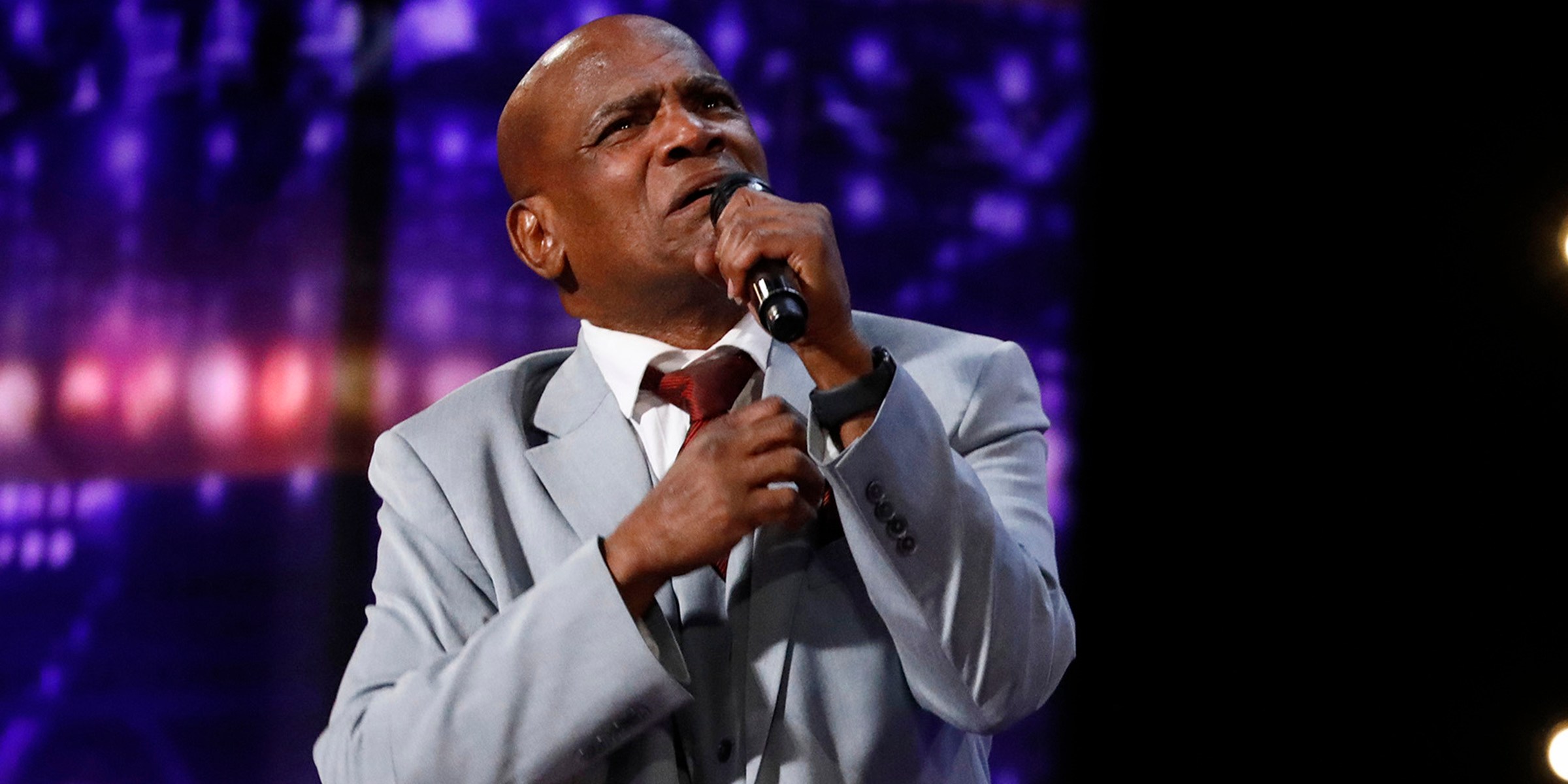
Just over a year after his release, Williams took the stage for America's Got Talent Season 15 (2020). His performance of Elton John's "Don't Let the Sun Go Down on Me" became one of the most viral moments in the show's history.
The "fight for justice" took on a new, public dimension through this platform. Williams didn't just sing; he told his story. He humanized the statistics of wrongful conviction for millions of viewers. Simon Cowell, moved by the story, became a vocal advocate for the Innocence Project, eventually becoming an ambassador for the organization.
Williams' success on the show—reaching the finals—served as a cultural reckoning. It forced the public to confront the reality that an innocent man had been discarded by society for nearly four decades. As of 2026, his audition remains a benchmark for "purpose-driven" performances in reality television, demonstrating how entertainment can be leveraged for social advocacy.
Summary of the Archie Williams Case Timeline
| Date | Event | Significance |
|---|---|---|
| Dec 1982 | Initial Crime Occurs | Baton Rouge attack; Williams is arrested without physical evidence. |
| 1983 | Conviction and Sentencing | Sentenced to life plus 80 years based on eyewitness testimony. |
| 1990s-2010s | Legal Stalemate | Multiple appeals for DNA testing are denied by Louisiana courts. |
| March 2019 | Exoneration | Fingerprint match to Stephen Forbes proves Williams’ innocence. |
| May 2020 | AGT Audition | Williams shares his story globally, sparking renewed interest in reform. |
| 2021-2026 | Continued Advocacy | Williams performs and speaks on behalf of the Innocence Project. |
The Broader Implications for Justice Reform
The fight for justice in the context of Archie Williams extends far beyond his individual freedom. His case highlights several systemic issues that advocates continue to address in 2026:
1. Eyewitness Misidentification Reform
Williams' case is a textbook example of why eyewitness testimony is often unreliable. States are increasingly adopting "blind" or "double-blind" lineup procedures, where the officer administering the lineup does not know who the suspect is, thereby preventing subtle cues that might influence a witness.
2. Access to Post-Conviction Testing
The decade-long delay in testing the evidence in Williams’ case was a result of restrictive laws. The fight for justice now involves lobbying for "Right to Truth" legislation, which ensures that prisoners have a streamlined path to forensic testing when new technology becomes available.
3. Compensation for the Wrongfully Convicted
After 37 years of lost wages, lost family time, and trauma, the question of "what is owed" remains a point of contention. While Louisiana has a compensation fund, the amounts are often capped at levels that many argue are insufficient for the scale of the injustice. As of 2026, advocacy groups are pushing for federal standards in exoneration compensation.
4. Accountability for Prosecutorial Conduct
While no specific misconduct was charged in the Williams case, the fight for justice frequently involves holding legal professionals accountable when evidence is suppressed or when flawed testimony is knowingly used.
FAQs: Understanding the Williams Case
Was Archie Williams ever compensated for his 37 years in prison?
Yes, but with limitations. In Louisiana, exonerated individuals are eligible for compensation, but it is often subject to a statutory cap. For many exonerated individuals, the transition back to society is difficult even with compensation, as they lack retirement savings, social security credits, and a work history.
Is Archie Williams still singing in 2026?
As of 2026, Archie Williams continues to perform and use his voice for advocacy. He frequently appears at charity events and legal conferences to share his story and sing songs that highlight themes of freedom and perseverance.
What happened to the actual perpetrator, Stephen Forbes?
Stephen Forbes was identified as the actual perpetrator through fingerprint evidence in 2019. However, he had already passed away in prison in 1996 while serving time for unrelated crimes. This fact underscores the tragedy that the real criminal remained a threat to the public while Williams was incarcerated.
How did Simon Cowell help Archie Williams?
Following Williams' AGT audition, Simon Cowell used his platform to raise awareness and funds for the Innocence Project. Cowell’s involvement helped bring the organization’s mission to a mainstream audience, leading to increased donations and support for legal staff who handle cases similar to Williams’.
What is the primary cause of wrongful convictions like this?
According to the Innocence Project, eyewitness misidentification is the leading cause of wrongful convictions overturned by DNA testing, contributing to approximately 69% of the cases exonerated by DNA in the United States.
Next Steps for Justice Advocates
For those moved by the story of Archie Williams and the fight for justice, there are several practical actions to take:
- Support the Innocence Project: This organization relies on donations to fund the expensive legal and forensic work required for exonerations.
- Stay Informed on Local Legislation: Pay attention to state laws regarding eyewitness identification procedures and post-conviction DNA access.
- Advocate for Public Defenders: Ensuring that every defendant has access to a robust, well-funded legal defense is the most effective way to prevent wrongful convictions before they happen.
Archie Williams' journey from a life sentence at Angola to the finals of America's Got Talent is a powerful reminder that justice is not a static state, but a constant, active pursuit. While he cannot get back his 37 years, his legacy serves as a beacon for thousands of others still fighting for their truth to be heard.
Image Gallery