Comprehensive Guide to Age Eligibility for Medicaid in 2026
Medicaid age eligibility is determined by specific lifecycle categories rather than a single qualifying age. While children under 19 and seniors aged 65 or older have dedicated pathways, adults aged 19 to 64 typically qualify based on...
Medicaid age eligibility is determined by specific lifecycle categories rather than a single qualifying age. While children under 19 and seniors aged 65 or older have dedicated pathways, adults aged 19 to 64 typically qualify based on income levels in "expansion states" or through specific criteria like disability or pregnancy in non-expansion jurisdictions.
Contents
The Role of Age in Medicaid Categorization
Age functions as a primary filter in the Medicaid system, determining which set of financial rules—and which benefit packages—apply to an applicant. In the administrative landscape of 2026, the program remains a federal-state partnership, meaning that while federal law sets the baseline, individual states have significant leeway in how they define "age-related" eligibility groups.
Generally, the system is divided into three major age-based buckets:
- Children and Young Adults (0–18/19): High income-eligibility thresholds and streamlined enrollment.
- Adults (19–64): Eligibility is largely dependent on whether a state has adopted the Affordable Care Act (ACA) expansion.
- Seniors (65+): Eligibility shifts from income-only assessments to a combination of income and asset (resource) limits.
Understanding where you fall on this spectrum is critical because the application process and the definition of "countable income" change significantly once you cross certain age milestones, particularly the transition into the senior category at age 65.
Medicaid Eligibility for Children (Birth through Age 18)
Children represent the largest group of Medicaid beneficiaries. Under federal law, states must provide Medicaid coverage to children in families with incomes up to at least 133% of the Federal Poverty Level (FPL), though most states have set their limits much higher, often exceeding 200% or 250% of the FPL.
The Children’s Health Insurance Program (CHIP)
If a child’s family earns too much for Medicaid but cannot afford private insurance, they often fall into the Children's Health Insurance Program (CHIP). In many states, Medicaid and CHIP are integrated into a single administrative pipeline. As of 2026, federal regulations emphasize "continuous eligibility" for children, which prevents them from losing coverage during the year due to minor fluctuations in family income.
Transitioning at Age 19
A common point of confusion occurs when a beneficiary turns 19. At this age, they are no longer considered "children" for Medicaid purposes. They must be re-evaluated under the adult eligibility rules. If the state has expanded Medicaid, the transition is usually seamless, provided their income remains below 138% of the FPL. In non-expansion states, 19-year-olds may lose coverage unless they meet other specific criteria, such as having a permanent disability.
Adult Eligibility: The 19 to 64 Demographic
For adults between the ages of 19 and 64, eligibility is primarily governed by the Modified Adjusted Gross Income (MAGI) rules. Under MAGI, there is no "asset test." This means the government looks only at your taxable income and does not count your savings, car, or home against you.
Expansion vs. Non-Expansion States
In 2026, the "coverage gap" remains a reality in states that have chosen not to expand Medicaid.
- Expansion States: If you are between 19 and 64 and your income is below 138% of the FPL, you are eligible regardless of your health status or whether you have children.
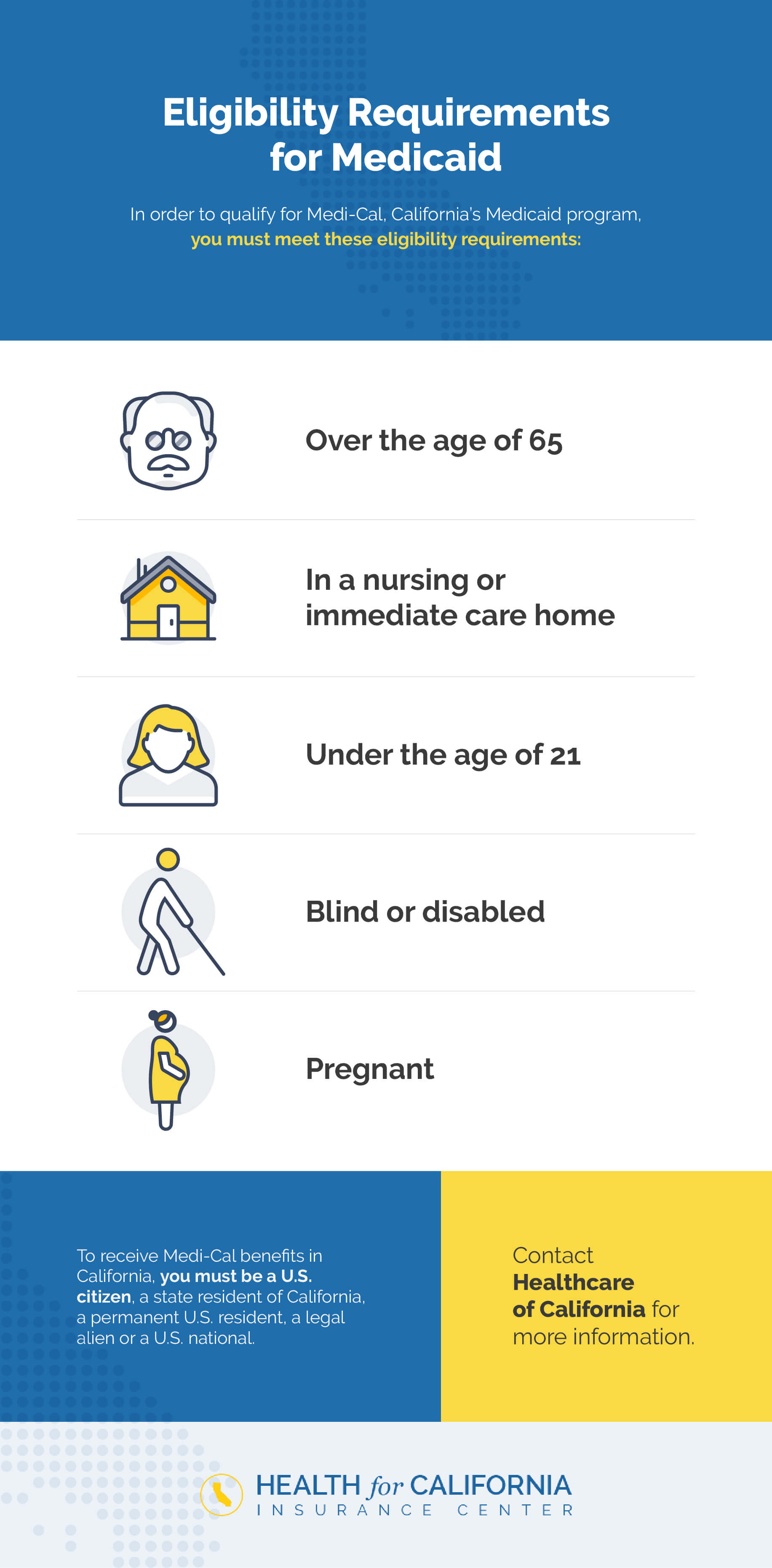
- Non-Expansion States: Age 19–64 adults generally cannot get Medicaid based on income alone. They must be "categorically eligible," meaning they must be pregnant, a parent/caretaker of a minor child, or have a documented disability that meets Social Security Administration standards.
The Disability Pathway
Adults under 65 who have a disability may qualify for Medicaid even if their income is slightly higher than the expansion limits, or if they live in a non-expansion state. However, this pathway often introduces the "asset test" earlier than age 65, requiring the individual to have limited resources (typically under $2,000 for an individual) to qualify.
Senior Eligibility: Turning 65 and the "Aged" Category
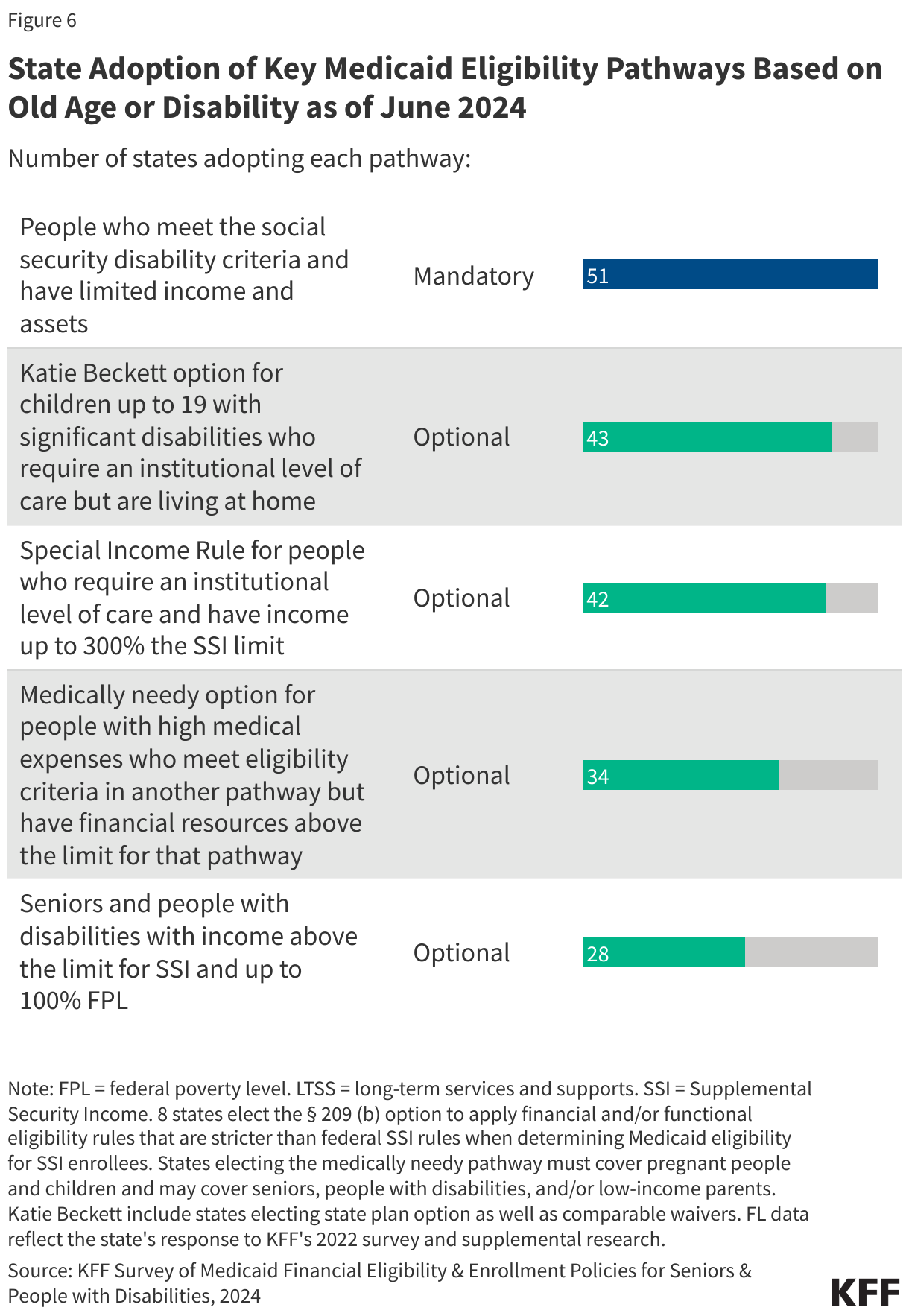
Turning 65 is the most significant milestone in Medicaid eligibility. At this point, the rules change from MAGI-based (income only) to Non-MAGI rules, which include both income and asset limits. This group is officially referred to as the Aged, Blind, and Disabled (ABD) population.
The Shift to Asset Testing
While an expansion-state adult aged 64 could theoretically have $1 million in a savings account and still qualify for Medicaid (if their monthly income is low), a 65-year-old cannot. To qualify as an "Aged" individual, most states require that you have:
- Limited Income: Usually tied to the Supplemental Security Income (SSI) limit or a percentage of the FPL.
- Limited Resources: In many states, this is capped at $2,000 for an individual or $3,000 for a couple.
Certain assets are "exempt," meaning they do not count toward the limit. These typically include your primary residence (up to a certain equity value), one primary vehicle, personal belongings, and certain burial funds.
Long-Term Care and Nursing Homes
Age 65 and older is also the primary demographic for Institutional Medicaid. Medicaid is the largest payer for long-term care in the United States. Eligibility for this specific branch of Medicaid requires a "functional assessment" to prove the individual needs a nursing-home level of care, in addition to meeting the strict financial asset tests.
Dual Eligibility: Medicaid and Medicare
Most individuals who meet the age eligibility for Medicaid (65+) are also eligible for Medicare. When a person has both, they are referred to as "Dual Eligibles." In this scenario, Medicare acts as the primary payer for medical services (hospital visits, doctor appointments), while Medicaid acts as the secondary payer, covering costs that Medicare does not, such as premiums, co-pays, and long-term custodial care.
Medicare Savings Programs (MSPs)
For seniors who do not qualify for full Medicaid, there are Medicare Savings Programs. These are state-administered programs that use Medicaid funds to help seniors with lower incomes pay for their Medicare Part B premiums and, in some cases, Part A and Part B deductibles and co-insurance. Eligibility for these programs is strictly tied to being "Medicare age" (usually 65) or having a qualifying disability.
Summary Table: Medicaid Age Groups and Financial Rules
| Age Group | Primary Category | Financial Test Used | Common Income Limit (Approx.) | Asset Test? |
|---|---|---|---|---|
| 0–18 | Children / CHIP | MAGI | 133%–300%+ FPL | No |
| 19–64 | Expansion Adult | MAGI | 138% FPL | No |
| 19–64 | Parent / Caretaker | MAGI | Varies by State | No |
| 19–64 | Disabled Adult | Non-MAGI | Varies (often SSI level) | Yes (usually $2,000) |
| 65+ | Aged (Senior) | Non-MAGI | ~100% FPL or SSI limit | Yes (usually $2,000) |
Note: Income limits are subject to annual adjustments by the Department of Health and Human Services (HHS) based on the 2026 Federal Poverty Guidelines.
State Variations and "Spend-Down" Programs
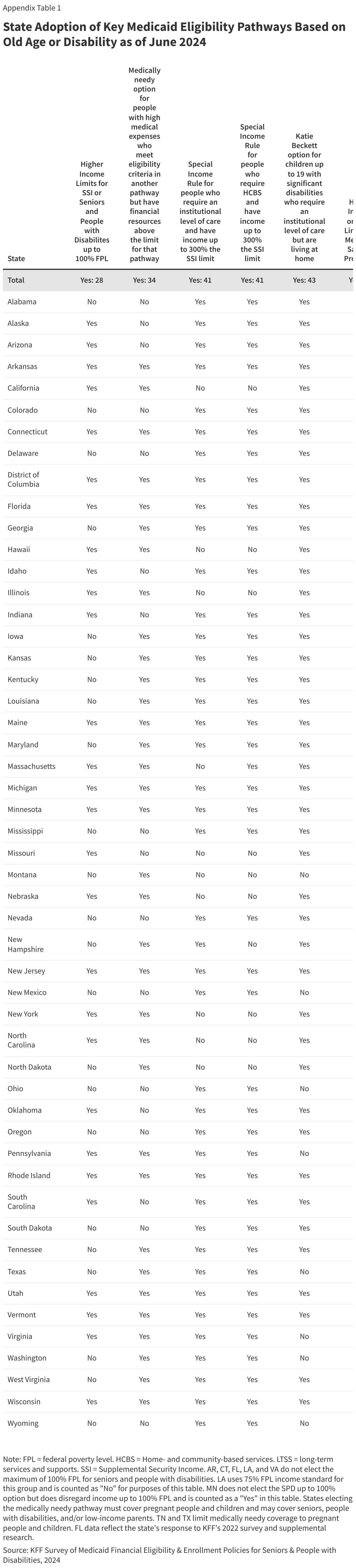
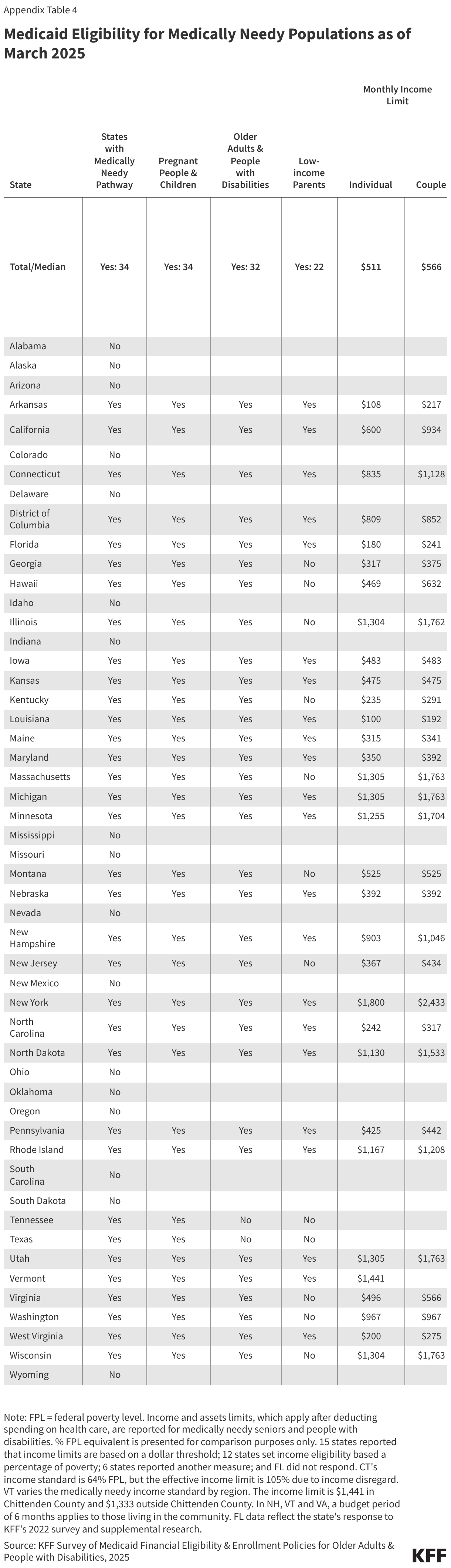
It is essential to recognize that age eligibility does not exist in a vacuum; state-specific laws frequently create "Medically Needy" pathways, often called Spend-Down programs.
If a senior (65+) or a disabled person has an income slightly above the state's Medicaid limit, they can "spend down" their excess income on medical expenses. Once they have spent the "excess" amount on doctor bills, prescriptions, or therapy, Medicaid kicks in to cover the rest for the remainder of the eligibility period (usually six months). This allows individuals who are aged or disabled to access Medicaid even if they technically fail the initial income test, provided their medical needs are high.
How to Verify Eligibility and Apply
Because Medicaid rules are complex and vary by state, the application process should be handled with documentation ready for the specific age-based pathway you are pursuing.
- Gather Documentation: You will need proof of age (birth certificate or passport), proof of income (tax returns or pay stubs), and—if you are 65 or older—proof of assets (bank statements, property deeds).
- Contact Your State Agency: Applications can typically be submitted through the state's Department of Health and Human Services or the equivalent social services portal.
- The Marketplace Alternative: If you are under 65 and find you are not eligible for Medicaid based on age or income, the HealthCare.gov Marketplace is the primary tool for finding subsidized private plans.
- Annual Redetermination: Once enrolled, you must verify your eligibility annually. For those turning 65, this is a critical time to notify the Medicaid office, as you must transition from the "Adult" category to the "Aged" category to avoid a gap in coverage.
Frequently Asked Questions
Can I get Medicaid if I am under 65 but not disabled?
Yes, if you live in a state that has expanded Medicaid, you can qualify based solely on your income (under 138% of the FPL). If you live in a non-expansion state, you generally cannot qualify unless you are pregnant, a parent/caretaker, or meet other specific state criteria.
Does my age affect what Medicaid covers?
To some extent, yes. For example, the Early and Periodic Screening, Diagnostic, and Treatment (EPSDT) benefit is a mandatory comprehensive health service specifically for children under age 21. For seniors, Medicaid often covers long-term care and nursing home services that are not typically prioritized in the "Expansion Adult" category.
What happens to my Medicaid when I turn 65?
When you turn 65, you typically transition from the MAGI-based "Adult" group to the "Aged" group. This is a major transition because you will now be subject to an asset test. If you have significant savings (usually over $2,000), you might lose Medicaid eligibility even if your income hasn't changed.
Is there an age limit for Medicaid?
There is no "upper" age limit for Medicaid. As long as you meet the financial and functional requirements, you can remain on Medicaid for the rest of your life. Medicaid is frequently used by individuals well into their 90s to cover the high costs of skilled nursing facilities.
Do I have to be 65 to get Medicaid for a nursing home?
Not necessarily. While most people in nursing homes are over 65, younger adults with severe disabilities or chronic conditions can qualify for long-term care Medicaid if they meet the state's "level of care" requirements and the financial asset limits.
Final Recommendation: If you are approaching age 65, or if you have a child approaching age 19, consult with a state Medicaid caseworker or a qualified benefits counselor at least three months before the birthday. These age transitions are the most common points for administrative errors or coverage lapses, and proactive notification can ensure that the move from one eligibility category to another is handled without a loss of benefits.
Image Gallery