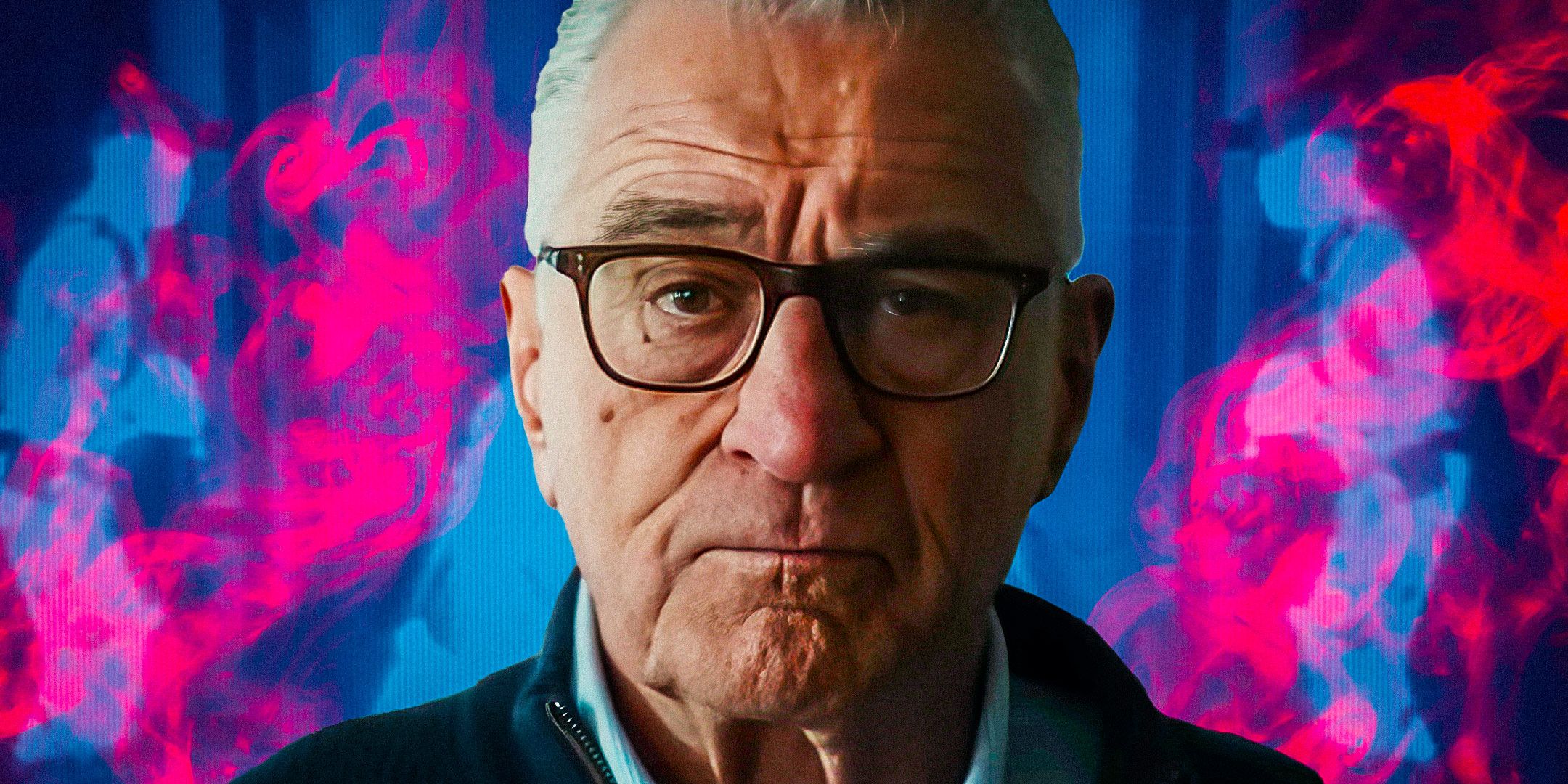
Should You Watch Dan Stevens in Zero Day? A Full Performance Review
Whether you should watch Dan Stevens in Zero Day depends on your appreciation for high-stakes political intrigue and Stevens' ability to portray morally ambiguous intellectuals. Stevens delivers a standout performance as Evan Cassell,...
Whether you should watch Dan Stevens in Zero Day depends on your appreciation for high-stakes political intrigue and Stevens' ability to portray morally ambiguous intellectuals. Stevens delivers a standout performance as Evan Cassell, providing a sharp, cynical counterpoint to Robert De Niro’s lead. It is a mandatory watch for fans of his character-actor era.
Contents
Released to significant acclaim on Netflix, Zero Day has solidified itself as a cornerstone of the 2025–2026 television landscape. While the series is anchored by the legendary Robert De Niro, the supporting cast—particularly Dan Stevens—elevates the narrative from a standard conspiracy thriller into a deep meditation on power, digital fragility, and the erosion of truth. For viewers questioning if Stevens gets enough screen time to warrant a binge-watch, the answer lies in the quality of his character’s impact rather than mere minutes on screen.
The Premise of Zero Day and Stevens' Integral Role
Zero Day centers on a devastating global cyberattack that plunges the United States into chaos. Robert De Niro stars as George Mullen, a retired former President called back into service to lead a commission investigating the origin of the attack. The "Zero Day" of the title refers to a vulnerability in software that is unknown to those who should be interested in mitigating it—essentially a digital ticking time bomb.
Dan Stevens enters this fray as Evan Cassell, a brilliant but divisive figure whose expertise in shadow politics and digital forensics makes him both an asset and a liability to Mullen’s investigation. Unlike his early career roles that leaned into "English gentleman" archetypes, Stevens continues his trajectory of playing complex, often abrasive characters who operate in the grey areas of morality. Cassell is a man who understands that in the modern age, information is more lethal than any kinetic weapon.
Watching Stevens in this role provides a masterclass in controlled intensity. He doesn’t play Cassell as a villain, but rather as a realist who has become disillusioned by the very systems Mullen is trying to save. This creates a fascinating generational and ideological clash between the two actors that serves as the heartbeat of the show’s middle episodes.
Analyzing Dan Stevens' Performance as Evan Cassell
One of the primary reasons to prioritize Zero Day is to witness the evolution of Dan Stevens as a character actor. Since leaving the comfort of period dramas like Downton Abbey, Stevens has sought out roles that challenge his range, from the psychedelic intensity of Legion to the terrifying precision of The Guest. In Zero Day, he brings a frantic, intellectual energy to Evan Cassell that feels distinct from his previous work.
Intellectual Friction and Dialogue
Stevens excels in the show’s dialogue-heavy scenes. Zero Day is not an action-packed procedural; it is a "talky" thriller where the tension is built through depositions, secret meetings, and verbal sparring. Stevens handles the dense, technical jargon of cybersecurity and political theory with a naturalism that makes the high stakes feel grounded. His character often serves as the audience’s window into the darker corners of the internet, explaining how the world is falling apart without ever sounding like a walking exposition dump.
Physicality and Presence
Even in a suit-and-tie political setting, Stevens uses his physicality to convey Cassell’s internal state. He portrays a man who is perpetually "caffeinated"—always a step ahead, slightly twitchy, and profoundly aware of the surveillance state surrounding him. This performance choice contrasts beautifully with De Niro’s more stoic, traditional "man of the people" presence. When Stevens is on screen, the pacing of the show seems to accelerate, reflecting his character’s restless mind.
Comparing Stevens to the Powerhouse Ensemble
While Dan Stevens is a major draw, Zero Day boasts one of the most decorated casts in recent television history. Deciding whether to watch often involves looking at how these actors interact. Stevens does more than just hold his own; he becomes the catalyst for some of the show's most pivotal dramatic shifts.
- Robert De Niro (George Mullen): The relationship between Mullen and Cassell is one of mutual distrust. Stevens plays Cassell with a "disrespect for the crown" that pushes De Niro’s character out of his comfort zone, forcing the former President to confront uncomfortable truths about his own legacy.
- Angela Bassett (President Mitchell): Stevens’ scenes with Bassett are fewer, but they highlight the friction between the deep state's clandestine operators and the public-facing executive branch.
- Jesse Plemons and Lizzy Caplan: Stevens fits perfectly into this tier of elite character actors. The ensemble feels cohesive, with Stevens often acting as the "wild card" that keeps the group dynamic unpredictable.
For fans who enjoy seeing Stevens in an ensemble where he can "chew the scenery" without overwhelming the plot, Zero Day is an ideal choice. He is part of a machine, but he is the gear that often makes the most noise.
Technical Execution and Production Value
Beyond the acting, the production quality of Zero Day in 2026 remains a high benchmark for streaming services. Directed by Lesli Linka Glatter (known for her work on Homeland), the series maintains a suffocating sense of dread that complements Stevens’ performance.
The visual language of the show uses a cold, clinical palette that emphasizes the digital nature of the threat. Stevens’ character is often framed against massive screens or in claustrophobic, high-tech environments, emphasizing his role as a prisoner—and master—of the digital age. The sound design is equally meticulous, using a subtle electronic score that mirrors the "glitch" aesthetic of a cyber-war.
| Feature | Description | Stevens' Involvement Rating |
|---|---|---|
| Genre | Political Conspiracy Thriller | High (Primary Antagonist/Ally) |
| Character Complexity | Multi-layered, morally ambiguous | Exceptional |
| Dialogue Density | Heavy technical and political jargon | High |
| Screen Time | Supporting Lead (all episodes) | Consistent |
| Performance Style | Intense, intellectual, high-energy | Signature Stevens |
Is Zero Day Worth the Time Commitment?
In the current landscape of 2026, where "prestige TV" can often feel bloated, Zero Day manages to justify its runtime. It is a limited series, meaning it offers a definitive conclusion rather than dragging a mystery out over multiple seasons. This condensed format benefits Stevens’ performance specifically; his character arc is sharp, purposeful, and doesn't suffer from the narrative "filler" often found in 22-episode seasons.
If you are a fan of Dan Stevens specifically, you will find that Zero Day captures a specific facet of his talent that hasn't been seen since Gaslit. He is playing someone who is perhaps too smart for their own good, and the tragedy of his character lies in the fact that he is right about the world's end, but lacks the social capital to stop it.
Potential Drawbacks
The show is undeniably grim. If you are looking for the charming, romantic Dan Stevens of the 2010s, you won't find him here. Zero Day is an exercise in cynicism. Additionally, some viewers might find the technical explanations regarding "Zero Day" exploits to be dense. However, if you enjoy the intellectual rigor of shows like Mr. Robot or Succession, these will be features rather than bugs.
How to Watch and What to Expect
Zero Day is available exclusively on Netflix. As of 2026, the series is available in 4K HDR, which is highly recommended to appreciate the dark, detailed cinematography.
When you sit down to watch, expect a slow-burn start. The first episode establishes the geopolitical stakes and De Niro’s return to the spotlight. Dan Stevens is introduced shortly thereafter, and his presence acts as the spark that moves the plot from a generic investigation into a complex web of betrayal.
Prerequisites for Enjoyment:
- Interest in Cybersecurity: While not a technical manual, an interest in how digital infrastructure affects modern life is helpful.
- Patience for Dialogue: This is a series built on conversations in rooms, not car chases.
- Appreciation for Ensemble Acting: You are watching a group of titans work together.
Frequently Asked Questions
Does Dan Stevens play a hero or a villain in Zero Day?
The beauty of Stevens' role as Evan Cassell is that he occupies a "grey zone." While he initially appears to be an antagonist or a rogue agent, his motivations are revealed to be rooted in a different kind of patriotism. He is a "truth-seeker" whose methods are often illegal or unethical, making him a complex anti-hero.
How many episodes is Dan Stevens in?
Dan Stevens appears in all six episodes of the limited series. While he is not the primary protagonist (that role belongs to Robert De Niro), his character is essential to the resolution of the main mystery, ensuring he has significant presence in every chapter.
Is Zero Day based on a true story?
While the specific characters are fictional, the concept of a "Zero Day" attack and the political commission that follows it are based on real-world cybersecurity threats and historical investigative bodies, such as the 9/11 Commission. The show's creators, including Michael S. Schmidt, have backgrounds in investigative journalism, lending the series a high degree of "scary realism."
How does this role compare to his work in Legion?
While Legion allowed Stevens to explore mental instability and surrealism, Zero Day is more grounded. His performance in Zero Day is more restrained and intellectual, though it carries a similar "under-the-surface" intensity. If you liked the "smartest man in the room" energy he brought to Legion, you will appreciate his work here.
Is the series appropriate for all audiences?
Zero Day is rated for mature audiences. It contains strong language, intense psychological themes, and depictions of global crisis situations that may be distressing. It is a sophisticated thriller intended for adult viewers who enjoy complex political dramas.
Final Recommendation
You should absolutely watch Dan Stevens in Zero Day if you value high-tier acting and a plot that reflects the anxieties of 2026. Stevens provides the necessary edge to a show that could have otherwise been a standard political vehicle. His performance as Evan Cassell is a reminder of why he is one of the most versatile actors of his generation. For the best experience, watch the series as a weekend binge to maintain the momentum of the conspiracy—and keep a close eye on Stevens' subtle facial work during the high-pressure commission hearings; it is where his best work resides.
Image Gallery