Why the Oreo Reese's Candy Trend Matters: Inside the Co-Branding Revolution
The Oreo Reese's candy trend represents a decisive shift in Consumer Packaged Goods (CPG) marketing, moving brand strategy away from incremental flavor variations toward high-profile brand crossovers. By combining two of the world's mo...
The Oreo Reese's candy trend represents a decisive shift in Consumer Packaged Goods (CPG) marketing, moving brand strategy away from incremental flavor variations toward high-profile brand crossovers. By combining two of the world's most dominant snack identities—Mondelez International's Oreo and The Hershey Company's Reese's—this trend demonstrates how legacy brands leverage shared equity, viral social media engagement, and limited-time releases to capture consumer attention in a hyper-fragmented marketplace.
Contents
The Evolution of the Mashup: From DIY Viral Recipes to Corporate Strategy
The pairing of chocolate sandwich cookies and peanut butter candy did not originate in a corporate test kitchen. For years, food bloggers, home bakers, and social media creators experimented with combining Oreo cookies and Reese's Peanut Butter Cups. Viral recipe concepts, such as baking Reese's cups inside chocolate chip cookies wrapped around Oreos, demonstrated strong organic demand for multi-textured, hyper-indulgent flavor combinations.
Social media platforms like TikTok, Instagram, and YouTube transformed these homemade experiments into viral phenomena. Millions of views for simple kitchen hacks proved to food manufacturers that consumers were actively seeking novel cross-category experiences. Rather than ignoring these grassroots trends, snack food conglomerates recognized an opportunity to commercialize established consumer behavior.
- Kitchen Innovation: Home bakers combine cookies & peanut butter
- Social Amplification: Viral recipes generate millions of views
- Market Signal: CPG data tracks rising demand for hybrid flavors
- Corporate Execution: Formal co-branding agreements & official SKUs
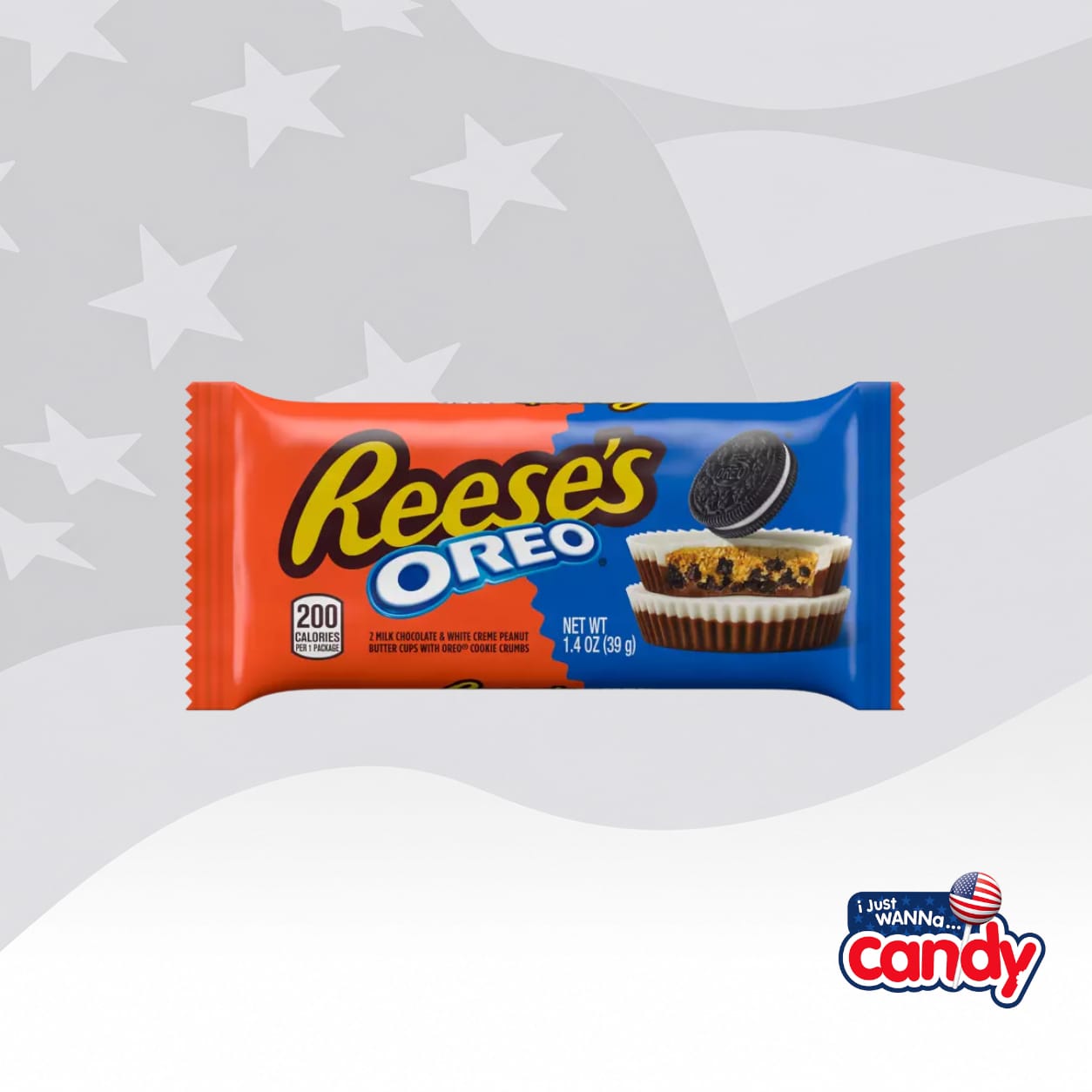
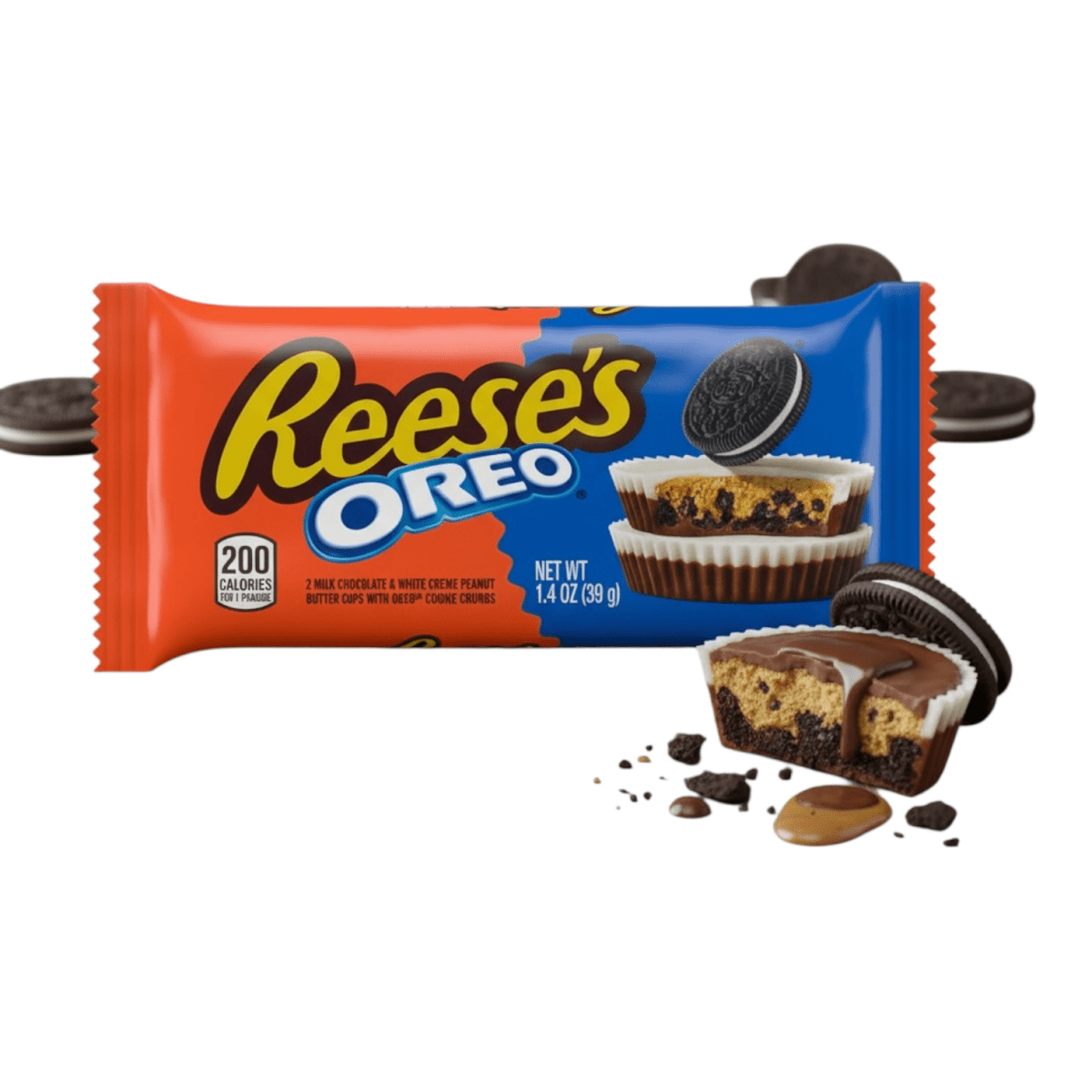
When official product crossovers emerged—such as Reese's Peanut Butter Cup Flavored Oreos and Reese's Big Cups filled with Oreo cookie pieces—they validated a strategic pipeline. Major CPG brands no longer rely solely on internal market research to develop new flavors; they look to social media consumption patterns to identify proven flavor combinations before investing in commercial manufacturing runs.
5 Reasons the Oreo Reese's Trend Matters to the CPG Industry
The convergence of Oreo and Reese's is more than a novel snack release; it reflects systemic changes in retail strategy, product development, and consumer engagement.
1. Unlocking Shared Brand Equity and Dual-Audience Reach
When two market-leading brands collaborate, they pool their respective customer bases without sacrificing identity. Oreo brings a massive global footprint built around milk's favorite cookie, while Reese's commands dominant market share in the chocolate-peanut butter confectionery segment.
Co-branding creates an immediate halo effect. Devotees of Reese's who rarely visit the cookie aisle are incentivized to browse Nabisco products, while loyal Oreo consumers are drawn directly to the candy display. This cross-pollination increases brand penetration across distinct retail categories without requiring millions of dollars in cold-audience advertising acquisition costs.
2. Capitalizing on the LTO (Limited-Time Offer) Engine
Modern retail thrives on urgency. The limited-time offer (LTO) strategy generates a sense of scarcity that drives immediate purchasing action. When consumers know a specialized mashup SKU (Stock Keeping Unit) may only remain on store shelves for a few months, impulse purchases spike.
The Oreo Reese's phenomenon showcases how LTO dynamics function in the grocery aisle:
- Scarcity Marketing: Drives high conversion rates at point-of-sale displays.
- Retail Partner Demand: Grocery chains and big-box retailers compete for exclusive initial allocation windows to boost foot traffic.
- Media Magnetism: Fast-moving consumer releases generate earned media coverage from food journalists, pop-culture outlets, and digital influencers.
3. Social Media Virality as Free R&D and Marketing
In traditional product development cycles, introducing a new flavor required extensive focus group testing, consumer panels, and multi-region pilot rollouts. Today, social media acts as a real-time focus group.
The organic momentum behind combining chocolate, cookie crunch, and peanut butter cream provided clear market validation before scale manufacturing commenced. Once official products hit store shelves, the unboxing, tasting, and reviewing process by content creators provided self-sustaining, low-cost marketing momentum. This user-generated content loop significantly lowers the overall cost-per-acquisition (CPA) for brand promotions.
4. De-risking Innovation in a Saturated Market
Introducing an entirely new product brand to retail shelves carries immense financial risk. Industry estimates suggest that a vast majority of brand-new CPG product launches fail within their first two years due to lack of consumer awareness or shelf-space competition.
Mashups dramatically de-risk the innovation cycle. Because consumers are already familiar with the taste profiles of both Oreo and Reese's, the barrier to trial is negligible. Purchasers do not need to be educated on what the product tastes like; they already trust both core components. The brand pairing acts as a quality guarantee, ensuring high trial rates right from launch day.
5. Blurring Category Boundaries
Historically, retail grocery stores maintained rigid category distinctions: cookies belonged in aisle four, while packaged candy stayed at the checkout register or in aisle seven. The Oreo Reese's trend exemplifies how modern food brands deliberately blur these operational lines.
By introducing cookie elements into chocolate cups and peanut butter cream into sandwich cookies, manufacturers capture shelf space across multiple physical store zones. This category fluidness allows parent companies like Mondelez and Hershey to capture market share outside their traditional core domains.
Brand Chemistry: Why Oreo and Reese's Work So Well Together
Not all brand mashups succeed. For a co-branded product to resonate, there must be underlying sensory, structural, and cultural compatibility between the two participating identities.
- OREO BRAND EQUITY
- Dark Cocoa Cookie Crunch
- Iconic Embossed Visual
- "Dunking" ritual
- REESE'S BRAND EQUITY
- Creamy Peanut Butter Center
- Milk Chocolate Shell
- Perfect Sweet-and-Salty Ratio
- OPTIMAL BRAND MASHUP
- Dual-texture contrast
- Complementary flavor balance
- High nostalgia leverage
Sensory and Texture Compatibility
The pairing relies on a proven culinary contrast: the crispy, slightly bitter cocoa crunch of an Oreo cookie balanced against the smooth, salty-sweet peanut butter cream of a Reese's cup. This dual-texture dynamic prevents sensory adaptation, making the eating experience more engaging than a single-texture snack.
Cultural Nostalgia and Heritage
Both brands possess deep emotional equity spanning multiple generations. Oreo (introduced by Nabisco in 1912) and Reese's (created by H.B. Reese in 1928) are anchored in childhood nostalgia. Combining them synthesizes decades of positive brand associations into a single purchase experience, appealing equally to parents purchasing household snacks and young adult consumers seeking comfort foods.
Comparison: Traditional Line Extensions vs. Co-Branded Mashups
To understand why major manufacturers invest heavily in co-branding licensing agreements, it helps to examine how mashups perform relative to standard in-house line extensions (such as releasing a standard mint or vanilla variant).
| Metric | Traditional In-House Line Extension | Co-Branded Flavor Mashup |
|---|---|---|
| Development Risk | Moderate; depends on consumer willingness to try an unfamiliar internal flavor. | Low; relies on pre-existing consumer affinity for an established external brand. |
| Earned Media Potential | Low to Moderate; standard line extensions rarely generate widespread press. | Extremely High; unexpected brand collaborations generate viral news cycles and social media chatter. |
| Audience Expansion | Incremental; primarily captures existing buyers of the parent brand. | Exponential; cross-pollinates consumer bases of both collaborating brand ecosystems. |
| Legal & Operational Complexity | Low; handled entirely within internal supply chains and R&D divisions. | High; requires complex licensing, IP agreements, joint quality control, and shared margins. |
| Velocity at Point of Sale | Standard baseline growth over time. | Rapid spike driven by curiosity, scarcity, and limited-time urgency. |
| Shelf-Space Footprint | Restricted to the brand's primary grocery aisle. | Flexes across multiple store sections (candy aisle, cookie aisle, bakery, endcaps). |
Consumer Impact: Managing Flavor Fatigue and Expectations
While the business case for brand crossovers is compelling, market saturation introduces clear risks for both manufacturers and consumers.
The Risk of SKU Proliferation and Confusion
When food manufacturers launch too many limited-edition combinations, store shelves become crowded with competing variations of the same core product. This phenomenon, known as SKU proliferation, can confuse shoppers and dilute the brand's identity. If an iconic brand continuously pivots to high-concept crossovers, its classic core product risks losing cultural focus.
Overcoming Innovation Fatigue
Consumers can quickly experience hype fatigue if brand collaborations feel forced or gimmick-driven. When a mashup fails to deliver a meaningful upgrade in flavor or texture—or simply relies on packaging changes without culinary merit—consumer trust erodes. For mashups like Oreo and Reese's to maintain long-term impact, the physical product must justify the promotional build-up.
The Strategic Playbook: What Marketers Can Learn From This Trend
The success of the Oreo Reese's phenomenon offers several tactical lessons for product managers, brand strategists, and marketers across industries:
- Monitor Social Listening for Unofficial Combinations: Track how consumers modify, hack, or customize your product on social platforms. Grassroots behavior often reveals validated product ideas.
- Seek Complementary, Not Identity-Overlapping, Partners: Pair with brands that offer contrasting sensory characteristics or operational strengths while sharing similar core customer demographics.
- Use Scarcity to Drive Retail Allocation: Frame new co-branded releases around limited windows to incentivize retail buyers to grant prime endcap placement and drive impulse purchases.
- Protect Core Brand Equity: Ensure that high-concept crossovers remain special events rather than permanent replacements for the foundational flagship products that drive steady baseline revenues.
Frequently Asked Questions
Why do competing food companies agree to co-brand products?
Even when companies compete broadly for consumer spend, target co-branding agreements unlock shared audience bases that neither brand could easily access alone. By structuring mutually beneficial licensing contracts, both parent companies drive incremental volume, share promotional costs, and gain dominant shelf presence over smaller competitors.
Is the Oreo Reese's trend permanent or temporary?
The specific product offerings often run as limited-time offers (LTOs) or seasonal campaigns to maximize impulse buys and prevent flavor fatigue. However, the underlying strategic model—using cross-category brand collaborations—is a permanent element of modern CPG retail strategy.
How do co-branding agreements handle profits and Intellectual Property?
Co-branding arrangements typically involve structured licensing agreements where one company leads the physical manufacturing and distribution while paying royalties or sharing net profit margins with the partner IP owner. Terms dictate strict quality control standards to protect both trademarks.
Why do consumers prefer brand mashups over generic flavor profiles?
Generic flavor descriptions (such as "peanut butter flavored cookie") lack the trust, psychological nostalgia, and guaranteed quality associated with an established brand name like Reese's. Consumers know the exact flavor profile they are getting when an official trademark is on the packaging.
What are the main supply chain challenges in producing mashup candies?
Combining distinct food components—such as maintaining cookie crispness while integrated with high-fat peanut butter creams or chocolate shells—requires specialized ingredient formulation, moisture barrier engineering, and temperature-controlled logistics to prevent product degradation on store shelves.
Practical Recommendation: Evaluating Mashups in Brand Strategy
For brand leaders and strategy professionals, the key takeaway from the Oreo Reese's trend is that consumer interest is captured at the intersection of familiarity and novelty.
When planning product pipelines or joint marketing campaigns, prioritize partnerships where both entities bring distinct, non-competing sensory or functional strengths to the table. Validate demand by observing how audiences naturally combine your products in real-world settings before committing to full-scale manufacturing, and leverage short release windows to maintain high purchasing velocity.
Image Gallery