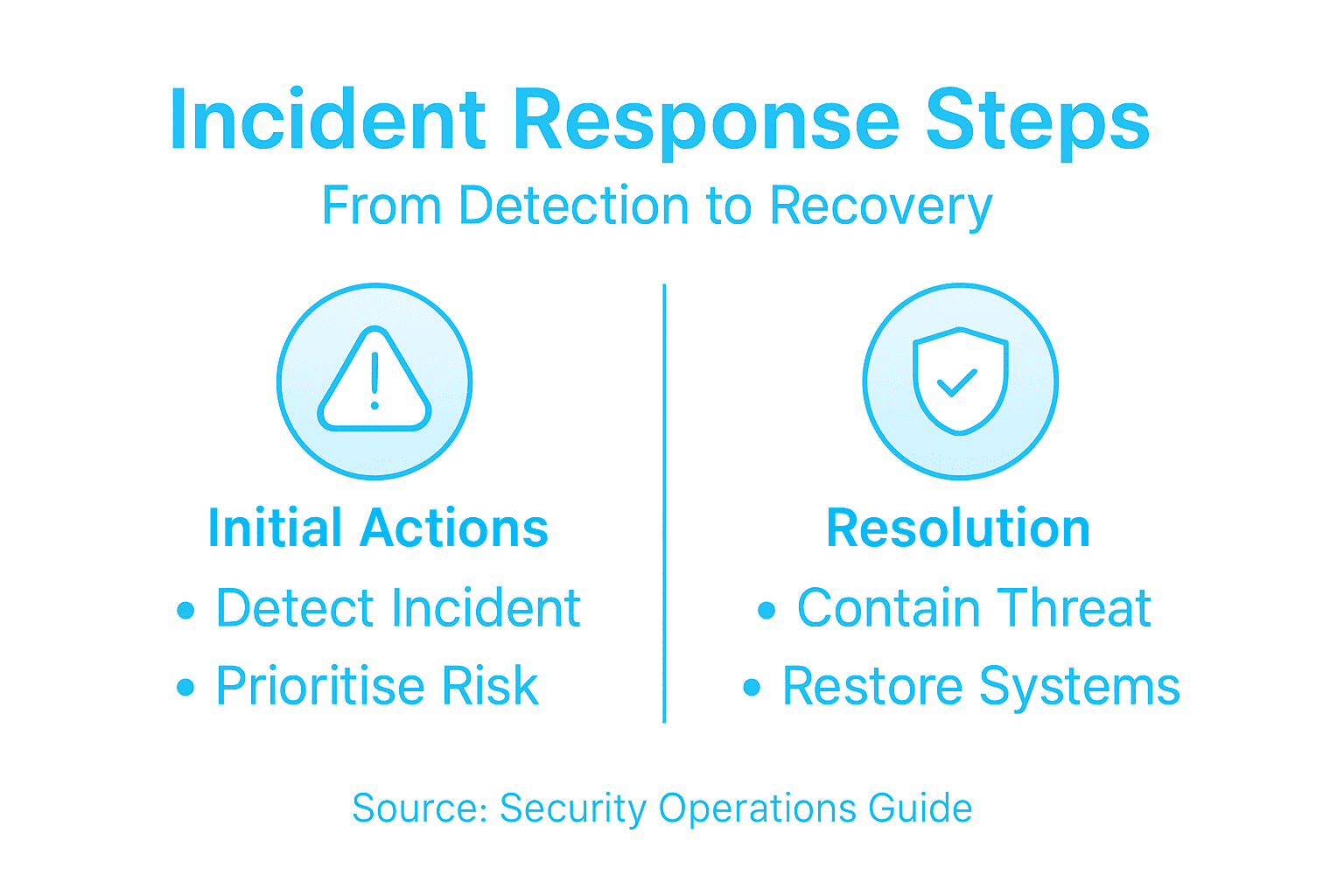
The SANS Incident Response Process: A Comprehensive Guide to the PICERL Framework
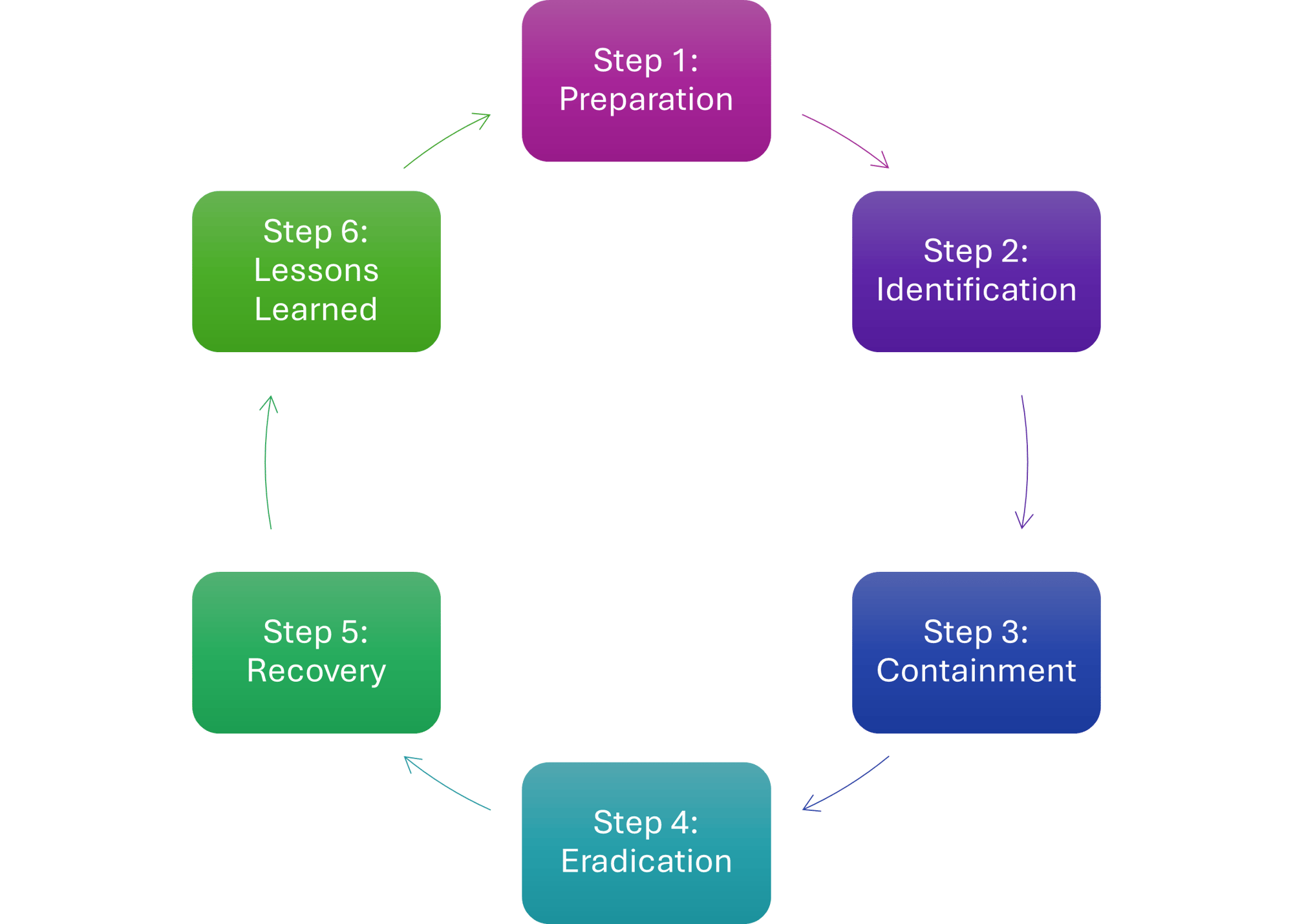
The SANS Institute incident response steps, collectively known by the acronym PICERL, consist of six critical phases: Preparation, Identification, Containment, Eradication, Recovery, and Lessons Learned. This structured framework provi...
The SANS Institute incident response steps, collectively known by the acronym PICERL, consist of six critical phases: Preparation, Identification, Containment, Eradication, Recovery, and Lessons Learned. This structured framework provides security professionals with a systematic approach to detecting, neutralizing, and recovering from cyberattacks while minimizing organizational damage and downtime.
Contents
The SANS (SysAdmin, Audit, Network, and Security) Institute has long been the gold standard for cybersecurity training. Among its most influential contributions is the Incident Handler’s Handbook, which outlines a rigorous methodology for managing security breaches. In an era where data breaches and ransomware are sophisticated and frequent, having a battle-tested roadmap is not just a luxury—it is a requirement for business continuity.
The PICERL framework is designed to be cyclical and iterative. Each phase feeds into the next, ensuring that an organization does not just "survive" an attack, but evolves to be more resilient against future threats. This guide explores each of the six steps in detail, providing technical depth and actionable strategies for implementation in 2026 environments.
Phase 1: Preparation – The Foundation of Incident Response
Preparation is arguably the most important phase, yet it is often the most neglected. Without a solid foundation, the remaining five steps will likely be chaotic and ineffective. In 2026, preparation involves more than just having a PDF document labeled "Incident Response Plan." It requires a convergence of policy, technology, and human readiness.
Organizational Policy and Governance
Preparation begins with establishing a formal Incident Response Plan (IRP). This document must be approved by executive leadership and clearly define what constitutes an "incident" versus an "event." Key components include:
- Defined Roles and Responsibilities: Identifying the members of the Incident Response Team (IRT), including technical leads, legal counsel, PR representatives, and executive sponsors.
- Communication Channels: Establishing "out-of-band" communication methods (such as encrypted messaging apps or separate email tenants) that can be used if the primary corporate network is compromised.
- External Partnerships: Maintaining active contracts with digital forensics firms and cyber insurance providers.
Technical Readiness and Tooling
Your team must have the necessary tools ready before the first alert triggers. This includes deploying Endpoint Detection and Response (EDR) agents, configuring Security Information and Event Management (SIEM) systems to aggregate logs, and ensuring that forensic "jump bags" (containing both physical hardware and specialized software like Volatility or EnCase) are updated and accessible.
Training and Simulation
Preparation also involves regular "Tabletop Exercises" (TTX). These are simulated scenarios where the IRT walks through their response to a specific threat, such as a localized ransomware outbreak or a supply-chain compromise. By testing the plan in a low-stakes environment, teams can identify gaps in their workflows and refine their communication strategies.
Phase 2: Identification – Detecting and Validating the Threat
The Identification phase is the process of determining whether a security event is a legitimate incident. Security teams are often bombarded with thousands of alerts daily; the goal here is to find the "signal" in the "noise" and confirm the scope of the compromise.
Indicators of Compromise (IoCs)
Analysts look for specific Indicators of Compromise (IoCs) and Indicators of Attack (IoAs). Common signs of an incident include:
- Unusual outbound network traffic to known malicious IP addresses.
- The creation of new administrative accounts or unauthorized privilege escalation.
- Massive file modifications or unauthorized encryption activity.
- Unexpected system reboots or service failures.
Triage and Scoping
Once a potential incident is detected, the IRT must perform triage. This involves categorizing the incident by severity and determining its "blast radius." For example, an infected guest Wi-Fi laptop is a lower priority than a domain controller showing signs of unauthorized access.
During identification, it is crucial to document everything. Capturing volatile memory (RAM) and taking "snapshots" of virtual machines before they are altered is essential for later forensic analysis. Failure to document during this phase can lead to "forensic suicide," where critical evidence is overwritten by the system's own processes.
Phase 3: Containment – Limiting the Blast Radius
The primary objective of containment is to stop the "bleeding." Once an attacker is inside, they will attempt to move laterally through the network. Containment seeks to isolate the affected systems to prevent further damage while keeping the rest of the business operational.
Short-Term Containment
Short-term containment involves immediate actions to stop the spread. This might include:
- Isolating an infected workstation from the local network.
- Disabling a compromised user account.
- Updating firewall rules to block traffic to a specific command-and-control (C2) server.
Long-Term Containment
Long-term containment focuses on allowing business processes to continue in a "hardened" state while the IRT works on a permanent fix. This might involve moving affected systems to a "sandbox" or a clean-room network environment where they can be monitored closely.
A critical decision point in this phase is the "Live vs. Dead" analysis. Should the system be left running to observe the attacker's techniques, or should it be shut down immediately to protect data? The SANS framework generally recommends isolation over shutdown, as shutting down a system can destroy evidence stored in RAM and may tip off the attacker that they have been discovered.
Phase 4: Eradication – Removing the Root Cause
Once the threat is contained, the IRT must identify and eliminate the root cause of the incident. Eradication is more than just running an antivirus scan; it is about ensuring the attacker has no remaining presence in the environment.
Root Cause Analysis
Before you can fix the problem, you must understand how the attacker got in. Was it a phished credential? An unpatched vulnerability? Or a misconfigured cloud storage bucket? Without identifying the root cause, the organization risks a "re-infection" loop where the attacker simply uses the same entry point to return.
Comprehensive Clean-up
Eradication steps include:
- Removing Malware: Deleting malicious binaries, scripts, and registry keys.
- Patching Vulnerabilities: Applying security updates to the software or OS that was exploited.
- Account Remediation: Resetting passwords for all compromised accounts and reviewing all active sessions.
- Rebuilding Systems: In many cases, the safest way to ensure eradication is to "wipe and reload." In 2026, this is often achieved by deploying fresh instances from "Known Good" Infrastructure-as-Code (IaC) templates rather than attempting to clean a dirty operating system.
Phase 5: Recovery – Safely Returning to Normal Operations
The Recovery phase is the process of restoring affected systems to the production environment. This must be done with extreme caution to ensure that the vulnerability has truly been closed and that no remnants of the threat remain.
Validation and Monitoring
Before a system is put back into production, it must be validated. This involves testing the system for functionality and security. Enhanced logging and monitoring should be placed on recovered systems for several weeks to detect any signs of the attacker attempting to return.
Phased Restoration
Restoration should happen in stages. Critical business functions are restored first, followed by secondary systems. During this time, the IRT must coordinate closely with business owners to verify that data integrity is intact. If backups are used for recovery, it is vital to scan those backups for malware, as modern attackers often attempt to infect backup repositories to thwart recovery efforts.
Phase 6: Lessons Learned – Improving Future Resilience
Often skipped in the rush to return to "business as usual," the Lessons Learned phase is the most valuable part of the SANS process for long-term security. It involves a formal review of the incident to identify what went well and what failed.
The Post-Incident Report
The IRT should produce a comprehensive report detailing the timeline of the attack, the technical methods used by the adversary, and the effectiveness of the response. This report should be presented to management to justify future security investments.
Updating the IRP
The final step is to take the "lessons learned" and feed them back into the Preparation phase. If the identification phase took too long because of poor logging, the organization should invest in better SIEM visibility. If containment was delayed by a lack of network segmentation, that should become a priority infrastructure project. This creates a feedback loop that strengthens the organization over time.
Comparison: SANS vs. NIST Incident Response Frameworks
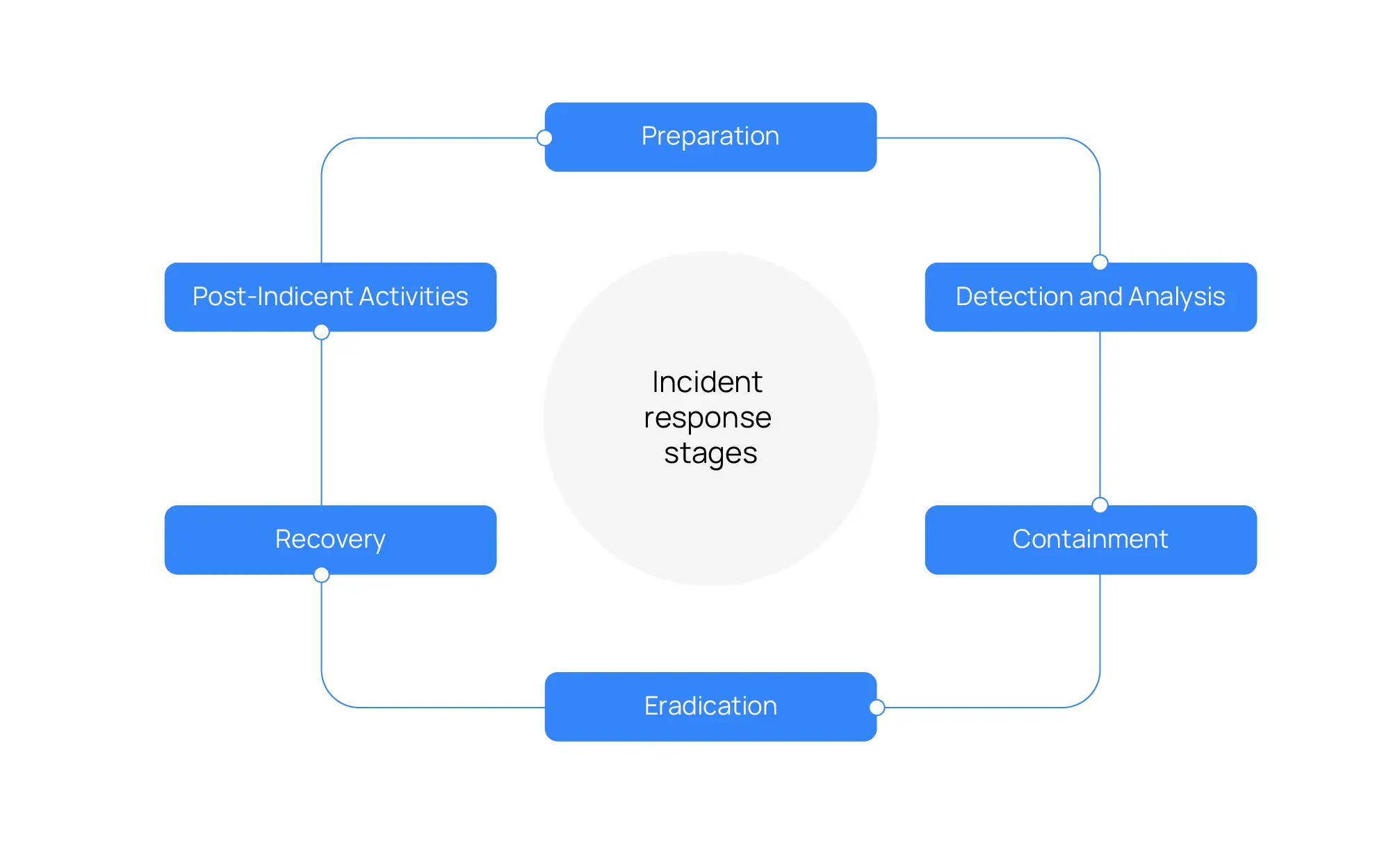
While SANS uses the six-step PICERL model, the National Institute of Standards and Technology (NIST) uses a four-phase cycle. Understanding the differences helps organizations align with various regulatory requirements.
| Feature | SANS (PICERL) | NIST (SP 800-61) |
|---|---|---|
| Number of Steps | 6 distinct steps | 4 broad phases |
| Primary Phases | Prep, ID, Contain, Eradicate, Recover, Lessons | Prep, Detection/Analysis, Contain/Eradicate/Recover, Post-Incident Activity |
| Granularity | Highly granular; separates containment from eradication. | Broader; groups containment, eradication, and recovery. |
| Best For | Hands-on incident handlers and technical IR teams. | Policy-level compliance and federal agencies. |
| Focus | Linear progression through technical actions. | Cyclical process emphasizing continuous improvement. |
Frequently Asked Questions
What is the most critical step in the SANS incident response process?
Preparation is widely considered the most critical step. Without proper planning, tool deployment, and training, an organization will lack the visibility to identify an attack and the authority to contain it effectively. Most failures in incident response can be traced back to inadequacies in the preparation phase.
How long should the "Lessons Learned" phase take?
Ideally, a "Post-Mortem" or "After-Action Review" should be conducted within two weeks of the incident's resolution while details are still fresh in the minds of the responders. The final report and the implementation of recommended changes may take several weeks or months, depending on the complexity of the remediation.
Is the SANS framework suitable for small businesses?
Yes, though the scale of implementation will differ. While a large enterprise might have a dedicated 24/7 Security Operations Center (SOC), a small business can still follow the PICERL steps by assigning roles to existing IT staff and using automated security tools to assist with identification and containment.
Can the eradication and recovery phases happen simultaneously?
In some high-pressure environments, teams may begin recovering non-infected systems while still eradicating the threat from others. However, SANS generally recommends completing eradication for a specific system or network segment before moving it into recovery to prevent "cross-contamination."
How does cloud computing change the SANS steps?
In cloud environments (AWS, Azure, Google Cloud), identification and containment are often faster due to automated logging (like CloudTrail) and the ability to programmatically isolate instances or revoke IAM permissions. However, eradication can be more complex if the attacker exploited the cloud management plane rather than just an individual virtual machine.
Final Recommendations for 2026
To effectively implement the SANS incident response steps in 2026, organizations must move beyond manual workflows. Automation and Orchestration (SOAR) should be integrated into the Identification and Containment phases to reduce the "Mean Time to Respond" (MTTR). Furthermore, as attackers increasingly use AI to find vulnerabilities, IR teams must ensure their Preparation phase includes the deployment of AI-enhanced detection tools that can identify anomalous behavior that traditional signature-based systems might miss.
By strictly adhering to the PICERL framework, cybersecurity teams can transform a chaotic crisis into a managed, professional operation that protects both the organization's assets and its reputation.
Image Gallery