Why Whole Life Insurance Face Amount Can Rise with Inflation
A whole life insurance face amount can rise over time to offset inflation primarily through participating policy dividends applied as paid-up additions (PUAs) or through specialized policy riders. When policyholders direct non-guarante...
A whole life insurance face amount can rise over time to offset inflation primarily through participating policy dividends applied as paid-up additions (PUAs) or through specialized policy riders. When policyholders direct non-guaranteed dividends into paid-up additions, each dividend purchases incremental, fully paid-up whole life coverage. This compounds both the total cash value and the overall death benefit over the policy's lifespan.
Contents
Disclaimer: This article is provided for educational and informational purposes only and does not constitute personalized financial, tax, or legal advice. Policy terms, dividend schedules, and rider availability vary significantly by insurer and jurisdiction. Consult a licensed financial professional or insurance agent before making policy modifications.
Understanding Whole Life Insurance: Guaranteed Base vs. Dynamic Face Amount
To understand how a death benefit expands over time, it is essential to distinguish between the guaranteed base face amount and the total face amount of a whole life insurance contract.
When an insurer issues a standard whole life insurance policy, it establishes a guaranteed death benefit—known as the base face amount—alongside a fixed premium schedule and a guaranteed cash value growth curve. Under a rigid, non-participating policy structure, this base face amount remains entirely static from the day of policy delivery until maturity or the insured’s death. In an inflationary environment, a fixed $500,000 death benefit established today will inevitably suffer a loss of real purchasing power twenty or thirty years down the road.
However, modern flexible whole life contracts—specifically participating policies issued by mutual or select stock life insurance companies—are designed to be dynamic. In these contracts, the total death benefit payable upon death is the sum of:
- The baseline guaranteed face amount.
- Accumulations from paid-up additions (PUAs).
- Any active term insurance blended into the contract.
- Outstanding policy loan balances or unpaid premiums (which reduce the net payout).
Because participating policies share in the financial performance of the insurance company's general account portfolio, policyholders can use their annual policy dividends to continuously purchase micro-policies of additional insurance. This mechanism allows the total face amount to rise without requiring new medical underwriting or evidence of insurability.
The Primary Engine: Participating Policy Dividends and Paid-Up Additions
The most common and effective way a whole life insurance face amount grows over time is through the reinvestment of non-guaranteed policy dividends into Paid-Up Additions (PUAs).
- INSURER GENERAL ACCOUNT (Earns yields from investment portfolio, mortalities, expenses)
- ANNUAL POLICY DIVIDEND (Declared by Insurer Board of Directors)
- PAID-UP ADDITIONS (PUA) OPTION (Purchases additional single-premium whole life)
- INCREMENTAL CASH VALUE (Grows Tax-Deferred)
- INCREMENTAL FACE AMOUNT (DEATH BENEFIT)
- COMPOUNDING FUTURE DIVIDENDS (PUAs generate their own dividends in subsequent years)
What Are Paid-Up Additions?
A Paid-Up Addition is a small, single-premium whole life policy purchased using the dividend declared by the insurance company. Each PUA carries two key financial features:
- Immediate Death Benefit: It permanently increases the total face amount of the contract.
- Immediate Cash Value: It holds an intrinsic cash value that begins earning guaranteed interest and generating its own dividends immediately.
Because the PUA is fully "paid up" at the moment of purchase, no future premium payments are ever required to maintain that specific slice of coverage.
The Compounding Effect of Dividend Reinvestment
When a policyholder selects the PUA dividend option, a compounding feedback loop is created:
- Year 1: The base policy generates a dividend based on the insurer's underwriting profits, operational efficiencies, and investment returns.
- Execution: The dividend automatically purchases a PUA, adding, for example, $3,000 of paid-up death benefit and $1,000 of cash value to the original policy.
- Subsequent Years: In Year 2, the insurer calculates dividends based on the base policy plus the accumulated PUAs from Year 1.
Because dividends generate PUAs, and PUAs generate larger future dividends, the total face amount of the contract accelerates over time. As an individual ages, the cost per dollar of paid-up insurance rises based on attained age; however, the compounding volume of accumulated cash value and dividend allocations often offsets this increased cost, keeping the total face amount on an upward trajectory.
How Inflation Directly and Indirectly Drives Face Amount Growth
While whole life insurance policies do not typically feature a mechanical index linked directly to the Consumer Price Index (CPI), inflation exerts significant economic pressure on the internal mechanics of a life insurance company’s general account. This relationship creates a natural macroeconomic hedge within participating policies.
- INFLATIONARY ENVIRONMENT
- CENTRAL BANK RAISES INTEREST RATES
- NEW BONDS / MORTGAGES YIELD HIGHER COUPONS
- INSURER GENERAL ACCOUNT PORTFOLIO YIELD RISES
- INSURER INCREASES DIVIDEND SCALE INTEREST RATE (DIR)
- LARGER ANNUAL DIVIDENDS PAID TO POLICYHOLDERS
- MORE PAID-UP ADDITIONS (PUAs) PURCHASED AUTOMATICALLY
- TOTAL DEATH BENEFIT / FACE AMOUNT EXPANDS AT AN ACCELERATED RATE
The Interest Rate Transmission Mechanism
Life insurance companies invest the vast majority of their general account reserves in conservative, long-term fixed-income securities, such as high-grade corporate bonds, commercial mortgages, and government debt.
- Inflation Emerges: When inflation increases, central banks routinely raise benchmark interest rates to stabilize currency purchasing power.
- Reinvestment at Higher Yields: As older, lower-yielding fixed-income assets mature, life insurance companies reinvest incoming premiums and maturing principal into newly issued bonds paying higher coupon rates.
- Dividend Scale Adjustments: Insurers reflect these higher portfolio returns in their annual Dividend Scale Interest Rate (DIR).
While there is a lag of several years due to the long-term duration of institutional bond portfolios, sustained inflation yields higher DIRs. Higher DIRs translate directly into larger annual dividend allocations, which in turn buy larger volumes of PUAs, expanding the face amount at a faster pace precisely when price inflation is high.
Policy Riders and Structural Options for Inflation Protection
In addition to standard participating dividend options, specific contractual riders can actively increase a policy's face amount to preserve purchasing power against rising costs.
1. Paid-Up Additions Rider (PUAR)
A Paid-Up Additions Rider (PUAR)—sometimes called an Excess Premium Rider—allows a policyholder to contribute extra funds above the base premium directly into the policy. These voluntary payments purchase additional PUAs immediately.
- Underwriting Efficient: PUAR contributions incur significantly lower front-end agent commissions and administrative charges than the base policy premium, allowing up to 85% to 95% of the rider payment to go straight into cash value and paid-up face amount.
- Inflation Defense: By systematically expanding the PUAR contributions during inflationary periods, policyholders deliberately force the overall face amount upward, securing higher total insurance protection without opening new base policies.
2. Cost-of-Living Adjustment (COLA) and Index Riders
Certain insurers offer dedicated Cost-of-Living Adjustment riders. These provisions automatically adjust the policy's face amount annually based on changes in a recognized inflation index, such as the Consumer Price Index for All Urban Consumers (CPI-U).
- No Re-underwriting: The policyholder receives an option to accept an increased face amount each year without submitting medical exams, answering health questionnaires, or proving insurability.
- Premium Adjustments: Accepting the face amount increase results in a proportional increase in the annual premium charged by the carrier.
3. Guaranteed Insurability Option (GIO)
A Guaranteed Insurability Option gives the policyholder the contractual right to purchase specific amounts of additional base whole life coverage at regular intervals (e.g., every three years, or upon life events such as marriage, home purchases, or the birth of a child) up to a specified age (typically age 40).
Although a GIO requires purchasing new base coverage—and paying the corresponding baseline premiums at the policyholder's attained age—it ensures that an individual whose income and coverage needs grow alongside inflation can secure additional face amount regardless of any changes in their personal health status.
Comparative Analysis: Fixed vs. Dividend-Adjusted Whole Life Policies
To visualize how face amounts behave under different policy configurations over a multi-decade horizon, consider the structural distinctions below:
| Feature / Mechanism | Standard Non-Participating Policy | Participating Policy (Dividend as Cash) | Participating Policy (Dividend as PUAs) | Participating Policy with PUAR Rider |
|---|---|---|---|---|
| Initial Base Face Amount | Fixed ($500,000) | Fixed ($500,000) | Fixed ($500,000) | Blended (e.g., $200,000 Base + $300,000 PUA/Term) |
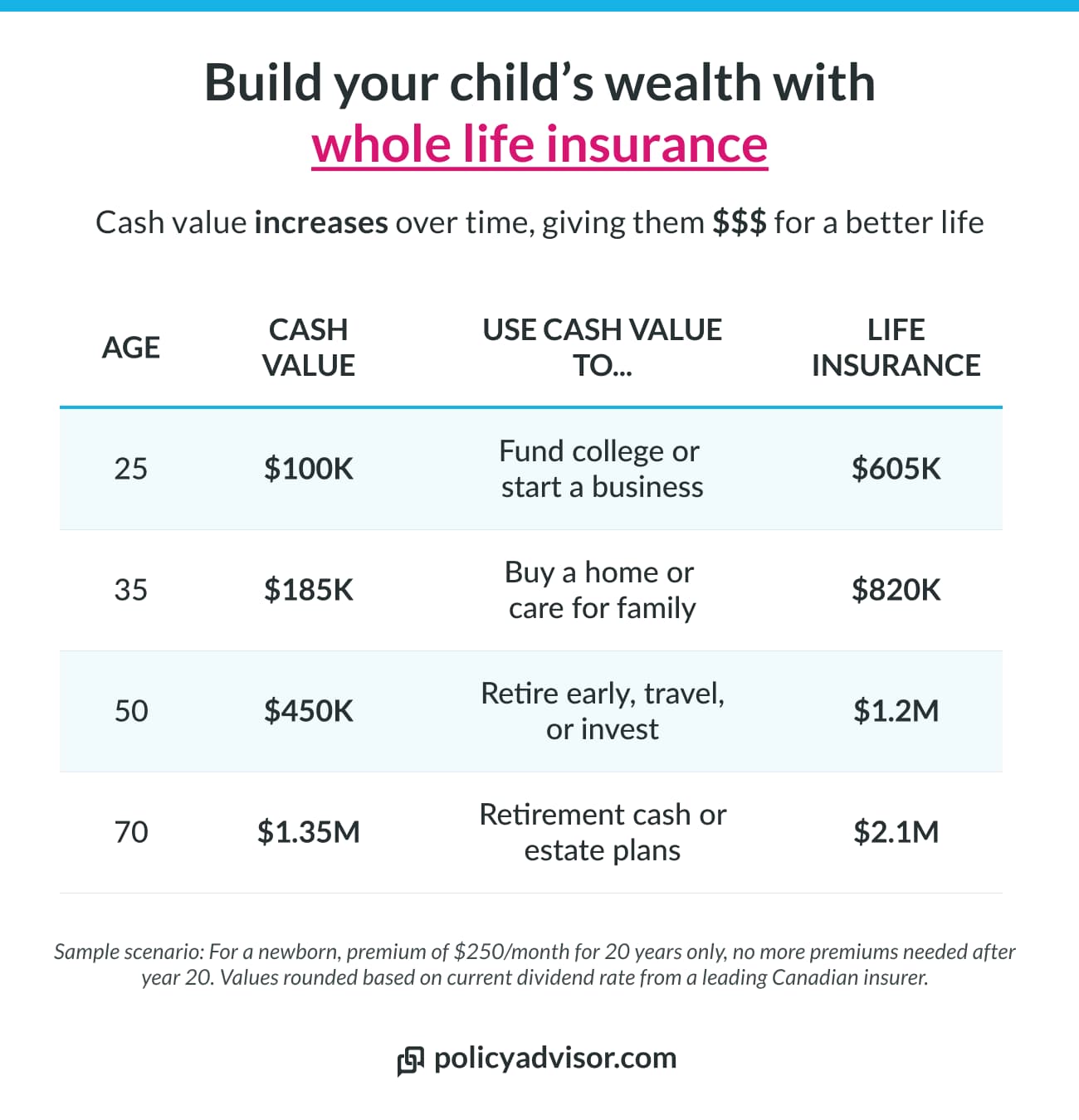
| Face Amount in Year 10 | $500,000 | $500,000 | ~$565,000 (Varies by DIR) | ~$680,000 (Varies by rider funding) |
| Face Amount in Year 30 | $500,000 | $500,000 | ~$850,000+ | ~$1,250,000+ |
| Inflation Sensitivity | None (Real value drops) | None (Dividends extracted as cash) | High (Yields drive PUA volume) | Very High (Custom funding increases PUA volume) |
| Insurability Requirements | N/A | N/A | Guaranteed (No exams required) | Guaranteed within rider limits |
| Primary Risk | Purchasing power erosion | Opportunity cost of cash payouts | Fluctuations in dividend scale | Managing Modified Endowment Contract (MEC) limits |
Mathematical Realities: Does Face Amount Growth Beat Inflation?
While paid-up additions and rising interest rates expand a policy's nominal face amount, policyholders must evaluate whether this expansion preserves real purchasing power over extended periods.
Real vs. Nominal Growth Dynamics
If a participating whole life policy generates an average internal rate of return (IRR) on cash value of 4.0% to 5.0% over thirty years, the total death benefit face amount typically grows at a parallel, compounding rate.
- Scenario A (Low to Moderate Inflation - 2.5%): If inflation averages 2.5% annually over 30 years, a dividend-paying participating policy utilizing PUAs will generally outperform inflation, resulting in a net gain in the real purchasing power of the death benefit delivered to beneficiaries.
- Scenario B (High Inflation - 6.0%+): During periods of hyperinflation or sudden price shocks, the lag in an insurer's general account portfolio portfolio yield means the face amount growth rate may temporarily trail consumer price inflation. However, as bond portfolios mature and roll over into higher yields, the dividend scale interest rate will eventually adjust upward, narrowing the gap.
Tax Treatment and Real Net Values
A critical element in evaluating whole life face amount growth is its tax-favored treatment under federal tax codes, such as U.S. Internal Revenue Code (IRC) Section 101(a).
- Tax-Free Death Benefit: The increased total face amount—including all accumulated PUAs—is generally paid to beneficiaries entirely free of federal income taxation.
- Tax-Deferred Cash Value: The cash value component of the PUAs grows tax-deferred, avoiding annual income and capital gains taxes that would otherwise erode taxable investment accounts during high-inflation cycles.
When comparing a taxable asset yielding 5.0% against a life insurance contract generating a 4.0% tax-free growth rate, the tax-equivalent yield of the life insurance contract is often higher for individuals in elevated federal and state income tax brackets.
Critical Pitfalls and Contractual Limitations
While designing a whole life policy for expanding face amounts offers significant advantages, policyholders must navigate several regulatory and operational risks.
POLICY DESIGN RISKS TO MONITOR:
- Non-Guaranteed Nature of Dividends
- Dividend scales fluctuate based on insurer performance and economic shifts.
- Modified Endowment Contract (MEC) Limits (IRC §7702A)
- Overfunding PUA riders can trigger loss of tax-free withdrawal privileges.
- Early-Year Liquidity Drag
- Heavy base premiums result in low initial cash values during early policy years.
- Attained-Age Cost Escalation
- Older age increases the single-premium cost per dollar of PUA face amount purchased.
1. Dividends Are Non-Guaranteed
Policy dividends are a return of excess premium and a share of board-declared earnings; they are never guaranteed by law or contract. While major mutual insurers have paid dividends continuously for over a century, the annual dividend scale rate (DIR) fluctuates based on:
- Insurer mortality experience (claims paid vs. claims expected).
- General account investment performance.
- Corporate operating overhead expenses.
If economic conditions depress general account yields, an insurer may lower its dividend scale, which slows down the rate of PUA accumulation and face amount growth.
2. Modified Endowment Contract (MEC) Status
When policyholders aggressively fund a policy using Paid-Up Additions Riders (PUAR) to force rapid face amount and cash value growth, they risk violating the 7-Pay Test under IRC Section 7702A.
If a policy receives cumulative premium payments in excess of the amount required to pay up the policy within seven years, the Internal Revenue Service reclassifies the contract as a Modified Endowment Contract (MEC).
- Consequences of MEC Status: While the ultimate death benefit (total face amount) remains tax-free to beneficiaries, cash value withdrawals and policy loans become taxable on a Last-In, First-Out (LIFO) basis and may incur a 10% tax penalty if accessed prior to age 59½.
- Mitigation: Professional policy design requires balancing base insurance premiums with PUA rider allocations to maintain non-MEC status while maximizing cash growth and face amount expansion.
3. Attained-Age Costs of Paid-Up Additions
As a policyholder grows older, the single-premium cost to purchase a $1.00 paid-up addition increases because the statistical probability of mortality rises. Consequently, a $2,000 dividend paid at age 35 will buy a significantly larger increment of face amount than a $2,000 dividend paid at age 70.
While the cash value added per dividend dollar remains intact, the rate of face amount expansion per dollar of dividend naturally slows down in the later decades of life.
Strategic Steps to Structure a Policy for Maximum Inflation Resistance
Policyholders seeking to ensure their whole life insurance face amount keeps pace with long-term inflation should follow a structured, multi-step planning framework.
Step 1: Select a Participating Policy from a Mutual Insurer
Choose a mutual life insurance company (or a mutual-holding stock company) with a long history of declaring policyholder dividends. Mutual companies are owned by their policyholders rather than public shareholders, meaning profits are distributed directly back to participating contracts rather than paid out as stock dividends.
Step 2: Elect "Paid-Up Additions" as the Default Dividend Option
Upon application delivery—or via a policy change form—explicitly designate Paid-Up Additions (PUAs) as the primary dividend option. Avoid selecting cash payouts, premium reduction options, or accumulation at interest (where interest earned is taxable annually), as none of these options increase the baseline death benefit.
Step 3: Blend Base Policy with a Paid-Up Additions Rider (PUAR)
Work with a qualified broker or agent to construct a blended policy structure. Rather than placing 100% of your annual premium budget into a traditional base whole life policy:
- Allocate a baseline portion (e.g., 40% to 60%) to the base whole life contract to establish the initial guaranteed death benefit foundation.
- Direct the remaining portion (e.g., 40% to 60%) into a Paid-Up Additions Rider.
- This allocation accelerates cash value accumulation in early policy years, which generates larger dividends sooner, driving faster face amount growth.
Step 4: Monitor and Adjust via Annual Policy Reviews
Review your policy's annual performance statements to monitor:
- The current Dividend Scale Interest Rate (DIR) declared by the carrier.
- Total accumulated face amount versus historical inflation benchmarks.
- Headroom under the contract's 7-Pay MEC limit to ensure maximum funding without triggering adverse tax status.
Frequently Asked Questions
Can the face amount of a whole life insurance policy decrease once it has risen?
Under standard participating whole life contracts where dividends are directed into Paid-Up Additions (PUAs), the overall face amount cannot decrease as long as premiums are paid and no policy loans or withdrawals are taken. Once a PUA is purchased, its cash value and face amount are permanently guaranteed. However, taking a policy loan or surrendering accumulated PUAs for cash will reduce the total death benefit payable upon death.
How do policy loans affect an expanding face amount?
A policy loan does not directly erase accumulated Paid-Up Additions, but the outstanding loan balance—plus any accrued, unpaid loan interest—is subtracted from the total face amount when a death claim is settled. Additionally, depending on whether the carrier uses direct recognition or non-direct recognition, outstanding policy loans may alter the dividend rate credited to the borrowed portion of the cash value.
What is the difference between a PUA dividend option and a Inflation Index Rider?
The PUA option relies on the insurer's general account dividend performance to buy additional paid-up life insurance, expanding both cash value and death benefit naturally. An Inflation Index Rider (such as a COLA rider) automatically offers the right to purchase higher face amounts linked directly to an index like the CPI, but doing so requires the policyholder to pay an additional out-of-pocket premium each year.
Is the growth of the face amount subject to annual income taxes?
No. Growth in the policy's total face amount achieved through Paid-Up Additions is completely tax-deferred while you are alive, and the eventual payout is generally delivered to your beneficiaries free of federal income tax under IRC Section 101(a).
Can I change my dividend option to Paid-Up Additions on an existing policy?
In most cases, yes. Most life insurance companies allow policyholders to change their dividend selection option at any time by submitting an administrative request form. If you previously elected to receive dividends as cash or premium reductions, switching to Paid-Up Additions will halt cash payouts and begin directing all future dividends toward expanding your face amount.
Practical Recommendation for Policyholders
To ensure your life insurance coverage retains its real purchasing power throughout your retirement and estate planning timeline, take the following actions:
- Audit Your Current Policy Declaration Page: Confirm whether your contract is participating or non-participating. Check the current dividend election option to ensure it is set to Paid-Up Additions (PUAs) rather than Cash or Premium Reduction.
- Request an In-Force Illustration: Contact your insurance carrier or financial advisor to request an updated in-force illustration modeled under current dividend scales. Compare the projected face amount growth at age 65, 75, and 85 against historical inflation averages (typically 2.5% to 3.5%).
- Evaluate Rider Customization: If your policy is in its early years and permits flexible contributions, evaluate adding or expanding a Paid-Up Additions Rider (PUAR) to increase cash accumulation and death benefit growth while remaining within IRC Section 7702A MEC guidelines.
Image Gallery