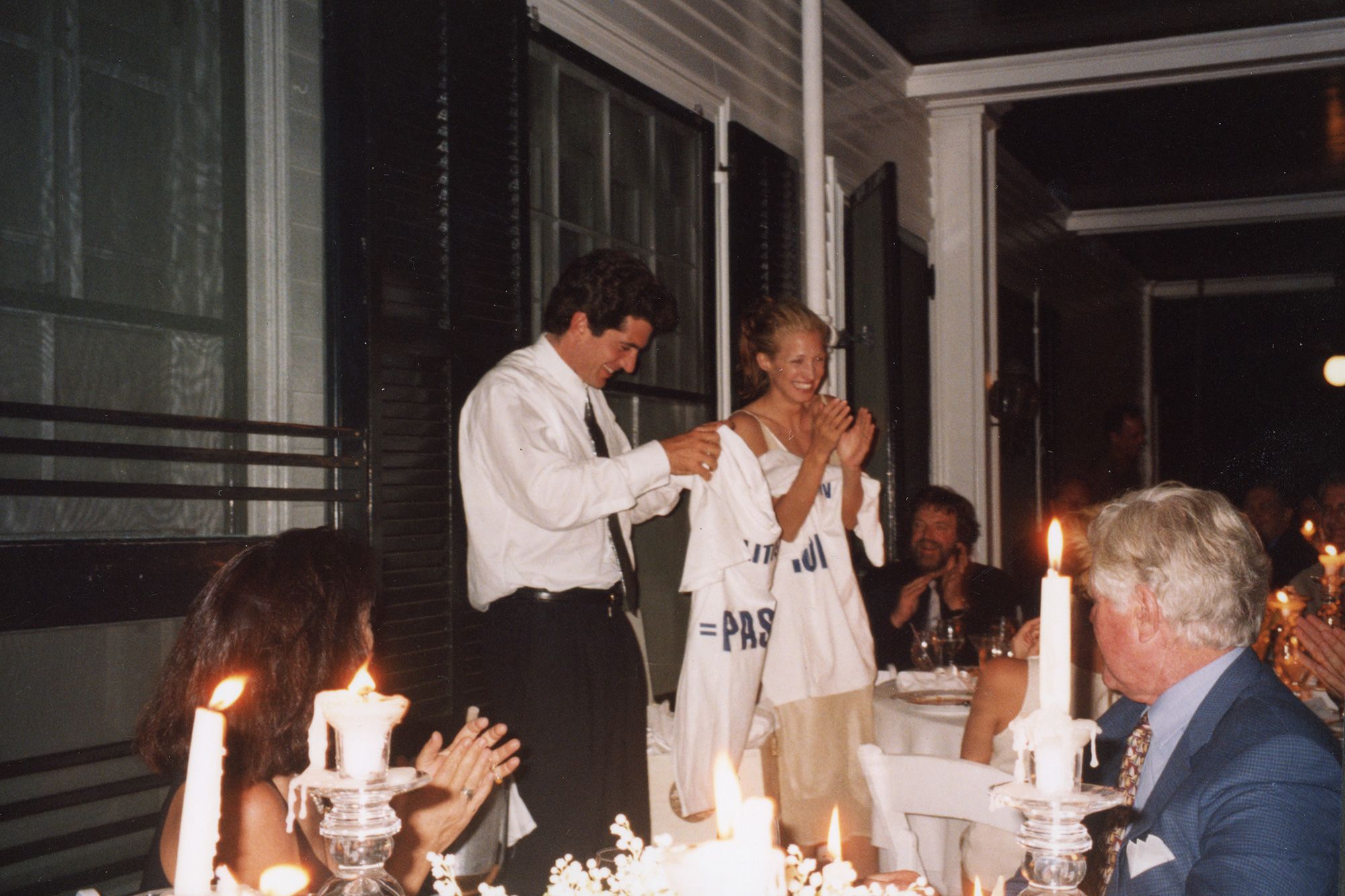
Carole Radziwill and the Life of Carolyn Bessette: An Examination of an Enduring Bond
The friendship between Carole Radziwill and Carolyn Bessette-Kennedy remains one of the most poignant narratives in the orbit of the Kennedy family’s history. Connected by marriage into the extended Radziwill and Kennedy circles, the t...
The friendship between Carole Radziwill and Carolyn Bessette-Kennedy remains one of the most poignant narratives in the orbit of the Kennedy family’s history. Connected by marriage into the extended Radziwill and Kennedy circles, the two women formed an intimate alliance during the late 1990s, characterized by shared experiences in New York City, mutual navigation of intense media scrutiny, and a deep, private connection that persisted until the tragic plane crash in July 1999.
Contents
The Foundation of a New York Connection
In the mid-1990s, Carolyn Bessette—then a publicist for Calvin Klein—and Carole Radziwill—a journalist for ABC News—found themselves situated within the same high-profile social and professional infrastructure of New York City. The catalyst for their proximity was their respective marriages: Carolyn to John F. Kennedy Jr. in 1996, and Carole to Anthony Radziwill, who was John’s cousin and best friend.
Anthony Radziwill was the son of Prince Stanisław Radziwill and Lee Radziwill, the latter being the younger sister of Jacqueline Kennedy Onassis. This familial overlap ensured that Carole and Carolyn were not merely acquaintances; they were tethered by the necessity of navigating a world where public interest often threatened their private sanity. As both couples dealt with the complexities of public life, they retreated into a tight-knit circle of trust. Carole’s background in journalism provided her with a pragmatic perspective on the nature of fame, a trait that Carolyn—who struggled immensely with the paparazzi culture of the era—found both grounding and supportive.
Navigating the Public Eye
The late 1990s represented a period of unprecedented intrusion into the lives of the Kennedy family. For Carolyn Bessette-Kennedy, the transition from a private professional life to the status of a global fashion icon and public figure was fraught with tension. Media outlets frequently dissected her personal style, her relationship with John, and her every public interaction.
Carole Radziwill’s role within this dynamic was that of a confidante. In her memoir What Remains: A Memoir of Fate, Friendship, and Love, published in 2005, Radziwill provided a rare, first-hand account of the internal pressures Carolyn faced. She described a woman who was acutely sensitive to the optics of her life and the unrelenting gaze of the public. By analyzing the documented accounts of this period, it becomes clear that their bond was defined by silence and shared space rather than public displays of friendship. They were allies in a campaign for normalcy, frequently spending time together away from the cameras, attempting to insulate their marriages from the surrounding noise.
Shared Struggles: Illness and Tragedy
The trajectory of their friendship was heavily influenced by the health battles of their husbands. During the same years that Carolyn was learning to navigate public life, Anthony Radziwill was fighting a long, public, and harrowing battle with cancer. The parallel nature of these burdens—Carole managing the care of a terminally ill spouse while Carolyn managed the psychological toll of fame—forged an unbreakable link between the two women.
This shared struggle moved their relationship beyond social pleasantries into the territory of genuine kinship. When Anthony Radziwill died in August 1999, just weeks after the plane crash that killed John F. Kennedy Jr., Carolyn Bessette-Kennedy, and Lauren Bessette, the tragedy of the Kennedy-Radziwill circle was complete. The loss of these four individuals remains a definitive moment in 20th-century American cultural history, marking the end of a specific generation of the family.
Historical Perspective on the 1999 Plane Crash
On July 16, 1999, the Piper Saratoga light aircraft piloted by John F. Kennedy Jr. crashed into the Atlantic Ocean off the coast of Martha’s Vineyard. The tragedy resulted in the deaths of all three passengers: John, his wife Carolyn, and her sister, Lauren Bessette.
| Fact Category | Details |
|---|---|
| Date of Incident | July 16, 1999 |
| Location | Atlantic Ocean, near Martha’s Vineyard |
| Aircraft Type | Piper Saratoga II HP |
| Primary Factor | Pilot spatial disorientation (NTSB finding) |
| Impacted Families | Kennedy, Bessette, Radziwill |
The National Transportation Safety Board (NTSB) investigation concluded that the probable cause of the crash was pilot error due to spatial disorientation while flying in hazy, nighttime conditions over water. For those outside the inner circle, the event was a national tragedy; for Carole Radziwill, it was the loss of the two most significant people in her life—her husband and her closest friend—within the span of a single month.
Carole Radziwill’s Documentation of the Life of Carolyn
Much of what the public knows about the private, non-performative personality of Carolyn Bessette-Kennedy comes from Carole Radziwill’s writing. In literature and interviews, Radziwill has consistently portrayed Carolyn as a woman of immense intelligence, wit, and vulnerability—traits that were often omitted or distorted in the tabloids of the 1990s.
Radziwill’s accounts serve as an essential counter-narrative to the "ice queen" caricature often applied to Carolyn during her lifetime. By detailing their private dinners, the humor they shared, and the mundane reality of their lives, Radziwill humanized a figure who had been rendered an object of curiosity. This documentation is critical for historians and biographers who seek to understand the reality of Carolyn’s experience, moving past the fashion-centric coverage that defined her legacy.
Common Misconceptions and Media Framing
The public perception of Carolyn Bessette-Kennedy has frequently been filtered through a lens of 1990s celebrity culture, which prioritized her appearance over her intellect or private character.
- The "Style Icon" Reduction: While Carolyn is remembered for her minimalist, impeccable fashion sense, this label often reduced her to a commodity, ignoring the professional skills she honed at Calvin Klein.
- The Media’s Antagonist Role: Contemporary reporting often framed her withdrawal from public events as coldness or arrogance, failing to contextualize it as a response to aggressive, often dangerous, stalking by paparazzi.
- Friendship as Performance: Observers often assumed their friendship was a social obligation of their social strata, rather than the deeply personal support system it proved to be during the dual crises of cancer and the pressure of fame.
Frequently Asked Questions (FAQ)
1. Was Carole Radziwill related to Carolyn Bessette-Kennedy? No, they were not blood relatives. They were connected through their marriages to the Kennedy-Radziwill family tree. Carolyn was married to John F. Kennedy Jr., and Carole was married to Anthony Radziwill, who was John’s cousin.
2. What book details the relationship between Carole and Carolyn? Carole Radziwill’s memoir, What Remains, provides an intimate look at her life in the late 1990s, detailing her marriage to Anthony and her close friendship with Carolyn and John.
3. Did Carolyn Bessette-Kennedy leave behind any personal records? Carolyn did not leave behind memoirs or public journals. Most of the information regarding her internal life comes from the accounts of those who knew her intimately, such as Carole Radziwill and close associates from her professional life.
4. How did the deaths of Anthony Radziwill and the Kennedy-Bessette couple impact each other? The deaths occurred within weeks of one another, resulting in a profound and concentrated period of mourning. The families were inextricably linked, and the loss of the husbands—who were best friends—and the wives—who were also close—compounded the collective trauma for the survivors.
5. Is the story of their friendship considered a reliable historical account? Carole Radziwill’s accounts are categorized as memoir. While they reflect her subjective experience and perspective, they are widely cited by historians as the most accurate and nuanced depictions of the private lives of the individuals involved.
Conclusion and Next Actions
The friendship between Carole Radziwill and Carolyn Bessette-Kennedy serves as a lens through which we can better understand the toll of public exposure on private individuals. To explore this subject further, researchers should consult archival reporting from 1999 to understand the initial media response, contrasted with the reflective, retrospective accounts provided in the subsequent decades. For those interested in the historical context of this era, reading the original 2005 memoir by Radziwill offers the most direct, primary-source account of the emotional climate surrounding these two women.
Image Gallery