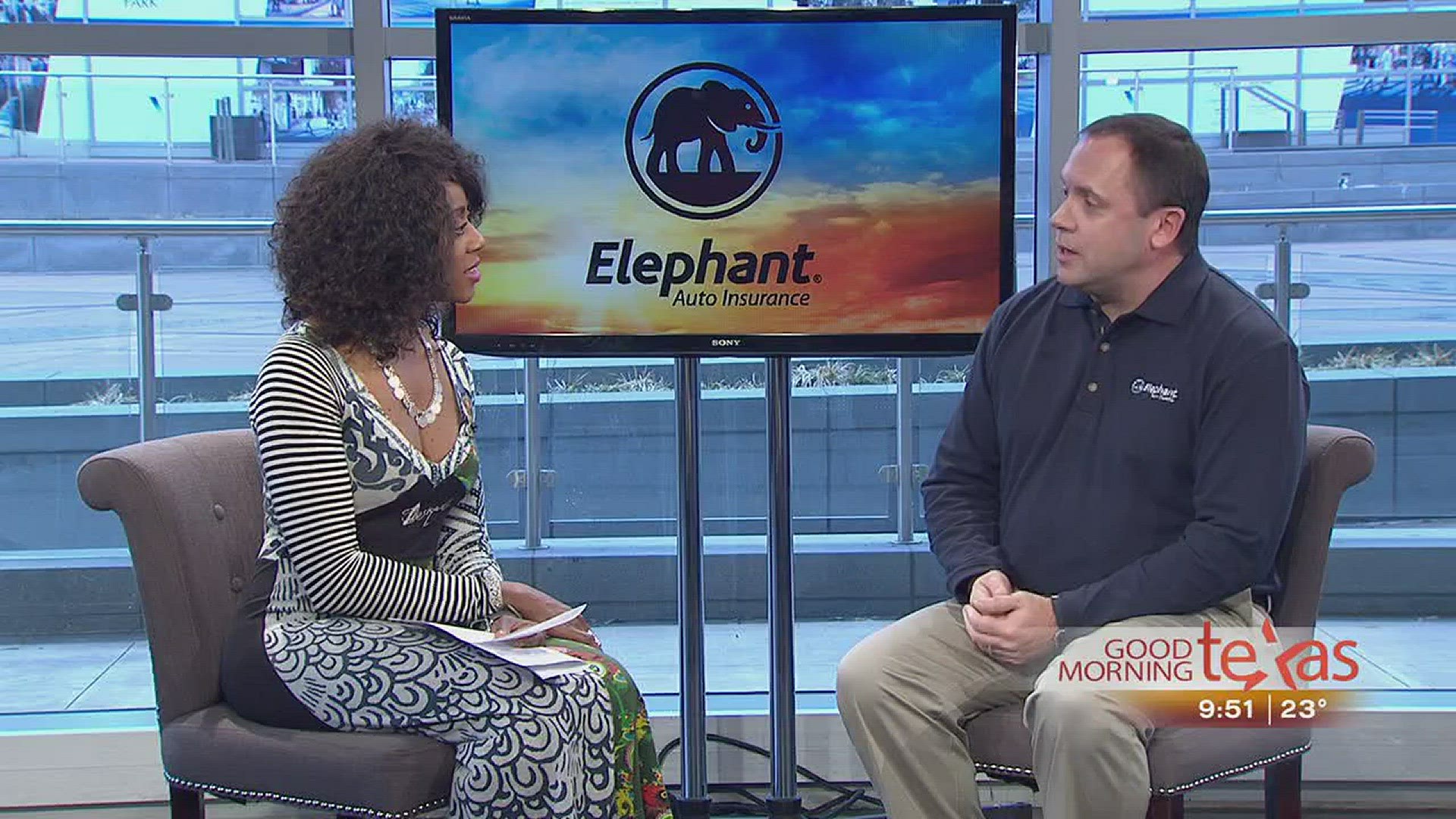
Elephant Auto Insurance Interview Testing and Assessment Guide
For candidates seeking employment at Elephant Auto Insurance in 2026, the interview process involves a multi-stage evaluation centered on behavioral and cognitive assessments. These tests, primarily administered through tools like the...
For candidates seeking employment at Elephant Auto Insurance in 2026, the interview process involves a multi-stage evaluation centered on behavioral and cognitive assessments. These tests, primarily administered through tools like the Predictive Index (PI), help the company match a candidate's natural work style and problem-solving speed with the demands of specific insurance roles.
Contents
Successfully navigating the Elephant Auto Insurance hiring process requires more than a polished resume and a strong interview presence. As a subsidiary of the Admiral Group, Elephant Auto Insurance utilizes a data-driven recruitment strategy that emphasizes psychological and technical alignment. The "testing" phase is often the most critical hurdle, occurring after the initial recruiter screen but before the final departmental interviews.
Understanding the specific nature of these tests—what they measure, why they are used, and how to approach them—is essential for any applicant aiming to join this Virginia-based direct-to-consumer insurer. This guide breaks down the assessment landscape at Elephant Auto Insurance, providing a comprehensive roadmap for preparation.
The Role of Pre-Employment Testing in the Insurance Industry
In the modern insurance sector, the cost of turnover is exceptionally high, particularly in customer-facing and claims-processing roles. Elephant Auto Insurance uses pre-employment testing to mitigate this risk. By 2026, the company has further refined its reliance on psychometric data to ensure that new hires possess the "Elephant Spirit"—a blend of adaptability, analytical rigor, and service-oriented temperament.
These tests serve three primary functions:
- Predictive Performance: Cognitive tests are among the most reliable predictors of how quickly a new hire will learn insurance regulations and software systems.
- Cultural Alignment: Behavioral assessments ensure that an individual’s natural work pace and communication style align with the team they are joining.
- Objective Standardized Benchmarking: Testing provides a level playing field, reducing the impact of unconscious bias during the early stages of the interview process.
The Predictive Index (PI) Behavioral Assessment
The most frequent "test" reported by candidates at Elephant Auto Insurance is the Predictive Index (PI) Behavioral Assessment. Unlike a traditional exam, there are no "right" or "wrong" answers here. Instead, it is a stimulus-response tool that measures an individual’s motivating drives.
How the Behavioral Assessment Works
The assessment usually consists of two lists of adjectives. In the first list, you are asked to select words that describe how you feel others expect you to act. In the second, you select words that you feel truly describe your own behavior.
Elephant looks for specific "patterns" depending on the role. For example:
- Claims Adjusters: Often require a "Specialist" or "Craftsman" pattern—individuals who are detail-oriented, deliberate, and follow established procedures.
- Sales and Service: May lean toward "Persuader" or "Promoter" patterns—extroverted, high-energy individuals who can handle rejection and maintain a positive tone.
- Leadership: Often looks for "Captain" or "Strategist" patterns, characterized by high dominance and the ability to drive change.
Preparation for Behavioral Testing
The key to this portion of the testing is honesty and consistency. Trying to "game" the test to fit what you think the company wants often results in an "invalid" profile or a mismatch that becomes apparent during the situational interview.
The Predictive Index (PI) Cognitive Assessment
While the behavioral assessment measures "will," the PI Cognitive Assessment (PICA) measures "can." This is a timed, 12-minute test consisting of 50 questions that measure your ability to learn, adapt, and grasp new concepts.
Components of the Cognitive Test
The test covers three main areas of intelligence:
- Verbal Reasoning: Identifying relationships between words, analogies, and logical conclusions.
- Numerical Reasoning: Basic math, number patterns, and data interpretation.
- Abstract Reasoning: Identifying patterns in shapes and spatial relationships.
The 12-minute time limit is intentionally restrictive. Very few candidates finish all 50 questions. Elephant is not necessarily looking for a perfect score but rather a score that meets the "target" for the specific job grade. A software engineer at Elephant will likely have a higher cognitive target than a junior administrative assistant.
Strategies for the Cognitive Assessment
Because the test is timed, pace is everything. If you encounter a complex math problem that will take a full minute to solve, it is often strategically better to guess and move on to three easier verbal questions. The goal is to maximize the number of correct answers within the 720-second window.
Job-Specific Technical Skills Testing
Depending on the department, you may be required to complete a technical assessment following the psychometric tests. These are designed to verify the "hard skills" listed on your resume.
Claims and Customer Service Tests
Candidates for customer-facing roles often undergo a Situational Judgment Test (SJT). You will be presented with a hypothetical scenario—such as an angry policyholder calling about a denied claim—and asked to choose the most effective and least effective responses. This evaluates your empathy, de-escalation skills, and adherence to company policy.
IT and Data Science Tests
For technical roles, Elephant Auto Insurance may utilize platforms like HackerRank or LeetCode. These tests focus on:
- Coding Proficiency: Python, SQL, or Java, depending on the stack.
- Data Analysis: Using Excel or specialized tools to interpret insurance loss ratios or pricing models.
- System Design: Basic architectural questions for senior engineering roles.
| Test Type | Duration | Primary Focus | Role Application |
|---|---|---|---|
| PI Behavioral | Untimed (approx. 10m) | Personality & Motivating Drives | All Roles |
| PI Cognitive | 12 Minutes | Learning Speed & Problem Solving | All Roles |
| Situational Judgment | 20–30 Minutes | Conflict Resolution & Empathy | Customer Service, Claims |
| Excel/Data Test | 30–60 Minutes | Data Manipulation & Formulas | Analysts, Underwriting |
| Coding Challenge | 60+ Minutes | Algorithm & Logic Efficiency | IT, Software Engineering |
The Interview Workflow: Where Testing Fits In
The Elephant Auto Insurance recruitment process in 2026 is streamlined but rigorous. Understanding where the testing fits helps manage expectations.
- Application Submission: Initial screening via an Applicant Tracking System (ATS).
- Recruiter Phone Screen: A 15–20 minute conversation to discuss basic qualifications and salary expectations.
- The Testing Phase: You will receive an email link to the PI Behavioral and Cognitive assessments. This must usually be completed within 48 to 72 hours.
- Hiring Manager Interview: If your test scores meet the role's requirements, you move to a deep-dive interview focused on your experience.
- Peer or Panel Interview: A final check for cultural fit with the specific team.
- Offer and Background Check: The final stage, including a review of your "Testing" profile to tailor your eventual onboarding and training.
Technical Setup and Best Practices for Online Testing
Since most Elephant Auto Insurance testing is conducted remotely via third-party platforms, your environment plays a significant role in your performance—especially for the timed cognitive test.
- Hardware and Browser: Ensure you are using a desktop or laptop with a stable internet connection. Avoid taking the cognitive test on a mobile phone, as the interface for abstract reasoning questions (shapes/patterns) can be difficult to navigate on a small screen.
- Eliminate Distractions: For the 12-minute cognitive test, even a 30-second distraction can be the difference between meeting the target score and falling short. Turn off phone notifications and alert household members of your "do not disturb" status.
- Materials Allowed: Generally, for the cognitive assessment, you are allowed a piece of scratch paper and a pen. While calculators are technically not allowed on some versions of the PI Cognitive test, you should clarify this in the instructions provided by the recruiter.
Common Mistakes to Avoid
- Overthinking the Behavioral Assessment: Candidates often try to "be" what they think a manager wants. The PI Behavioral assessment is designed to find your "comfort zone." If you fake a high-dominance profile but are actually a collaborative specialist, you may find the daily job duties at Elephant exhausting.
- Getting Stuck on One Question: On the cognitive test, all questions carry equal weight. Spending three minutes on a difficult logic puzzle is a tactical error. Guessing is not penalized, so moving quickly is vital.
- Ignoring the "Work Sample": If the role requires an Excel test or a writing sample, do not treat it as a formality. These are often used as the "tie-breaker" between two candidates with similar interview performances.
FAQs
Is the Elephant Auto Insurance cognitive test hard?
The difficulty of the PI Cognitive Assessment lies in the time constraint rather than the complexity of the questions. Most of the math is basic algebra or arithmetic, and the verbal questions are straightforward analogies. However, answering 50 of them in 12 minutes creates a high-pressure environment that tests your mental processing speed.
Can I retake the test if I fail?
Typically, Elephant Auto Insurance does not offer immediate retakes for the PI assessments. Most companies have a "cooling off" period of six months to a year before a candidate can re-apply and re-test. It is crucial to prepare and be in the right headspace before clicking the "start" button.
Do I need to study for the behavioral assessment?
No, studying for the behavioral assessment is counterproductive. The best approach is to read the adjectives and react based on your first instinct. Over-analyzing the words can lead to an "atypical" result, which may cause the recruiter to view your profile as inconsistent.
What if I have a disability that affects my testing?
Under the Americans with Disabilities Act (ADA) and similar international regulations, candidates are entitled to reasonable accommodations. If you have a condition that affects your ability to take a timed test, you should notify the recruiter before you open the test link.
How much weight does the test carry compared to the interview?
At Elephant Auto Insurance, the test is usually a "gateway." If your cognitive score is significantly below the benchmark for a high-complexity role, you may not move to the interview stage regardless of your resume. Once you pass the benchmark, the interview performance becomes the primary deciding factor.
Final Recommendations for Candidates
To succeed in the Elephant Auto Insurance testing phase, prioritize your mental state. For the Behavioral Assessment, stay true to your natural work style—this ensures long-term job satisfaction. For the Cognitive Assessment, practice with sample PI-style questions online to familiarize yourself with the format and improve your speed.
Once the testing is complete, use the interview stages to ask how the company uses these results for development. Asking, "How does my PI profile align with the current team's dynamics?" shows a high level of self-awareness and professional maturity that Elephant Auto Insurance values in its employees.
Image Gallery