Carnival in New Orleans 2021: Parades, Restrictions, and the House Float Phenomenon
Carnival in New Orleans in 2021 was defined by historic modifications resulting from the COVID-19 pandemic. Traditional street parades across Orleans Parish were prohibited to prevent virus transmission. In response, locals transformed...
Carnival in New Orleans in 2021 was defined by historic modifications resulting from the COVID-19 pandemic. Traditional street parades across Orleans Parish were prohibited to prevent virus transmission. In response, locals transformed neighborhoods into public art galleries through the "Krewe of House Floats," alongside static drive-thru float displays and virtual parade broadcasts.
Contents
Official Regulations and Public Health Mandates in 2021
The 2021 Carnival season in New Orleans, culminating on Mardi Gras Day on February 16, 2021, operated under unprecedented municipal mandates. Following the early 2020 Mardi Gras season—which health officials later identified as an early accelerator for coronavirus spread in Louisiana—city administrators took strict preventive measures to limit public gatherings.
In late November 2020, New Orleans Mayor LaToya Cantrell announced that traditional parading would not be permitted during the 2021 season. Under the City Charter and municipal code, parade permits across Orleans Parish were suspended. The mandate applied to major super-krewes, traditional motorized float parades, walking clubs, and marching bands that typically draw hundreds of thousands of spectators to the St. Charles Avenue and Canal Street corridors.
As Fat Tuesday approached in February 2021, municipal authorities tightened restrictions further to prevent spontaneous crowds from gathering in nightlife hubs:
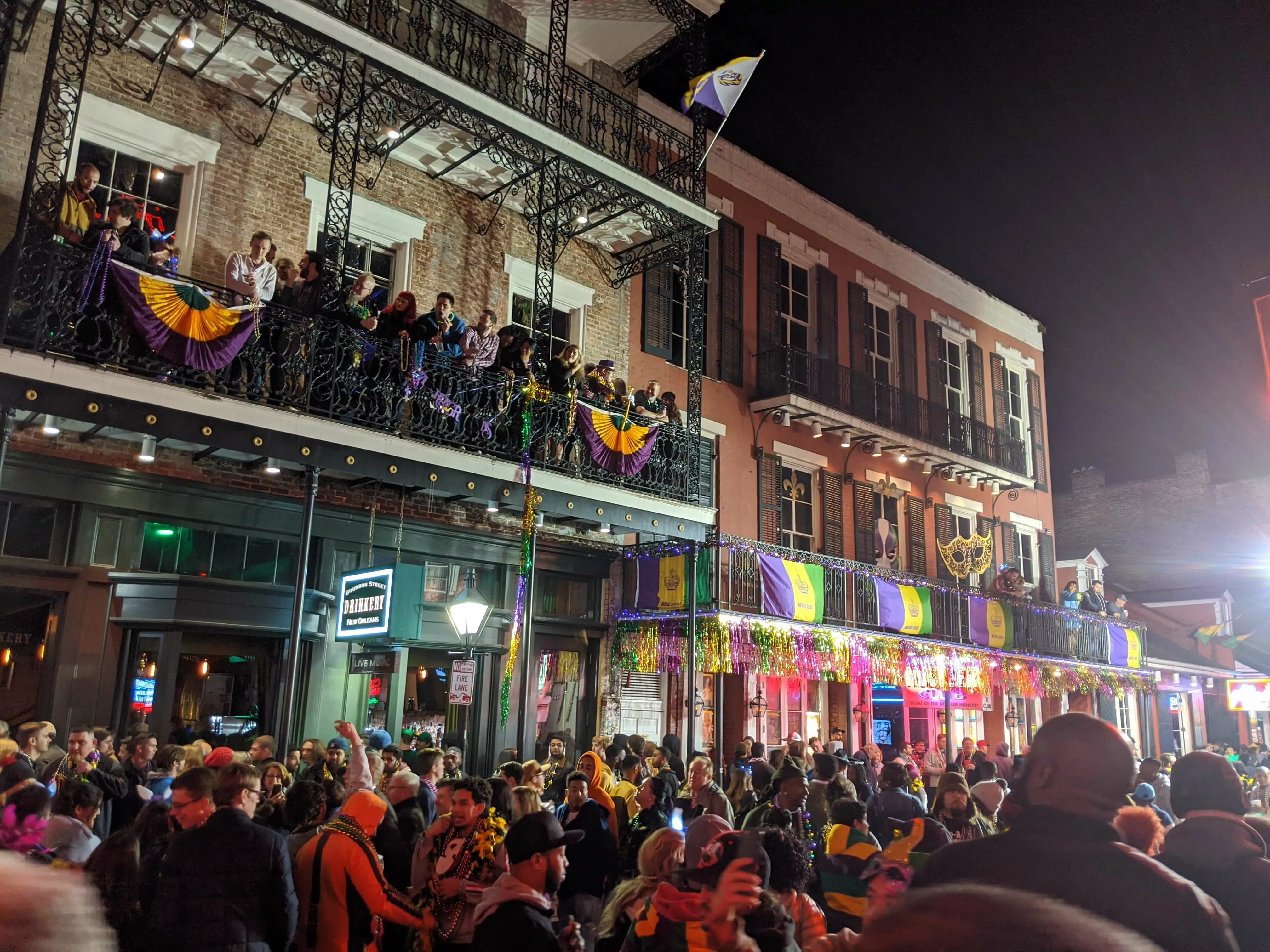
- French Quarter Bar Closures: All operational bars in New Orleans, including iconic venues along Bourbon Street and Frenchmen Street, were ordered closed from February 12 through February 16, 2021.
- Prohibition of To-Go Alcohol Sales: Restaurants and venues in the French Quarter and surrounding entertainment districts were prohibited from selling packaged or to-go alcohol over the holiday weekend to curtail sidewalk congregating.
- Pedestrian and Vehicle Controls: Police checkpoints restricted vehicle access to the French Quarter, allowing entry only to residents, hotel guests, and business employees.
- Public Space Closures: Key gathering zones, such as Claiborne Avenue under the I-10 overpass (traditionally a central gathering spot for the Black Masking Indians and local revelers), were fenced off and patrolled by law enforcement.
While nearby suburban parishes like Jefferson Parish also curtailed large-scale street events, Orleans Parish maintained the strictest regulatory environment to protect municipal public health capacity.
The Rise of "Yardi Gras" and the Krewe of House Floats
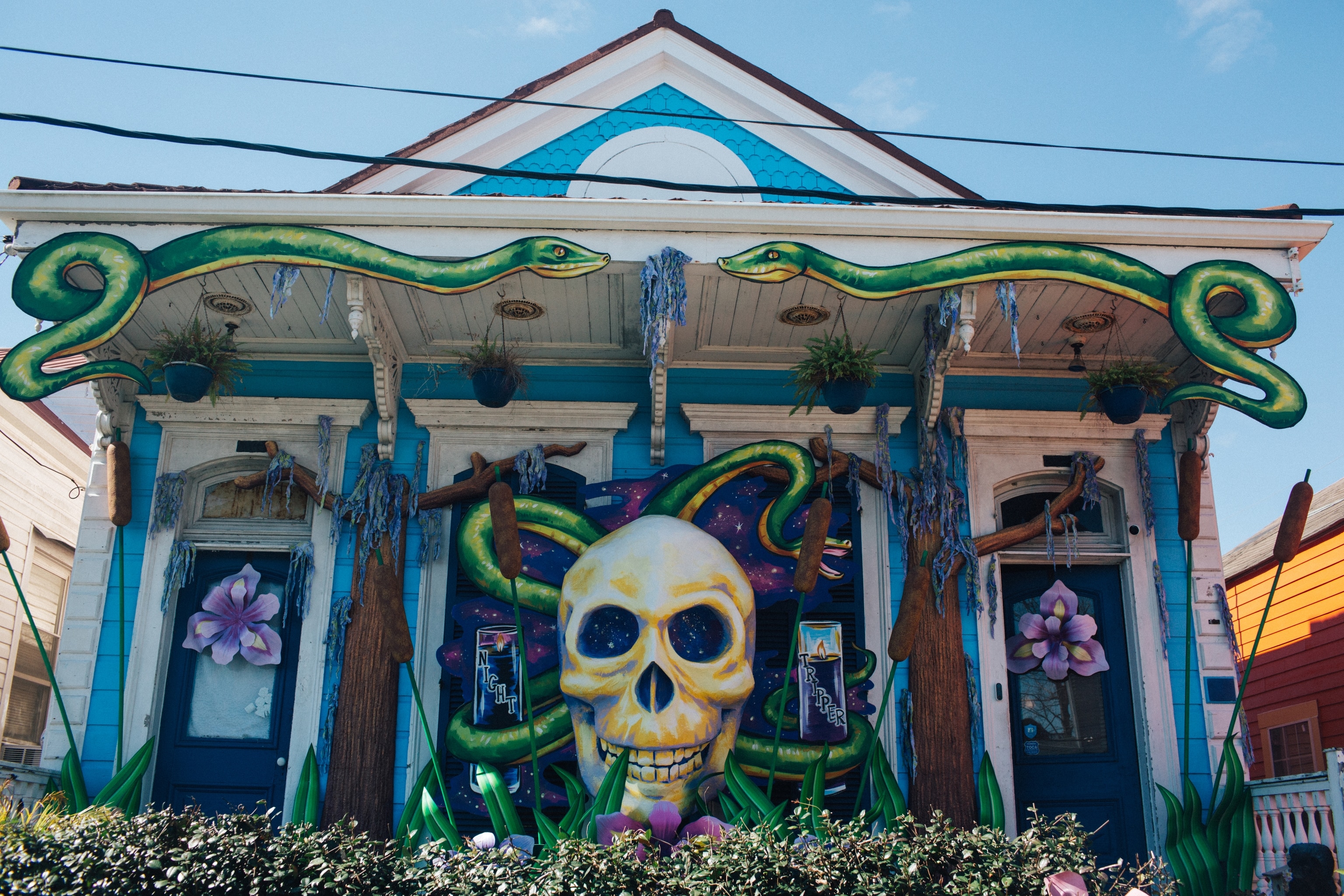
Faced with the cancellation of street parades, New Orleans residents established an alternative celebration method that gained national attention: the Krewe of House Floats (KoHF). Frequently referred to as "Yardi Gras," this movement turned private residences into stationary parade floats.
Origins of the Movement
The initiative began in November 2020 when local resident Megan Boudreaux posted a lighthearted suggestion on social media proposing that citizens decorate their homes like parade floats instead of attending traditional street marches. The concept quickly expanded into a citywide cultural effort. Boudreaux organized the Krewe of House Floats as an official grass-roots organization divided into localized neighborhood sub-krewes representing areas such as Algiers, Mid-City, Uptown, the Bywater, and Lakeview.
Economic Support for Local Artists
A critical outcome of the House Float movement was its economic impact on the local arts ecosystem. Mardi Gras prop artisans, float painters, and sculptors faced severe income loss due to parade cancellations. Krewes, neighborhood associations, and individual homeowners hired professional float builders—including artists from historic workshops like Kern Studios and Royal Artists—to design large-scale papier-mâché props, silk-screened banners, and animated figures for house facades.
Scope and Execution
By February 2021, more than 3,000 homes in New Orleans were officially registered on the Krewe of House Floats interactive map, with hundreds more participating informally across surrounding parishes and international locations. Common design themes included:
- Satirical Commentary: References to social distancing, pandemic protocols, local politics, and public health officers.
- Historical Homages: Displays honoring historic parading krewes, jazz legends, and local culinary traditions.
- Immersive Sculptural Installations: Entire house fronts covered in giant octopus tentacles, historic float props, or elaborate light displays mimicking night parades.
Residents and visitors engaged with the house floats via self-guided walking, biking, and driving tours, allowing celebratory participation while maintaining physical distancing.
Alternative Celebrations: Static Displays and Virtual Format
In addition to neighborhood house floats, traditional parading organizations and media outlets created alternative formats to preserve Carnival customs without triggering illegal crowd gatherings.
Static Float Displays: "Floats in the Park"
To provide a controlled, ticketed experience, several major krewes partnered with the City Park Improvement Association to host static float exhibitions. The "Floats in the Park" event featured stationary floats positioned along a paved drive-thru loop in New Orleans City Park.
Participating organizations included prominent krewes such as the Krewe of Bacchus, Rex, and the Krewe of Hermes. Spectators purchased timed-entry vehicular passes to drive past fully illuminated floats while listening to streamed audio commentary detailing the history and design of each float. Throw items—traditionally tossed from floats to spectators—were prohibited to prevent foot traffic and gathering along the driving route.
Virtual Parades and Interactive Apps
Krewes also utilized digital platforms to maintain community engagement:
- Krewe of Bacchus App: The organization expanded its digital application, allowing users to collect virtual "throws," play mini-games, and participate in virtual parade simulations during their traditional Sunday night slot.
- Broadcast Retrospectives: Local television networks, including WDSU, WWL-TV, and WVUE, produced multi-hour retrospective broadcasts featuring historical parade footage, interviews with krewe leadership, and coverage of neighborhood house float installations.
- Virtual Concerts and Lectures: Cultural institutions like the New Orleans Jazz & Heritage Foundation and the Louisiana State Museum hosted digital lectures, virtual concerts, and educational panels focusing on the historical origins of Mardi Gras.
2021 Carnival vs. Traditional New Orleans Mardi Gras
The alterations made during the 2021 season fundamentally reshaped how public space and cultural assets were utilized compared to standard Carnival operations.
| Operational Feature | Traditional Mardi Gras Season | 2021 Carnival Season |
|---|---|---|
| Parade Activity | Over 70 permitted street parades across Greater New Orleans | All official street parade permits revoked in Orleans Parish |
| Spectator Gathering | Hundreds of thousands crowded along St. Charles Ave, Canal St, and French Quarter | Decentralized neighborhood visitation, drive-thru park tours, and virtual streams |
| Float Presentation | Dynamic motorized floats moving through designated parade routes | Static house floats and fixed vehicular displays (e.g., City Park) |
| French Quarter Operations | High-density pedestrian crowds, open bars, street parties, and balcony events | Closed bars, restricted vehicle checkpoints, prohibited to-go alcohol sales |
| Primary Throw Economy | Tons of plastic beads, doubloons, plush toys, and custom throws thrown to crowds | Throw distribution halted; focus shifted to visual home installation and digital collectibles |
| Economic Beneficiaries | Large hospitality sectors, hotels, parade vendors, and float transport services | Freelance prop artists, local hardware stores, neighborhood restaurants, and independent trades |
Economic and Cultural Impact of the Modified Season
The cancellation of traditional parades during the 2021 season had profound economic ramifications across Southeastern Louisiana.
Financial Losses in Hospitality and Retail
Studies conducted by the University of New Orleans Department of Economics and Finance typically estimate the annual economic impact of Mardi Gras at over $1 billion. In 2021, the absence of regional and international tourists resulted in catastrophic revenue declines for hotels, short-term rentals, tour operators, and restaurant groups. Hospitality employment dropped sharply during what is historically the city's highest-revenue quarter.
Preservation of Artisan Crafts
Despite commercial losses, the widespread adoption of house float commissions provided a financial bridge for float builders and prop masters. Production studios that typically build massive rolling floats pivoted toward creating modular fiberglass and papier-mâché elements suitable for residential roofs and porches. This shift preserved specialized craft skills and maintained employment for local artists during a period of industrial standstill.
Lasting Innovations
The 2021 season introduced structural innovations that persisted long after restrictions were lifted in subsequent years:
- Neighborhood Float Tours: The Krewe of House Floats demonstrated that residential decorating could serve as a permanent secondary tradition alongside main-route parading.
- Direct Artist Support: Direct public commissioning of float builders altered how local artists market their skills year-round.
- Decentralization of Festivities: The success of neighborhood-centric celebrations highlighted the cultural vitality of residential areas beyond tourist corridors like the French Quarter and Downtown.
Historical Context: Disruptions in Mardi Gras History
The modifications imposed during the 2021 Carnival season placed it among a small group of historic interruptions to traditional New Orleans Mardi Gras festivities over the past two centuries.
Prior to 2021, major disruptions to the parade schedule occurred under specific national emergencies or labor conflicts:
- The American Civil War (1862–1865): Parades were suspended entirely during Union military occupation.
- World War I (1918–1919) and World War II (1942–1945): Official parading was canceled due to wartime resource conservation, manpower shortages, and security concerns.
- The 1979 Police Strike: A significant portion of the Carnival parade schedule was canceled or relocated to suburban parishes when the New Orleans Police Department went on strike shortly before Mardi Gras weekend.
- Post-Katrina Mardi Gras (2006): Following Hurricane Katrina in August 2005, the city hosted a scaled-down, shortened Carnival season in early 2006 focused on civic resilience and recovery.
The 2021 season stood out historically because, while traditional parades were canceled due to a global health emergency, public participation adapted through localized physical art installations rather than ceasing completely.
Frequently Asked Questions
Did Mardi Gras take place in New Orleans in 2021?
Mardi Gras as a official calendar holiday occurred on February 16, 2021. However, all traditional street parades were canceled by the City of New Orleans to prevent public gatherings during the COVID-19 pandemic.
What was Yardi Gras in 2021?
"Yardi Gras" refers to the grassroots movement where residents decorated their houses, yards, and porches like traditional Mardi Gras floats. Organized primarily by the Krewe of House Floats, thousands of homes participated across the city.
Were French Quarter bars open on Fat Tuesday in 2021?
No. The City of New Orleans mandated the temporary closure of all operational bars in the French Quarter and key entertainment areas from Friday, February 12, through Fat Tuesday, February 16, 2021.
Could visitors drive through float displays in 2021?
Yes. Organizations such as the Krewe of Bacchus participating in "Floats in the Park" hosted stationary float displays in New Orleans City Park, where visitors bought tickets to drive past illuminated floats from inside their vehicles.
Were throws distributed during the 2021 Carnival season?
Traditional throws (beads, doubloons, cups, and plush toys) were not tossed to crowds because street parades were canceled and static displays prohibited physical distribution to prevent gathering.
Practical Takeaways for Future Carnival Visitors
Understanding the history of the 2021 season provides useful context for anyone planning to visit New Orleans during Carnival season today.
First, monitor the official municipal channels—such as the City of New Orleans Mayor’s Office of Cultural Economy and the NOLA Ready emergency alert system—for up-to-date parade schedules, safety protocols, and route modifications. Second, while traditional street parades returned in full force in subsequent years, residential decorations remain a vibrant part of the season. Visitors seeking a complete cultural experience should allocate time to explore neighborhood house float installations in residential areas such as the Garden District, Uptown, and Mid-City, alongside traditional parade viewing along established street routes.
Image Gallery