The Devil in Ghost Rider: Mephisto, Zarathos, and Film Adaptations Explained
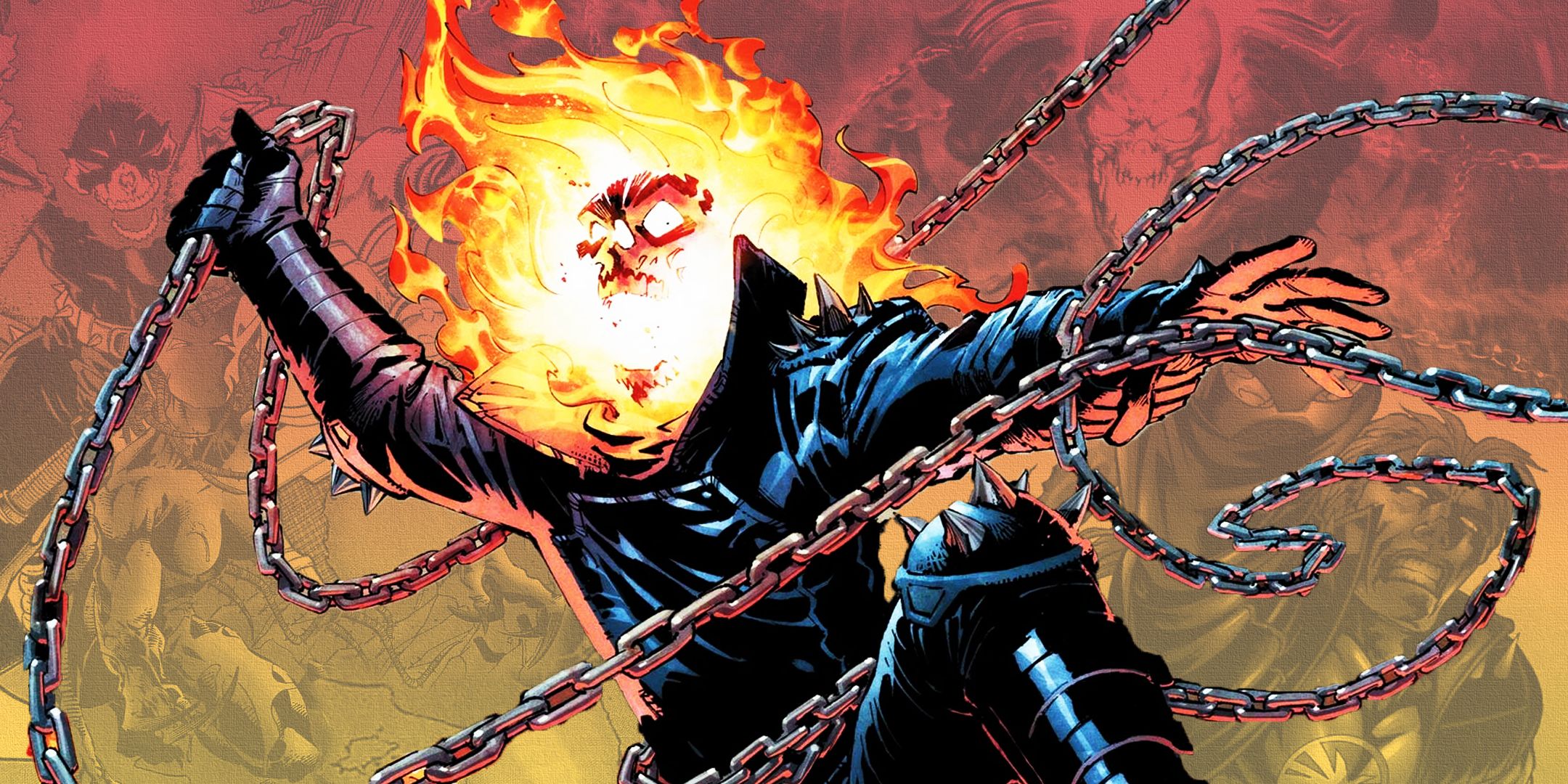
In Marvel lore, the "Devil" in Ghost Rider is primarily Mephisto, an extra-dimensional demon lord who tricks stunt rider Johnny Blaze into trading his soul. Mephisto binds the entity Zarathos to Blaze, creating the Ghost Rider. In live...
In Marvel lore, the "Devil" in Ghost Rider is primarily Mephisto, an extra-dimensional demon lord who tricks stunt rider Johnny Blaze into trading his soul. Mephisto binds the entity Zarathos to Blaze, creating the Ghost Rider. In live-action films, this demonic figure appears as Mephistopheles (2007) and Roarke (2011).
Contents
Who Is the Primary Devil Figure in Ghost Rider?
The primary devil figure in the Ghost Rider franchise is Mephisto. Created by writer Stan Lee and artist John Buscema in The Silver Surfer #3 (1968), Mephisto was later integrated into the supernatural origin of Ghost Rider by Roy Thomas, Gary Friedrich, and Mike Ploog in Marvel Spotlight #5 (1972).
Unlike traditional religious depictions of the Devil, Mephisto is an extra-dimensional demon lord who rules an underworld dimension often referred to as "Hell" or the "Hades realm." He is not the literal biblical Satan, though he frequently adopts that identity, appearance, and folklore to manipulate human beings. Mephisto thrives on deception, contract manipulation, and harvesting pure or tragic human souls to expand his power base.
The Demonic Origin Cycle:
- Johnny Blaze
- Tricked Bargain with Mephisto
- Forced Bond to Ghost Rider
- Mephisto
- Enslaved Zarathos
- Zarathos
- Vengeance Flame to Ghost Rider
In the original comic book origin, motorcycle stunt performer Johnny Blaze discovers that his surrogate father and mentor, Crash Simpson, is dying of terminal cancer. Desperate to save him, Blaze performs an occult ritual that summons Mephisto. Mephisto promises to cure Simpson's cancer in exchange for Blaze's soul and servitude.
While Mephisto keeps the literal letter of the agreement by curing the cancer, he orchestrates a tragic loophole: Crash Simpson dies almost immediately afterward during a stunt jump attempt. When Blaze confronts Mephisto, the demon claims his soul. However, the purity of Blaze's love for his girlfriend, Roxanne Simpson, creates a protective barrier that prevents Mephisto from outright taking Blaze's soul to Hell. Unable to claim the soul directly, Mephisto instead binds the soul of an ancient demon named Zarathos to Johnny Blaze, creating the flaming, skeletal antihero known as the Ghost Rider.
Mephisto vs. Zarathos: Distinguishing the Devil from the Spirit of Vengeance
A common source of confusion among casual fans is the distinction between Mephisto and Zarathos. While both are demonic entities associated with Ghost Rider's origin, they play fundamentally different roles in Marvel mythology.
- Mephisto is the arch-foe, corruptor, and contract master who orchestrates the binding. He remains outside the host body, managing his underworld domain and manipulating cosmic events.
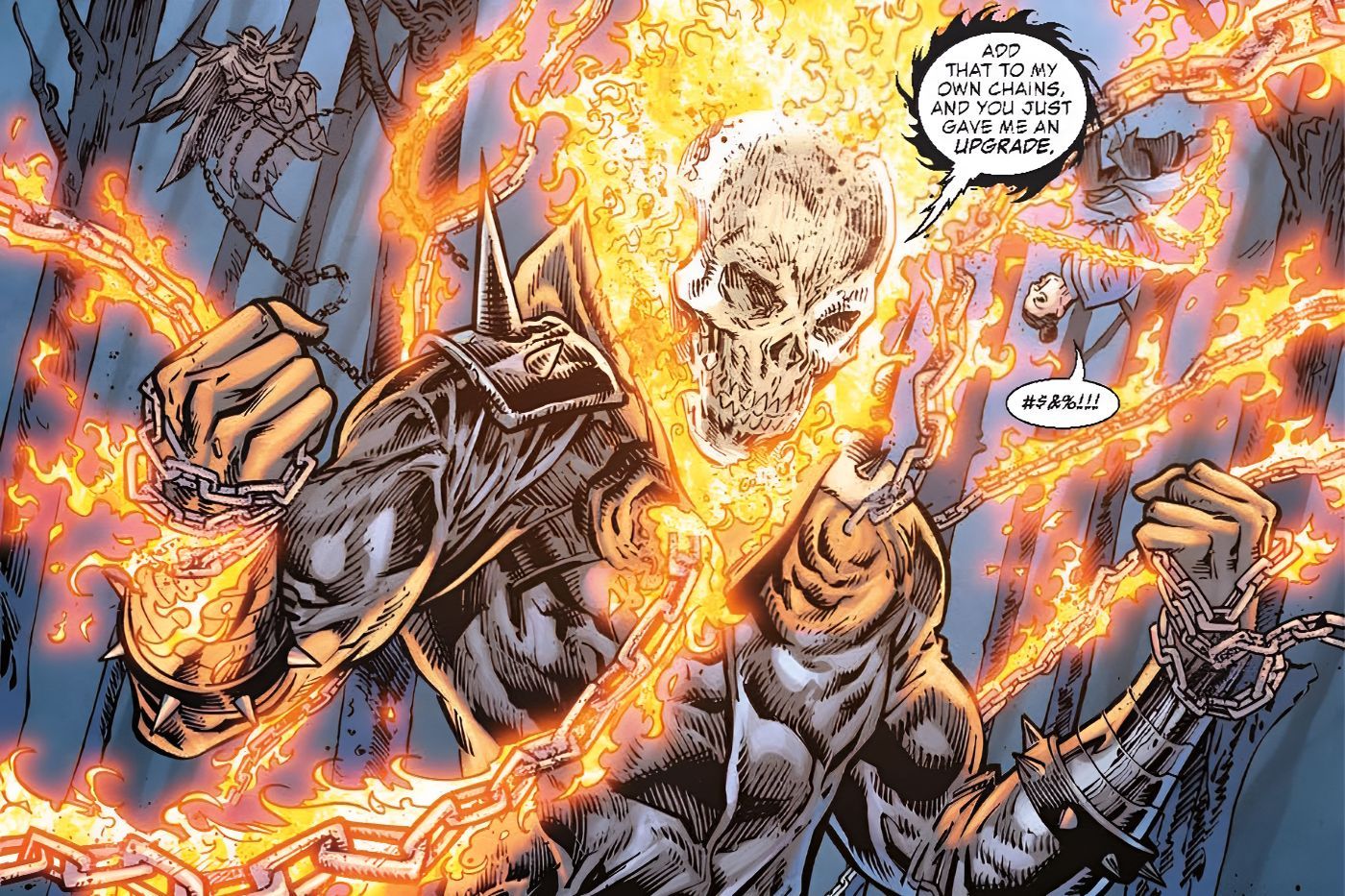
- Zarathos is the actual source of Ghost Rider's supernatural power. He is the entity dwelling within Johnny Blaze (and later other hosts), manifesting as Hellfire, superhuman strength, invulnerability, and the Penance Stare.
Demonic Entities:
- Mephisto
- Hell-Lord
- Master Deceiver
- Contract Maker
- Zarathos
- Bound Entity
- Hellfire Source
- Power Provider
The History of Zarathos
Eons ago, Zarathos was a powerful demon who fed on human souls and built a massive cult of followers on Earth. His growing influence threatened Mephisto's dominance over human corruption. Mephisto engaged Zarathos in a cosmic battle, eventually tricking and defeating him.
Rather than destroying Zarathos, Mephisto stripped the demon of his memory and identity, turning him into a captive weapon. For centuries, Mephisto bound the amnesiac Zarathos to various mortal hosts to collect souls and exact punishment on his behalf.
Shifts in Lore: Angels vs. Demons
Over decades of Marvel comic publication, Zarathos's precise origin has undergone revision:
- Original Canon (1970s–1980s): Zarathos was depicted purely as an ancient, power-hungry demon rivaling Mephisto.
- Modern Retcons (2000s–Present): Writers like Garth Ennis and Jason Aaron re-contextualized the Spirits of Vengeance. In this expanded mythology, Spirits of Vengeance were originally weapons of Heaven—archangelic embodiments of divine wrath created to protect humanity and punish evil. Mephisto captured, corrupted, and bound these celestial entities to mortal bodies, perverting their divine purpose into tools of torment.
Despite these lore shifts, the functional dynamic remains constant: Mephisto is the devilish puppeteer, while Zarathos is the volatile engine of vengeance bound inside the human host.
The Devil in Live-Action Ghost Rider Films
The depiction of the Devil evolved significantly across the cinematic adaptations produced by Sony Pictures.
| Movie (Year) | Actor | Character Name | Primary Goal |
|---|---|---|---|
| Ghost Rider (2007) | Peter Fonda | Mephistopheles | Contract Retrieval |
| Spirit of Vengeance | Ciarán Hinds | Roarke | Biological Vessel |
1. Ghost Rider (2007)
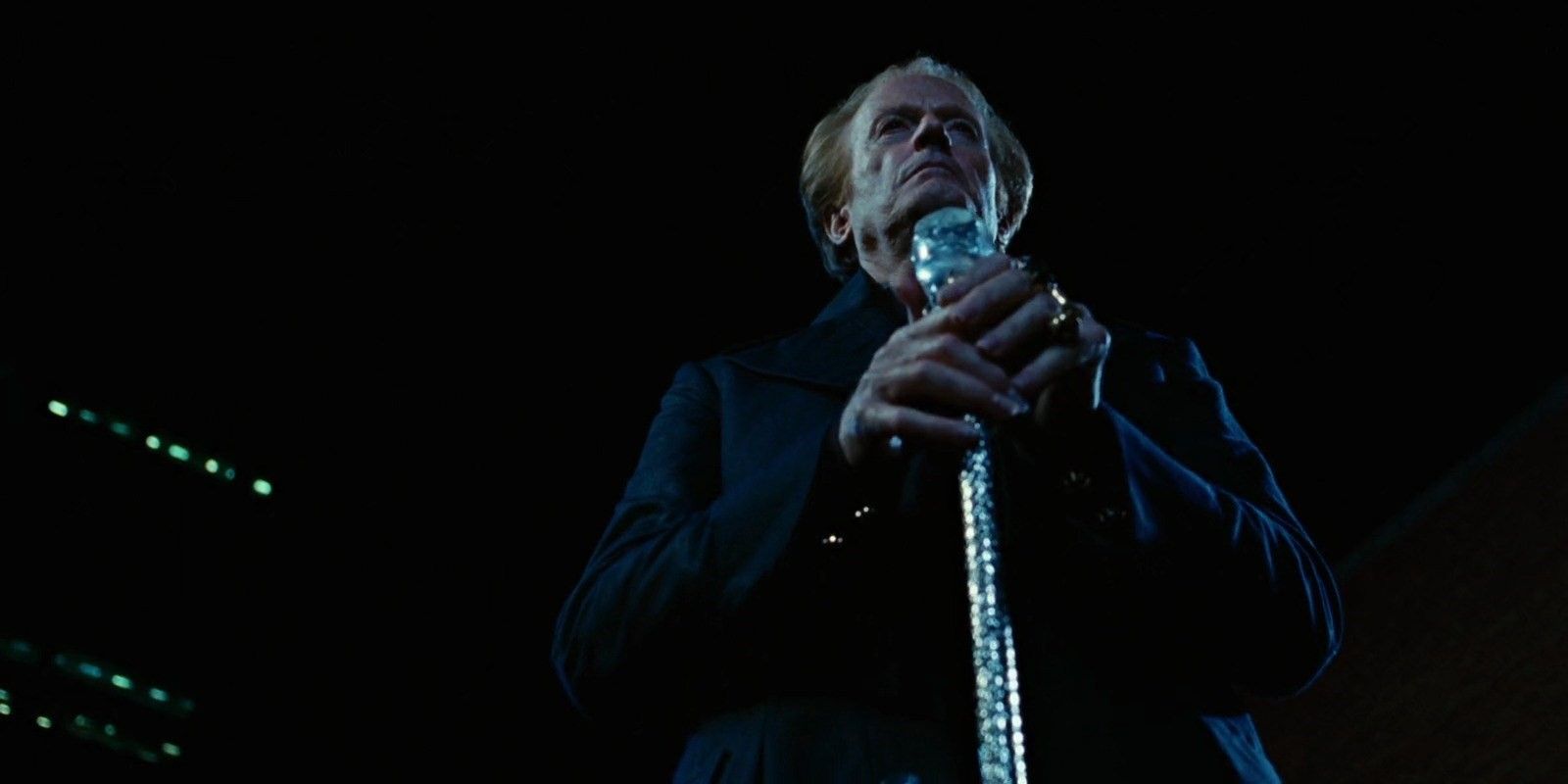
Directed by Mark Steven Johnson, the 2007 film stars Nicolas Cage as Johnny Blaze and Peter Fonda as the Devil, credited as Mephistopheles.
Fonda plays the character with a calm, predatory charisma, clad in a sleek black suit with a cane. In this adaptation:
- Mephistopheles tricks a young Johnny Blaze into signing a blood contract to cure his father's lung cancer.
- The Devil creates the Ghost Rider specifically to act as his bounty hunter on Earth.
- The film's primary conflict involves the Contract of San Venganza—a parchment containing 1,000 corrupt souls. Mephistopheles's rogue son, Blackheart (played by Wes Bentley), seeks the contract to overthrow his father and turn Earth into a hellscape.
- Mephistopheles uses Johnny Blaze to eliminate Blackheart, maintaining his dominion over the underworld.
2. Ghost Rider: Spirit of Vengeance (2011)
Directed by Brian Taylor and Mark Neveldine, the 2011 sequel took a darker, more kinetic approach. Ciarán Hinds replaced Peter Fonda as the character, now referred to primarily as Roarke.
In this film:
- Roarke represents Mephisto existing in a rapidly decaying human body on Earth.
- To escape physical destruction and exercise his full power outside of Hell, Roarke seeks to transfer his spirit into a young boy named Danny (conceived through a pact Roarke made with the boy's mother).
- Spirit of Vengeance explicitly incorporates the retconned comic lore: Zarathos is identified as an angel of justice who was dragged down to Hell, tortured into madness, and turned into a Spirit of Vengeance.
Is Mephisto the Literal Satan? Marvel's Hell-Lords Explained
In the Marvel Universe, there is no single entity that represents the exclusive biblical Satan. Instead, Marvel features a pantheon of powerful extra-dimensional demons known collectively as the Hell-Lords.
The Hell-Lords:
- Mephisto
- Lucifer
- Marduk Kurios
- Satannish
Because mortal humans conceptualize evil through the archetype of Satan, several Hell-Lords exploit this belief to gain influence. Mephisto is simply the most prominent and active of these lords on Earth.
Other Notable Marvel Hell-Lords
- Lucifer: A distinct demonic entity from Mephisto who has clashed with Ghost Rider, the X-Men, and the Avengers.
- Marduk Kurios: The demon lord who often claims the title of "Satan" and is the father of Daimon Hellstrom (the Son of Satan) and Satana.
- Satannish: A powerful demon created by the extra-dimensional entity Dormammu, ruling his own pocket realm.
- Belasco: The sorcerous ruler of the dimension known as Otherplace or Limbo.
Mephisto frequently allows mortals to call him Satan, Lucifer, or the Devil because human fear and religious framing strengthen his contract power. However, within Marvel canon, he remains an independent realm lord vying for cosmic territory alongside rival demons.
Technical Comparison of Ghost Rider's Demonic Entities
The following table breaks down the key characteristics, roles, and media appearances of the major demonic figures within the Ghost Rider canon.
| Entity Name | Primary Role in Canon | Relationship to Ghost Rider | Primary Abilities / Attributes | Major Media Appearances |
|---|---|---|---|---|
| Mephisto | Hell-Lord / Arch-Demon | Creator of the pact; manipulator of Johnny Blaze | Reality manipulation, soul bargaining, immortality, fire control | Ghost Rider (2007), Marvel Spotlight #5, various Marvel games |
| Zarathos | Spirit of Vengeance / Demon | Internal power source bound to the host | Hellfire manipulation, Penance Stare, infinite stamina | Ghost Rider comics, Spirit of Vengeance (2011) |
| Blackheart | High-Demon / Rival Lord | Son of Mephisto; antagonist to both Blaze and Mephisto | Darkforce manipulation, telepathy, sub-zero energy generation | Ghost Rider (2007 film), Hearts of Darkness graphic novel |
| Roarke | Earthly Avatar of Mephisto | External corruptor attempting to capture host vessel | Decay immunity, soul pact creation, localized telekinesis | Ghost Rider: Spirit of Vengeance (2011) |
| Lucifer | Rival Hell-Lord | Enemy who fragmented his soul into 666 bodies for Blaze to hunt | Essence division, possessive resurrection, hellfire manipulation | Ghost Rider Vol. 6 (Daniel Way comic run) |
How Ghost Rider Combats and Defies the Devil
Although Mephisto created the Ghost Rider to serve as an agent of evil, the binding process carries an inherent flaw: human free will.
The Penance Stare Mechanic:
- Ghost Rider Eye Contact
- Reflects Past Sins & Cruelty
- Target Experiences Cumulative Pain Inflicted on Others
- Soul Incineration / Permanent Psychotic Torment
The Penance Stare
Ghost Rider's ultimate weapon is the Penance Stare. When Ghost Rider makes eye contact with a victim, he forces them to experience all the pain, grief, and suffering they have ever inflicted on innocent people throughout their lives.
While Mephisto and high-tier demons are often resistant to standard physical damage, the Penance Stare targets the moral weight of their actions. In storylines such as Ghost Rider: Road to Damnation by Garth Ennis, Blaze uses this power to inflict cosmic agony directly back onto demonic entities.
Breaking the Contract Loophole
Throughout his publication history, Johnny Blaze constantly seeks ways to break his pact with Mephisto. Blaze repeatedly turns his curse against the underworld by using the demonic powers granted by Zarathos to protect mortals, destroy lower demons, and disrupt Mephisto’s soul-harvesting operations on Earth.
In notable story arcs, such as the Damnation event, Johnny Blaze goes so far as to dethrone Mephisto, temporarily taking over the Throne of Hell to maintain balance and prevent extra-dimensional invasions of Earth.
Frequently Asked Questions
Is Mephisto the actual Devil from the Bible in Marvel Comics?
No. Mephisto is an extra-dimensional demon lord who rules a Hell-like dimension. While he often uses names like Satan, Lucifer, and Mephistopheles to exploit human fears and traditions, Marvel canon establishes that he is one of several powerful "Hell-Lords," not the literal biblical Satan.
Why did Mephisto bind Zarathos to Johnny Blaze?
Mephisto bound Zarathos to Johnny Blaze for two primary reasons: to punish and control Zarathos after defeating him in an ancient demonic war, and to create a powerful earthly agent capable of collecting souls without Mephisto having to leave his own realm.
What is the difference between Mephistopheles in the 2007 film and Roarke in the 2011 sequel?
Both characters represent the same fundamental Marvel entity (Mephisto). Peter Fonda's Mephistopheles in the 2007 film is a suave, suit-wearing contract broker operating from the shadows. Ciarán Hinds's Roarke in the 2011 sequel is a decaying earthly incarnation of the Devil who must transfer his soul into a child's body to survive on Earth.
Can Ghost Rider's Penance Stare kill Mephisto?
The Penance Stare affects targets based on the grief and suffering they have caused. While it can cause immense agony to Mephisto, it rarely destroys him permanently because he is a cosmic entity fueled by evil and soul corruption. However, it has been used to incapacitate him and disrupt his control over Hell.
Was Zarathos originally an angel or a demon?
In original 1970s Marvel comics, Zarathos was written strictly as an ancient demon. Modern retcons introduced by writers like Garth Ennis and Jason Aaron established that Zarathos was originally an archangel of divine justice who was dragged into Hell, tortured, and corrupted into a Spirit of Vengeance.
Recommended Next Actions for Fans & Readers
To explore the relationship between Ghost Rider and Mephisto across comics and screen, consider the following entry points:
- Read the Essential Comic Runs:
- Marvel Spotlight #5 (1972): The original debut of Johnny Blaze and his pact with Mephisto.
- Ghost Rider: Road to Damnation (2005-2006): Garth Ennis's story focusing on Blaze escaping Hell and hunting demons.
- Ghost Rider: Damnation (2018): A crossover event where Johnny Blaze directly confronts Mephisto for control of the underworld.
- Watch the Live-Action Films:
- Compare Peter Fonda’s contract-focused performance in Ghost Rider (2007) with Ciarán Hinds's performance in Ghost Rider: Spirit of Vengeance (2011) to see how filmmakers adapted Marvel's Hell-Lord mythology.
Image Gallery