Auto Insurance Coverage for Tires: What Is Covered and When to File a Claim
Standard auto insurance covers tire damage under specific circumstances, such as vehicle collisions, vandalism, theft, or severe storm damage. However, auto insurance policies strictly exclude normal wear and tear, slow leaks, and stan...
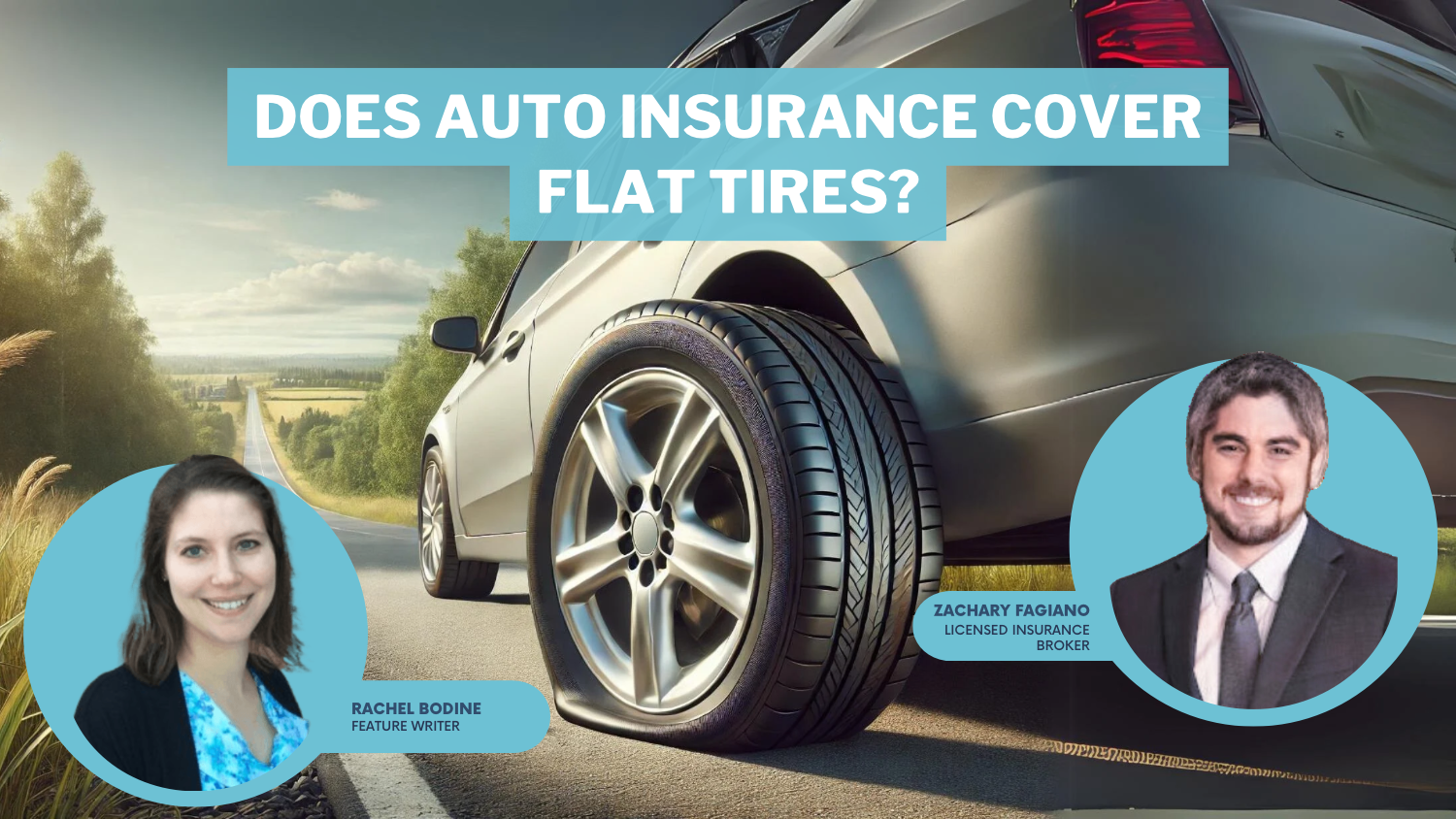
Standard auto insurance covers tire damage under specific circumstances, such as vehicle collisions, vandalism, theft, or severe storm damage. However, auto insurance policies strictly exclude normal wear and tear, slow leaks, and standard road punctures. Because deductibles often exceed the cost of replacing individual tires, filing an insurance claim is typically cost-effective only when tire damage accompanies broader vehicle destruction.
Contents
Understanding How Auto Insurance Treats Tire Damage
Auto insurance policies treat tires as component parts of the larger vehicle rather than separate, individually covered items. Consequently, standard liability insurance—which only pays for damage or injuries you cause to others—provides no financial protection for your own tires. To receive coverage for your tires, your policy must include optional physical damage coverages: Comprehensive or Collision.
Insurance companies differentiate between standard operational degradation and sudden, accidental loss. If a tire fails because the rubber aged or the tread naturally wore down below safe thresholds, insurance providers categorize the incident as maintenance, which is the sole financial responsibility of the vehicle owner. Conversely, if a sudden event impairs the structural integrity of a tire, physical damage coverage may apply depending on the cause of the incident.
When auto insurance does pay for tire replacement, claims payouts are bounded by legal concepts of indemnification. Insurance is designed to make an owner whole, not to improve their position. If a claims adjuster approves a tire replacement, the insurer may reduce the payout to account for the depreciation of the old tire’s tread wear, or pay only the actual cash value rather than the retail price of a brand-new high-performance replacement.
Comprehensive vs. Collision Coverage for Tires
Navigating a tire-related loss requires knowing which policy clause applies to your situation. Physical damage insurance is split into two primary distinct policy lines:
- Physical Damage Coverage
- Comprehensive Coverage
- Vandalism / Slashed
- Theft of wheels/tires
- Falling objects/trees
- Storms, flood, fire
- Collision Coverage
- Multi-vehicle crashes
- Striking curb / debris
- Impact with potholes
- Rollover accidents
- Comprehensive Coverage
Comprehensive Coverage for Tires
Comprehensive insurance addresses non-collision events that are sudden, accidental, and outside the control of the driver. Common tire claims handled under comprehensive coverage include:
- Vandalism: If someone intentionally slashes your tires or damages the sidewalls while your car is parked, comprehensive coverage responds.
- Theft: If thieves lift your vehicle on blocks and steal your wheels and tires, comprehensive coverage pays to replace the stolen items (minus your deductible).
- Falling Objects and Environmental Disasters: If a tree branch falls onto your vehicle, crushing the wheel assembly, or if a flood washes your car away and damages the tires, comprehensive handles the property damage.
- Fire or Animal Strikes: If a garage fire damages the rubber compound or you strike a large animal that subsequently causes tire damage, the loss falls under comprehensive coverage.
Comprehensive claims are generally viewed by insurers as no-fault events. While filing multiple comprehensive claims over a short timeframe can impact your risk profile, an isolated comprehensive claim is less likely to trigger a steep premium surcharge than an at-fault collision claim.
Collision Coverage for Tires
Collision insurance protects your vehicle when it physically impacts an object or another vehicle, regardless of fault. Tire damage covered under collision includes:
- Multi-Vehicle Accidents: If another car impacts your wheel assembly or forces you off the road, resulting in blown tires, collision coverage steps in.
- Pothole Impact: Hitting a deep pothole that blows out a tire or bends a wheel rim is classified by insurance companies as a single-vehicle collision.
- Curbs and Road Debris: Swerving into a concrete median, striking heavy fallen cargo on the highway, or driving over structural debris that ruptures the tire casing fall under collision parameters.
Because pothole and single-vehicle road hazard impacts fall under collision coverage, insurers view them as preventable accidents. Consequently, filing a collision claim for pothole tire damage usually requires paying your collision deductible and often results in an at-fault mark on your driving record, which can raise your insurance premiums upon policy renewal.
When Are Tires Covered? (Scenario Analysis)
To determine whether your tire issue qualifies for an insurance payout, evaluate the underlying cause of the damage against standard policy language:
| Damage Scenario | Covered by Policy? | Applicable Coverage Type | Driver Fault Assessment |
|---|---|---|---|
| Slashed tires (Vandalism) | Yes | Comprehensive | No-fault |
| Stolen wheels and tires | Yes | Comprehensive | No-fault |
| Blowout from hitting a pothole | Yes | Collision | At-fault (Single-vehicle) |
| Collision with another car | Yes | Collision | Depends on accident investigation |
| Tire damaged by falling tree limb | Yes | Comprehensive | No-fault |
| Nail or screw picked up on road | No | None (Excluded as road hazard) | N/A |
| Blowout due to low tread/dry rot | No | None (Excluded as wear & tear) | N/A |
| Flat tire fixed by roadside call | Partial (Service only) | Roadside Assistance add-on | N/A |
Excluded Scenarios: Wear, Tear, and Maintenance Exclusions
Auto insurance policies explicitly state that standard wear, tear, and maintenance are excluded from coverage. Insurers expect vehicle operators to routinely monitor tire pressure, perform alignment checks, and replace tires when tread depth reaches unsafe levels (typically 2/32 of an inch).
If a tire suffers a blowout on the highway strictly due to under-inflation, dry rot, tread separation from age, or general wear, insurance will deny the claim. Furthermore, if a worn tire blows out and causes you to lose control of your vehicle, insurance will cover the resulting damage to your car's body and third-party property under collision and liability coverages—but the insurer will still deny reimbursement for the faulty tire itself.
The Financial Math: Deductibles vs. Replacement Costs
Even when tire damage is fully covered by an active comprehensive or collision policy, filing a claim often makes little financial sense due to policy deductibles and premium adjustments.
The Deductible Threshold
A deductible is the out-of-pocket amount you must pay before your insurance policy contributes to a loss. Typical insurance deductibles range from $500 to $1,000.
Consider the replacement cost of tires:
- Standard passenger sedan tire: $100 – $200 per tire
- High-performance or truck/SUV tire: $250 – $450 per tire
- Full set of four premium tires: $800 – $1,800
If a driver hits a curb and blows out a single high-performance tire costing $300, but holds a $500 collision deductible, the insurance company pays $0. The total repair cost falls completely below the deductible line.
- Scenario: Single Tire Blowout ($300 Cost) vs. $500 Deductible
- $500 Policy Deductible
- $300 Repair Expense
- No Insurance Payout (Out-of-pocket: $300)
Even if vandalism results in two slashed tires valued at $600 under a $500 comprehensive deductible, the net insurance payout would only be $100.
Long-Term Premium Surcharges
Filing an auto insurance claim initiates a record on your claims history (often tracked via the Comprehensive Loss Underwriting Exchange, or C.L.U.E. database). If you file a collision claim for a blown tire or bent wheel, the insurer may re-classify you as a higher-risk driver.
An at-fault collision claim can increase auto insurance premiums by 20% to 45% annually, lasting for three to five years. Receiving a $200 net payout on a tire claim can easily cost you $1,000 or more in cumulative rate increases over the subsequent policy renewal cycles.
Comparing Auto Insurance to Supplemental Tire Protection
Vehicle owners seeking protection against flat tires, nails, and curb damage should understand the functional differences between primary auto insurance, optional policy add-ons, and standalone protection plans.
- Tire Protection Ecosystem
- Primary Auto Insurance
- Major accidents, theft, vandalism
- Roadside Add-On Policy Coverage
- Labor to swap tire or tow vehicle
- Road Hazard Warranty
- Flat repairs, nail punctures, blowouts
- Primary Auto Insurance
| Coverage Attribute | Primary Auto Insurance (Collision/Comp) | Roadside Assistance Add-On | Independent Road Hazard Warranty |
|---|---|---|---|
| Primary Scope | Major collisions, vandalism, theft, severe weather | Mechanical breakdown, flat tire changing service | Punctures, nails, potholes, glass, curb impacts |
| Covers Tire Replacement Cost? | Yes (Subject to deductible and depreciation) | No (Covers labor only) | Yes (Covers full repair or replacement cost) |
| Deductible Required? | Yes ($250 to $1,000 typical) | No | Rarely ($0 to $50 typical) |
| Impact on Insurance Premiums? | Risk of rate increases (especially Collision) | Minimal impact (if not overused) | No impact (Completely separate from auto policy) |
| Typical Purchase Source | Insurance Carrier (e.g., State Farm, Progressive) | Insurance Carrier or Motor Clubs (e.g., AAA) | Tire Retailers (e.g., Discount Tire) or Dealerships |
How Roadside Assistance and Road Hazard Warranties Fill the Gaps
Because primary auto insurance policies leave minor tire issues uncovered, vehicle owners frequently use two specialized financial mechanisms:
Roadside Assistance Coverage
Offered as a cheap add-on by insurance carriers or third-party motor clubs, roadside assistance covers the logistical emergency caused by a flat tire. If you experience a blowout on the highway, roadside assistance pays for a technician to arrive, remove the damaged tire, and mount your vehicle’s spare.
If your vehicle does not carry a spare tire or has multiple flat tires, roadside assistance pays to tow the car to the nearest qualified repair facility. Roadside assistance does not pay for the new replacement tire itself—only the labor, service call, and towing.
Road Hazard Warranties
When purchasing new tires from retail centers or auto dealerships, consumers are typically offered an optional Road Hazard Warranty (or Road Hazard Protection Plan). These plans are specifically structured to cover what standard auto insurance excludes:
- Punctures and Leaks: Covers free repairs for tread punctures caused by nails, screws, or road debris.
- Unrepairable Blowouts: If a nail punctures the tire sidewall or a pothole destroys the internal belting, the warranty pays to replace the tire on a pro-rated or 100% reimbursed basis.
- Zero Insurance Impact: Claims made under a road hazard warranty do not report to insurance databases and have no effect on your personal auto insurance policy rates.
Many high-end tire manufacturers, such as Michelin, Bridgestone, and Continental, include limited road hazard protection policies directly within their structural warranty packages for the first year of ownership or first 2/32 inches of tread wear. Check your tire purchase documentation before considering an insurance claim.
How to File an Auto Insurance Claim for Tire Damage
If your tire damage is part of a larger covered event—such as widespread vandalism, wheel theft, or a major accident—follow these steps to ensure proper claims processing:
1. Document the Scene and Damage Immediately
Take clear, high-resolution photos and videos of the damaged tires, wheels, and surrounding vehicle components. Capture the environmental context, including visible road hazards, debris, or evidence of vandalism. If tires were slashed or stolen, take photos of the empty wheel wells or blocks supporting the vehicle.
2. File a Police Report (For Vandalism or Theft)
If your tires were stolen or intentionally damaged, contact local law enforcement to file an official police report. Insurance adjusters require a police report number before processing comprehensive claims involving criminal activity or hit-and-run incidents. Obtain the officer's name, badge number, and report copy.
3. Verify Your Deductible and Policy Coverage
Log into your insurance portal or call your agent to review your coverage limits and deductible amounts. Calculate whether the total estimated repair costs—including tire replacement, wheel rim repair, wheel alignment, and suspension work—substantially exceed your deductible.
4. Initiate the Claim Process
Contact your insurance provider’s claims department online or via their mobile application. Provide the details:
- Date, time, and location of the incident.
- Detailed description of how the damage occurred.
- Police report number (if applicable).
- Photos of the damage and vehicle identification number (VIN).
5. Schedule an Adjustment and Vehicle Inspection
An insurance adjuster will inspect the vehicle in person or evaluate digital photos to verify the cause of failure. The adjuster will assess whether the damage was caused by an immediate incident or prolonged wear. Keep all damaged tires until the adjuster inspects them; disposing of the tire prematurely can result in a claim denial due to lack of evidence.
6. Review the Payout Settlement
Review the adjuster's estimate carefully. Check whether the carrier calculated tread depreciation or paid full replacement value based on your policy endorsements. If approved, the payout will be issued directly to you or your chosen repair facility, minus your deductible.
Frequently Asked Questions
Does full coverage auto insurance cover flat tires?
"Full coverage" (a common term for a policy combining Liability, Collision, and Comprehensive coverages) does not pay to fix ordinary flat tires caused by nails, slow leaks, or normal driving hazards. Flat tire repair is considered routine maintenance. However, if your insurance policy includes a Roadside Assistance add-on, it will cover the labor cost to install your spare tire or tow the vehicle to a repair shop.
Will auto insurance pay if someone slashes my tires?
Yes, slashed tires are covered under Comprehensive Coverage as an act of vandalism. To receive a payout, you must have active comprehensive insurance at the time of the event, file a formal police report, and have total replacement costs (including mounting, balancing, and wheel damage) that exceed your comprehensive deductible.
Does auto insurance cover tire damage caused by potholes?
Yes, striking a pothole is classified as a single-vehicle collision, which falls under Collision Coverage. However, filing a collision claim for pothole damage requires paying your collision deductible, and the insurer will typically treat it as an at-fault accident, which may increase your annual car insurance premiums.
Does insurance replace one damaged tire or all four tires?
Insurance policies generally pay only to replace the specific tire or tires directly damaged in the covered event. If your car requires matching tread depths on all four tires to prevent drivetrain damage—such as on certain All-Wheel Drive (AWD) vehicles—some insurance policies will pay to replace the undamaged tires, while others strictly pay for the damaged tire and require you to cover the rest out-of-pocket. Check your policy's mechanical match clause.
Does filing a tire claim affect my driving record and insurance rates?
Filing a claim for tire damage under collision coverage (e.g., hitting a curb or pothole) usually marks your record with an at-fault accident, which can raise your insurance rates for three to five years. Filing a comprehensive claim (e.g., slashed or stolen tires) is considered a no-fault event and carries a much lower risk of a rate hike, though frequent claims of any type can affect policy pricing.
Strategic Recommendations for Car Owners
Before contacting your insurer regarding damaged tires, evaluate your situation using this strategic framework:
- Assess Total Repair Costs First: Obtain an itemized quote from an authorized tire retailer or mechanic. Include costs for the tire, mounting, balancing, wheel rim straightening, and alignment.
- Apply the "Deductible Plus Premium" Rule: Do not file a claim unless the total repair cost exceeds your deductible by at least $500 to $1,000. Receiving a minor payout from your insurer is rarely worth the long-term risk of increased monthly insurance premiums.
- Utilize Retailer Road Hazard Plans for Daily Risks: When purchasing new tires, opt for a Road Hazard Warranty directly through the dealer or tire shop. These inexpensive plans cover nails, punctures, and blowouts with zero deductibles and no impact on your personal auto insurance record.
- Add Roadside Assistance to Policy or Motor Club: For $10 to $30 a year, ensure your policy carries emergency roadside assistance so you are never left stranded on the highway with a flat tire.
Image Gallery