Understanding the Fundamental Differences Between Money Markets and Capital Markets
The money market and the capital market serve distinct roles in the global financial ecosystem by facilitating the flow of funds between those with excess capital and those who need it. The primary difference lies in the time horizon:...
The money market and the capital market serve distinct roles in the global financial ecosystem by facilitating the flow of funds between those with excess capital and those who need it. The primary difference lies in the time horizon: money markets deal in short-term debt instruments with maturities of one year or less, while capital markets facilitate the exchange of long-term debt and equity securities.
Contents
Core Functional Differences
To understand financial markets, it is helpful to categorize them by the duration of the financial obligations they trade. Both markets are essential to economic stability, yet they cater to entirely different institutional and individual needs.
The money market is essentially the market for liquidity. It provides a platform for participants to manage their short-term cash flows, maintain liquidity, and earn a modest return on otherwise idle cash. Because the instruments involved are typically highly liquid and carry lower risk, they are often used by banks, governments, and large corporations to manage daily operational requirements.
In contrast, the capital market is the engine of long-term economic growth. It enables entities—such as corporations and governments—to raise the substantial capital required for infrastructure projects, factory expansions, or long-term technological research. Investors in the capital market are generally looking for capital appreciation or long-term interest income, accepting higher levels of volatility and risk in exchange for potential growth over years or decades.
The Money Market: Liquidity and Safety
The money market is characterized by high liquidity and short maturities. Instruments traded here are often referred to as "cash equivalents." Because these assets can be converted into cash quickly with minimal impact on their market price, they provide a safe harbor for institutional investors.
Key characteristics include:
- Maturity: Instruments typically mature in less than 365 days.
- Risk Profile: Generally considered low-risk, as the issuers are usually highly rated governments or large, financially stable corporations.
- Primary Instruments: Common instruments include Treasury bills (T-bills), commercial paper, certificates of deposit (CDs), and repurchase agreements (repos).
- Participant Base: Primarily dominated by central banks, commercial banks, and large institutional investors.
For a business, the money market acts as a buffer. If a company has a sudden cash shortfall, it might issue commercial paper to bridge the gap until receivables are collected. Conversely, if a company has a temporary cash surplus, it might park those funds in a money market fund to preserve capital while earning interest.
The Capital Market: Financing Growth and Value
The capital market is where the long-term future of an entity is financed. Unlike the money market, which is focused on temporary liquidity, the capital market facilitates the permanent or semi-permanent allocation of capital into the economy.
Key characteristics include:
- Maturity: Instruments are long-term (more than one year) or have no maturity date at all (in the case of common equity).
- Risk Profile: Substantially higher than the money market. Equity investors are "residual claimants," meaning they are last in line if a company fails, while long-term debt holders face inflation and interest rate risk over extended periods.
- Primary Instruments: Stocks (shares of ownership), corporate bonds, government bonds, and debentures.
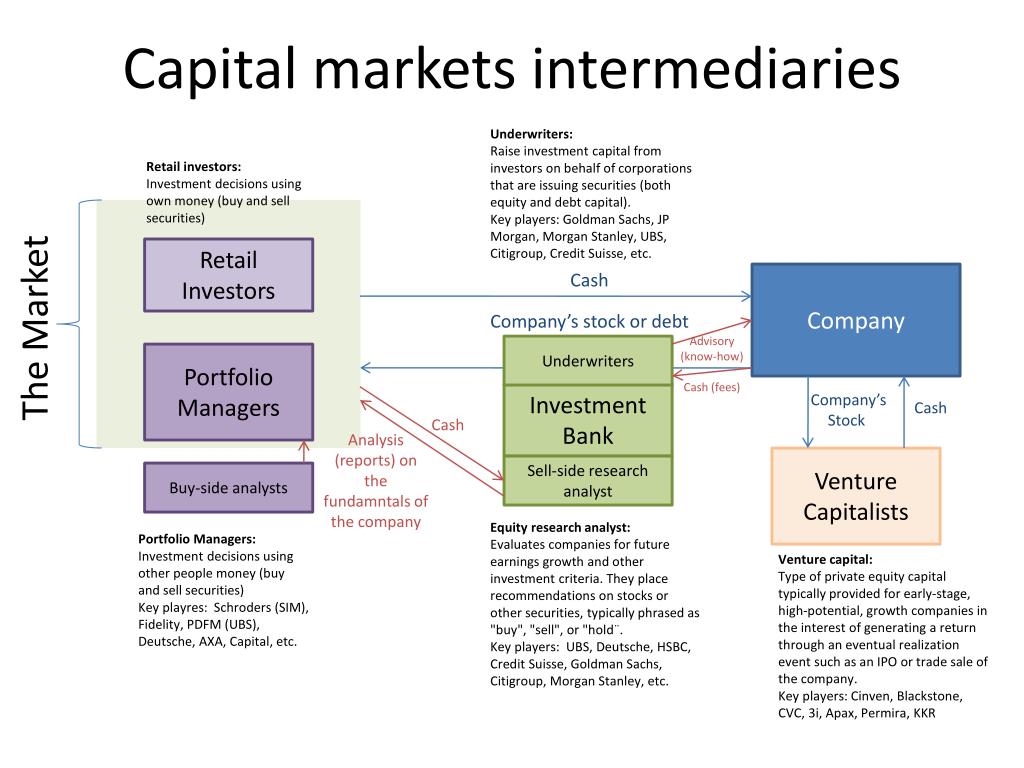
- Participant Base: Includes individual retail investors, pension funds, mutual funds, insurance companies, and investment banks.
The capital market is divided into the primary market, where new securities are issued and sold to investors (such as an Initial Public Offering), and the secondary market, where previously issued securities are traded among investors (such as the New York Stock Exchange or NASDAQ).
Comparative Analysis of Financial Markets
The following table summarizes the structural differences between these two vital financial segments.
| Feature | Money Market | Capital Market |
|---|---|---|
| Duration | Short-term (up to 1 year) | Long-term (1 year to indefinite) |
| Primary Goal | Liquidity and working capital | Capital formation and growth |
| Risk Level | Low | High |
| Return Potential | Lower | Higher |
| Liquidity | High (near-cash) | Lower (varies by asset) |
| Major Participants | Banks and Financial Institutions | Retail investors and Institutional funds |
Why the Distinction Matters for Investors
Understanding these markets is critical for effective asset allocation. If an individual investor places all their savings into the capital market, they may be forced to sell assets at a loss if they suddenly need cash for an emergency, simply because those assets have not yet matured or the market is currently depressed.
Conversely, holding too much wealth in the money market over the long term can result in an "opportunity cost." Because money market instruments are designed for safety and liquidity, they rarely provide returns that significantly outpace inflation. Over a 20-year horizon, the lower returns of the money market may fail to grow an investor's purchasing power effectively compared to a diversified portfolio of stocks and long-term bonds in the capital market.
Regulatory and Economic Oversight
Both markets are heavily regulated to ensure fairness and transparency, though the oversight mechanisms differ.
- Money Market Regulation: Central banks, such as the Federal Reserve in the United States, play a massive role in money markets. They use these markets to implement monetary policy by adjusting the federal funds rate. By managing the supply of short-term liquidity, central banks influence the cost of borrowing throughout the entire economy.
- Capital Market Regulation: These markets are overseen by bodies like the Securities and Exchange Commission (SEC). The primary focus is on disclosure. Because capital market investments involve long-term risk and public ownership, companies are required to provide audited financial statements and regular updates to ensure investors can make informed decisions.
Frequently Asked Questions
1. Can an instrument move between markets? Typically, no. The classification is based on the original maturity. However, as a long-term bond approaches its maturity date—for instance, if a 10-year bond has less than a year left before it is retired—it effectively begins to trade like a money market instrument because it is now a short-term, low-risk obligation.
2. Which market is riskier? The capital market is generally riskier. Because the time horizon is longer, the investor is exposed to more variables, including interest rate changes, economic cycles, and corporate performance. In the money market, the short duration minimizes the impact of these variables.
3. Are mutual funds considered money market or capital market products? Both exist. Money market mutual funds invest in short-term debt instruments, while capital market mutual funds (such as equity or bond funds) invest in long-term securities. You must verify the fund's objective to know where your capital is being deployed.
4. How do central banks influence these markets? Central banks influence the money market directly through interest rate policy and open market operations. This, in turn, cascades into the capital market. When short-term rates rise, borrowing becomes more expensive for corporations, which can slow down their capital investment plans, eventually affecting their stock prices in the capital market.
5. Which market should I use for a home down payment fund? If you plan to use the money within a year or two, the capital market may be too volatile, as a market downturn could wipe out a significant portion of your savings just when you need it. The money market or high-yield savings accounts are generally preferred for short-term goals due to their capital preservation nature.
Strategic Considerations for Participants
When participating in these markets, always consider your liquidity needs first. If the capital is intended for your retirement or long-term wealth building, the capital market offers the necessary vehicle for growth. If you are managing your company's payroll or your personal emergency fund, the money market provides the safety and accessibility required.
Consulting with a licensed financial advisor can help clarify how these markets fit into your broader financial plan. Always ensure that your asset allocation—the split between these two types of investments—aligns with your personal risk tolerance, time horizon, and financial goals.
Image Gallery