How a State Waiver for Workers’ Compensation Works: A 2026 Guide to Exemptions and Endorsements
A state waiver for workers’ compensation functions either as a formal exemption that legally excuses a business owner or officer from the requirement to carry insurance, or as a policy endorsement known as a "Waiver of Subrogation." Th...
A state waiver for workers’ compensation functions either as a formal exemption that legally excuses a business owner or officer from the requirement to carry insurance, or as a policy endorsement known as a "Waiver of Subrogation." These mechanisms allow eligible individuals to opt out of coverage or prevent insurers from pursuing third parties for claim reimbursements.
Contents
The term "waiver" in the context of workers’ compensation is often used interchangeably to describe two distinct legal concepts. For a small business owner or independent contractor in 2026, understanding which type of waiver is required is the first step toward regulatory compliance and risk management. One type allows you to bypass the legal mandate to buy insurance for yourself, while the other is a contractual agreement frequently required by general contractors before a project can begin.
The Two Faces of Workers’ Compensation Waivers
To understand how these waivers work, we must first distinguish between the State Exemption (Exclusion) and the Waiver of Subrogation. While both are referred to as waivers in common industry parlance, they serve entirely different purposes and carry different legal weights.
1. State-Level Exemptions and Exclusions
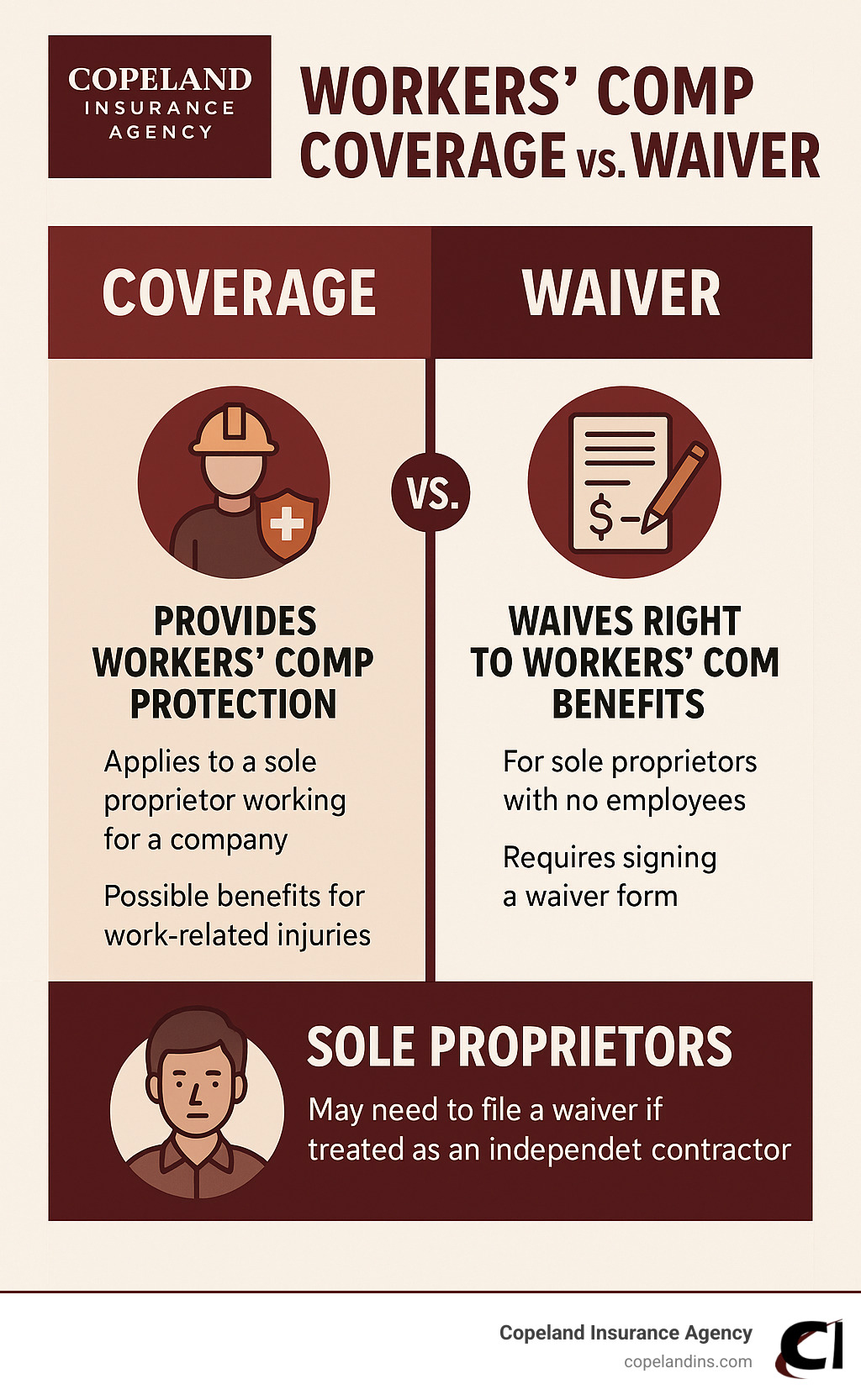
Most states mandate that any business with one or more employees must carry workers’ compensation insurance. However, state laws typically allow certain individuals—usually business owners, corporate officers, members of an LLC, or partners—to "waive" or exclude themselves from this coverage.
When you file for a state-level waiver, you are telling the state’s labor department or insurance commission that you, as an owner, will not be covered by the policy. This reduces the premium because the insurance company no longer has to account for your high salary or occupational risk in its calculations. In 2026, most states utilize centralized digital registries where these exemptions are filed and verified by third-party hiring entities.
2. The Waiver of Subrogation Endorsement
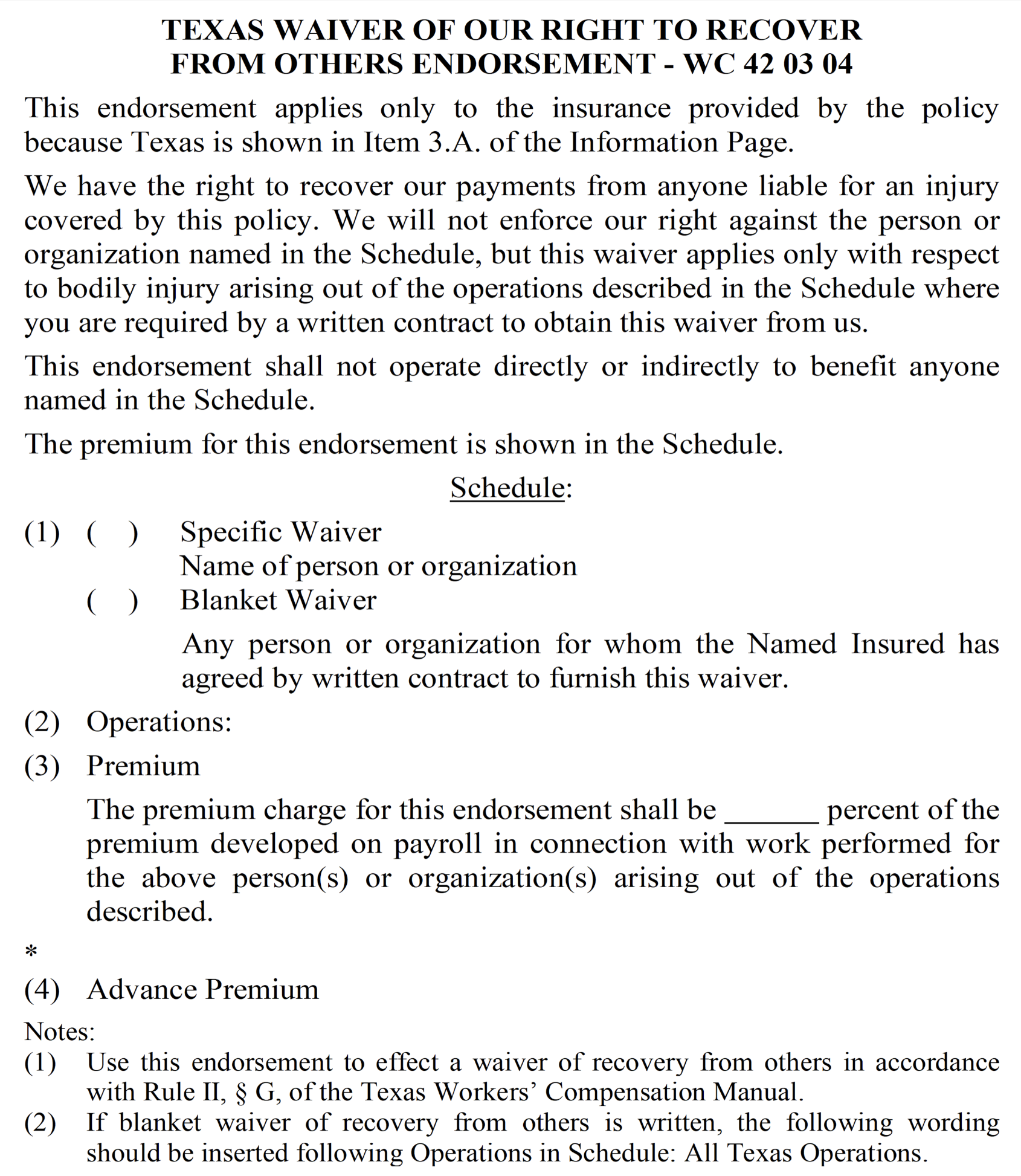
The second type of waiver is a specific endorsement added to an existing workers' compensation policy. Subrogation is the legal process by which an insurance company, after paying a claim to an injured worker, sues a third party who may have been responsible for the injury to recover the costs.
A "Waiver of Subrogation" prevents the insurance company from doing this. For example, if a subcontractor’s employee is injured on a job site due to a general contractor’s negligence, the subcontractor’s insurance pays the claim. Normally, that insurer would then sue the general contractor. If a waiver is in place, the insurer "waives" that right. This is almost always a requirement in construction and high-risk service contracts to streamline liability.
How the State Exemption Process Works
For sole proprietors and small business owners, the "State Waiver" is often a prerequisite for obtaining work. Many hiring entities will not sign a contract unless the contractor provides either a certificate of insurance or a verified state exemption.
Eligibility Criteria
Eligibility for a state waiver is strictly governed by state statutes. As of 2026, most jurisdictions follow these general categories for exclusion:
- Corporate Officers: Individuals holding high-level titles (President, VP, Secretary) who own a minimum percentage of the company (often 10% or more).
- LLC Members: Owners of Limited Liability Companies who are actively involved in the business.
- Partners: Members of a legal partnership.
- Sole Proprietors: Business owners with no employees. In many states, sole proprietors are automatically excluded but must file a waiver to prove their status to clients.
The Application Procedure
The process typically involves filing a "Notice of Election to be Exempt" or a similarly named document with the state’s workers’ compensation board.
- Verification of Entity: You must provide your Articles of Incorporation or Organization to prove your ownership status.
- FEIN and Business Data: You will need your Federal Employer Identification Number and your North American Industry Classification System (NAICS) code, which determines your risk category.
- Payment of Fees: Many states charge a processing fee for exemptions, which must be renewed every two years in most jurisdictions.
- Public Registry: Once approved, your name and business appear in a public database. Hiring contractors use these databases to verify that you are legally allowed to work without a policy.
How a Waiver of Subrogation Works in Practice
While the state exemption is about who is covered, the Waiver of Subrogation is about who can be sued. This is a critical component of commercial insurance in 2026, especially as multi-party project sites become more complex.
The "Transfer of Rights" Clause
Standard workers’ compensation policies contain a clause that automatically transfers the injured worker’s right to sue a negligent third party to the insurance company. When you request a waiver, you are asking the insurance company to delete or modify this clause for a specific client or project.
Why It Is Required
General contractors (GCs) and project owners require this waiver to ensure that if an accident happens, the litigation ends with the workers' compensation claim. Without the waiver, the GC’s own liability insurance might be targeted by the subcontractor’s workers' comp carrier, leading to higher premiums and legal fees for the GC.
The Cost Factor
Insurance carriers do not provide these waivers for free. Because the insurer is giving up its right to recover money, they are taking on more risk. Typically, a Waiver of Subrogation costs:
- A flat fee (ranging from $100 to $500 per project).
- A percentage of the total manual premium (usually 2% to 5%).
- A "Blanket Waiver" fee, which covers all contracts for the year and is often the most cost-effective for high-volume contractors.
Comparative Analysis: Exemption vs. Subrogation Waiver
Understanding which document you need is vital for maintaining compliance and securing contracts.
| Feature | State Exemption (Exclusion) | Waiver of Subrogation |
|---|---|---|
| Primary Purpose | To opt out of receiving benefits/coverage. | To prevent the insurer from suing a third party. |
| Who it Affects | The business owner or officer. | The insurance company and the hiring party. |
| Legal Basis | State Labor Law / Statutes. | Policy Endorsement / Contract Law. |
| Documentation | State-issued Certificate of Election. | ACORD Certificate of Insurance with Endorsement. |
| Cost | Usually a small state filing fee ($50–$200). | Percentage of premium or flat endorsement fee. |
| Risk | Owner has no coverage for personal injuries. | Insurer loses recovery rights; premium may rise. |
The Risks of Operating Under a Waiver
While a state waiver can save a business thousands of dollars in annual premiums, it introduces significant financial exposure. In 2026, with rising medical costs and litigation trends, these risks must be carefully weighed.
Personal Medical Exposure
If a sole proprietor files a state waiver and is injured on the job, they have no access to workers’ compensation benefits. Their private health insurance may also deny the claim if the injury is deemed "work-related," as many health policies exclude industrial accidents. This can leave the individual with massive medical debt and no lost-wage replacement.
The "Employee" Misclassification Trap
States are increasingly aggressive in auditing businesses that use waivers. If a business owner claims an exemption but is found to be acting as an employee—or if they hire "independent contractors" who do not have their own coverage—the state may nullify the waiver. This results in heavy fines, stop-work orders, and back-payment of premiums.
Contractual Rejection
Simply having a waiver does not mean a client must accept it. Many large-scale developers and government entities in 2026 refuse to hire any contractor who is exempt. They prefer the security of knowing every person on the job site is covered by a standard policy, regardless of their ownership status.
Common Challenges and Troubleshooting
Navigating the world of workers' comp waivers often involves administrative hurdles.
- Multi-State Operations: A waiver issued in Georgia is generally not valid for work performed in Florida or Alabama. Each state has its own "reciprocity" rules. If you are working across state lines, you must often file for a separate exemption in each jurisdiction.
- The "Officer Minimum" Rule: Some states require that a corporation have at least two officers to allow one to be exempt, or they may limit the total number of exemptions per company (e.g., no more than three exempt officers).
- Premium Audits: Even if you have a waiver, your insurance company will conduct an annual audit. You must keep your state-certified exemption forms on file. If you cannot produce the verified waiver during the audit, the insurance company will charge you a premium for that person as if they were a covered employee.
Frequently Asked Questions
Does a state waiver protect me from being sued by an employee?
No. A state waiver usually applies to the owner's coverage. It does not waive the requirement to provide coverage for your employees. If an employee is injured and you do not have insurance for them, you lose the "exclusive remedy" protection of workers' compensation, meaning the employee can sue your business for negligence and unlimited damages.
Can I cancel my waiver at any time?
Yes, most states allow you to revoke an exemption. However, you must immediately obtain a workers' compensation policy to cover yourself. You cannot be "uncovered" and "not exempt" simultaneously without violating state labor laws. Revocation typically requires filing a specific form with the same state board that issued the exemption.
Is a Waiver of Subrogation the same as a Hold Harmless agreement?
No. A Hold Harmless agreement is a contract between two parties (e.g., a subcontractor and a GC) where one agrees not to hold the other liable. A Waiver of Subrogation involves the insurance company agreeing not to pursue the other party. Both are often used together in 2026 construction contracts to create a "layered" defense against liability.
Why did my insurance premium go up after adding a waiver?
If you added a Waiver of Subrogation, your premium likely increased because the insurance company is charging a fee for the additional risk of not being able to recover claim costs. If you filed a State Exemption and your premium went up, it may be due to a change in your business’s risk classification (experience rating) or a general rate increase in your state, despite the reduction in covered payroll.
How do I prove I have a state waiver to a general contractor?
You provide a copy of your state-issued "Certificate of Election to be Exempt." In 2026, most GCs will also verify this by checking the state's online database. For a Waiver of Subrogation, you provide an ACORD 25 Certificate of Insurance that specifically lists the "Waiver of Subrogation" box as checked and names the GC in the description of operations.
Final Recommendations for 2026
When deciding whether to utilize a state waiver for workers’ compensation, your primary focus should be on contractual requirements and personal risk tolerance.
If you are a sole proprietor, a state exemption is a cost-effective way to meet legal requirements, but you must ensure your personal disability or health insurance will cover job-site injuries. For businesses working as subcontractors, expect the "Waiver of Subrogation" to be a non-negotiable part of your overhead. Always consult with a licensed insurance broker to ensure that your specific state filings match the requirements of your current contracts, as a single missing endorsement can lead to a breach of contract and the immediate suspension of work.
Image Gallery