What the Meaning of Endurance Is: A Comprehensive Guide to Physical and Mental Stamina
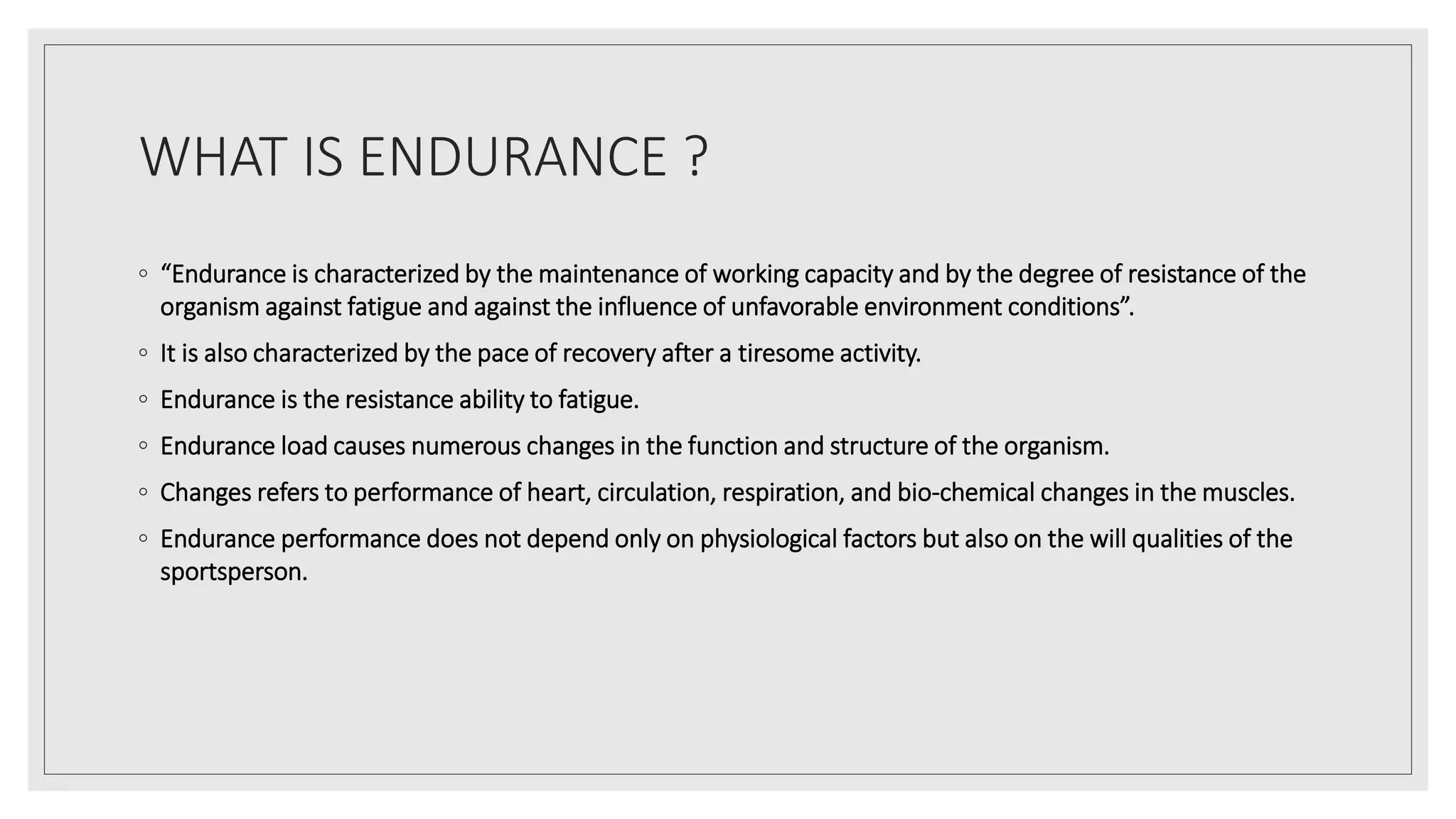
Endurance is the capacity of an organism to maintain a specific level of physical or mental activity over an extended duration. It involves the integration of cardiovascular efficiency, muscular stamina, and psychological resilience, a...
Endurance is the capacity of an organism to maintain a specific level of physical or mental activity over an extended duration. It involves the integration of cardiovascular efficiency, muscular stamina, and psychological resilience, allowing an individual to resist fatigue, withstand stress, and recover effectively from prolonged periods of exertion or hardship.
Contents
Understanding the Multi-Dimensional Nature of Endurance
The meaning of endurance extends far beyond the simple ability to run a long distance. In a biological and psychological context, endurance is a complex interplay of systems designed to preserve homeostasis under stress. While a marathon runner exemplifies physical endurance, a student studying for a grueling twelve-hour exam or a survivor navigating a long-term crisis demonstrates mental and emotional endurance.
To fully grasp what endurance means in 2026, we must categorize it into its primary components: cardiorespiratory endurance, muscular endurance, and psychological stamina. Each of these requires different physiological adaptations and mental frameworks. Understanding these distinctions is the first step toward improving one's overall "work capacity"—a term often used by sports scientists to describe the total amount of effort a person can perform and recover from.
Cardiorespiratory Endurance: The Engine of Life
Cardiorespiratory endurance refers to the ability of the heart, lungs, and circulatory system to supply oxygen-rich blood to working muscles during sustained physical activity. This is often considered the most critical form of endurance because it directly impacts long-term health and longevity.
At the cellular level, cardiorespiratory endurance is governed by mitochondrial density and efficiency. Mitochondria are the "powerhouses" of the cells, converting nutrients into adenosine triphosphate (ATP), the primary energy currency of the body. Higher levels of aerobic endurance are characterized by a greater ability to utilize fat as a fuel source, sparing limited glycogen stores for higher-intensity efforts. This metabolic flexibility is a hallmark of high-level endurance.
Muscular Endurance: Localized Stamina
Unlike cardiorespiratory endurance, which is systemic, muscular endurance is localized. It is the ability of a specific muscle group to exert force repeatedly against resistance over time. For instance, a person might have the cardiovascular capacity to run five miles but lack the muscular endurance in their core or shoulders to hold a plank for three minutes.
Muscular endurance relies heavily on Type I muscle fibers, also known as slow-twitch fibers. These fibers are rich in myoglobin and mitochondria, making them highly resistant to fatigue. Training for muscular endurance typically involves high-repetition, low-to-moderate intensity movements that force the muscles to adapt to waste product accumulation, such as lactic acid.
The Psychological Dimension: Mental Endurance and Resilience
The meaning of endurance is incomplete without addressing the brain. In recent years, sports psychologists and neurologists have converged on the "Central Governor Theory." This theory suggests that the brain, rather than the muscles or heart, is the ultimate arbiter of endurance. To prevent catastrophic failure, the brain induces feelings of fatigue well before the body’s physical limits are reached.
Mental endurance—often called "grit" or "fortitude"—is the ability to override these signals of discomfort. It involves:
- Response Inhibition: The capacity to suppress the urge to quit when the "burning" sensation of lactic acid or the gasping for air becomes intense.
- Cognitive Control: Maintaining focus on a goal despite external distractions or internal pain.
- Stress Tolerance: The ability to remain functional and decisive under high-pressure conditions.
In 2026, mental endurance is increasingly recognized as a vital professional skill. The ability to endure long-term projects, navigate economic volatility, and manage the "always-on" nature of digital work requires a level of cognitive stamina that mirrors the physical stamina of an elite athlete.
Key Physiological Markers of Endurance
To quantify endurance, researchers and athletes look at several specific metrics. These markers provide a snapshot of how well the body can handle sustained stress.
| Metric | Definition | Importance |
|---|---|---|
| VO2 Max | The maximum amount of oxygen an individual can utilize during intense exercise. | Represents the ceiling of aerobic capacity and is a strong predictor of cardiovascular health. |
| Lactate Threshold | The intensity of exercise at which lactate begins to accumulate in the blood faster than it can be removed. | Determines the pace an athlete can maintain for long durations without "bonking" or hitting the wall. |
| Resting Heart Rate (RHR) | The number of times the heart beats per minute while at complete rest. | A lower RHR typically indicates a more efficient heart and better cardiovascular conditioning. |
| Heart Rate Variability (HRV) | The variation in time between each heartbeat. | Indicates the state of the autonomic nervous system and the body's readiness to endure more stress. |
| Metabolic Flexibility | The ability to switch between burning carbohydrates and fats for fuel. | Essential for ultra-endurance events where glycogen depletion is a limiting factor. |
How to Develop and Improve Endurance
Developing endurance is a process of "progressive overload," where the body is gradually exposed to increasing levels of stress to trigger adaptation. Whether the goal is to run a first 5K or to improve mental focus at work, the principles of adaptation remain the same.
The Importance of "Zone 2" Training
One of the most effective ways to build a foundation of endurance is through Zone 2 training. This refers to low-intensity, steady-state exercise where the heart rate remains between 60% and 70% of its maximum. In this zone, the body primarily uses oxidative phosphorylation (aerobic metabolism), which stimulates the growth of new mitochondria and improves the efficiency of the vascular system.
Modern guidance from the American College of Sports Medicine (ACSM) emphasizes that a significant portion of an endurance program—up to 80%—should be performed at this lower intensity. This builds the "aerobic base" necessary to support higher-intensity efforts later on.
The Role of HIIT and Anaerobic Power
While Zone 2 builds the base, High-Intensity Interval Training (HIIT) increases the "ceiling." HIIT involves short bursts of near-maximal effort followed by recovery periods. This training improves the body’s ability to clear lactate and increases VO2 max more rapidly than steady-state exercise alone. However, because HIIT is extremely taxing on the central nervous system, it must be used sparingly to avoid overtraining.
Nutrition and Recovery: The Fuel for Endurance
You cannot build endurance without adequate recovery. During sleep, the body releases growth hormones that repair the micro-tears in muscle tissue caused by exercise and consolidates the neural pathways required for mental stamina.
From a nutritional standpoint, endurance requires:
- Complex Carbohydrates: To maintain glycogen stores in the liver and muscles.
- Lean Proteins: For tissue repair and enzyme production.
- Electrolytes: Sodium, potassium, and magnesium are essential for nerve signaling and muscle contraction. Dehydration is one of the most common causes of endurance failure.
The Evolution of Endurance Monitoring in 2026
As of 2026, the technology used to monitor and enhance endurance has become highly sophisticated. We have moved beyond simple step counters to "biosensing" wearables that provide real-time data on metabolic health.
- Continuous Glucose Monitors (CGMs): Once used only for diabetics, CGMs are now common among endurance athletes to prevent "hypoglycemic crashes" during long training sessions.
- Non-Invasive Lactate Sensors: New wearable patches can now estimate blood lactate levels through sweat, allowing athletes to stay exactly at their lactate threshold without needing finger-prick blood tests.
- Recovery Scoring: Algorithms now integrate sleep data, HRV, and skin temperature to tell a user exactly how much "endurance" they have available for the day, helping to prevent burnout and injury.
Endurance as a Pillar of Longevity
In the broader context of health, endurance is a primary marker of "biological age." Studies published in journals like Scientific Reports have shown that individuals with higher cardiorespiratory fitness in mid-life have significantly lower risks of developing chronic diseases such as Type 2 diabetes, heart disease, and certain forms of dementia.
Endurance training promotes the health of the endothelium (the lining of the blood vessels) and reduces systemic inflammation. Furthermore, the mental resilience gained through physical endurance training often transfers to other areas of life, providing a "psychological buffer" against the stresses of aging and life transitions.
Common Obstacles to Building Endurance
Many people struggle to improve their endurance because they fall into common traps. Recognizing these can help streamline the process.
- The "Grey Zone" Trap: Many people exercise too hard to be in Zone 2, but not hard enough to be in a true high-intensity zone. This leads to stagnation and chronic fatigue without significant aerobic gains.
- Neglecting Strength Training: Resistance training is crucial for endurance. Stronger muscles are more efficient and less prone to the injuries that often sideline endurance enthusiasts.
- Inadequate Hydration: Even a 2% loss in body weight due to fluid loss can significantly impair both physical and cognitive endurance.
- Lack of Consistency: Endurance is a "long game." The physiological adaptations (like capillary density) take months and years to fully develop, not weeks.
FAQs About the Meaning of Endurance
What is the difference between stamina and endurance?
While often used interchangeably, "stamina" usually refers to the ability to perform at maximum capacity for a shorter burst, whereas "endurance" refers to the ability to stay active for a much longer, sustained period. Stamina is about intensity; endurance is about duration.
Can anyone build high levels of endurance?
Yes. While genetic factors like muscle fiber distribution and lung capacity play a role in elite performance, the human body is remarkably plastic. Almost everyone can significantly improve their aerobic base and mental resilience through consistent, structured training.
How does age affect endurance?
Aerobic capacity naturally declines with age, largely due to a decrease in maximum heart rate. However, endurance is the fitness component that is most "holdable" as we age. Many ultra-marathoners and long-distance cyclists reach their peak in their 30s or 40s, and master athletes can maintain impressive endurance levels well into their 70s and 80s.
Is mental endurance more important than physical endurance?
They are interdependent. In extreme situations, physical systems will eventually fail regardless of mental will. However, in most daily activities and amateur sports, the mind usually quits long before the body does. Developing mental fortitude allows you to tap into the "hidden" physical reserves you already possess.
How long does it take to see improvements in endurance?
Initial neurological and blood volume adaptations can happen within two to four weeks. However, significant structural changes, such as increased mitochondrial density and improved fat metabolism, generally take eight to twelve weeks of consistent training to become noticeable.
Practical Recommendations for Building Endurance
To begin improving your endurance today, start by assessing your current baseline. A simple "Talk Test" is an effective low-tech tool: if you can hold a full conversation while exercising, you are likely in the aerobic endurance-building zone (Zone 2).
- Prioritize Volume Over Intensity: If you are new to endurance training, focus on increasing the number of minutes you move each week rather than how fast you move.
- Incorporate "Grit" Challenges: Occasionally put yourself in safely controlled, uncomfortable situations—such as a very long hike or a complex mental task—to practice the psychological aspect of endurance.
- Monitor Your Recovery: Use a wearable or a simple journal to track your resting heart rate. If it begins to trend upward, it is a sign you need more rest.
- Stay Patient: Endurance is built over seasons, not sessions. Embrace the process of slow, incremental growth.
Image Gallery