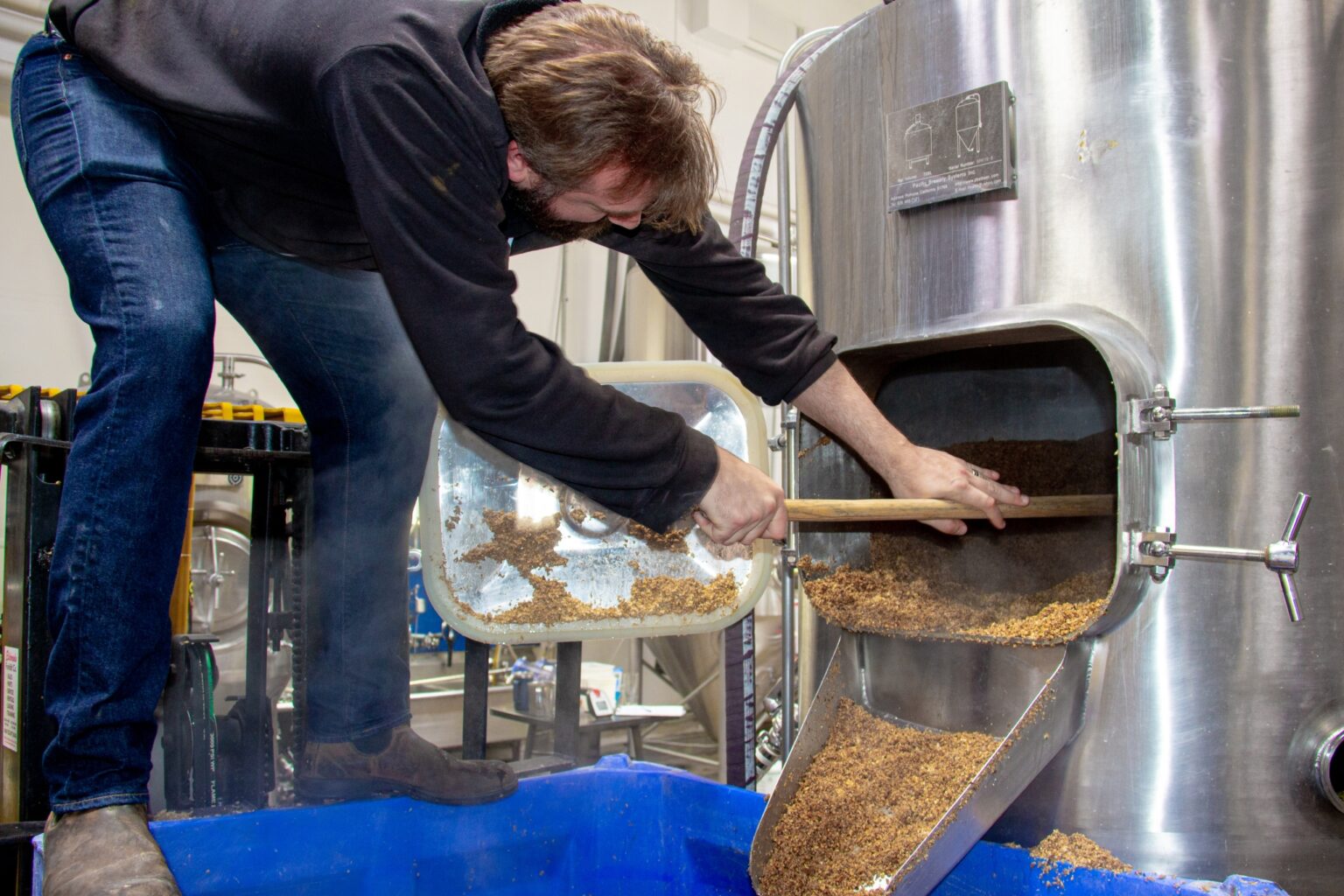
Understanding How the Mash Producer Fits in Brewing Operations
The mash producer, often referred to in professional brewing as a mash mixer or mash conversion vessel, serves as the critical intersection between raw malted grains and fermentable sugar. It is the vessel where enzymatic activity conv...
The mash producer, often referred to in professional brewing as a mash mixer or mash conversion vessel, serves as the critical intersection between raw malted grains and fermentable sugar. It is the vessel where enzymatic activity converts complex starches into the maltose and glucose required for yeast to produce alcohol and flavor compounds.
Contents
In modern commercial brewing, the mash producer is a specialized piece of equipment engineered to maintain precise temperature profiles and uniform hydration. By facilitating the biochemical process known as saccharification, this vessel acts as the foundational engine of the entire brewing system. If the mash producer fails to perform its primary function—creating a consistent, enzyme-rich wort—the resulting beer will suffer from poor attenuation, low alcohol yield, and inadequate flavor development.
The Core Function: Starch Conversion and Enzymatic Activity
At its heart, the mash producer is designed to manage the hydration of milled grain, or "grist." When grist is mixed with hot liquor (brewing water), the resulting mixture is called the mash. The primary objective within this vessel is to provide the ideal environment for amylase enzymes to break down starches.
There are two primary types of amylase enzymes, both activated within the mash producer under specific temperature ranges. Alpha-amylase is responsible for breaking down long-chain starch molecules into smaller dextrins, which provide body and mouthfeel. Beta-amylase, on the other hand, works to produce maltose, a simple sugar that is highly fermentable. A professional-grade mash producer allows brewers to "rest" the mash at specific temperatures to manipulate the ratio of fermentable sugars to non-fermentable dextrins. This precise control is how a brewer decides if a beer will be dry and crisp or full-bodied and malty.
Engineering Requirements for an Effective Mash Producer
A high-performance mash producer must address several physical and thermodynamic challenges. Unlike a simple boiling kettle, a mash producer requires sophisticated internal mechanisms to maintain consistency.
- Thermal Insulation and Jacket Control: Because enzyme activity is highly temperature-sensitive, the vessel must be double-walled and insulated to prevent heat loss. Steam jackets or electric heating elements controlled by PID (Proportional-Integral-Derivative) controllers ensure that the temperature does not fluctuate during a mash rest.
- Agitation Systems: The mash is a thick, viscous slurry. A motor-driven raking or stirring system is essential to prevent "dough balls"—pockets of dry flour that escape enzymatic breakdown. Proper agitation ensures that every grain particle is in contact with the liquor, maximizing extraction efficiency.
- Liquor-to-Grist Ratio Control: The vessel must be calibrated to allow the brewer to precisely control the ratio of water to grain. A thicker mash (lower ratio) often protects enzymes from heat denaturation, while a thinner mash (higher ratio) can improve the conversion speed and ease of lautering.
Integration Within the Brewhouse Workflow
The mash producer occupies a specific stage in the multi-vessel brewing setup. In a traditional three-vessel system, the mash mixer/producer functions independently of the lauter tun (the filter vessel) and the brew kettle (the boiling vessel).
| Vessel Type | Primary Role | Integration Point |
|---|---|---|
| Mash Producer | Starch conversion | Follows milling/hydration |
| Lauter Tun | Solid-liquid separation | Receives converted mash |
| Brew Kettle | Boiling and sterilization | Receives clarified wort |
By decoupling the mash producer from the lauter tun, brewers can implement "step mashing" and decoction mashing, where portions of the mash are removed, heated to boiling, and returned to the vessel to further modify the sugar profile. This separation increases the throughput of the brewhouse, allowing a new mash to begin in the producer while the previous batch is still being rinsed (sparged) in the lauter tun.
Common Operational Considerations
Brewers must approach the mash producer with an understanding of both chemistry and mechanical maintenance. One common mistake is improper grain milling; if the grist is too fine, the mash can become a set bed, leading to stuck sparges and poor extract efficiency. Conversely, if the grind is too coarse, enzymes cannot effectively access the starch stored inside the endosperm.
Furthermore, pH management within the mash producer is just as vital as temperature. Most amylase enzymes function optimally at a pH between 5.2 and 5.5. Many modern mash producers include inline pH sensors to allow for real-time adjustments using food-grade acids or brewing salts. Managing the pH ensures that the enzymatic conversion remains efficient and that the final beer does not suffer from astringent flavors caused by polyphenols extracted from the grain husks.
Troubleshooting the Mash Process
When extract efficiency drops, the mash producer is the first place to investigate. If the target gravity of the wort is lower than calculated, the issue likely stems from one of three areas:
- Temperature Inconsistency: Check the calibration of the thermowell sensors. If the mash is operating 2-3 degrees lower than the target, alpha-amylase may be inhibited, leading to incomplete conversion.
- Insufficient Mixing: If the agitation blades have debris or if the motor speed is too low, the mash will not be homogenous. Perform a manual inspection to ensure there are no dead spots in the vessel where temperature or concentration varies.
- Enzymatic Inhibition: Ensure that the brewing water is properly de-chlorinated and adjusted for mineral content. High levels of chlorine or inappropriate calcium-to-magnesium ratios can physically interfere with enzyme protein structures, rendering them ineffective regardless of temperature.
Frequently Asked Questions
Does every brewing system require a dedicated mash producer? Not necessarily. In single-vessel brewing systems (often used by nano-breweries), the same kettle acts as the mash producer, lauter tun, and boil kettle. However, these systems lack the efficiency and production capacity of dedicated vessels, as they cannot perform multiple stages of the brewing process simultaneously.
What is the impact of a mash producer on beer clarity? A well-managed mash producer improves clarity by ensuring complete protein and starch breakdown. If the mash temperature is poorly managed, high-molecular-weight proteins and starches may survive the boil, causing chill haze in the final product.
How does a mash producer differ from a lauter tun? A mash producer is designed for mixing, heat management, and biochemical reaction. A lauter tun is designed for filtration. The lauter tun features a false bottom, a raking mechanism to cut the grain bed, and a sparge arm to rinse the sugars into the kettle.
Can I use a mash producer to create non-alcoholic beers? Yes. By manipulating the mash temperature to higher ranges (e.g., 72°C/162°F), a brewer can denature beta-amylase while keeping alpha-amylase active. This creates a wort rich in non-fermentable dextrins, resulting in a beer with very low alcohol content after fermentation.
How often should the mash producer be cleaned? The mash producer should undergo a full Clean-in-Place (CIP) cycle after every batch. Given that the vessel deals with starches and organic material, failure to sanitize can lead to the growth of lactic acid bacteria, which will sour subsequent batches of beer.
Next Steps for Implementation
If you are looking to integrate a more robust mash producer into your brewing workflow, start by evaluating your batch size requirements and the desired flexibility in your grain bill. Consult with a brewhouse equipment manufacturer to discuss jacket pressures, automation levels, and the compatibility of existing grain hydration equipment. For those currently operating, conduct an audit of your temperature uniformity across the vessel to ensure that your PID controllers are correctly calibrated for your specific mash densities.
Image Gallery