The Legacy of Jack Whittaker and the Powerball: A Cautionary Tale of Historic Multi-Million-Dollar Wealth
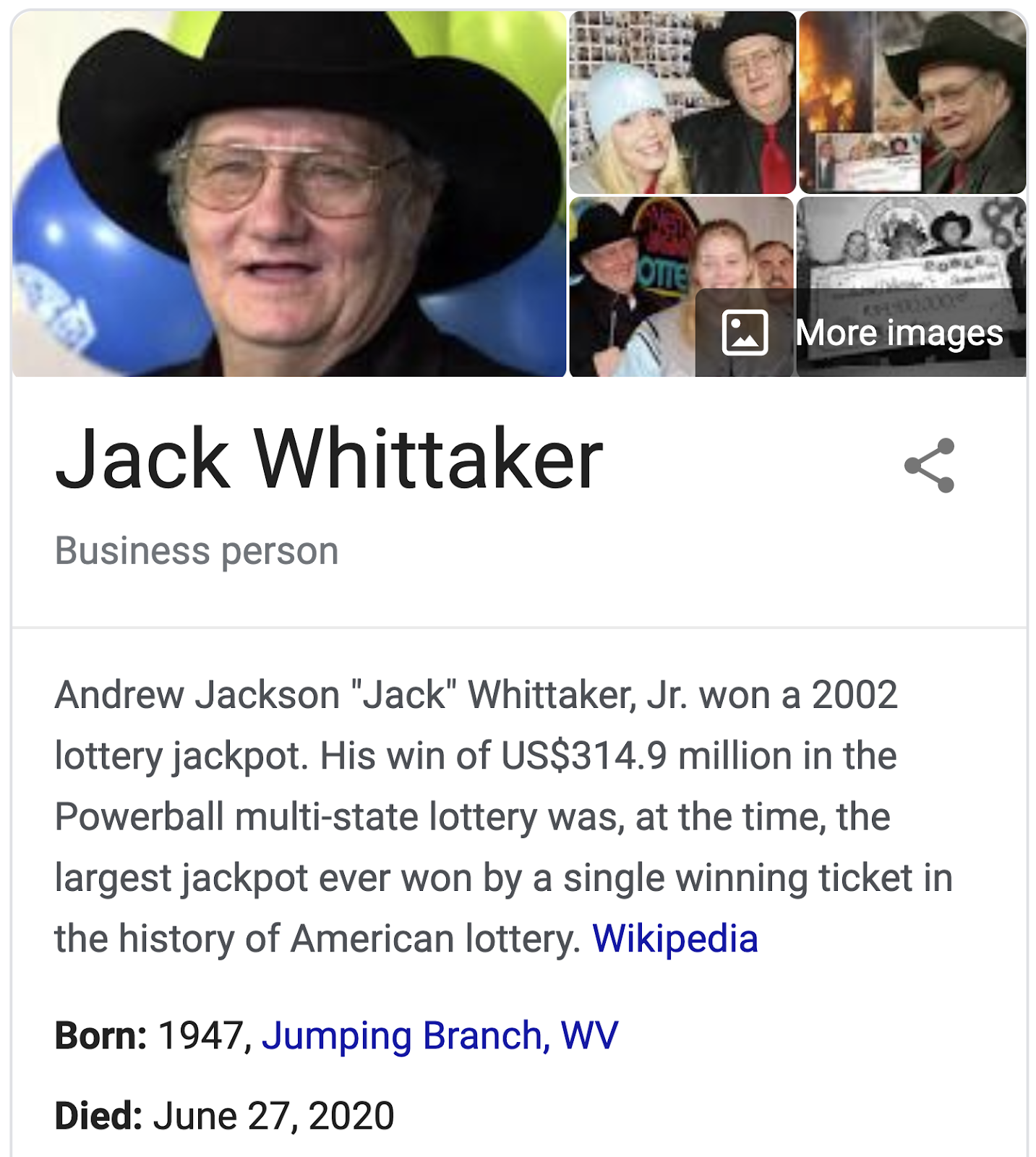
Andrew Jackson Whittaker Jr. captured global attention in Christmas 2002 when he won a record-breaking $314.9 million Powerball jackpot, opting for a lump-sum cash payout of $113.4 million after taxes. His story remains one of the most...
Andrew Jackson Whittaker Jr. captured global attention in Christmas 2002 when he won a record-breaking $314.9 million Powerball jackpot, opting for a lump-sum cash payout of $113.4 million after taxes. His story remains one of the most widely cited case studies on the complex psychological, financial, and legal repercussions of sudden, immense wealth, transforming a successful West Virginia businessman into a central figure of lottery lore.
Contents
Understanding the 2002 Powerball Record and Payout Structure
On December 25, 2002, a single ticket purchased at a Dunbar, West Virginia, supermarket matched all numbers for the multistate Powerball drawing. At the time, the $314.9 million advertised jackpot stood as the largest undivided lottery prize in United States history won by a single ticket holder.
Jack Whittaker, known locally as "Jack," owned Contractor's Enterprises Inc., a successful pipeline construction firm in West Virginia. Rather than selecting the annuity option—which would have distributed the full $314.9 million across 30 graduated annual payments—Whittaker chose the lump-sum cash option. After federal and state tax withholdings, his take-home amount dropped to approximately $113.4 million.
Lump-Sum Versus Annuity Comparisons
| Feature | Lump-Sum Cash Option | 30-Year Annual Annuity |
|---|---|---|
| Payout Speed | Immediate single disbursement | Distributed over three decades with annual increases |
| Total Nominal Value | Lower initial total value | Higher aggregate advertised value |
| Tax Implications | Higher immediate tax bracket exposure | Taxed progressively year-over-year |
| Investment Control | Winner controls capital allocation | Managed by state lottery commission / treasuries |
| Risk Exposure | Vulnerable to early overspending and poor investments | Protected against rapid depletion |
Philanthropic Commitments and Immediate Investments
Following his win, Whittaker publicly announced intentions to share his windfall. True to his word, he pledged substantial sums to religious institutions, Christian education, and community initiatives in West Virginia. He donated ten percent of his winnings to various Christian charities, fulfilling a promise he made prior to the drawing.
Additionally, Whittaker funded new equipment and facility improvements for churches and youth programs, and he provided multi-million-dollar bonuses to key employees who had helped build Contractor's Enterprises. Early reports highlighted his generosity, showcasing a self-made man who wanted to uplift his local community and reward loyal associates.
Legal, Personal, and Financial Complications
Despite initial philanthropic efforts, Whittaker’s life grew increasingly complicated following the windfall. Sudden wealth frequently attracts complex legal exposure, and Whittaker faced a cascade of civil lawsuits, thefts, and personal tragedies over the ensuing years.
The Burden of Open Access and Litigation
In West Virginia, state public records laws at the time required lottery winners to be publicly identified, preventing anonymous collection. This transparency exposed Whittaker to intense public scrutiny, solicitation letters, and opportunistic claims.
Within years of his win, Whittaker was targeted by multiple lawsuits. In 2003, he was sued by a casino employee alleging civil assault, and separately, he faced legal challenges related to vehicle accidents and disputes at entertainment venues. Furthermore, thieves targeted his vehicles and property on multiple occasions, stealing hundreds of thousands of dollars in cash that he frequently carried in briefcases.
Family Tragedies and Social Pressures
The most devastating challenges Whittaker faced involved his family. The immense wealth introduced severe disruptions into the lives of his close relatives, particularly his granddaughter, Brandi Bragg. Brandi became heavily involved in substance abuse, receiving large allowances funded by the lottery winnings. In July 2004, Brandi Bragg was found dead from a drug overdose, a tragedy that Whittaker frequently attributed to the destructive impact of the sudden fortune. Several years later, his daughter, Ginger Whittaker Bragg, also passed away under distressing circumstances.
Financial Depletion and Asset Liquidation
By 2007, public court documents and interviews indicated that Whittaker's liquid assets had been largely exhausted. His business enterprises faced downturns, and checks written to settle legal disputes occasionally bounced due to frozen or depleted bank accounts. The combination of heavy giving, lavish lifestyle inflation, legal fees, thefts, and poor financial management dismantled the once-massive fortune within a relatively short span.
Comparative Analysis of High-Profile Lottery Outcomes
To understand the broader context of Whittaker's experience, lottery analysts and financial planners frequently contrast single-winner lump sums with structured payouts and anonymous claiming rules.
| Lottery Incident / Factor | Jack Whittaker (2002) | Modern Anonymous Winners |
|---|---|---|
| Anonymity Status | Publicly identified per state mandate | Often shielded by trusts or state privacy laws |
| Financial Advisory Team | Hired late; relied heavily on personal control | Typically mandated to establish institutional wealth management |
| Primary Vulnerability | Direct cash access, open litigation, family exploitation | Secured trusts, legal firewalls against predatory claims |
| Long-Term Asset Retention | Nearly complete depletion within a decade | Variable, but structured tools improve preservation rates |
Regulatory Evolution and Post-2002 Changes
The challenges faced by Jack Whittaker and other early 2000s lottery winners catalyzed policy debates across the United States. Over the subsequent two decades, numerous states reevaluated their public disclosure mandates.
Today, a growing number of jurisdictions allow lottery winners to claim prizes through anonymous legal entities, such as blind trusts or limited liability companies (LLCs). These legislative shifts aim to protect winners from targeted crimes, harassment, and immediate solicitation pressures that characterized high-profile wins like Whittaker's. Financial planners universally recommend that modern multi-state lottery winners assemble a multidisciplinary team—including tax attorneys, certified public accountants, and fiduciary financial advisors—before claiming any major prize.
Frequently Asked Questions
How much did Jack Whittaker actually win in the Powerball?
Jack Whittaker won a $314.9 million jackpot in December 2002. After selecting the lump-sum cash option and accounting for federal and state tax withholdings, his take-home cash disbursement was approximately $113.4 million.
Why was Jack Whittaker's identity made public?
At the time of Whittaker's win, West Virginia state law mandated the public disclosure of lottery winners' names and cities of residence, prohibiting anonymous claims to ensure transparency in state-run gaming operations.
Did Jack Whittaker lose all of his money?
Yes, by 2007, legal filings and public interviews confirmed that Whittaker had exhausted his liquid funds, facing substantial legal debts, asset seizures, and business reversals following years of heavy spending, thefts, and litigation.
What happened to Jack Whittaker's family after the win?
Whittaker experienced severe personal tragedies following his win, notably the deaths of his granddaughter Brandi Bragg in 2004 and his daughter Ginger Whittaker Bragg in 2009, both of whom struggled with severe substance abuse issues exacerbated by access to immense wealth.
What lessons do financial planners draw from Jack Whittaker's story?
Financial advisors cite Whittaker's case to illustrate the critical importance of maintaining financial privacy, establishing legal trusts, delaying immediate spending, and delegating fund management to professional fiduciaries immediately upon winning large sums.
Conclusion and Next Actions
The legacy of Jack Whittaker serves as a foundational case study in the intersection of sudden wealth, behavioral finance, and legal exposure. For individuals navigating complex windfalls, legal settlements, or major financial transitions, Whittaker's experience underscores the necessity of professional governance, strict asset protection, and emotional insulation. When managing large-scale assets, engaging specialized legal counsel and fiduciary wealth managers before public disclosure remains the primary safeguard against systemic wealth depletion.
Image Gallery