Understanding the Life Insurance Assignment Agreement: A Comprehensive Guide
A life insurance assignment agreement is a legal contract that transfers the ownership rights or the death benefit proceeds of a life insurance policy from the current owner (the assignor) to another party (the assignee). This process...
A life insurance assignment agreement is a legal contract that transfers the ownership rights or the death benefit proceeds of a life insurance policy from the current owner (the assignor) to another party (the assignee). This process is primarily used to secure loans, facilitate estate planning, or execute the sale of a policy.
Contents
Life insurance is often viewed strictly as a tool for beneficiary protection, but it is also a sophisticated financial asset with transferable value. In 2026, as the integration of digital finance and traditional insurance deepens, the use of assignment agreements has become a standard procedure for both individual wealth management and corporate finance. Understanding the nuances of these agreements is essential for any policyholder looking to leverage their policy’s cash value or death benefit as a financial instrument.
What is a Life Insurance Assignment Agreement?
At its core, a life insurance assignment agreement is a formal mechanism to reassign the "incidents of ownership" or specific monetary rights associated with a policy. When a policy is issued, the owner typically holds all rights, including the power to name beneficiaries, borrow against the cash value, and surrender the policy for its current worth. An assignment agreement allows the owner to delegate or completely surrender these rights to a third party.
The agreement serves as a bridge between the insurance carrier, the policyholder, and the recipient of the rights. It is important to distinguish between a beneficiary designation and an assignment. While a beneficiary has a "mere expectancy" of receiving funds upon the insured's death, an assignee acquires a legal interest in the policy that often takes precedence over the claims of any revocable beneficiaries.
In the current financial landscape of 2026, these agreements are frequently executed through secure digital platforms provided by insurers, yet they remain governed by established contract law and the specific terms dictated by the insurance policy itself.
The Two Primary Types of Assignments
Understanding the distinction between the two main types of assignments is critical, as they carry vastly different legal and financial consequences.
1. Absolute Assignment
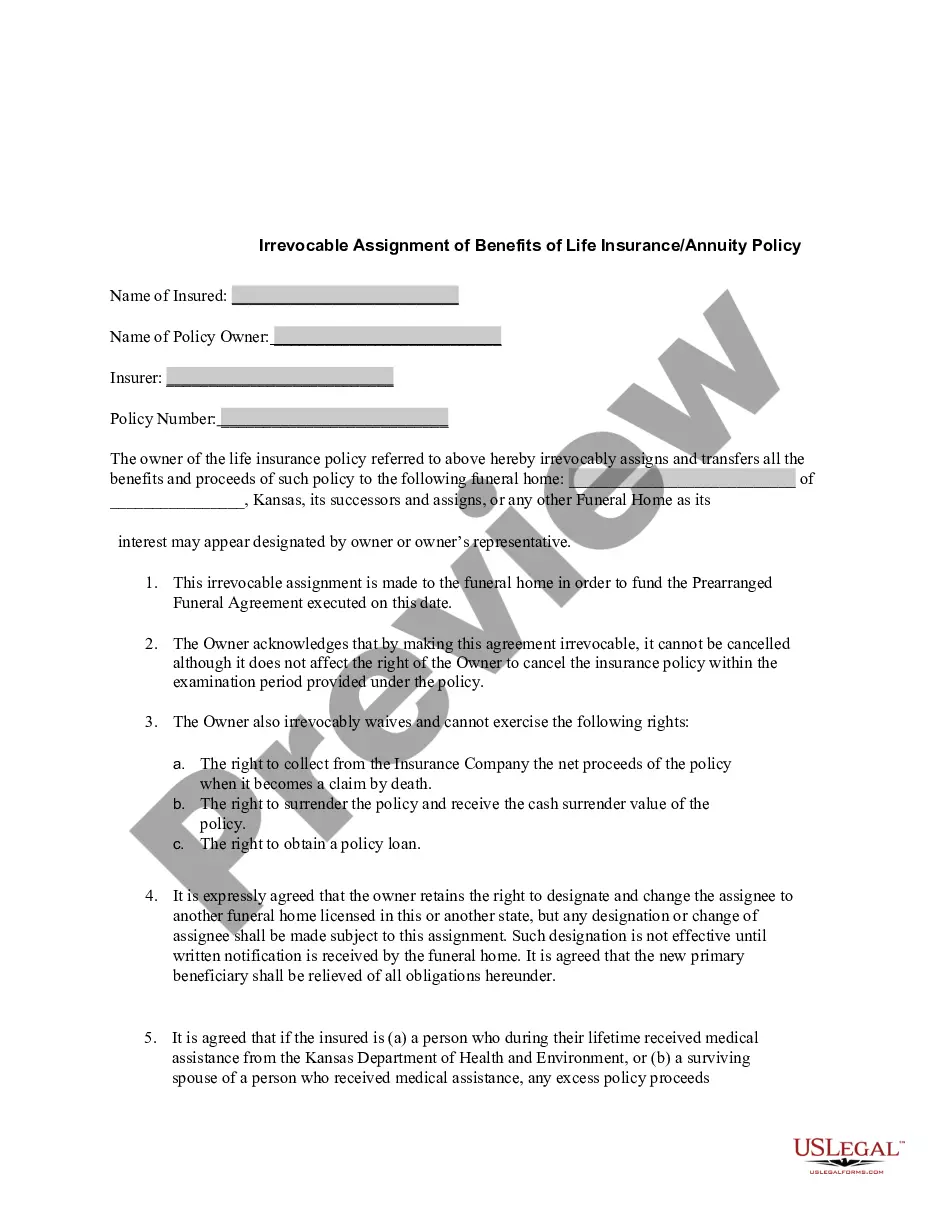
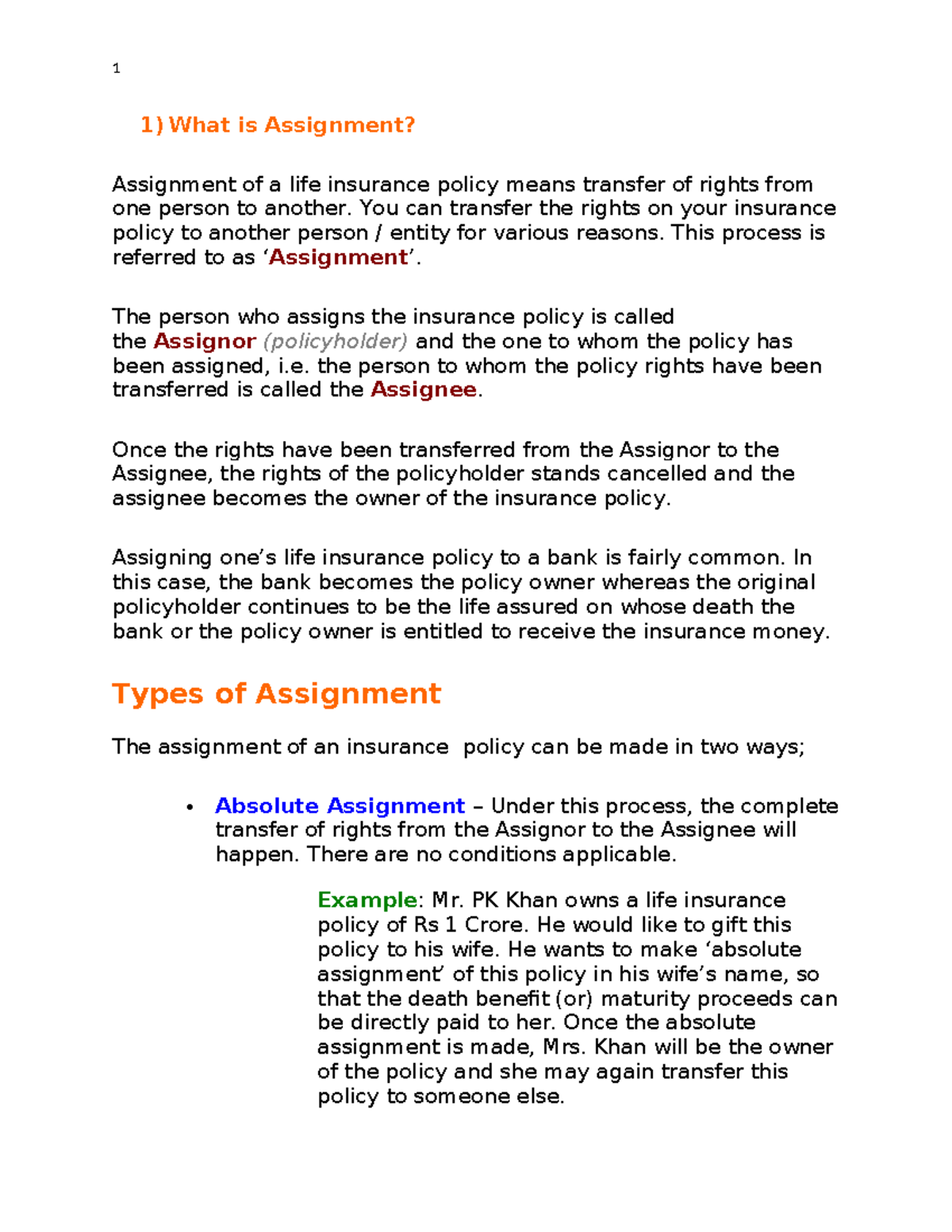
An Absolute Assignment involves the complete and permanent transfer of all rights, titles, and interests in the insurance policy to the assignee. Once the agreement is executed and accepted by the insurer, the original owner (assignor) loses all control over the policy.
- Ownership Transfer: The assignee becomes the new owner and can change beneficiaries, take out loans, or even cancel the policy for its cash value without the original owner's consent.
- Irreversibility: Generally, an absolute assignment is irrevocable. The only way for the original owner to regain control is if the new owner chooses to assign the policy back to them.
- Common Use Cases: This is frequently seen in gift-giving for estate planning purposes, where a parent transfers a policy to a child or an Irrevocable Life Insurance Trust (ILIT) to remove the death benefit from their taxable estate.
2. Collateral Assignment
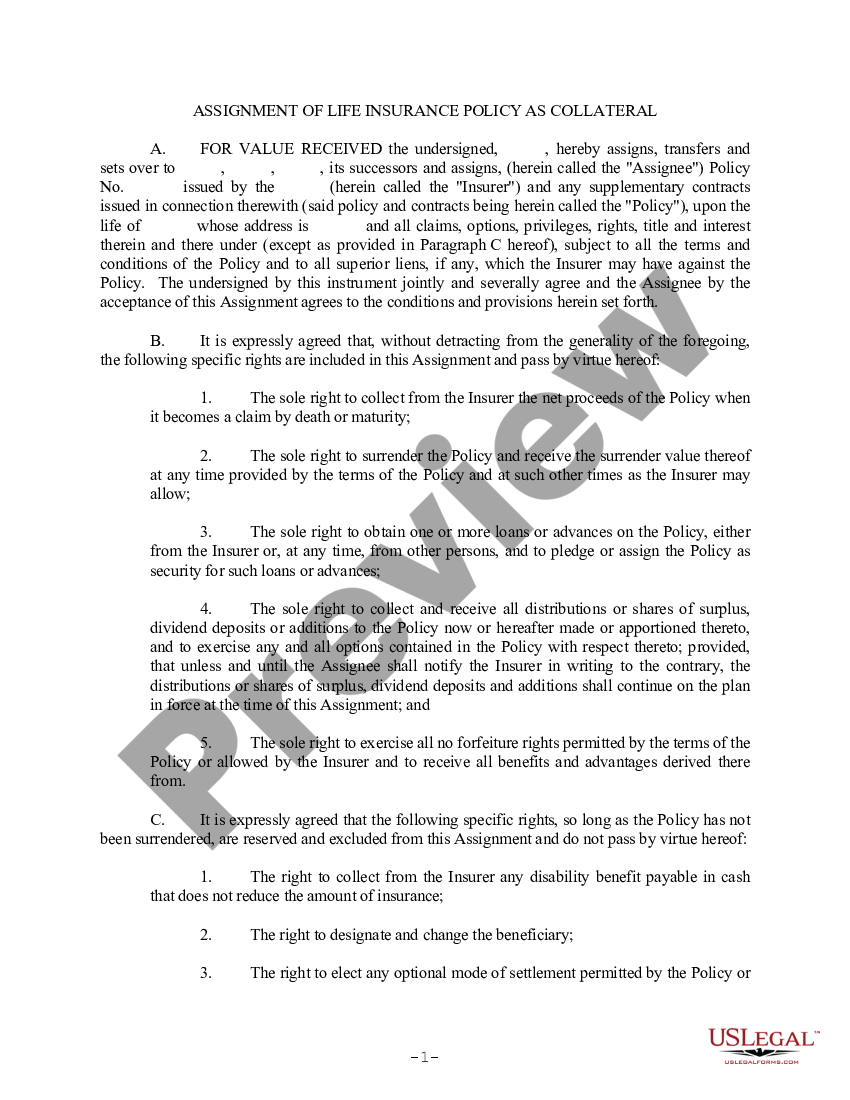
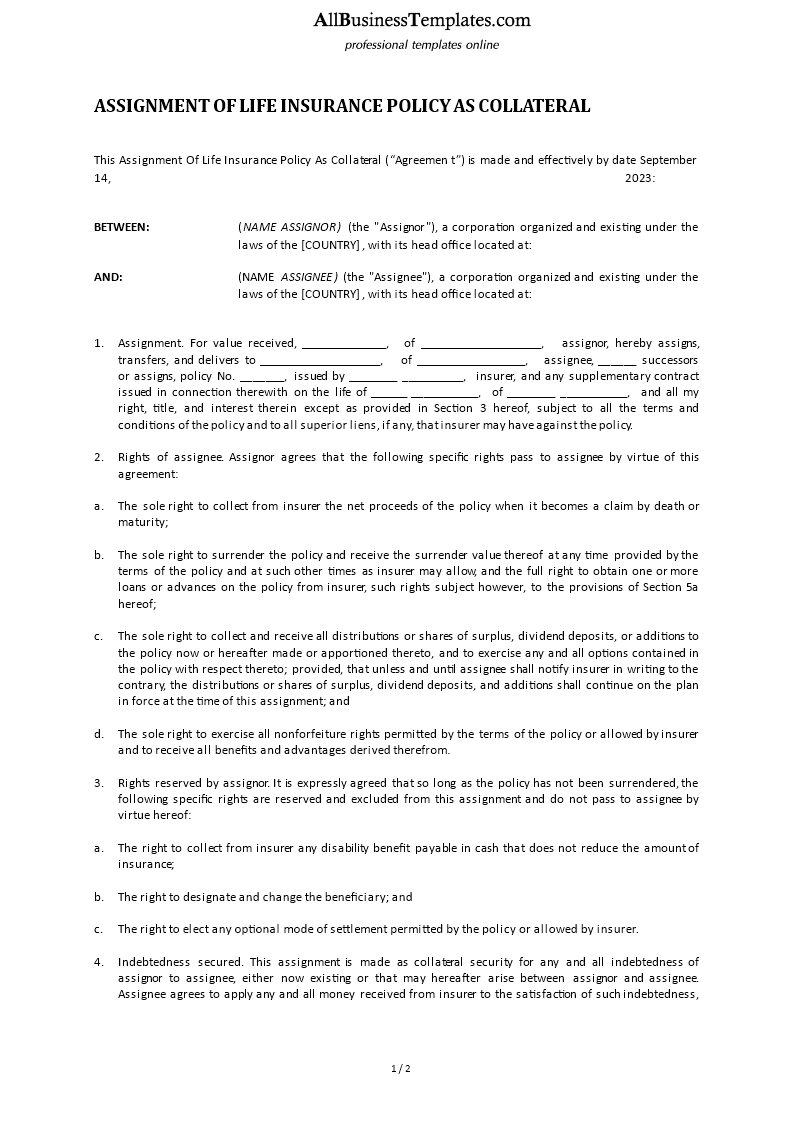
A Collateral Assignment is a conditional and limited transfer of rights, usually used to secure a debt. The assignee (often a bank or private lender) is granted a right to the policy’s proceeds only to the extent of the outstanding debt at the time of the insured's death or default.
- Limited Rights: The original owner retains most ownership rights, such as the ability to change beneficiaries (though the lender's interest remains protected) and manage the policy, provided the conditions of the loan are met.
- Temporary Nature: Once the underlying debt is repaid in full, the assignee releases the assignment, and all rights revert fully to the owner.
- Death Benefit Priority: If the insured dies while the assignment is active, the insurer pays the lender the remaining balance of the loan first. Any residual funds are then paid to the named beneficiaries.
The Mechanics of the Assignment Process
Executing an assignment agreement requires more than just a signed contract between two people; it involves the cooperation of the insurance company. Most life insurance contracts contain an "Assignment Clause" which outlines the specific requirements for a transfer to be recognized.
The Role of the Insurer
The insurance company is not a party to the assignment agreement itself, but it must be formally notified of the change. In 2026, most major carriers require the submission of a specific "Notice of Assignment" form. It is a standard legal principle that the insurer is not bound by the assignment until it has received and recorded the written notice at its home office.
The insurer does not typically take responsibility for the "validity or sufficiency" of the assignment. This means they will not investigate whether a debt is legitimate or if the assignor was under duress. Their role is strictly administrative: ensuring the paperwork is filed correctly and directing payments to the correct party when a claim is made.
The "Transfer-for-Value" Rule
One of the most critical considerations in an assignment agreement is the tax implication under the Transfer-for-Value Rule. In the United States, Internal Revenue Code Section 101(a)(2) states that if a life insurance policy is transferred for "valuable consideration" (money or something of value), the death benefit may lose its tax-free status.
However, there are exceptions to this rule, such as transfers to the insured person, to a partner of the insured, or a corporation in which the insured is an officer or shareholder. Because the tax consequences of a mismanaged assignment can be severe—turning a tax-free windfall into a significant income tax liability—consulting a tax professional is mandatory before executing an absolute assignment for value.
Key Components of an Assignment Document
While insurers provide standard forms, sophisticated financial arrangements may require a custom assignment agreement. A comprehensive document should include:
- Identification of Parties: Full legal names and addresses of the Assignor, Assignee, and the Insurer.
- Policy Details: The policy number, the name of the insured, and the face amount.
- Consideration: A statement of what is being given in exchange for the assignment (e.g., a $500,000 commercial loan).
- Extent of Rights: For collateral assignments, a clear definition of what rights the lender has (e.g., the right to the cash value upon default).
- Signature and Notarization: Most states and insurers require the signature of the owner and, in community property states, the signature of the spouse. Notarization is standard practice to prevent fraud.
Comparison: Absolute vs. Collateral Assignment
The following table highlights the functional differences between the two methods of assignment as they are typically applied in 2026.
| Feature | Absolute Assignment | Collateral Assignment |
|---|---|---|
| Extent of Transfer | Complete ownership and all rights | Limited rights as security for debt |
| Primary Purpose | Estate planning, gifting, or sale | Securing a loan or credit line |
| Revocability | Generally irrevocable | Released upon debt repayment |
| Beneficiary Status | Assignee names new beneficiaries | Assignee takes priority over beneficiaries |
| Control of Cash Value | Entirely held by the Assignee | Usually retained by Assignor (subject to lender terms) |
| Tax Implications | High risk of "Transfer-for-Value" | Generally no impact on tax-free status |
Common Use Cases in 2026
The landscape of 2026 has introduced more complex reasons for using assignment agreements, driven by evolving tax laws and the rise of private credit.
Business Succession and Key Person Insurance
Companies often use assignment agreements when a "Key Person" leaves the firm. If the company owns a policy on an executive, they might execute an absolute assignment to the executive as part of a retirement or severance package, allowing the individual to take the coverage with them.
Life Settlements
The life settlement market remains a significant driver of absolute assignments. Policyholders who no longer need coverage or who need liquidity may sell their policy to a third-party investor for an amount greater than the cash surrender value but less than the death benefit. This requires an absolute assignment to the purchasing entity.
SBA and Commercial Lending
For small business owners seeking SBA 7(a) loans, collateral assignment of life insurance is often a mandatory requirement. Lenders want to ensure that if the "brains of the operation" passes away, the loan will be satisfied immediately, preventing the business from collapsing under debt.
Potential Risks and Limitations
While powerful, assignment agreements are not without pitfalls. One of the most common issues occurs when a policyholder forgets that an assignment is in place.
- Beneficiary Displacement: In a collateral assignment, if the insured dies, the family (beneficiaries) may be surprised to find that a significant portion of the death benefit goes to a bank. It is vital to communicate these arrangements to heirs.
- Policy Lapse: If the assignor stops paying premiums on a policy assigned as collateral, the lender may have the right to pay the premiums and add that cost to the debt, or they may seize the cash value, ending the coverage.
- Impact on Credit: In some corporate structures, an assignment of a major policy can impact the balance sheet and credit rating of the entity, as it represents a pledged asset.
Frequently Asked Questions
Can I assign my life insurance policy to a family member?
Yes, you can use an absolute assignment to transfer ownership to a family member. This is often done as a gift. However, be aware of federal gift tax limits and the potential three-year lookback rule for estate taxes, which may include the policy in your estate if you pass away within three years of the transfer.
Does an assignment change the insured person?
No. An assignment agreement only changes the ownership or the right to the proceeds. The person whose life is covered by the policy (the insured) remains the same. You cannot "assign" the insurance coverage to a different person’s life.
What happens to a collateral assignment once the loan is paid off?
Once the debt is satisfied, the lender should issue a "Release of Assignment." This document must be sent to the insurance company to formally remove the lender's interest from the policy records. It is the policyholder's responsibility to ensure this filing is completed.
Can a group life insurance policy be assigned?
It depends on the employer's contract and state law. Many group life insurance policies (provided through work) allow for absolute assignment for estate planning purposes, but they rarely allow for collateral assignment to secure private loans.
Does the assignee have to have an "insurable interest"?
For an absolute assignment, many jurisdictions require the assignee to have an insurable interest in the insured at the time of the transfer, particularly to prevent "stranger-originated life insurance" (STOLI). However, for collateral assignments to legitimate lending institutions, the debt itself usually satisfies the legal requirement for an interest in the policy proceeds.
Practical Recommendations
Before signing a life insurance assignment agreement, take the following steps:
- Verify Policy Provisions: Review your original policy document to ensure assignments are permitted and to identify any specific forms the insurer requires.
- Consult a Tax Professional: Especially for absolute assignments, ensure you are not inadvertently creating a massive tax liability through the transfer-for-value rule.
- Audit Your Beneficiaries: If you are using a collateral assignment, calculate whether the remaining death benefit (after the debt is paid) is still sufficient to meet your family’s needs. You may need to increase your coverage.
- Confirm the Release: If you are the assignor in a collateral arrangement, set a reminder to verify that the lender files the release of assignment as soon as your loan is closed.
Image Gallery