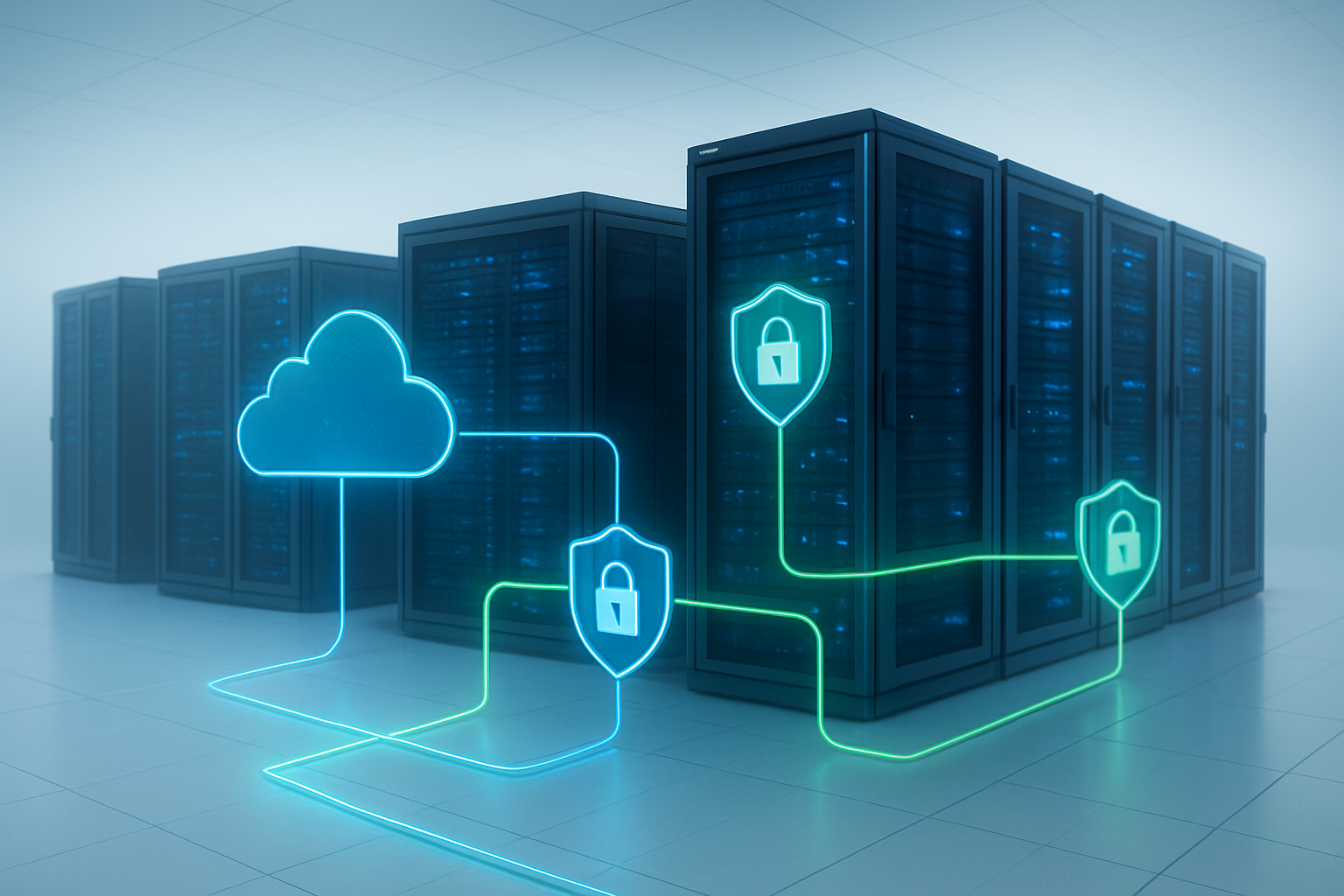
Understanding the Rise of Cy Stack Security Services: Plans for Endpoint and Cloud Security
In 2026, Cy Stack security services represent an integrated approach to digital defense, merging endpoint protection, cloud security, and managed response into a unified subscription model. These plans are designed to eliminate securit...
In 2026, Cy Stack security services represent an integrated approach to digital defense, merging endpoint protection, cloud security, and managed response into a unified subscription model. These plans are designed to eliminate security silos, providing businesses with automated threat detection and real-time monitoring across distributed hybrid environments, ensuring that both remote hardware and cloud-native assets remain resilient against evolving AI-driven threats.
Contents
The Transformation of the Cybersecurity Landscape in 2026
The cybersecurity landscape has undergone a radical shift. Gone are the days when an organization could rely on a patchwork of disconnected software tools to protect its perimeter. As we navigate 2026, the "perimeter" itself has effectively vanished. With the proliferation of remote work, decentralized data centers, and the Internet of Things (IoT), the traditional firewall is no longer a sufficient barrier. This reality has fueled the rise of Cy Stack security services, a comprehensive methodology that bundles various security layers into a cohesive "stack."
A Cy Stack—short for a Cybersecurity Stack—is not merely a collection of products but a strategic alignment of services. These services are typically delivered via managed plans that prioritize interoperability. When endpoint security, cloud protection, and identity management are part of the same stack, they share telemetry data in real-time. This allows for a level of threat orchestration that was previously impossible. In 2026, the rise of these services is driven by the need for speed; as attackers use automated tools to launch exploits, defenders must use automated stacks to neutralize them before they can breach the core network.
The Components of a Modern Security Stack
To understand the value of various Cy Stack service plans, one must first understand the pillars upon which they are built. Modern plans focus heavily on two primary areas: the endpoint and the cloud. While they were once managed separately, the 2026 standard dictates that they must be integrated to prevent "blind spots" in the organizational infrastructure.
Extended Endpoint Detection and Response (XDR)
The endpoint remains the most targeted entry point for cybercriminals. In 2026, Cy Stack plans have moved beyond traditional EDR (Endpoint Detection and Response) to XDR (Extended Detection and Response). XDR collects and automatically correlates data across multiple security layers, including email, endpoints, servers, and networks. This holistic view allows security teams to detect sophisticated attacks that might look like benign activity when viewed in isolation. Cy Stack plans now include managed XDR as a baseline, providing 24/7 monitoring and automated containment of infected devices.
Cloud-Native Application Protection Platforms (CNAPP)
As organizations shift their workloads to the cloud, the complexity of managing those environments has scaled exponentially. Cy Stack services now integrate CNAPP, which combines Cloud Security Posture Management (CSPM) and Cloud Workload Protection Platforms (CWPP). This ensures that cloud configurations are secure (avoiding common "leaky bucket" scenarios) and that the actual applications running in the cloud are shielded from runtime exploits. In 2026, a Cy Stack plan without dedicated cloud-native security is considered incomplete, as most business logic now resides in serverless functions and containerized environments.
Analyzing Cy Stack Security Service Plans
Choosing the right Cy Stack plan requires an understanding of your organization's risk profile and technical architecture. In 2026, providers generally offer tiered service models that cater to different business sizes and regulatory requirements.
| Feature Category | Essential Stack | Professional Stack | Enterprise Managed Stack |
|---|---|---|---|
| Endpoint Coverage | Basic Antivirus + EDR | Advanced XDR + Mobile Security | XDR + Managed SOC Hunting |
| Cloud Security | Basic CSPM (Single Cloud) | Multi-Cloud CNAPP | Full Zero Trust Cloud Access |
| Threat Intelligence | Periodic Updates | Real-time Global Feeds | Bespoke Industry-Specific Intel |
| Incident Response | Automated Playbooks | 4-Hour Response SLA | 15-Minute Critical Intervention |
| Compliance Mapping | Standard (GDPR/CCPA) | Industry Specific (HIPAA/PCI) | Continuous Audit & Governance |
| AI Integration | Signature-based Detection | Behavioral AI Analysis | Generative AI Autonomous Defense |
The Essential Stack: Foundational Protection
The Essential Stack is designed for small to medium-sized enterprises (SMEs) that need robust protection without the overhead of a full internal security team. These plans focus on "hygiene" and automation. They provide automated patching, basic endpoint response, and fundamental cloud monitoring. While these plans are affordable, they rely heavily on automated playbooks. If a threat is detected, the system follows a pre-set routine to isolate the threat, which is effective for 95% of common commodity malware.
The Professional Stack: For the Growth-Oriented Enterprise
The Professional level is where we see the integration of human intelligence with machine speed. These plans are popular among mid-market firms that handle sensitive customer data. The key differentiator here is the Managed Detection and Response (MDR) component. Not only does the software monitor the environment, but a team of remote analysts also reviews high-priority alerts. This level of service significantly reduces "alert fatigue" for internal IT staff, as they only deal with verified, actionable threats.
The Enterprise Managed Stack: Full-Spectrum Defense
In 2026, global corporations and government entities typically opt for the Enterprise Managed Stack. This plan treats the service provider as an extension of the company’s own Security Operations Center (SOC). It includes proactive threat hunting, where analysts look for indicators of compromise (IoCs) that haven't triggered alerts yet. These plans also feature Zero Trust Network Access (ZTNA) as a core component, ensuring that no user or device is trusted by default, regardless of whether they are inside or outside the corporate network.
Why the Rise of Integrated Stacks is Unstoppable
The move toward integrated Cy Stack services is not just a trend; it is a response to the economic and technical realities of 2026. There are three primary reasons why this model has become the industry standard.
- The Talent Gap: Despite advancements in AI, there is still a significant shortage of high-level cybersecurity professionals. By subscribing to a Cy Stack plan, organizations gain access to a pool of experts that would be prohibitively expensive to hire individually.
- Regulatory Pressure: Global regulations regarding data privacy have become increasingly stringent. Modern Cy Stack plans are "compliance-aware," meaning they automatically generate the reports required for audits under frameworks like GDPR, NIS2, or the updated CCPA of 2025.
- Complexity Management: A typical enterprise in 2026 uses over 100 different SaaS applications. Managing the security of each individual app is impossible. Cy Stack services use Identity and Access Management (IAM) as the glue, securing the user identity across all platforms rather than securing the applications individually.
Implementing a Cy Stack Strategy: Key Considerations
Transitioning to an integrated security stack requires more than just a signature on a contract. Organizations must evaluate their current "technical debt" and determine how a new stack will overlay their existing infrastructure.
Assessing Compatibility and Integration
The first step is a thorough audit of existing assets. A Cy Stack service is most effective when it can "see" everything. If your organization relies on legacy on-premise servers that cannot support modern XDR agents, those will remain vulnerable. Before choosing a plan, verify that the provider’s agents support your entire OS ecosystem, including specialized Linux distributions used in cloud environments and mobile operating systems.
Prioritizing "Zero Trust" Architecture
In 2026, the integration of Zero Trust principles is non-negotiable. When evaluating Cy Stack plans, look for those that emphasize "least privilege access." This means the service should be able to restrict a user's access to only the specific data and applications they need for their role. If a credential is stolen, the Cy Stack should automatically detect the anomalous behavior and revoke access before the attacker can move laterally through the network.
Cost vs. Value Analysis
While the monthly subscription for a top-tier Cy Stack plan may seem high, it must be weighed against the cost of a data breach. In 2026, the average cost of a ransomware attack—including downtime, legal fees, and brand damage—frequently exceeds $5 million for mid-sized firms. A managed security stack is effectively an insurance policy that provides proactive mitigation rather than just reactive compensation.
Frequently Asked Questions
What is the difference between a security stack and a single security product?
A single security product, such as a standalone antivirus, addresses one specific vulnerability. A Cy Stack is an integrated ecosystem where multiple services (endpoint, cloud, identity, and network) work together. The primary advantage is that the "stack" shares data between these layers, allowing for faster detection of complex, multi-stage attacks that individual products might miss.
Does a Cy Stack plan replace our internal IT team?
No. Rather than replacing your IT team, a Cy Stack plan empowers them. It automates the "grunt work" of monitoring thousands of alerts and patching vulnerabilities. This allows your internal team to focus on high-value tasks like digital transformation, internal policy development, and strategic infrastructure planning, while the managed service handles the 24/7 threat monitoring.
Is cloud security more important than endpoint security in 2026?
Neither is "more" important; they are two sides of the same coin. An attacker might use a compromised endpoint (like a laptop) to steal credentials that grant them access to your cloud environment. Conversely, a misconfigured cloud bucket could provide a doorway into your corporate network. Modern security plans treat both as equally critical components of the same attack surface.
How do AI-driven threats affect which Cy Stack plan I should choose?
As of 2026, attackers are using generative AI to create highly convincing phishing campaigns and polymorphic malware. Therefore, you should choose a plan that utilizes Behavioral AI. This technology doesn't just look for "known" viruses; it looks for "weird" behavior. If a user suddenly downloads 5,000 files at 3:00 AM from a new location, the AI can intervene instantly, even if the user's credentials are technically valid.
Can a Cy Stack help with legal and regulatory compliance?
Yes. Most modern Cy Stack plans include automated compliance dashboards. These tools continuously monitor your environment against specific regulatory frameworks (like HIPAA for healthcare or SOC2 for tech). They provide real-time updates on your compliance posture and can generate the necessary documentation for auditors, significantly reducing the time and cost of manual compliance checks.
Final Recommendations for 2026
To stay ahead of the current threat landscape, organizations should move away from fragmented security tools and toward a unified Cy Stack security service. When selecting a plan, prioritize providers that offer deep integration between endpoint and cloud telemetry. Start with a comprehensive risk assessment to identify your most critical data assets, and ensure your chosen plan includes a "Managed Detection and Response" component to provide human oversight for AI-driven alerts. In 2026, the goal is not just to have "more" security, but to have "smarter," more integrated security that operates at the speed of the modern digital economy.
Image Gallery