Cameron Young’s Rise to PGA Prominence: From Korn Ferry Tour to Elite Ball-Striker
Cameron Young established himself among elite professional golfers through an extraordinary ascent from Korn Ferry Tour double-winner to PGA Tour Rookie of the Year. Driven by exceptional off-the-tee mechanics, heavy college competitio...
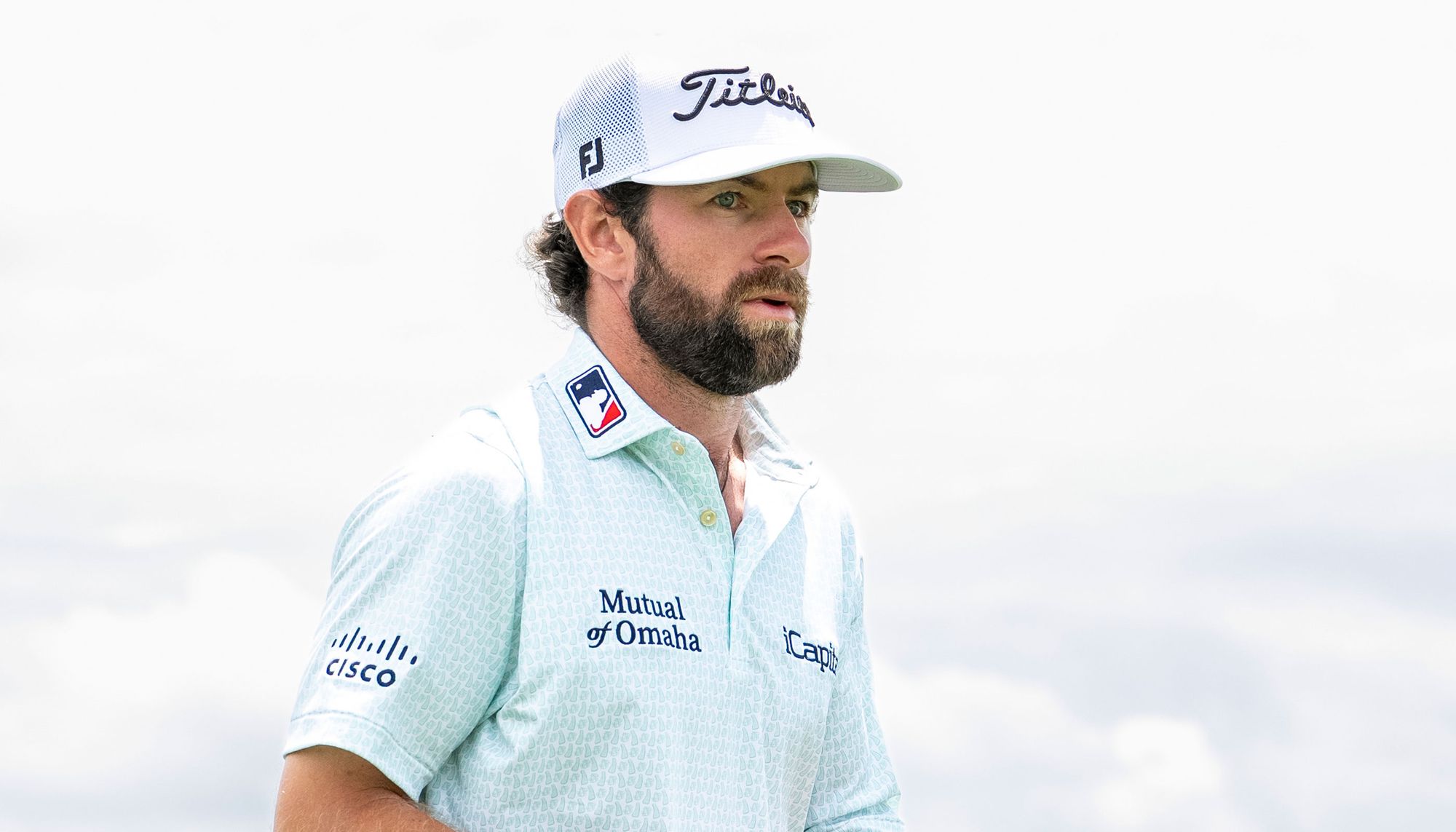
Cameron Young established himself among elite professional golfers through an extraordinary ascent from Korn Ferry Tour double-winner to PGA Tour Rookie of the Year. Driven by exceptional off-the-tee mechanics, heavy college competition at Wake Forest, and high-pressure runner-up finishes at major championships, his rise represents a modern template for tour-level player development.
Contents
Early Foundation: The Sleepy Hollow and Wake Forest Roots
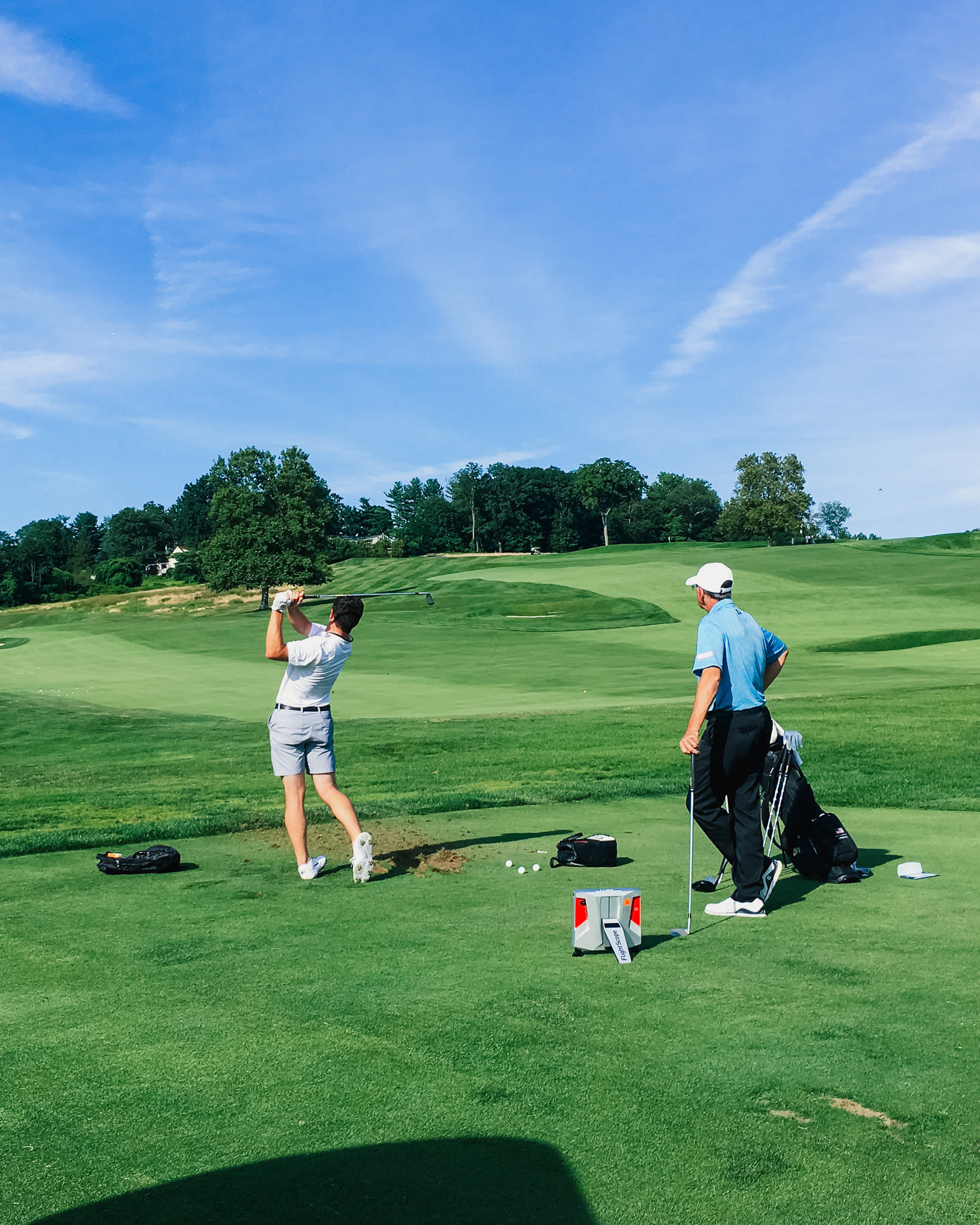
Cameron Young’s path to professional golf was shaped by early access to top-tier coaching and competitive environments. Born into a golfing family, Young spent his formative years at Sleepy Hollow Country Club in Scarborough, New York, where his father, David Young, served as the long-time head PGA professional. This environment provided Young with direct access to structured practice facilities, high-level instruction, and an understanding of course management from an early age.
His junior career led him to Wake Forest University, a college program with a rich legacy of producing world-class golfers, including Arnold Palmer, Lanny Wadkins, Jay Haas, and Webb Simpson. Playing for the Demon Deacons from 2015 to 2019, Young refined his competitive composure while competing in the Atlantic Coast Conference (ACC).
During his collegiate career, Young recorded multiple victories and earned All-ACC honors. His amateur profile expanded further through key appearances in national championships:
- U.S. Amateur Competitions: Consistent deep runs in match play highlighted his capability on championship-style course setups.
- Palmer Cup Selection: Representing the United States in elite international collegiate competition reinforced his ability to perform on team stages.
- Systematic Swing Calibration: Working alongside top regional swing coaches and his father, Young used his college years to build a repeatable, high-speed swing foundation designed to withstand high-pressure situations.
Upon graduating in 2019 with a degree in Economics, Young turned professional. Unlike prodigies who transition immediately to PGA Tour status via sponsor exemptions, Young took a methodical route through golf's developmental tiers.
The Korn Ferry Tour Catalyst (2020–2021)
The transition from college to professional golf rarely occurs without friction. When the COVID-19 pandemic disrupted the global golf calendar in 2020, minor-tour playing opportunities were restricted. Young relied on Monday qualifiers and mini-tour events to secure limited starts on the Korn Ferry Tour.
His career trajectory changed during May 2021. Entering events with limited status, Young delivered back-to-back victories that guaranteed his full PGA Tour promotion:
- AdventHealth Championship (May 2021): Held at Blue Hills Country Club in Kansas City, Missouri, Young secured his breakthrough victory by posting a 19-under-par total. His driving distance and greens-in-regulation (GIR) percentages outpaced the field.
- Evans Scholars Invitational (May 2021): Just one week later at The Glen Club in Glenview, Illinois, Young won again by five strokes. He demonstrated total control of his ball flight in varying weather conditions, reaching 18-under-par.
- Korn Ferry Tour Breakthrough (May 2021)
- AdventHealth Championship (-19): First Victory
- Evans Scholars Invitational (-18): Back-to-Back Victory & Direct PGA Tour Card Secured
Winning back-to-back events on the Korn Ferry Tour is a rare achievement achieved by only a small group of players. These wins propelled Young into the top 10 of the Korn Ferry Tour regular-season points list, securing his PGA Tour card for the 2021–2022 season.
Breakout PGA Tour Season (2021–2022)
Young entered his first full season on the PGA Tour (2021–2022) with limited national profile, but quickly established himself as a force. Rather than undergoing a gradual adjustment period, Young contested for titles immediately against elite fields.
Over the course of 25 starts in his rookie season, Young achieved five runner-up finishes—a record for a PGA Tour rookie. His consistency across different course styles proved that his game translated to the sport's highest levels.
- Sanderson Farms Championship (October 2021): Early-season T2 finish that validated his place on tour.
- The Genesis Invitational (February 2022): Shared second place at Riviera Country Club, one of the most demanding layouts on the PGA Tour schedule, competing alongside top-10 world ranked players.
- RBC Heritage (April 2022): Demonstrated his versatility by contending on Harbour Town Golf Links, a positional course that rewards precision over raw distance.
- Rocket Mortgage Classic (July 2022): Posted another runner-up finish with aggressive scoring on a low-scoring layout.
His performances earned him the Arnold Palmer Award as the PGA Tour Rookie of the Year for 2021–2022, selected by a vote of his peers over a deep rookie class that included Sahith Theegala and Davis Riley.
Major Championship Contention and International Representation
While five runner-up finishes on the PGA Tour established his regular-season credentials, Young’s performances in major championships elevated his global ranking.
The 2022 PGA Championship at Southern Hills
At Southern Hills Country Club in Tulsa, Oklahoma, Young navigated severe wind conditions and complex green complexes to finish tied for third place (T3). His ability to hit long, high iron shots into firm greens kept him in contention through the final round.
The 150th Open Championship at St Andrews
Young’s standout performance of 2022 occurred at the Old Course at St Andrews. Competing in his first Open Championship at the home of golf, Young delivered four consecutive under-par rounds. On the 72nd hole, he made an eagle on the famous 18th hole to shoot a final-round 65 (-7), finishing at 19-under-par overall.
He finished solo second, just one stroke behind champion Cameron Smith. The performance demonstrated his adaptability on traditional links setups.
| Event | Finish | Final Score | Key Performance Factor |
|---|---|---|---|
| 2022 PGA Championship | T3 | -4 (276) | Iron play on firm, elevated greens |
| 2022 The Open Championship | 2nd | -19 (269) | Driving distance and clutch putting (72nd-hole eagle) |
| 2022 Genesis Invitational | T2 | -17 (267) | Total Strokes Gained off-the-tee dominance |
| 2022 Match Play / Team | Presidents Cup Selection | 1-2-1 Record | Debut on U.S. National Team at Quail Hollow |
| 2023 Masters Tournament | T7 | -5 (283) | High trajectory off the tee, controlling spin |
Young’s major championship consistency earned him automatic selection to the 2022 U.S. Presidents Cup team at Quail Hollow Club and subsequent inclusion on the 2023 U.S. Ryder Cup team at Marco Simone Golf & Country Club in Rome, solidifying his role in American team golf.
Technical Profile: Swing Mechanics and Ball-Striking Precision
Cameron Young’s rapid rise relies on a distinct technical model. Swing analysts and biomechanists frequently study his movement pattern, which combines high swing speed with elite control.
The Top-of-Backswing Pause
The most recognizable feature of Young’s golf swing is a subtle, deliberate pause at the top of his backswing. Unlike traditional continuous swing tempo, Young allows his upper body to briefly settle before initiating his transition.
This pause offers distinct biomechanical benefits:
- Re-sequencing the Downswing: The brief hesitation allows his lower body to initiate horizontal lateral force toward the target before the arms move downward, preventing early release of energy.
- Face Angle Stability: By reducing sudden acceleration at the top, Young maintains control over the clubface angle relative to his path.
- Consistent Dynamic Loft: The transition helps lower his dynamic loft with the driver, creating high launch with low spin rates.
Off-the-Tee Metrics
Young routinely ranks near the top of the PGA Tour’s Strokes Gained: Off-the-Tee category. His combination of distance and accuracy provides a distinct statistical advantage over the field.
Clubhead Speed: Averages between 120 mph and 123 mph, placing him in the upper 5% of PGA Tour players.
Ball Speed: Consistently generates ball speeds exceeding 180 mph with the driver.
Launch Parameters: Hits high-launch, low-spin drives that maximize carry distance even on soft or slow fairways.
Swing Mechanics Profile
- Top-of-Backswing Pause: Enhances lower-body kinetic sequencing
- 120+ mph Clubhead Speed: Generates 180+ mph ball speed
- High Launch / Low Spin: Maximizes carry distance & fairway retention
By coupling off-the-tee length with high-trajectory iron play, Young approaches greens with shorter clubs than most competitors, creating significantly more birdied opportunities per round.
Equipment and Setup Strategy
To maintain high ball speeds without sacrificing control, Young works closely with tour representatives to fine-tune his equipment specs. His setup reflects a preference for stability, high-MOI (Moment of Inertia) driver heads, and stiff shaft profiles designed to minimize excessive torque.
- Driver Setup: Typically plays a 9-degree driver head adjusted for a neutral-to-fade bias, paired with an extra-stiff (TX-flex) low-launch, low-spin shaft.
- Iron Configuration: Uses modern tour-cavity irons from 3-iron through pitching wedge, providing turf interaction suited to his shallow angle of attack.
- Wedge System: Operates a four-wedge setup (46°, 50°, 56°, 60°) to manage distance gaps inside 145 yards, compensating for the long distances achieved with his primary irons.
His equipment choices emphasize predictability over maximum theoretical distance, prioritizing consistent dispersion patterns across all environmental conditions.
Strategic Takeaways for Developing Golfers
Cameron Young’s transition from elite collegiate player to international professional offers actionable guidance for developing competitive golfers:
- Prioritize Ground Force Mechanics: Young’s ability to generate elite speed stems from efficient ground interaction rather than upper-body muscular force. Focus on kinetic sequencing from the ground up.
- Master the Transition: Incorporating a slight delay or pause in practice drills can help golfers correct over-the-top swing paths and early-extension issues.
- Capitalize on Developmental Opportunities: Young used his time on the Korn Ferry Tour to learn how to win under pressure, rather than treating lower-tier events as mere stepping stones.
- Structure Off-the-Tee Strategy around Strokes Gained: Prioritizing distance combined with controllable dispersion yields measurable scoring advantages on modern championship courses.
Frequently Asked Questions
When did Cameron Young win PGA Tour Rookie of the Year?
Cameron Young was named the PGA Tour Rookie of the Year (winning the Arnold Palmer Award) for the 2021–2022 season following a vote by PGA Tour members. He secured five runner-up finishes and top-10 performances in two major championships during that campaign.
Where did Cameron Young play college golf?
Young played collegiate golf at Wake Forest University in Winston-Salem, North Carolina, from 2015 to 2019. He graduated with a degree in Economics before turning professional.
What is unique about Cameron Young’s golf swing?
Young’s swing features a distinct pause or hesitation at the top of his backswing. This tempo enables him to clear his hips early in the downswing while maintaining clubhead control, generating ball speeds over 180 mph with stable clubface angles.
How did Cameron Young earn his PGA Tour card?
Young earned his full PGA Tour card through his performance on the Korn Ferry Tour during the 2020–2021 season, highlighted by back-to-back victories at the AdventHealth Championship and the Evans Scholars Invitational in May 2021.
What was Cameron Young’s best major championship finish?
Young’s best major championship finish to date is solo second place at the 150th Open Championship at St Andrews in July 2022, where he shot a final-round 65 to finish at 19-under-par.
Who coached Cameron Young during his development?
Young was coached early in his career by his father, David Young, a PGA Master Professional and former head golf professional at Sleepy Hollow Country Club. He has also worked with swing instructors across his collegiate and professional career to refine his mechanics.
Next Steps for Analysis
To track Cameron Young’s ongoing career development and technical adaptations, monitor official performance metrics via the official PGA Tour statistical tracking systems (ShotLink). Reviewing updated Strokes Gained data—specifically off-the-tee efficiency and approach distance proximities—provides clear insight into his tournament readiness and technical progression throughout each season.
Image Gallery