Managing the Handling of Security Incidents in Cloud Computing
Managing the handling of security incidents in cloud computing requires a structured approach that integrates the Shared Responsibility Model with automated detection, rapid containment, and rigorous post-incident analysis. Organizatio...
Managing the handling of security incidents in cloud computing requires a structured approach that integrates the Shared Responsibility Model with automated detection, rapid containment, and rigorous post-incident analysis. Organizations must align their internal security operations with cloud provider capabilities to ensure visibility across ephemeral assets and maintain compliance with evolving 2026 data privacy regulations.
Contents
The Foundation of Cloud Incident Management: The Shared Responsibility Model
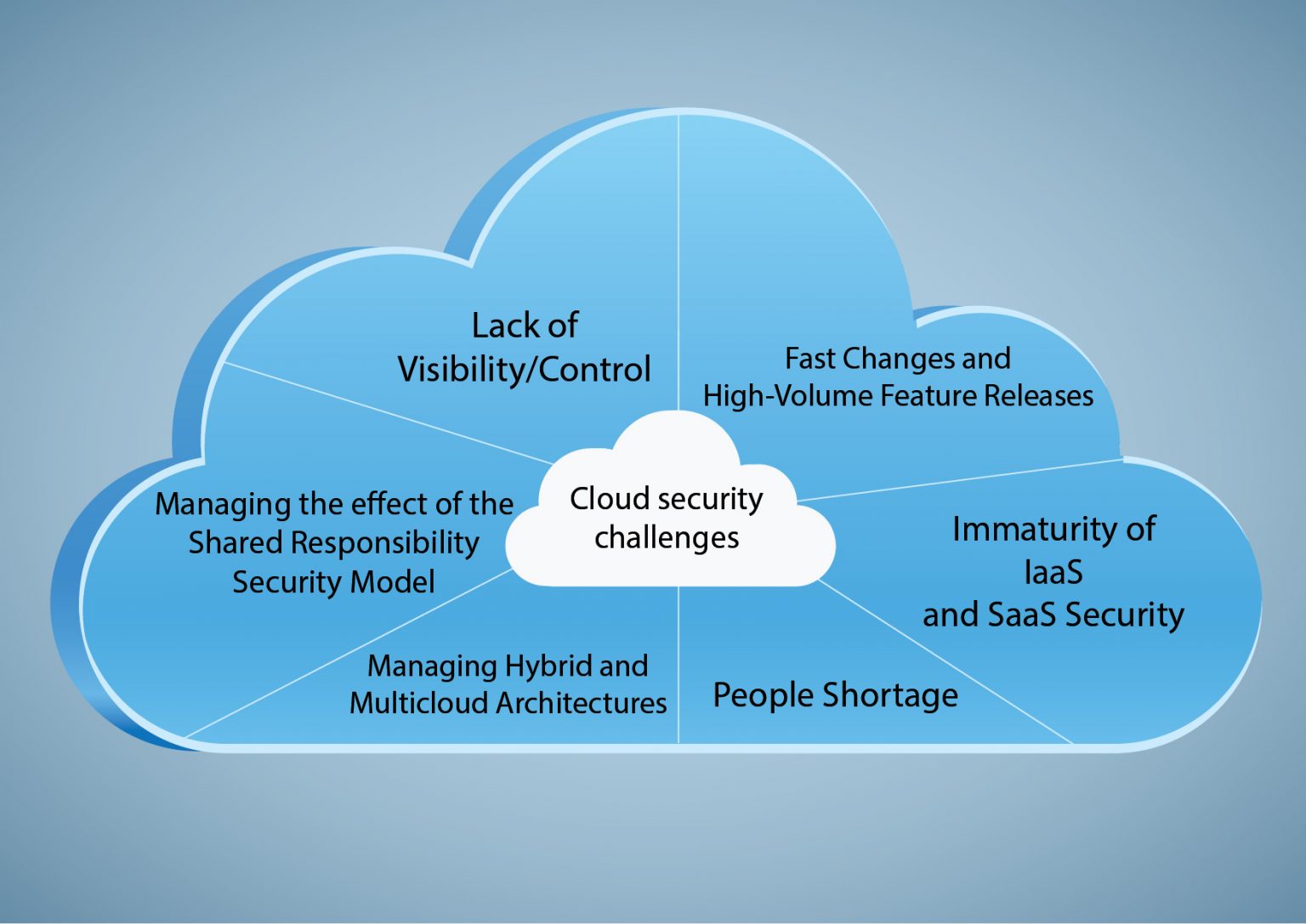
In 2026, the complexity of cloud environments—spanning public, private, and hybrid configurations—necessitates a precise understanding of the Shared Responsibility Model. Unlike traditional on-premises infrastructure where the organization owns the entire stack, cloud security is a partnership. The division of labor depends entirely on the service model: Infrastructure as a Service (IaaS), Platform as a Service (PaaS), or Software as a Service (SaaS).
Under IaaS, the customer manages the operating systems, applications, and data, making them responsible for detecting and mitigating incidents at the guest OS level. In contrast, SaaS providers handle almost the entire infrastructure, leaving the customer primarily responsible for identity and access management (IAM) and data governance. Managing these incidents effectively starts with a "Responsibility Matrix" that clearly defines which party triggers alerts, who performs the initial triage, and how forensic data is exchanged between the Cloud Service Provider (CSP) and the tenant.
Failure to clarify these boundaries often leads to "responsibility gaps," where an incident goes unaddressed because both parties assume the other is monitoring the specific layer. In 2026, sophisticated threats frequently target the management plane (APIs and consoles), making the security of the CSP-customer interface the highest priority for incident managers.
The Cloud Incident Response Lifecycle
To manage incidents effectively, organizations typically follow a lifecycle based on frameworks like NIST SP 800-61, adapted for the dynamic nature of cloud computing. This lifecycle is non-linear and relies heavily on continuous feedback loops.
Preparation and Readiness
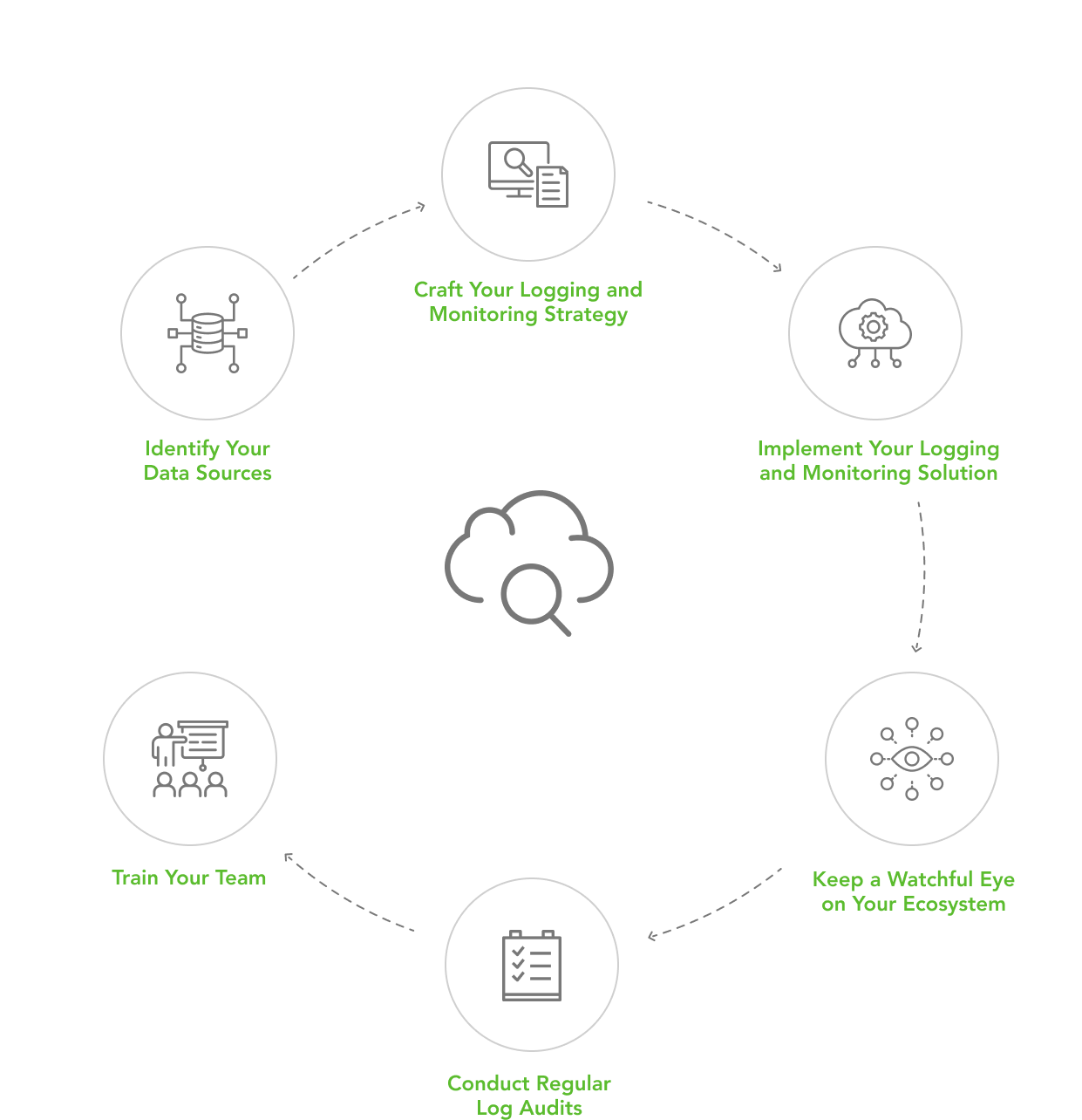
Preparation is the most critical phase for cloud environments. Because cloud resources are often ephemeral—existing only for minutes or hours—forensic evidence can vanish if not captured proactively.
- Logging and Observability: Organizations must enable comprehensive logging, such as AWS CloudTrail, Azure Monitor, or Google Cloud Audit Logs. In 2026, these logs are typically streamed in real-time to a centralized, immutable repository to prevent attackers from "log scrubbing."
- Identity-Centric Defense: Since the perimeter is now identity-based, preparation involves implementing Zero Trust Architecture (ZTA). This includes Just-In-Time (JIT) access and multi-factor authentication (MFA) for all administrative actions.
- Incident Response Plans (IRP): A cloud-specific IRP should include pre-approved "Isolation Playbooks" that allow security teams to quarantine compromised instances or revoke session tokens without waiting for manual executive approval.
Detection and Analysis
Detection in the cloud focuses on behavioral anomalies rather than static signatures. By 2026, most organizations utilize Security Orchestration, Automation, and Response (SOAR) platforms integrated with AI-driven threat intelligence.
- API Monitoring: Attackers often exploit misconfigured APIs. Monitoring for unusual API call patterns (e.g., an account suddenly attempting to export dozens of snapshots) is a primary detection method.
- Drift Detection: Comparing the current state of the cloud environment against the "Golden Image" or Infrastructure as Code (IaC) templates helps identify unauthorized changes that indicate a breach.
Containment, Eradication, and Recovery
In a cloud context, containment often involves "isolation by networking" or "identity suspension" rather than pulling a physical plug.
- Automated Containment: Upon detection of a high-confidence threat, automated scripts can move a compromised Virtual Machine (VM) to an isolated Security Group for forensic analysis.
- Eradication: Rather than "cleaning" an infected server, the standard cloud practice is to "burn and rebuild." The infected resource is terminated, and a fresh instance is deployed from a known-secure image.
- Recovery: Recovery leverages cloud elasticity. Using Immutable Backups and automated deployment pipelines, services can be restored in seconds, provided the underlying vulnerability (e.g., a hardcoded secret in a Lambda function) has been patched.
Managing Forensic Challenges in the Cloud
One of the most difficult aspects of managing cloud incidents is performing forensics on resources that no longer exist. In 2026, forensic management focuses on Live Response and Snapshot Preservation.
When a security event is triggered, the management system must automatically take a snapshot of the volume and a dump of the system memory (RAM). In containerized environments using Kubernetes, managing forensics requires capturing the state of the pod and the associated network traffic through technologies like eBPF (Extended Berkeley Packet Filter).
Incident managers must also coordinate with the CSP’s legal and support teams. While customers have access to their own data, they do not have access to the underlying physical hardware. This necessitates a pre-established protocol for requesting specialized logs from the CSP during high-impact "Tier 1" incidents, such as those involving hypervisor escapes or large-scale DDoS attacks against the cloud backbone.
Comparison of Incident Management Responsibilities by Service Model
The following table outlines how the burden of incident management shifts depending on the cloud architecture used in 2026.
| Feature / Layer | Infrastructure as a Service (IaaS) | Platform as a Service (PaaS) | Software as a Service (SaaS) |
|---|---|---|---|
| Endpoint Security | Customer Responsibility | Customer (limited) | Provider Responsibility |
| Network Traffic | Customer (Virtual Network) | Provider / Customer Mix | Provider Responsibility |
| Identity & Access | Customer Responsibility | Customer Responsibility | Customer Responsibility |
| Application Code | Customer Responsibility | Customer Responsibility | Provider Responsibility |
| Physical Infrastructure | Provider Responsibility | Provider Responsibility | Provider Responsibility |
| Data Integrity | Customer Responsibility | Customer Responsibility | Customer Responsibility |
| Forensic Access | High (Full OS Access) | Moderate (Log-based) | Low (Audit Logs only) |
Automation and AI in 2026 Incident Management
By 2026, manual incident response is considered insufficient for the scale of enterprise cloud deployments. Autonomic Security Operations (ASO) has become the standard, where the system is designed to self-heal and self-defend.
Managing these automated systems requires a shift in personnel skills. Security analysts now function as "Automation Engineers," writing and auditing the Python or Go scripts that power SOAR playbooks. The use of Large Language Models (LLMs) specifically trained on cybersecurity datasets allows for natural language querying of massive log files, significantly reducing the Mean Time to Respond (MTTR). However, managers must also account for "AI-driven threats," such as prompt injection attacks against the security tools themselves, adding a new layer to the incident handling process.
Regulatory Compliance and Legal Notifications
In 2026, global regulations such as the EU Data Act and updated SEC disclosure rules require rapid reporting of "material" incidents—often within 24 to 72 hours of discovery. Managing the handling of these incidents, therefore, includes a significant legal and public relations component.
Incident managers must ensure that the "Chain of Custody" for digital evidence is maintained to satisfy legal requirements. This involves using cryptographically hashed logs and ensuring that all investigative steps are automatically documented in a tamper-proof case management system. If an incident involves the exposure of Personal Identifiable Information (PII), the management process must immediately trigger the "Notification Workflow," which involves legal counsel, data protection officers (DPOs), and potentially law enforcement.
Common Pitfalls in Cloud Incident Management
Even with advanced tools, several common mistakes can compromise the incident handling process:
- Inadequate IAM Permissions: Giving incident responders too much power (e.g., 'AdministratorAccess') can be risky, while giving them too little can delay containment. The use of pre-provisioned, break-glass accounts is essential.
- Ignoring the Control Plane: Many teams focus only on the data plane (the servers) and ignore the control plane (the cloud console). An attacker who gains access to the console can delete backups and bypass all network-level security.
- Lack of Multi-Cloud Parity: Using different IR processes for AWS, Azure, and Google Cloud leads to confusion. Organizations should strive for a "Single Pane of Glass" approach using vendor-neutral security tools.
- Failure to Practice: "Paper-based" incident response plans often fail in reality. In 2026, leading organizations conduct "Chaos Security Engineering" and "Purple Team" exercises to test their automated responses under real-world conditions.
Frequently Asked Questions
How does the Shared Responsibility Model affect incident notification?
The Shared Responsibility Model dictates who is responsible for notifying whom. If the CSP experiences a hardware failure or a breach of the underlying hypervisor, they are legally obligated to notify the customer. Conversely, if a customer’s application is compromised due to a code vulnerability, the customer is responsible for notifying their users and regulators. The timeline for these notifications is often defined in the Service Level Agreement (SLA).
What are the biggest challenges with ephemeral assets in cloud forensics?
Ephemeral assets, such as serverless functions or auto-scaling containers, disappear once they finish their task or are terminated. If an incident occurs on one of these assets, the memory and local disk state are lost. To manage this, 2026 security architectures use "sidecar" containers or agents that stream memory and process metadata to a persistent external storage location in real-time.
How does AI improve incident response speed in 2026?
AI improves speed by automating the "Triage" phase. It can analyze thousands of alerts, correlate them into a single "Incident Story," and prioritize them based on the criticality of the affected asset. Furthermore, generative AI can suggest specific remediation steps or even generate the necessary CLI commands for an analyst to execute, reducing the time spent looking up documentation.
Is a multi-cloud strategy harder to secure than a single-cloud approach?
Yes, multi-cloud strategies are significantly more complex to manage. Each provider has unique log formats, API structures, and identity models. Managing incidents across multiple clouds requires an abstraction layer—usually a third-party Cloud Native Application Protection Platform (CNAPP)—that normalizes data and allows for consistent policy enforcement regardless of the underlying provider.
Strategic Recommendation
To effectively manage security incidents in 2026, organizations should move away from reactive "firefighting" and toward a Proactive Resilience model. This involves integrating security into the CI/CD pipeline (DevSecOps) so that vulnerabilities are caught before they reach the cloud. Additionally, implement Infrastructure as Code (IaC) for your security environment; this allows you to "redeploy" your entire security stack and monitoring configuration in a known-good state if it is ever compromised. Finally, ensure your incident response team conducts quarterly "Cloud Game Days" to simulate high-stakes breaches and refine automated playbooks.
Image Gallery