The U.S. Dash Cam Guide: Regulations, Technical Features, and Installation
Dashboard cameras, commonly known as dash cams, have become essential driver security tools across the United States. Operating a dash cam in the U.S. requires navigating a complex patchwork of state windshield obstruction laws, federa...
Dashboard cameras, commonly known as dash cams, have become essential driver security tools across the United States. Operating a dash cam in the U.S. requires navigating a complex patchwork of state windshield obstruction laws, federal highway regulations, and audio wiretapping statutes. While dash cams are legal in all 50 states, drivers must position their devices within strict legal zones and ensure compliance with regional privacy laws to keep recorded video and audio admissible as evidence in court or insurance claims.
Contents
Legal Landscape of Dash Cams in the United States
Understanding U.S. automotive and privacy laws is critical before affixing a dash camera to any vehicle. Although no federal law prohibits private vehicle owners from recording public roadways, how and where a camera is installed—along with how audio is captured—is subject to both federal guidelines and state statutes.
- U.S. Dash Cam Legal Spectrum
- Visual Obstruct Laws
- FMCSA 49 CFR 393.60
- State Windshield Clear-Sight Rules
- Suction / Adhesive Placement Limits
- Audio Privacy Laws
- 1-Party Consent
- 2-Party Consent
- Passenger Notice
- Visual Obstruct Laws
Windshield Obstruction Laws
The primary legal hurdle for U.S. drivers is windshield obstruction. Federal regulations enforced by the Federal Motor Carrier Safety Administration (FMCSA 49 CFR 393.60) state that video event recorders on commercial motor vehicles must be mounted no more than 4 inches below the upper edge of the area swept by the windshield wipers, or within 7 inches above the bottom edge, outside of the driver's primary line of sight.
For passenger vehicles, state laws govern windshield placement:
- Prohibitive States: States like Minnesota and Wisconsin strictly limit objects mounted directly to the front windshield glass. In these jurisdictions, dash cams should be mounted on the dashboard or attached directly to the interior rear-view mirror stem.
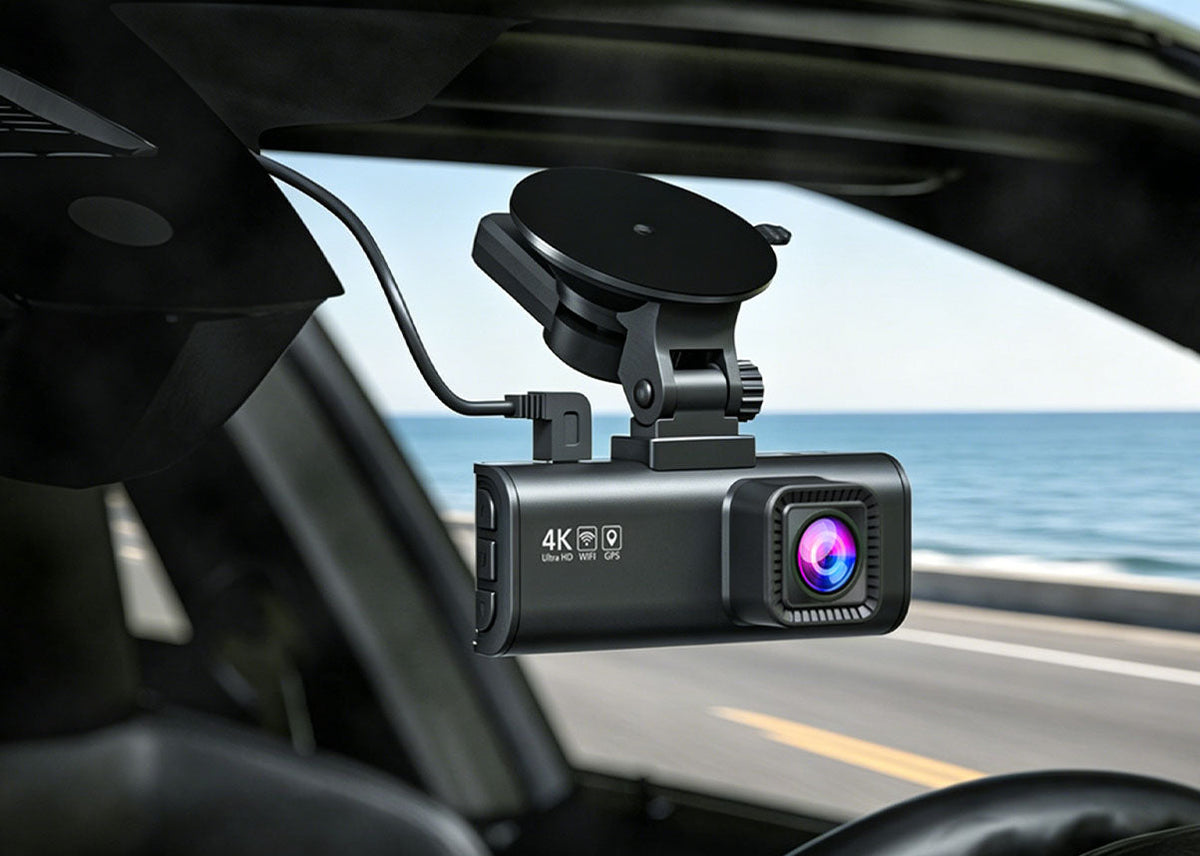
- Permissive States: States such as California (California Vehicle Code § 26708) allow dash cams to be affixed to the windshield if the device occupies no more than a 5-inch square on the lower corner of the driver’s side, or a 7-inch square on the lower corner of the passenger’s side.
- Flexible States: Many states, including Texas and Florida, permit windshield mounting provided the camera does not obstruct the driver's clear view of the road or traffic control devices.
Audio Recording and Privacy Laws
While recording public roads outside the vehicle is generally protected under the First Amendment, capturing interior cabin conversations involves state wiretapping and eavesdropping laws:
- One-Party Consent States: In the majority of U.S. states, audio recording is legal if at least one party to the conversation (which can be the driver) consents to being recorded.
- All-Party (Two-Party) Consent States: In roughly a dozen states—including California, Florida, Illinois, Maryland, Massachusetts, Pennsylvania, and Washington—all individuals inside the vehicle must consent to audio recording.
Drivers in all-party consent states, particularly rideshare drivers working for Uber or Lyft, must disable interior microphone recording or place clear informational decals on vehicle windows alerting passengers that audio recording is active.
Technical Specifications for American Driving Conditions
Selecting a dash camera for U.S. driving requires evaluating optical sensors, thermal durability, and recording capabilities designed to withstand diverse climate zones and high-speed highway conditions.
Sensor Resolution and Image Processing
High optical resolution is necessary to capture fine details such as license plate numbers, state registration tags, and road signs at high speeds.
1080p Full HD (1920 x 1080)
- Basic coverage
- Standard detail
1440p / 2K QHD (2560 x 1440)
- Higher legibility
- Balanced storage
2160p / 4K UHD (3840 x 2160)
- Maximum clarity
- License plate detail
1080p Full HD: The baseline standard for basic video capture, suitable for urban commuting.
1440p (2K) Quad HD: Delivers a 78% increase in pixels over 1080p, offering a strong balance between visual detail and memory card storage consumption.
2160p (4K) Ultra HD: The premium standard for low-light legibility and distance capture. Native 4K cameras utilizing image sensors such as the Sony STARVIS 2 (IMX678) capture small details clearly, even in dark environments or against high-contrast headlights.
High Dynamic Range (HDR) and Night Vision
U.S. highways vary significantly in ambient lighting, from well-lit urban interstates to unlit rural highways. Real High Dynamic Range (HDR) processing combines multiple exposure levels into a single frame, preventing headlight glare from overexposing license plates while illuminating shadow details in nighttime accidents.
Thermal Resilience: Supercapacitors vs. Lithium Batteries
Vehicles parked outdoors in sunbelt states like Arizona, Nevada, and Texas can experience interior cabin temperatures exceeding 140°F (60°C). Conversely, northern states experience sub-zero winter temperatures.
- Lithium-Ion Batteries: Prone to swelling, chemical degradation, fluid leaks, and fire risks under high heat. They carry a short lifespan when exposed to extreme thermal cycling.
- Supercapacitors: Highly recommended for dash cams used in the U.S. Supercapacitors store electrical energy electrostatically rather than chemically, enabling safe operation across broad temperature ranges (-4°F to 158°F / -20°C to 70°C) and extending the camera's operational lifespan.
Multi-Channel Systems and Installation Methods
Modern U.S. dash cams are available in multi-camera configurations to provide comprehensive vehicle surveillance.
- Multi-Channel Camera Layout
- Front Camera (Primary Coverage)
- Interior Cam (Cabin / Rideshare)
- Rear Camera (Rear Collision)
- Front Camera (Primary Coverage)
Channel Configurations
- Single-Channel (1-CH): Captures the forward road view only. Easy to install, but provides no coverage for rear-end collisions or side impacts.
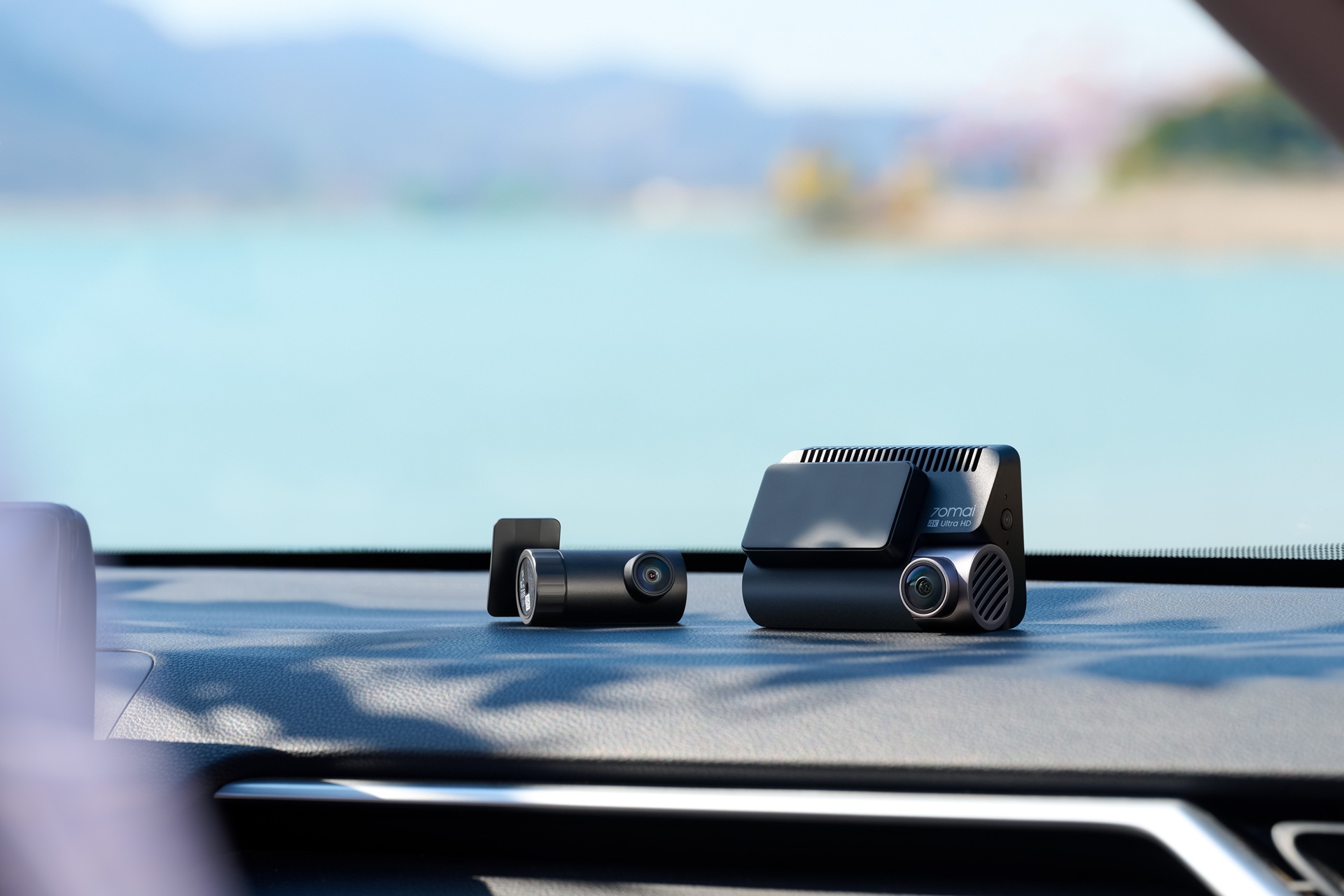
- Dual-Channel (2-CH): Includes a front camera and a rear camera mounted on the back windshield. This setup captures tailgate tailgating, rear-end impacts, and traffic approaching from behind.
- Triple-Channel (3-CH): Adds an interior-facing infrared (IR) camera focused on the passenger cabin. This configuration is widely used by commercial delivery fleets, rideshare drivers, and taxi operators.
Wiring and Power Options
| Connection Method | Primary Power Source | Key Advantages |
|---|---|---|
| 12V Auxiliary Plug | Cigarette lighter socket | Plug-and-play; no tool setup |
| OBD-II Power Cable | On-Board Diagnostics port | Easy installation with parking mode |
| Hardwire Kit | Vehicle fuse box (BAT/ACC) | Cleanest look; full 24/7 power |
12V Auxiliary Power Outlet
The simplest installation relies on the car's 12V cigarette lighter plug. The camera powers on and off automatically with the vehicle ignition. However, this leaves cables exposed across the dashboard and typically disables continuous parking monitor features when the engine is off.
OBD-II Port Adapters
OBD-II power cables plug directly into the diagnostic port located under the driver-side dashboard. This method supplies constant power for parking surveillance without opening the main fuse box. Many OBD-II cables feature built-in voltage switches to prevent vehicle battery drain.
Fuse Box Hardwiring
Hardwiring involves connecting a three-wire cable (Constant 12V, Switched Accessory, and Chassis Ground) directly into the vehicle's interior fuse panel using add-a-fuse (fuse tap) connectors.
Hardwiring provides a clean installation, hiding all wires behind trim panels and headliners. It also enables Parking Mode, allowing the camera to record impact events or motion while the car is unattended. Hardwire kits should feature an integrated Low Voltage Cutoff (LVC) switch set between 11.8V and 12.4V to prevent draining the car's main 12V starter battery.
State Regulations and Placement Specs Matrix
The following reference table outlines windshield mounting compliance, audio consent standards, and ideal installation locations across selected key U.S. jurisdictions.
| State | Windshield Mounting Rules | Audio Consent Type | Permitted Placement Zone | Recommended Power Option |
|---|---|---|---|---|
| California | Strictly regulated (CVC § 26708) | All-Party (Two-Party) | 5-in sq lower driver corner; 7-in sq lower passenger corner | Hardwired with LVC switch |
| Texas | Permitted if line of sight is clear | One-Party | Behind rear-view mirror outside driver view | Hardwired (Supercapacitor model) |
| Florida | Permitted if line of sight is clear | All-Party (Two-Party) | Top center of windshield behind mirror | Hardwired (High-temp resistant) |
| New York | Clear windshield required; no vision obstruction | One-Party | Upper passenger side of rear-view mirror | OBD-II Pass-through cable |
| Illinois | Restricted; no visual obstruction | All-Party (Two-Party) | Dashboard mount or mirror stem attachment | 12V Auxiliary / Hardwired |
| Minnesota | Prohibits objects attached to windshield | One-Party | Dashboard friction mount or mirror stem | Hardwired to vehicle fuse box |
| Washington | Restricted to peripheral zones | All-Party (Two-Party) | 5-in sq lower corner or top edge of glass | Hardwired with battery protection |
Dash Cam Evidence in U.S. Auto Insurance Claims
Dash cams serve as objective witnesses during insurance disputes, traffic court proceedings, and civil litigation. American insurance companies do not typically offer direct policy discounts simply for owning a dash camera; however, high-quality video footage speeds up claims processing and helps drivers avoid fault determination penalties.
- Incident Occurs
- Save & Secure Footage (Lock files / Backup SD card)
- Submit Video to Adjuster (Provides unassailable proof of fault)
- Accelerated Claim Settlement (No fault penalty / Deductible saved)
Proving Fault in Complex Accidents
In multi-vehicle accidents, lane-change collisions, and intersection right-of-way disputes, driver statements often conflict. Clear video footage showing traffic signals, turn signals, lane markings, and vehicle positions provides conclusive proof of liability to insurance adjusters and law enforcement officers.
Combating Insurance Fraud
Dash cams protect drivers against staged-accident schemes, such as "swoop and squat" maneuvers where a bad actor cuts in front of a victim and slams on the brakes to force a rear-end collision. Video evidence captures deliberate fraud, preventing fraudulent personal injury claims and keeping insurance premiums low.
Hit-and-Run and Vandalism Claims
Dual-channel cameras with hardwired parking surveillance continuously record surroundings when the vehicle is unattended. If another driver strikes a parked vehicle and leaves the scene, video evidence capturing the hit-and-run vehicle's license plate, make, model, and color allows police and insurance companies to hold the responsible party accountable, saving the owner from paying an unrecoverable comprehensive or collision deductible.
Memory Card Maintenance and Storage Troubleshooting
Dash cams continuously write, erase, and overwrite large amounts of video data. Standard consumer MicroSD cards designed for digital cameras or smartphones often fail rapidly under continuous dash cam recording loads.
Choosing the Correct MicroSD Card
- Card Endurance: Always select High Endurance or Max Endurance memory cards. These cards utilize Industrial-Grade MLC (Multi-Level Cell) or specialized TLC (Triple-Level Cell) NAND flash memory designed specifically for thousands of continuous write/erase cycles.
- Speed Class Rating: Look for cards rated UHS-I U3 or Video Speed Class V30 (minimum sustained write speed of 30 MB/s). This speed ensures smooth high-bitrate 4K multi-channel recording without dropping video frames or corrupting files.
- Storage Capacity: Standard 4K dual-channel dash cams require at least a 128GB or 256GB card to store several hours of driving footage before loop recording overwrites older files.
| MicroSD Card Type | Continuous Overwrite | Operational Fit |
|---|---|---|
| Standard Class 10 / U1 | Low (Fails quickly) | Standard digital photo cameras |
| High Endurance U3 / V30 | High (Thousands hrs) | 1080p and 2K dual-channel dash cams |
| Max Endurance U3 / V30 | Maximum (10,000+ hrs) | Continuous 4K multi-channel systems |
Best Practices for Card Longevity
- In-Camera Formatting: Format the MicroSD card directly inside the dash camera menu once every 4 to 6 weeks. This cleans file system fragmentation and clears corrupt data sectors.
- Manual File Backup: Immediately pull the memory card or transfer video files to a mobile phone or cloud storage following an incident. Lock protected emergency files to prevent loop recording from overwriting critical footage.
- Annual Replacement: Even high-endurance cards degrade over time. Replace dash cam memory cards every 12 to 24 months to ensure continuous performance.
Recommended Next Steps for U.S. Drivers
To install and operate a dash camera system effectively and legally:
- Verify Local State Regulations: Check your state's motor vehicle code regarding windshield obstruction limits and interior audio recording consent laws.
- Select the Right Camera Configuration: Choose a dual-channel (front and rear) supercapacitor-powered dash camera featuring high dynamic range (HDR) and Sony STARVIS sensor technology.
- Use High-Endurance Storage: Equip the camera with a dedicated High Endurance UHS-I U3 / V30 MicroSD card rated for continuous overwrite cycles.
- Choose an Appropriate Mounting Spot: Mount the camera centered directly behind the interior rear-view mirror to keep it out of the driver's primary line of sight.
- Install a Low-Voltage Hardwire Kit: Wire the device to the interior fuse panel or OBD-II port using an adjustable low-voltage cutoff kit to maintain battery health during parking monitor mode.
Frequently Asked Questions
Is it legal to have a dash cam mounted on the windshield in all U.S. states?
Dash cams are legal in all 50 states, but placement rules vary. Some states ban objects mounted directly on the front glass, requiring cameras to be positioned on the dashboard or attached to the rear-view mirror. Other states allow windshield mounting provided the camera is placed within specified 5-inch or 7-inch peripheral zones outside the driver's line of sight.
Can police seize my dash cam or delete footage during a traffic stop?
U.S. law enforcement officers cannot search or seize personal property, including a dash camera or memory card, without a valid warrant, probable cause related to a serious crime, or explicit consent. Police officers are legally prohibited from modifying, editing, or deleting footage from a driver's camera.
Does a dash cam lower auto insurance rates in the United States?
Most major U.S. insurance providers do not offer a direct upfront policy discount for installing a dash cam. However, dash camera video speeds up claim processing, provides definitive evidence to avoid improper fault assignment, and protects policyholders from paying out-of-pocket deductibles in fraudulent claims or hit-and-run incidents.
How does parking mode work without draining the car battery?
Parking mode operates using hardwire kits connected to the vehicle's fuse box or OBD-II port. Quality hardwire kits feature an integrated Low Voltage Cutoff (LVC) sensor that continuously monitors the starter battery's health. When vehicle voltage drops below a pre-set threshold (such as 12.0V), the kit cuts power to the camera completely, ensuring the engine can still start.
Should I record audio inside my dash cam?
Recording audio inside the vehicle is fine in one-party consent states if the driver consents. However, in all-party (two-party) consent states like California, Florida, and Pennsylvania, all vehicle occupants must agree to be recorded. Drivers who frequently carry passengers or operate rideshares should post notice decals or turn off internal audio recording.
Editorial Category Metadata:
Image Gallery