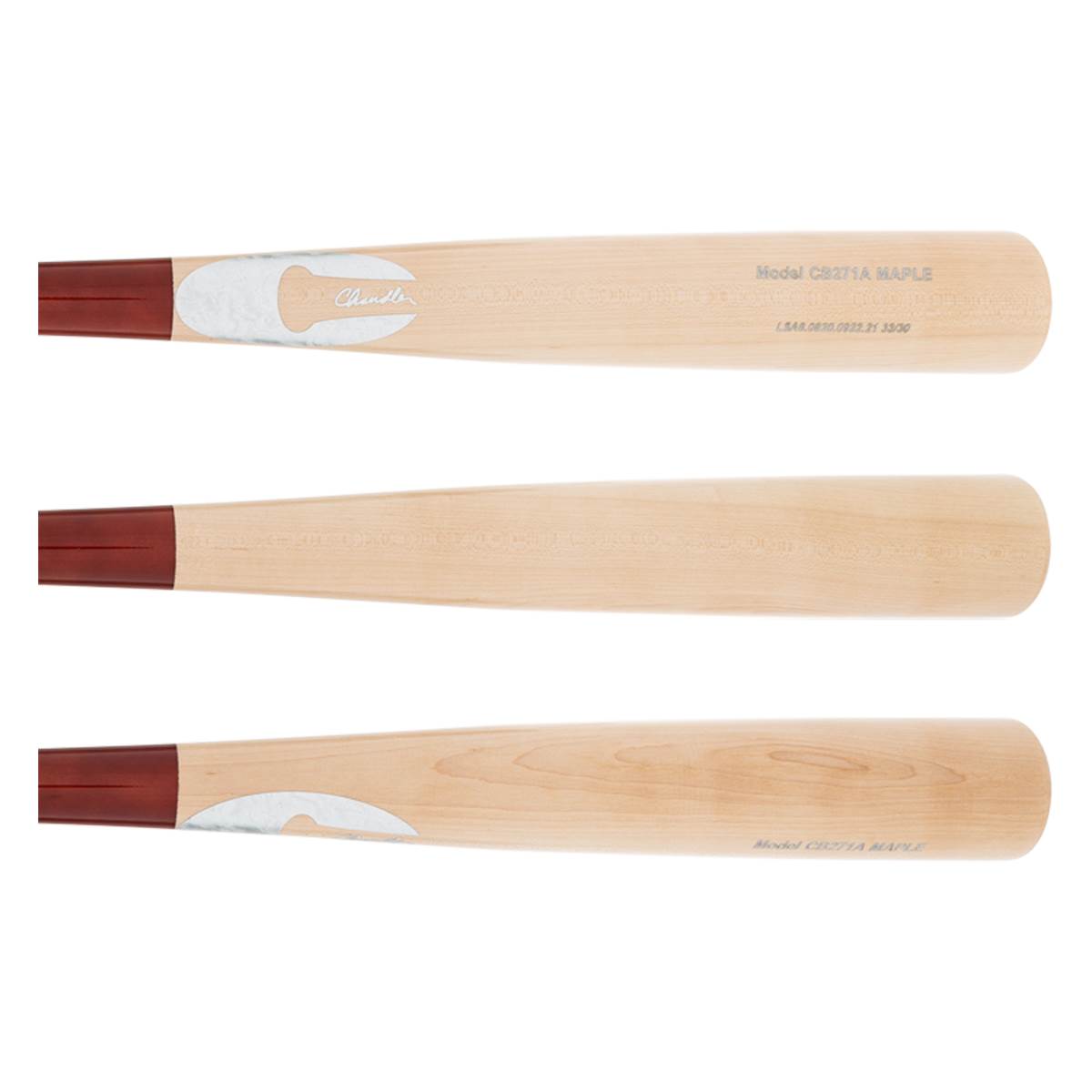
Does Yoenis Céspedes Own Chandler Bats? Ownership History and Brand Overview
Yes, former Major League Baseball (MLB) slugger Yoenis Céspedes owns Chandler Bats. After the high-end wooden bat manufacturer faced severe financial challenges and corporate restructuring in 2019, Céspedes—a long-time user of the bran...
Yes, former Major League Baseball (MLB) slugger Yoenis Céspedes owns Chandler Bats. After the high-end wooden bat manufacturer faced severe financial challenges and corporate restructuring in 2019, Céspedes—a long-time user of the brand during his major league career—acquired the company. He took over primary ownership to preserve its legacy of craftsmanship, high-density wood selection, and elite performance standards.
Contents
The Origins of Chandler Bats and Its Rise in Major League Baseball
Chandler Bats was founded in 2009 by David Chandler under the parent entity RxSport. Emerging during an era when wood bat manufacturing was transitioning from traditional ash to high-density sugar maple, Chandler set out to engineer a product that catered to the precise mechanical feedback demanded by professional hitters.
Unlike traditional bat makers that focused primarily on mass production, Chandler applied furniture-grade woodworking practices to baseball bat turning. The company gained rapid attention across Major League clubhouses for several key innovations:
- Engineered Density: Selecting prime cuts of hard rock maple to maximize exit velocity and limit barrel compression.
- Luxury Aesthetics: Utilizing high-luster piano finishes, 22-karat gold leaf logos, and distinct metallic barrel coatings.
- Strict Tolerances: Maintaining weight differentials within fractions of an ounce to ensure identical swing feels across multiple bats in a player's batch.
By the mid-2010s, Chandler Bats became one of the most recognizable brands on televised MLB broadcasts. Superstars like Bryce Harper, Aaron Judge, Kris Bryant, and Yoenis Céspedes himself relied on Chandler models during some of the most productive years of their careers.
How Yoenis Céspedes Acquired Chandler Bats: The 2019 Buyout
Despite strong product demand and widespread adoption by marquee players, RxSport (the parent company of Chandler Bats) encountered financial instability, supply chain bottlenecks, and mounting debt by 2019. The company entered financial restructuring and court-supervised insolvency proceedings.
Yoenis Céspedes, who had played for the Oakland Athletics, Boston Red Sox, Detroit Tigers, and New York Mets, recognized that the brand risked dissolution. Having swung Chandler bats exclusively for years, Céspedes stepped in to provide capital and save the business.
- 2009: Founded by David Chandler
- 2012–2018: MLB Adoption & Growth
- 2019: Financial Restructuring
- Late 2019: Acquired by Yoenis Céspedes
- 2020–2026: Modernized Production & Expansion
In late 2019, Céspedes finalized an acquisition agreement, purchasing the assets, intellectual property, machinery, and brand rights of Chandler Bats. The deal transitioned ownership away from founder David Chandler and placed corporate governance under Céspedes and his executive leadership team.
Céspedes’s primary goals for the acquisition were straightforward:
- Preserve the proprietary turning recipes and wood-sourcing standards that made the bats popular.
- Stabilize company finances and resolve legacy liabilities.
- Modernize manufacturing facilities to shorten lead times for both professional players and retail consumers.
- Expand retail availability while maintaining custom-shop craftsmanship.
Brand Evolution Under Céspedes's Ownership
Following the acquisition, Céspedes restructured Chandler’s supply chain and production operations. The company reorganized its manufacturing operations, maintaining core wood turning standards in Pennsylvania while setting up operational bases in Florida near major Spring Training facilities.
Under Céspedes's direction, Chandler Bats underwent several operational improvements:
1. Capital Investments in Manufacturing
The brand invested in updated computer numerical control (CNC) wood lathes and precision automated sanders. This machinery ensured that the weight distribution, taper dimensions, and handle contours of custom orders matched the exact digital specs submitted by players.
2. Streamlined Direct-to-Consumer (DTC) Sales
Historically, boutique wood bat makers prioritized big-league clients, leaving amateur players facing months-long turnaround times. Céspedes expanded Chandler's digital direct-to-consumer storefront, offering non-professional ballplayers access to stock turn models, custom colorways, and quick-ship options without sacrificing wood quality.
3. Preserving Professional Player Relationships
Céspedes utilized his deep connections across Latin American ballplayers and MLB clubhouses to maintain a strong presence in professional baseball. Top-tier power hitters continue to swing Chandler bats in official games, backed by the brand's compliance with strict MLB wood testing guidelines.
Overview Table: Chandler Bats Key Milestones and Specifications
| Parameter / Feature | Historical & Current Details |
|---|---|
| Primary Owner | Yoenis Céspedes (Acquired late 2019) |
| Year Founded | 2009 (by David Chandler under RxSport) |
| Primary Wood Species | North American Hard Rock Maple, Pro-Grade White Ash, Yellow Birch |
| Headquarters & Production | Port St. Lucie, FL & Pennsylvania, USA |
| Signature Features | High-gloss clear coats, hand bone-rubbed barrels, strict weight tolerances |
| MLB Compliance | Full MLB Ink-Dot Certification (Slope of Grain testing ≤ 1:20) |
| Target Audience | MLB/MiLB players, NCAA collegiate athletes, competitive youth/high school players |
| Popular Turn Profiles | AJ99, CC1, AP5 profiles, XP Series (compressed wood) |
Technical Excellence: Why Professional Hitters Use Chandler Bats
To understand why an MLB player would purchase a bat manufacturing company, it helps to examine the engineering behind Chandler bats. Wood bats are not identical; subtle differences in wood selection, moisture content, and turning techniques alter exit velocity, durability, and barrel feel.
- Raw Billet Selection
- Moisture Kiln Drying
- CNC Lathe Turning
- Hand Sanding & Bone Rubbing
- Ink-Dot Grain Test
- High-Luster Finishing
Wood Sourcing and Grain Density
Chandler uses high-density maple harvested from northern forests in the United States and Canada. Northern climates feature shorter growing seasons, producing trees with tightly packed annual growth rings. Tighter growth rings yield denser wood billets, which resist surface indentation and transfer kinetic energy into the ball more efficiently.
Bone Rubbing and Wood Compression
Before finishing, every Chandler bat undergoes a manual "bone-rubbing" process. Technicians rub the wood barrel with a hardened steel rod or smooth bone under intense pressure. This compresses the outer wood fibers, closing microscopic pores and hardening the impact zone. Bone-rubbed bats are less prone to flaking or splintering along the grain lines.
MLB Ink-Dot Compliance
To comply with Major League Baseball regulations, maple and birch bats used in professional play must pass an ink-dot slope-of-grain test. A single drop of black ink is applied to the unpainted handle to expose the wood grain angle. If the grain strays more than 2.86 degrees (a 1:20 ratio) from the longitudinal axis of the bat, it is disqualified from professional use due to shatter risks. Chandler applies this rigorous quality control across both its pro-issue lines and commercial offerings.
Popular Chandler Bat Models and Profiles
Chandler offers several turn models customized for different hitting styles, ranging from end-loaded power bats to balanced contact profiles.
CHANDLER BAT LINEUP
- Power Profiles
- AJ99 (Large Barrel)
- XP Series (End-Load)
- Contact Profiles
- CC1 (Balanced)
- 271 Profile (Tapered)
- Power Profiles
AJ99: Modeled for maximum leverage and barrel surface area. Features a medium-to-thin handle transitioning into a large barrel, providing an end-loaded swing weight favored by home-run hitters.
CC1: Designed for maximum barrel control. It features a gradual taper from handle to barrel, distributing weight evenly throughout the stick for faster swing speeds and precise bat-head control.
XP Series (Extreme Pressure Compression): Incorporates a proprietary manufacturing stage where the raw wood billet is subjected to extreme multi-directional hydraulic pressure. This process increases overall wood density throughout the core, giving hitters a harder hitting surface without adding weight.
Choosing and Caring for a Pro-Grade Wood Bat
Whether buying a Chandler bat for high school showcase play, collegiate summer leagues, or professional competition, proper selection and maintenance are essential for maximizing bat performance and longevity.
1. Select the Right Drop Weight
Most adult wood bats are turned to a -3 drop weight (length in inches minus weight in ounces). For example, a 33-inch bat will weigh approximately 30 ounces. Players transitioning from light BBCOR composite bats should start with balanced models (like a 271 or CC1 turn) before attempting to swing end-loaded models (like an AJ99).
2. Proper Impact Orientation (Label Up / Label Down)
When swinging a maple bat, contact must be made on the edge grain (90 degrees away from the logo placement) to prevent structural splitting. Chandler places its logo stamp so that holding the label directly facing up or directly facing down automatically positions the flat grain perpendicular to incoming pitches, placing the dense edge grain directly in the impact zone.
3. Humidity and Storage Control
Wood is hygroscopic; it absorbs and releases environmental moisture. Storing wood bats in hot car trunks or damp basements causes the wood to swell, gain weight, or become brittle. Store bats indoors at room temperature, standing vertically in a dry rack.
Frequently Asked Questions (FAQs)
Did Yoenis Céspedes buy Chandler Bats directly out of bankruptcy?
Yes. Yoenis Céspedes acquired Chandler Bats (RxSport) in late 2019 through a financial restructuring agreement. The transaction allowed the company to satisfy outstanding creditors, maintain its production intellectual property, and continue manufacturing without shutting down operations.
Does David Chandler still work for Chandler Bats?
No. Following the 2019 buyout by Yoenis Céspedes, founder David Chandler parted ways with the brand. Executive control and corporate governance were transferred entirely to Céspedes and his management team.
Are Chandler bats approved for use in Major League Baseball (MLB)?
Yes. Chandler Bats remains fully certified on the MLB approved bat manufacturer list. The company adheres to all official specifications regarding wood density, barrel diameter limits, and handle ink-dot testing for slope-of-grain integrity.
What kind of wood does Chandler use for its bats?
Chandler primarily uses top-grade North American Hard Rock Maple, Pro-Grade White Ash, and Yellow Birch. Hard Rock Maple is the most popular choice among professional hitters due to its hardness, minimal flex, and high exit velocity performance.
Can amateur and high school players purchase Chandler bats?
Yes. While Chandler initially focused on custom orders for professional athletes, the company under Céspedes’s leadership expanded direct-to-consumer sales. Amateur players can order stock models or fully customized bats directly from the official Chandler website and select retail partners.
Practical Recommendation for Players and Buyers
If you are considering purchasing a Chandler bat, keep the following steps in mind to select the best option:
- Assess Swing Mechanics: If you rely on bat speed and line-drive contact, choose a balanced turn model like the CC1 or 271. If you are a physical power hitter who generates high rotational acceleration, opt for an end-loaded barrel like the AJ99.
- Verify League Rules: Ensure your league allows maple or birch wood. High school and youth players should confirm whether ink-dot certifications or specific barrel diameter limits are required by their governing bodies.
- Inspect the Grain: When taking delivery of any pro-grade wood bat, examine the handle's ink dot to verify straight grain alignment, and store the bat in a climate-controlled room to protect the wood's moisture content.
Image Gallery