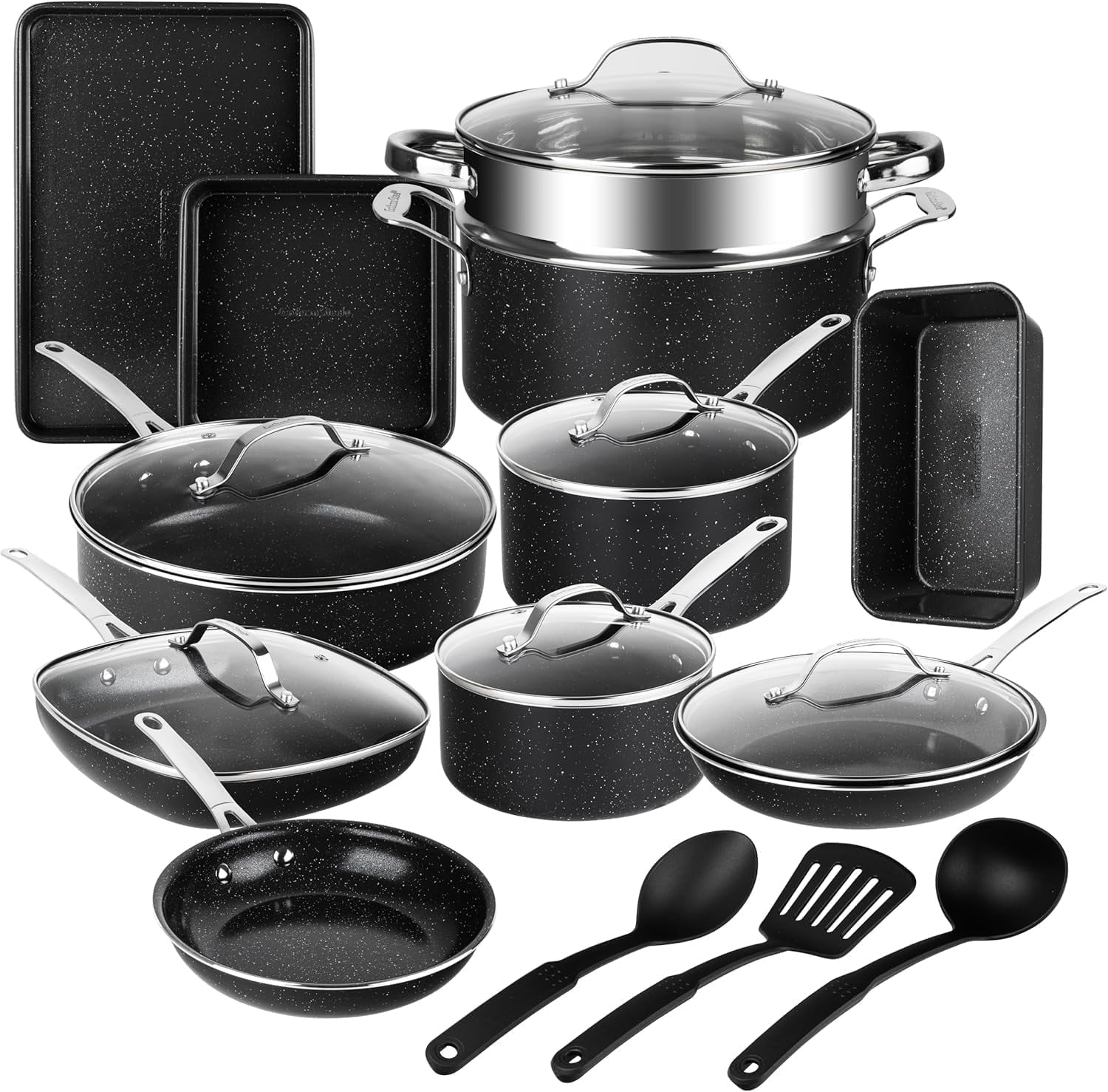
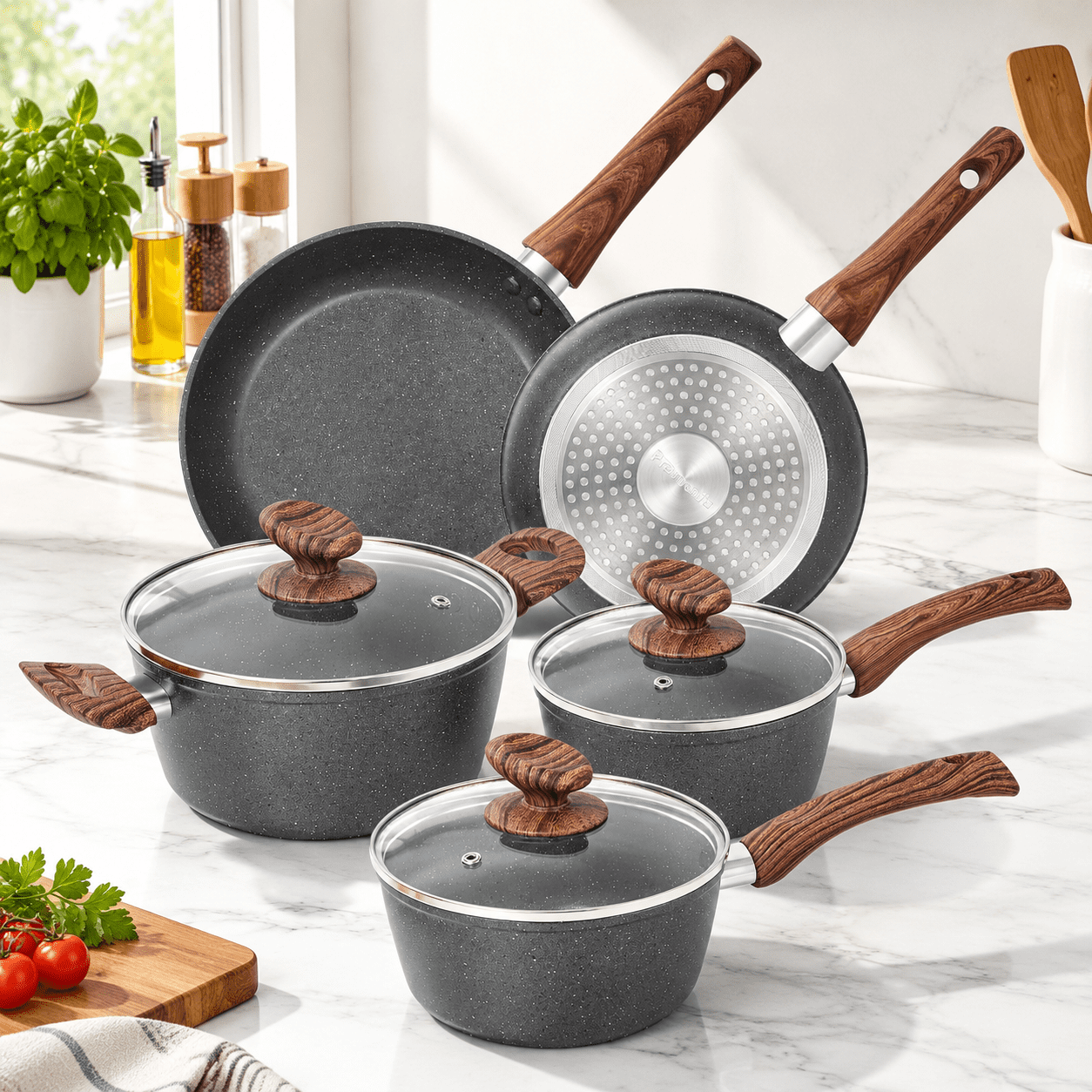
What Is the Best Nonstick Cookware? A Complete Guide to Materials, Performance, and Safety
The best nonstick cookware features a heavy-gauge hard-anodized aluminum body paired with a multi-layer PTFE (polytetrafluoroethylene) or advanced sol-gel ceramic coating. For maximum durability, even heating, and effortless food relea...
The best nonstick cookware features a heavy-gauge hard-anodized aluminum body paired with a multi-layer PTFE (polytetrafluoroethylene) or advanced sol-gel ceramic coating. For maximum durability, even heating, and effortless food release, top-rated cookware pairs a thick magnetic stainless steel base for induction compatibility with heat-resistant, double-riveted stainless steel handles safe up to at least 400°F.
Contents
Understanding Nonstick Cookware Technology
Evaluating nonstick cookware requires looking beyond marketing terms like "granite," "diamond," or "stone." These phrases usually refer to cosmetic textures or mineral additives embedded in standard coating matrices. The core functionality of any nonstick pan depends on two main components: the structural base metal and the hydrophobic surface coating.
The structural base dictates how quickly and evenly heat travels across the cooking surface. Aluminum is the industry standard due to its high thermal conductivity and low cost. Un-anodized aluminum is soft and reactive with acidic foods, so quality manufacturers subject it to an electrochemical process called hard-anodization.
Hard-anodized aluminum undergoes an acid bath exposed to an electrical current, transforming the outer layer of raw aluminum into aluminum oxide. This layer is twice as hard as stainless steel, corrosion-resistant, and non-reactive, creating an ideal foundation for nonstick surface layers.
- Cookware Base Structure
- Top Surface: Hydrophobic Nonstick Layer (PTFE or Ceramic Sol-Gel Matrix)
- Mid Layers: Primer & Reinforcement Coatings (Plasma/Titanium/Diamond Particles)
- Core Layer: Hard-Anodized Aluminum (High Thermal Conductivity)
- Bottom Plate: Encapsulated Stainless Steel (Induction Magnetic Compatibility)
The outer nonstick layer relies on low surface energy to prevent protein strands and carbohydrates from bonding with the metal. When food hits a hot, un-coated pan, denatured proteins sink into microscopic fissures on the metal surface, forming mechanical bonds. Nonstick coatings fill these micro-fissures, establishing a smooth barrier that forces food to slide across the pan.
Nonstick Surface Chemistry: PTFE vs. Ceramic Sol-Gel
Choosing nonstick cookware primarily comes down to selecting between two distinct surface chemistries: traditional PTFE fluoropolymers and ceramic sol-gel coatings.
- Nonstick Coating Types
- PTFE Fluoropolymer
- Synthetic polymer
- Superior release
- 3 to 5+ year lifespan
- Limit: 500°F (260°C)
- Ceramic Sol-Gel
- Silica-derived gel
- PTFE/PFAS-free
- High initial release
- Limit: 600°F+ (315°C)
- PTFE Fluoropolymer
Traditional PTFE (Polytetrafluoroethylene)
PTFE is a synthetic fluoropolymer known for having one of the lowest coefficients of friction of any solid material. High-performance PTFE pans use multi-layered application systems:
- Primer Coat: Adheres directly to the etched or anodized aluminum substrate.
- Mid-Coat: Often reinforced with titanium, ceramic, or synthetic diamond particles to resist scratch damage.
- Topcoat: Pure PTFE engineered specifically for fluid and food release.
Multi-layer PTFE coatings provide exceptional longevity, often lasting three to five years under regular residential use. They offer unmatched release properties for delicate items like eggs, crepes, and flaky fish. However, PTFE degrades when exposed to temperatures exceeding 500°F (260°C), making it unsuitable for high-heat searing.
Ceramic Sol-Gel Coatings
Ceramic nonstick cookware does not use traditional kiln-fired clay. Instead, it relies on a sol-gel process that converts liquid inorganic monomers (primarily silica derived from sand) into a hard gel matrix via chemical reaction.
Ceramic coatings are naturally free of PTFE, PFOA, PFAS, and heavy metals. They can withstand higher surface temperatures (up to 600°F or 315°C) without chemical breakdown or gas emissions.
Despite these advantages, ceramic coatings have a shorter functional lifespan than PTFE. The rigid silica matrix develops microscopic cracks over repeated heating and cooling cycles. Oil microscopic residue collects in these tiny fractures, degrading the nonstick release over 12 to 24 months of daily cooking.
Key Performance Factors to Consider
To choose nonstick cookware that lasts, evaluate the following structural specifications before buying:
Base Construction and Gauge Thickness
Pan thickness directly influences warp resistance and thermal distribution. Stamped aluminum pans thinner than 3 millimeters heat unevenly, creating hot spots that scorch food and ruin nonstick coatings. Look for heavy-gauge cold-forged or cast aluminum with a thickness between 4.5 millimeter and 6 millimeter.
If cooking on an induction cooktop, ensure the pan features a bonded or encapsulated magnetic stainless steel base plate. Without this magnetic iron plate, aluminum pans will not interact with induction stovetop coils.
Handle Attachment and Ergonomics
Nonstick cookware handles are typically attached using one of three methods:
- Double or Triple Riveting: The gold standard for commercial and high-end residential cookware. Stainless steel rivets permanently join the handle to the pan wall. Ensure the rivets inside the cooking vessel are coated in nonstick material or made of flush stainless steel for easy cleaning.
- Welded Joints: Creates a smooth interior pan surface free of rivet heads. While easier to wipe clean, welds can break under sudden mechanical shock or thermal stress over time.
- Screw-Mounted Fittings: Common in lower-cost cookware. Screws loosen over time due to expansion and contraction, requiring periodic tightening and risking handle failure.
Handle material also dictates oven utility. Stainless steel handles remain structural at high temperatures, permitting oven finishes up to 500°F (if the coating allows). Phenolic (Bakelite) handles stay cooler on the stovetop but break down in oven temperatures above 350°F (176°C).
Thermal Boundaries and Oven Safety Ratings
Always check the manufacturer's maximum temperature rating. While a hard-anodized pan body may handle high heat, the surface coating and handle materials dictate safe limits:
- Standard PTFE Pans: Safe up to 400°F–500°F (204°C–260°C).
- Reinforced PTFE Pans: Safe up to 500°F (260°C).
- Ceramic Sol-Gel Pans: Safe up to 600°F (315°C) (though glass lids typically top out at 400°F).
Nonstick Cookware Comparison Matrix
The table below compares primary nonstick cookware categories against structural performance indicators:
| Cookware Construction | Coating Type | Max Oven Safe Temp | Induction Compatible? | Average Release Lifespan | Primary Advantage | Best Use Case |
|---|---|---|---|---|---|---|
| Hard-Anodized Aluminum | Multi-Layer PTFE | 500°F (260°C) | Only with steel plate | 3 to 5+ Years | Maximum durability and release consistency | Everyday versatile cooking, delicate eggs, fish |
| Sol-Gel Ceramic | Silica-based Gel | 600°F (315°C) | Only with steel plate | 1 to 2 Years | PTFE/PFAS-free, higher heat tolerance | Eco-conscious households, low-heat cooking |
| Enamelled Cast Iron | Vitreous Enamel | 500°F+ (260°C+) | Yes (Native) | Lifetime (Low slickness) | Exceptional heat retention, non-reactive | Slow braising, pan roasting, acidic sauces |
| Seasoned Carbon Steel | Polymerized Oil | 600°F+ (315°C+) | Yes (Native) | Lifetime (Self-renewing) | High heat tolerance, metal utensil safe | High-heat searing, stir-frying, sauteing |
| Clad Stainless Steel | Uncoated Metal | 600°F+ (315°C+) | Depends on alloy | Lifetime (Requires oil) | Superior searing and fond creation | Deglazing, pan sauces, heavy searing |
Health, Safety, and Environmental Standards
Understanding nonstick safety requires clearing up misconceptions about manufacturing chemicals and thermal degradation.
The Evolution Beyond PFOA
Historically, the manufacturing process for PTFE coatings used perfluorooctanoic acid (PFOA), a synthetic fluoropolymer compound linked to persistence in the environment. Under the Environmental Protection Agency (EPA) PFOA Stewardship Program, major international chemical manufacturers voluntarily phased out PFOA production by 2015.
Modern PTFE nonstick cookware is produced without PFOA. Contemporary nonstick pans use alternative fluoropolymer formulations (such as GenX compounds) or sol-gel ceramic chemistry.
Thermal Breakdown Limits of PTFE
PTFE is stable at normal cooking temperatures. However, heating dry PTFE cookware above 500°F (260°C) causes the chemical bonds to break down, releasing microscopic polymer fumes. According to safety data reviewed by the National Institutes of Health (NIH), inhaling these thermal breakdown products can cause temporary flu-like symptoms known as polymer fume fever.
To prevent overheating:
- Never preheat an empty nonstick pan on high heat.
- Always add cooking oil or fat before turning on the burner to act as a visual heat indicator.
- Avoid using nonstick PTFE pans under high-heat oven broilers.
Best Maintenance Practices to Maximize Pan Lifespan
Even high-end nonstick cookware will degrade prematurely if maintained incorrectly. Follow these evidence-based care techniques to extend your pan's nonstick lifespan:
- Maintenance Protocols
- Utensils: Silicone, Wood, or Heat-Resistant Nylon (No Metal)
- Washing: Hand Wash with Soft Sponge & Liquid Dish Soap (No Dishwasher)
- Preheating: Low-to-Medium Heat WITH Oil/Fat Present (Never Dry Preheat)
- Storage: Hanging Racks or Felt Pan Protectors (No Bare Stacking)
Thermal Shock Management
Plunging a hot nonstick pan directly into cold sink water causes thermal shock. The metal base contracts faster than the surface coating, leading to micro-tears, surface warping, and complete separation of the nonstick layer from the aluminum substrate. Always let cookware cool to room temperature before washing.
Utensil Selection
While manufacturers may market nonstick pans as "metal-utensil safe," any hard metal tool can score the coating matrix over time. Micro-scratches weaken surface tension and create starting points for flaking. Use silicone, wood, or heat-resistant nylon utensils to protect the surface.
Avoid Aerosol Cooking Sprays
Aerosol oil sprays contain chemical propellants, lecithin, and emulsifiers. Under low-to-medium heat, these additives polymerize into a sticky dark film that bonds permanently to nonstick coatings. This burnt-on residue masks the nonstick surface, destroying its release properties. Instead, use a pump sprayer filled with pure cooking oil or add whole fats directly to the pan.
Cleaning and Storage Protocols
While many nonstick pans are labeled dishwasher safe, aggressive dishwasher detergents, high water temperatures, and abrasive drying cycles dull nonstick coatings and oxidize exposed aluminum rims. Hand-washing with a soft microfiber sponge and liquid dish soap is essential for preserving the pan's hydrophobic layer.
When storing nonstick pans in cabinets, do not stack them nest-style without protection. Metal bottoms will scratch the interior nonstick finish of the pan below. Use felt protective pads or hang pans from a pot rack.
Frequently Asked Questions
What is the healthiest type of nonstick cookware?
Sol-gel ceramic nonstick cookware and naturally seasoned carbon steel or cast iron are considered the healthiest options. Ceramic cookware is free from synthetic fluoropolymers (PTFE, PFOA, and PFAS), meaning it emits no fumes even if accidentally overheated.
How long should a good nonstick pan last?
A high-quality, heavy-gauge hard-anodized PTFE pan typically lasts three to five years with proper care. Sol-gel ceramic pans generally retain their peak nonstick properties for 12 to 24 months before food release performance degrades.
Why do foods stick to my nonstick pan after a few months?
Sticking is usually caused by microscopic layers of burnt-on fat and oil additives (like lecithin from aerosol sprays) that mask the nonstick surface. Overheating the pan above recommended limits can also break down the hydrophobic coating, permanently damaging its release properties.
Is hard-anodized aluminum better than regular nonstick cookware?
Yes. Hard-anodized aluminum undergoes an electrochemical treatment that renders the base metal twice as hard as stainless steel. This scratch-resistant, warp-proof base provides superior heat distribution and holds nonstick coatings far longer than soft, stamped aluminum pans.
Can nonstick cookware be used on induction cooktops?
Nonstick aluminum cookware works on induction cooktops only if it features a magnetic stainless steel base plate welded or encapsulated into the bottom. Always check for the "induction compatible" symbol or test the bottom of the pan with a household magnet before buying.
Final Verdict and Recommendations
The overall best nonstick cookware for performance and durability combines a heavy-gauge (4.5mm+) hard-anodized aluminum body, a multi-layer reinforced PTFE nonstick system, double-riveted stainless steel handles, and an encapsulated magnetic base plate. This construction delivers fast, uniform heat transfer, resists structural warping, and ensures effortless release for delicate ingredients over years of daily kitchen use.
If you prefer a synthetic-fluoropolymer-free kitchen, choose heavy ceramic sol-gel cookware. Keep in mind that you will sacrifice long-term release life for higher thermal heat limits. For cooks needing ultra-high-heat searing and lifelong performance, consider transitioning to naturally seasoned carbon steel as an easy-release alternative to synthetic nonstick coatings.
Image Gallery