How to Find the Least Expensive Carpet
Finding the least expensive carpet in 2026 requires balancing material costs, sourcing strategies, and installation variables. To minimize expenses, focus on polyester or olefin fibers, search for "remnants" at local warehouses, and op...
Finding the least expensive carpet in 2026 requires balancing material costs, sourcing strategies, and installation variables. To minimize expenses, focus on polyester or olefin fibers, search for "remnants" at local warehouses, and opt for "builder-grade" products. Prioritizing wholesale liquidators over big-box retailers can further reduce costs while ensuring functional durability for low-traffic areas.
Contents
Understanding Carpet Fiber Economics
When your primary goal is cost reduction, the fiber type is the most significant factor in the total price per square foot. In the 2026 flooring market, synthetic fibers dominate the budget-friendly category. Unlike natural wool or high-end branded nylon, which command premiums for their resilience and luxury feel, polyester and olefin (polypropylene) are engineered for affordability.
Polyester (PET) has become the industry standard for budget-conscious homeowners. Most polyester carpeting is manufactured from recycled plastic containers, which keeps raw material costs low. It is naturally stain-resistant because it is "solution-dyed," meaning the color is part of the fiber itself rather than applied to the surface. For a low-traffic bedroom or a guest suite, polyester offers a soft feel at a fraction of the cost of other materials.
Olefin (Polypropylene) is typically the absolute cheapest option available. It is most commonly found in "Berber" styles or level-loop piles. While it is incredibly moisture-resistant—making it a candidate for basements or sunrooms—it lacks the "memory" of other fibers. This means it will flatten out or "crush" quickly under heavy foot traffic. However, if you are looking for the lowest entry-point price for a room that isn't used daily, olefin is the financial leader.
The Strategy of Buying Remnants and Closeouts
The single most effective way to secure high-quality carpet at a "cheap" price point is to avoid ordering from a sample book. When a carpet mill finishes a large production run, there are often leftover rolls, known as remnants, or discontinued styles called closeouts.
Shopping the Remnant Rack
Remnants are end-of-roll pieces that are usually too small for a whole house but perfect for a single room. Because these pieces take up valuable warehouse space, retailers are often desperate to move them. In 2026, you can frequently find a high-end nylon or triexta remnant priced lower than the cheapest polyester on a standard order. The limitation is size; you must have your room measurements ready and be prepared to buy what is physically in stock.
Discontinued Lines and Stocking Credits
Large flooring warehouses often buy massive quantities of a specific style to get a volume discount. If that style is being discontinued by the manufacturer, the remaining stock is sold at liquidation prices. Ask your local dealer specifically for "in-stock specials" or "discontinued inventory." These products are brand new and structurally sound but are priced to clear the warehouse floor.
Comparing Retailers: Big-Box vs. Independent Wholesalers
Where you buy is just as important as what you buy. In 2026, the retail landscape offers several distinct paths, each with its own pricing structure.
- Big-Box Home Improvement Stores: These retailers often lure customers with "free installation" promotions. However, it is essential to scrutinize the price per square yard of the carpet itself. Often, the labor cost is "loaded" into the product price. While convenient, the selection of truly bottom-tier budget carpet may be limited to a few specific brands.
- Local Wholesale Warehouses: These businesses operate on high volume and low margins. They rarely offer flashy showrooms or free installation, but their base price per square foot is typically the lowest in the industry. They are the best source for "contractor-grade" or "builder-grade" carpeting, which is designed for rental properties and quick flips.
- Online Flooring Liquidators: Purchasing carpet online can offer significant savings on the material, but shipping costs for heavy rolls can negate those gains. This route is only cost-effective if you can arrange local pickup at a freight terminal or if the vendor offers a flat-rate shipping tier for large orders.
Identifying Quality vs. Price with Technical Specs
To find the least expensive carpet that won't fall apart in six months, you must understand three technical specifications: Face Weight, Twist Level, and Density.
| Feature | Budget Specification | Impact on Price |
|---|---|---|
| Face Weight | 20 oz - 30 oz | Lower weight means less yarn and lower cost. |
| Fiber Type | Polyester or Olefin | Synthetic materials are the most affordable. |
| Twist Level | 3.0 - 4.0 | Lower twist counts are cheaper but prone to fraying. |
| Density | 2,000 - 3,000 | Lower density feels thinner but reduces material cost. |
| Construction | Textured Plush or Level Loop | These are the most cost-effective manufacturing methods. |
For a "least expensive" search, you are looking for a face weight between 25 and 30 ounces. Anything lower than 20 ounces is typically considered "apartment grade" or "base grade" and is extremely thin. While it is the cheapest, it may require replacement so soon that the lifetime cost actually increases.
Reducing Installation and Accessory Costs
The carpet itself is only about 40% to 60% of the total project cost. To truly find the cheapest path, you must manage the "hidden" expenses of padding, labor, and prep work.
The Padding Compromise
The cushion under your carpet (padding) determines how long the carpet lasts. While it is tempting to buy the cheapest 1/4-inch rebond pad, this is often a mistake. Most manufacturers require a specific minimum density (usually 6 lbs or higher) to honor the wear warranty. To save money without sacrificing the carpet's lifespan, look for "standard" 7/16-inch rebond padding rather than specialty moisture-barrier or memory foam pads, which can double the padding cost.
DIY Labor and Prep
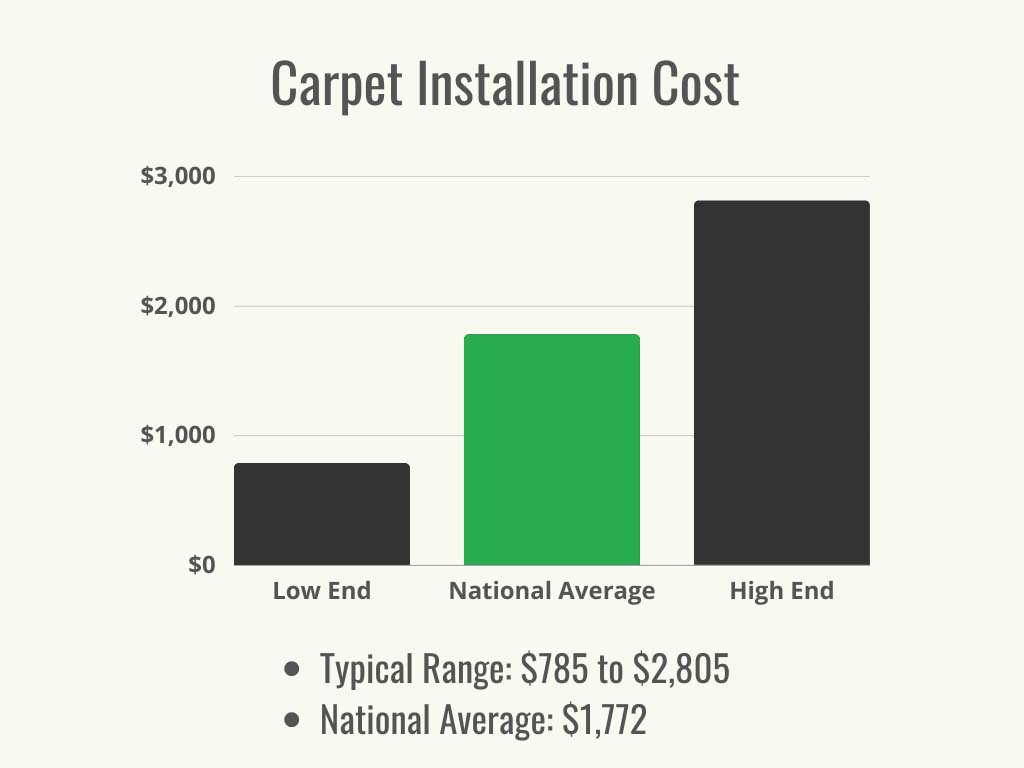
Professional installation in 2026 typically costs between $0.75 and $1.50 per square foot, depending on the complexity of the room. You can eliminate this cost by installing it yourself, though carpet stretching requires specialized tools like a power stretcher and a knee kicker.
If you aren't comfortable with the installation, you can still save significantly by performing the prep work yourself. This includes:
- Removing the old carpet and padding: Contractors often charge $0.25–$0.50 per square foot just for "rip and haul."
- Prepping the subfloor: Ensure the floor is clean, dry, and free of old staples or adhesive.
- Moving furniture: Most installers charge a per-item fee for moving heavy furniture. Clearing the room yourself can save $50–$200 per project.
Common Pitfalls When Sourcing Cheap Carpet
When hunting for the lowest price, it is easy to fall into traps that lead to "buyer's remorse." One common error is ignoring the pile height. A very high, shaggy pile made of cheap polyester will mat down almost instantly in walkways. Instead, choose a shorter, tighter "textured" pile or a "frieze" style. These hide footprints and vacuum marks better, maintaining a "new" look longer despite the lower price point.
Another pitfall is the "unit of measurement" confusion. In 2026, some retailers still price by the square yard, while others price by the square foot. Always convert to a single unit to compare fairly (1 square yard = 9 square feet). A price of $2.00 per square foot sounds cheaper than $15.00 per square yard, but the square yard price is actually the better deal.
Frequently Asked Questions
What is the absolute cheapest carpet material available in 2026?
The least expensive material is generally Olefin (polypropylene) in a level-loop or Berber construction. Following closely is "Base Grade" Polyester. These materials are cost-effective because the polymers are inexpensive to produce and the manufacturing process for loop-pile carpet is faster and less intensive than cut-pile styles.
Can I get high-quality carpet cheaply by buying "Builder Grade"?
Yes, "Builder Grade" refers to carpeting designed for high-volume use in new home construction. It is designed to look good and feel acceptable at the lowest possible price point. While it will not last 20 years like a premium nylon, it is an excellent choice for those who need a clean, fresh look on a strict budget.
Is it cheaper to buy carpet online or in-store?
Usually, it is cheaper to buy in-store at a local wholesale warehouse. While online prices may appear lower, the cost of shipping 500+ pounds of rolled flooring often exceeds any material savings. Additionally, local warehouses allow you to inspect remnants, which are often the best bargains available.
How much should I expect to pay for the cheapest carpet and installation?
In the 2026 market, for a basic 12x12 room (144 sq. ft.), you should expect to pay between $350 and $600 for the lowest-priced materials, padding, and professional installation. If you source a remnant and perform the installation yourself, this cost can drop below $200.
Does "Free Installation" from big retailers actually save money?
Rarely. "Free Installation" is almost always a marketing tactic where the labor costs are hidden within a higher price-per-square-foot for the carpet or the requirement to purchase a premium (and expensive) padding. Always ask for an "all-in" itemized quote to compare the true bottom line against a wholesaler's price.
Final Recommendation
To find the least expensive carpet, start by measuring your rooms and visiting local independent flooring warehouses to check their remnant inventory. If your space is too large for remnants, request a quote for in-stock polyester textured plush with a standard 6-lb rebond pad. To maximize your savings, handle the demolition and furniture removal yourself, and compare the total "installed" price against the "material-only" price to determine if professional labor fits your budget.
Image Gallery