Why the MT4 Software Still Matters for Traders Today
MetaTrader 4 (MT4) remains the industry standard in 2026 because of its massive library of custom Expert Advisors (EAs), low hardware resource requirements, and its status as the primary platform supported by the vast majority of retai...
MetaTrader 4 (MT4) remains the industry standard in 2026 because of its massive library of custom Expert Advisors (EAs), low hardware resource requirements, and its status as the primary platform supported by the vast majority of retail Forex brokers. While newer platforms offer more timeframes and asset classes, MT4’s stability and the sheer volume of its MQL4-based community make it indispensable for automated and manual traders alike.
Contents
The Resilience of a Trading Legend: A 2026 Perspective
In the fast-paced world of financial technology, software rarely survives two decades without being rendered obsolete. However, MetaTrader 4, originally released by MetaQuotes in 2005, continues to dominate the retail trading landscape in 2026. This longevity is not merely a result of habit; it is a testament to the platform's architectural efficiency and the massive global ecosystem that has grown around it.
For many traders, MT4 is more than just a gateway to the markets; it is an operating system for their financial strategies. Despite MetaQuotes’ efforts over the years to shift the user base toward MetaTrader 5 (MT5), MT4 retains a significant market share. This is primarily because the transition from MT4 to any other platform requires more than just learning a new interface—it requires the complete migration of proprietary code, custom indicators, and automated strategies that have been refined over years of market volatility.
The Power of the MQL4 Ecosystem
The primary reason MT4 still matters is its programming language, MQL4. Over the last twenty years, millions of lines of code have been written for MT4. This includes Expert Advisors (EAs) for automated trading, custom technical indicators, and scripts for trade management.
Legacy Code and Strategy Preservation
Many professional traders and hedge funds have invested tens of thousands of dollars into developing proprietary trading bots in MQL4. Because MQL4 and MQL5 (the language for MT5) are not backward compatible, migrating a complex strategy to a newer platform is often a costly and risky endeavor. In 2026, the cost of re-coding and re-testing these strategies often outweighs the benefits of moving to a newer platform.
Community and Marketplace Support
The MQL5.com marketplace and various third-party forums still host a disproportionately large number of tools specifically designed for MT4. Whether a trader needs a specialized Fibonacci retracement tool or a complex grid-trading bot, the MT4 versions are usually the most reviewed and battle-tested. This "network effect" ensures that as long as there are traders using MT4, developers will continue to support it, and as long as there are tools available, traders will continue to use it.
Broker Integration and Infrastructure Stability
From a broker’s perspective, MT4 is a "known quantity." It is highly stable, and the server-side infrastructure is deeply integrated into the bridge providers and liquidity aggregators that connect retail orders to the interbank market.
Server-Side Reliability
Brokers favor MT4 because the server maintenance is predictable. By 2026, every major technical glitch or security vulnerability in the MT4 architecture has been identified and patched. This provides a level of reliability that newer, more complex platforms sometimes struggle to match during periods of extreme market liquidity or "black swan" events.
White-Label Accessibility
The MT4 ecosystem allows smaller brokerage firms to launch "white label" versions of the platform relatively cheaply. This competition among brokers benefits the trader by keeping spreads tight and commissions low. If MT4 were to disappear, the barrier to entry for new brokers would rise, potentially leading to a more consolidated and less competitive brokerage market.
Performance Efficiency and Low System Requirements
In an era where software often becomes "bloated" with unnecessary features that drain system resources, MT4 remains remarkably lean. This technical efficiency is a critical factor for two specific types of traders: those using Virtual Private Servers (VPS) and those in developing economies.
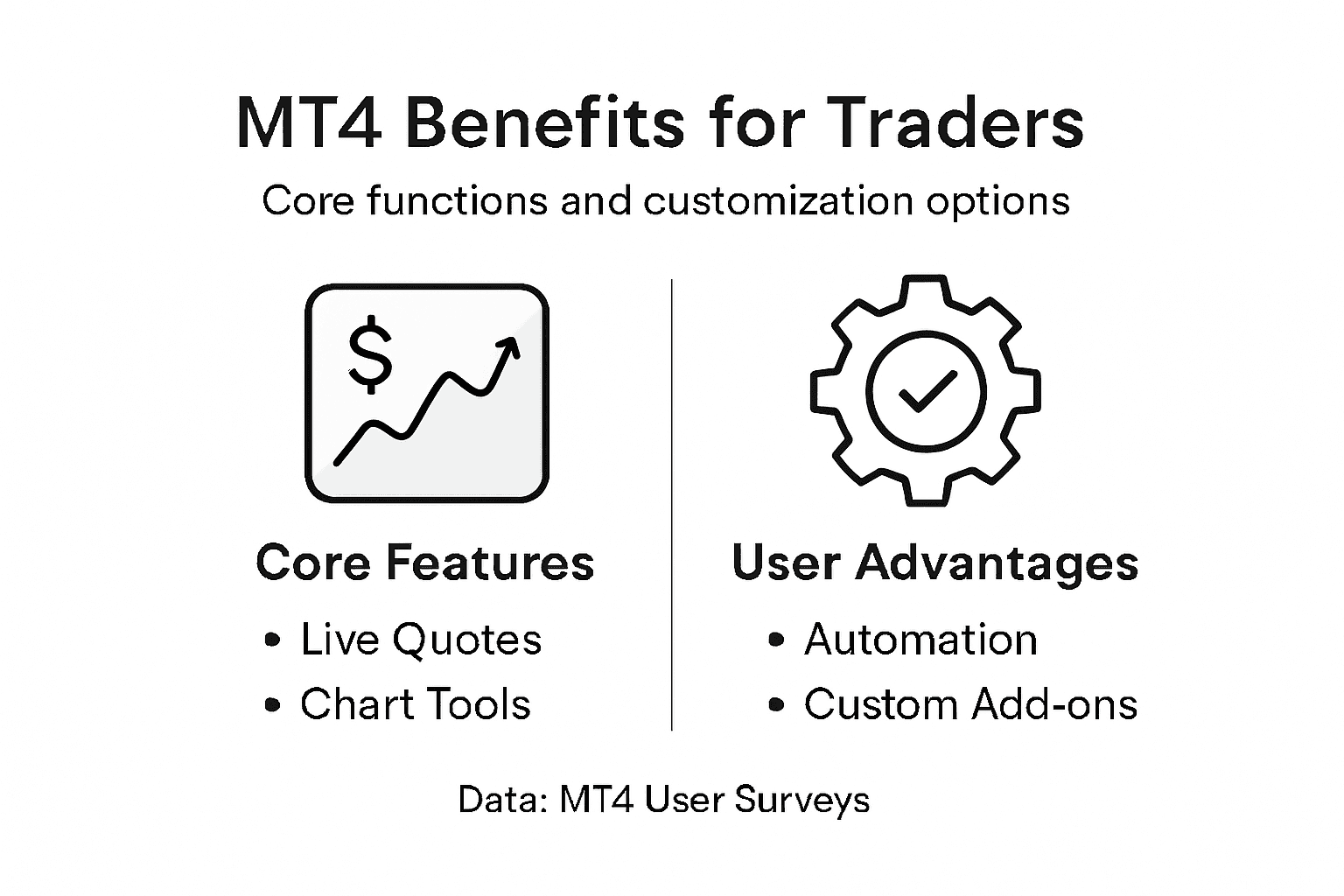
- VPS Optimization: High-frequency and automated traders often host their platforms on a VPS to ensure 24/7 connectivity and low latency. Because MT4 uses very little RAM and CPU power compared to modern web-based platforms or MT5, a trader can run multiple instances of MT4 on a single, low-cost VPS without compromising execution speed.
- Global Accessibility: Not every trader has access to high-end computing hardware. MT4’s ability to run smoothly on older hardware or low-bandwidth internet connections makes it the most accessible professional-grade platform for the global retail market.
Comparison: MT4 vs. MT5 in the 2026 Market
While MT5 was designed to be the successor, it serves a slightly different niche. The table below outlines why MT4 continues to hold its ground specifically for Forex traders.
| Feature | MetaTrader 4 (MT4) | MetaTrader 5 (MT5) |
|---|---|---|
| Primary Focus | Forex and CFDs | Multi-asset (Stocks, Futures, Forex) |
| Programming Language | MQL4 (Simpler, Procedural) | MQL5 (Object-Oriented, Complex) |
| System Resource Usage | Very Low | Moderate to High |
| Timeframes | 9 Standard Timeframes | 21 Timeframes |
| Order Execution | Hedging allowed by default | Hedging and Netting |
| Strategy Tester | Single-threaded (Slower) | Multi-threaded (Faster, Multi-currency) |
| Availability of EAs | Massive (20+ years of library) | Growing, but still smaller than MT4 |
As the table illustrates, while MT5 is technically superior for backtesting and multi-asset trading, MT4 remains the "specialist" tool for Forex traders who prioritize simplicity and the availability of legacy automated tools.
The UI/UX Paradox: Why Familiarity Equals Profitability
In trading, speed of execution and clarity of thought are paramount. The user interface (UI) of MT4 has remained largely unchanged for two decades. While some critics call it "dated," many traders view this consistency as a significant advantage.
When a market-moving event occurs—such as a central bank interest rate decision—a trader needs to act in milliseconds. Muscle memory plays a vital role here. Traders who have used MT4 for years do not need to "search" for a feature or a specific chart setting; they can navigate the platform instinctively. In 2026, where market volatility can be triggered by AI-driven news sentiment, the ability to execute a trade without fighting a complex UI is a tangible edge.
Overcoming MT4's Technical Limitations
Critics often point to MT4’s lack of an economic calendar integration or its limited timeframes. However, the MT4 community has effectively solved these problems through third-party plugins. Today, traders use "bridge" software to connect MT4 to modern data streams, AI analysis tools, and advanced risk management dashboards.
By using MT4 as the "execution engine" and layering modern analytical tools on top of it, traders get the best of both worlds: the rock-solid reliability of a legacy platform and the advanced capabilities of modern fintech.
Frequently Asked Questions
Is MT4 still safe to use in 2026?
Yes, MT4 remains safe for trading. While MetaQuotes focuses its new feature development on MT5, they continue to provide critical security updates and "build" refreshes for MT4. Furthermore, because it is the most used platform, cybersecurity firms and brokers have developed robust secondary layers of protection to secure trader data and funds.
Why do some brokers still promote MT4 over MT5?
Brokers promote MT4 because it has a lower "churn rate." Traders who use MT4 tend to stay with a broker longer because they are comfortable with the interface and have their EAs set up. Additionally, the operational costs for a broker to maintain an MT4 server are often lower due to the extensive third-party support and established liquidity bridges.
Can I trade stocks and crypto on MT4?
MT4 was primarily designed for the decentralized Forex market. While many brokers offer CFDs (Contracts for Difference) on stocks, indices, and cryptocurrencies via MT4, it is not a "native" multi-asset platform. If your primary focus is trading physical equities or complex futures, MT5 or a specialized proprietary platform may be more appropriate.
Will MT4 ever be completely discontinued?
While MetaQuotes has stopped selling new licenses to new brokers in some instances to encourage MT5 adoption, the massive installed base of existing brokers ensures that MT4 will be supported for the foreseeable future. A complete shutdown would alienate millions of traders and thousands of brokers, making it an unlikely business move.
Can I convert my MT4 indicators to MT5?
There is no automated "one-click" converter. Because MQL4 and MQL5 use different logic structures (procedural vs. object-oriented), the code must be manually rewritten. There are many freelance developers who specialize in this migration, but for complex EAs, it remains a significant task.
Final Recommendation for Traders
If you are a retail Forex trader who relies on automated strategies or values a platform that won't lag during high-volatility events, MetaTrader 4 remains a top-tier choice in 2026. Its relevance is secured by its unmatched ecosystem and the "if it ain't broke, don't fix it" philosophy that dominates professional trading.
For new traders, the best course of action is to verify that your chosen broker offers a robust MT4 environment with low-latency execution. If you already have a library of MQL4 tools, there is currently no compelling reason to force a migration to a newer platform unless you require specific features like native exchange-traded futures or advanced multi-threaded backtesting.
Image Gallery