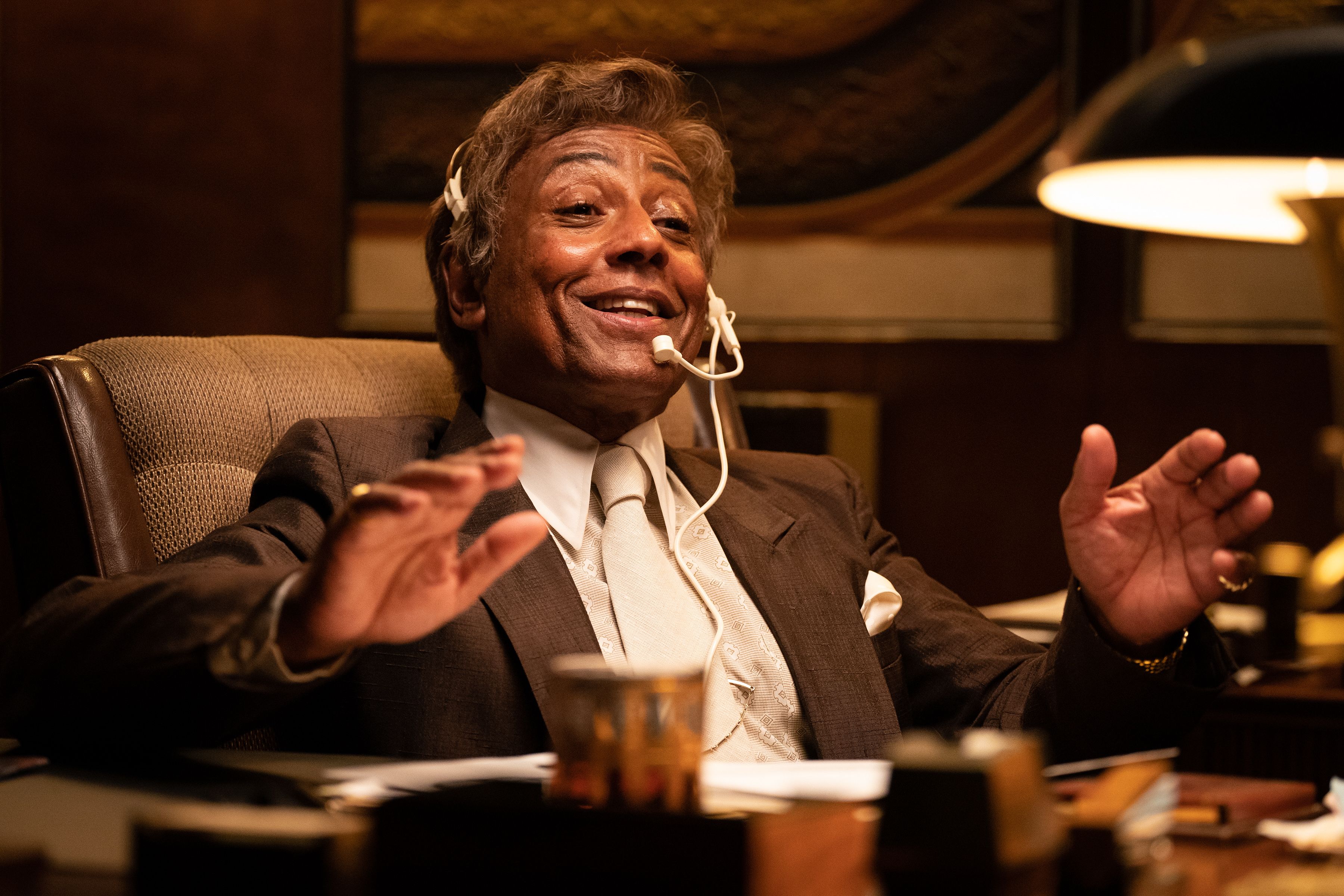
Giancarlo Esposito in Film and Television: A Career of Calculated Intensity
Giancarlo Esposito has cultivated a multi-decade career defined by his ability to portray characters of profound poise, cold intellect, and latent menace. From his breakthrough in Spike Lee’s socially charged dramas to his iconic tenur...
Giancarlo Esposito has cultivated a multi-decade career defined by his ability to portray characters of profound poise, cold intellect, and latent menace. From his breakthrough in Spike Lee’s socially charged dramas to his iconic tenure as Gustavo Fring in the modern golden age of television, Esposito has mastered the art of the slow-burn performance, becoming a staple of prestige genre storytelling.
Contents
The trajectory of Giancarlo Esposito’s career is not merely a record of appearances but a study in the evolution of the "character actor" into a singular cinematic brand. While many actors are defined by their range, Esposito is defined by his specificity. Whether playing a neighborhood store owner, a calculating drug kingpin, or a futuristic corporate overlord, he brings a measured, rhythmic cadence to his dialogue that commands immediate viewer attention. This analysis explores the technical evolution of his performances, the thematic consistency of his roles, and his enduring impact on contemporary screen culture.
The Early Foundations: From Broadway to Spike Lee
Before achieving widespread recognition for his work in television, Esposito spent years honing his craft on the stage and in independent cinema. His early work provided the technical discipline required for the nuanced portrayals that would later define his mid-career resurgence.
In the late 1980s, his collaborations with Spike Lee were instrumental in establishing his screen presence. Roles in School Daze (1988) and Do the Right Thing (1989) showcased a young actor capable of embodying complex, often contradictory urban archetypes. In Do the Right Thing, his portrayal of Buggin' Out remains a masterclass in escalating tension. Unlike his later, more restrained roles, this performance was physically frantic and outward-facing, demonstrating a versatility that is often overlooked in favor of his more recent "cool-headed" portrayals.
These foundational years were marked by a high volume of guest appearances on episodic television, such as Miami Vice and Spenser: For Hire. This period was critical for building the professional stamina and technical understanding of camera blocking and framing that would allow him to dominate high-budget television productions decades later.
The Architect of Calm: The Gustavo Fring Phenomenon
If there is a singular turning point in Esposito’s professional narrative, it is his casting as Gustavo Fring in Breaking Bad (2009–2011), a role he reprised in the prequel series Better Call Saul (2017–2022). This role reset the industry standard for how a television antagonist should behave.
Esposito’s approach to Fring was an exercise in extreme minimalism. By stripping away the erratic, theatrical villainy common in television dramas, he created a character who weaponized politeness. The technical brilliance of this performance lies in his control of micro-expressions. Esposito understood that in close-up cinematography, less is often more. The effectiveness of Fring did not come from screaming or overt aggression, but from the terrifying suggestion that he was always the smartest person in the room.
Key Performance Characteristics
- Vocal Cadence: Utilizing a low-register, steady, and deliberate delivery that forces other actors—and the audience—to lean in.
- Physical Stillness: Minimizing unnecessary movement to project an image of absolute control.
- Eye Contact: A hallmark of his performance is the sustained, unflinching gaze, which serves as a psychological anchor in tense scene compositions.
Expanding the Portfolio: Franchise Integration and Range
Following the success of his work in the Breaking Bad universe, Esposito transitioned into massive intellectual property franchises. This phase of his career solidified his status as an actor who could anchor high-concept world-building without losing his distinct personal stamp.
His involvement in The Mandalorian (2019–2023) as Moff Gideon demonstrated his ability to translate his "controlled menace" archetype into the space-opera genre. Similarly, his work in The Boys (2019–present) allowed him to explore the intersection of corporate bureaucracy and superhuman conflict. In these roles, Esposito plays characters who operate behind a veil of professional legitimacy, mirroring the structural integrity he brought to Gustavo Fring, but adapting it to the shifting power dynamics of science fiction and satire.
Comparative Analysis of Major Roles
| Role | Project | Archetype | Primary Motivator |
|---|---|---|---|
| Buggin' Out | Do the Right Thing | Activist/Neighborhood Local | Social Justice |
| Gustavo Fring | Breaking Bad | Drug Kingpin/Businessman | Legacy/Control |
| Moff Gideon | The Mandalorian | Imperial Warlord | Order/Power |
| Stan Edgar | The Boys | Corporate CEO | Profit/Efficiency |
The consistency across these roles is found in the "facade." Whether he is selling fried chicken or leading an imperial remnant, Esposito’s characters are defined by a gap between their public-facing professionalism and their private, often ruthless, strategic objectives.
Technical Considerations: Acting for the Lens
Esposito’s longevity in the industry is a result of his technical adaptability. In an era where digital cinematography often uses 4K and 8K resolution, capturing high-frequency detail, his style of performance—which relies on subtle muscle tension and ocular movement—is uniquely suited to modern technical standards.
His work requires a deep understanding of lighting and framing. Because he often plays characters who occupy shadows or are framed in tight, claustrophobic close-ups, he must modulate his performance based on the focal length of the camera lens. During his work on Better Call Saul, the cinematographic choices relied heavily on wide, sweeping shots of the New Mexico desert punctuated by extreme close-ups of Esposito’s face. Understanding this rhythm allows him to deliver performances that are "camera-ready" without requiring significant post-production manipulation.
Frequently Asked Questions
How does Giancarlo Esposito prepare for roles that require intense, controlled silence?
Esposito often notes that his preparation involves "internalizing the history" of the character. He focuses on the silence before he speaks, viewing it as a moment of tactical deliberation. By deciding why his character is waiting to speak, he turns silence into an active performance choice rather than a lack of dialogue.
What is the significance of his transition into voice acting and video games?
Esposito has increasingly utilized his recognizable vocal timbre for high-profile video game roles, such as Anton Castillo in Far Cry 6. This reflects an industry trend where "prestige acting" is used to provide emotional weight to digital characters, allowing him to expand his audience without the physical constraints of long-term on-set filming.
Is Esposito typecast by his roles as a villain?
While he is frequently cast as an antagonist, it is more accurate to say he is cast as an "authority figure." His roles are rarely one-dimensional "bad guys"; they are characters of extreme competence, discipline, and hierarchy. The "villain" label is a consequence of these characters being placed in opposition to the protagonists, rather than a limitation of his acting range.
How did his background in theater influence his film career?
His theater roots provided him with the ability to sustain high-intensity performances over long, unbroken takes. This is essential in modern television production, where long-take sequences are frequently used to build suspense. His comfort with blocking and stage presence allows him to command a scene even when sharing the frame with multiple actors.
Recommendations for Further Study
To fully appreciate Esposito's technical evolution, one should view his body of work chronologically rather than by popularity. Start with Do the Right Thing (1989) to see his early energetic style, then move to Breaking Bad to observe the maturation of his signature "controlled" persona. For those interested in how this style functions in modern blockbuster television, The Mandalorian offers a clear view of how he integrates his performance into heavy visual effects and costume-driven environments.
For actors and film students, observing his work as a case study in "economy of motion" is highly recommended. Pay close attention to how he uses his hands, his blinking rate, and his posture to communicate shifts in character power, often without changing his vocal tone or facial expression.
Image Gallery