The Critical Role of CASB in Your Cloud Information Security Strategy
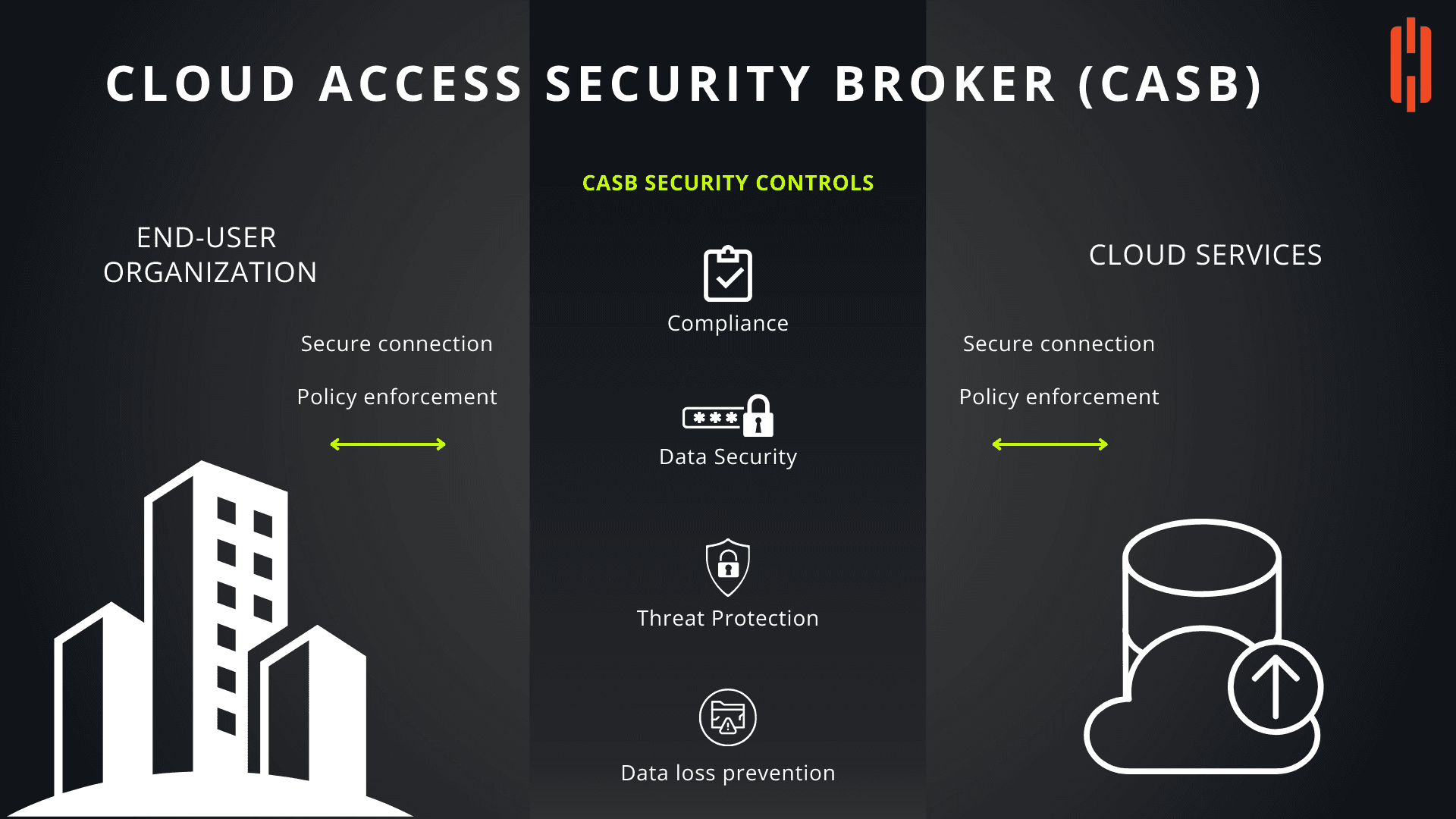
A Cloud Access Security Broker (CASB) serves as the primary policy enforcement point between cloud service consumers and cloud service providers. It is critical because it provides deep visibility into "Shadow IT," ensures regulatory c...
A Cloud Access Security Broker (CASB) serves as the primary policy enforcement point between cloud service consumers and cloud service providers. It is critical because it provides deep visibility into "Shadow IT," ensures regulatory compliance for sensitive data, prevents unauthorized data exfiltration, and defends against sophisticated, cloud-native threats that traditional perimeter-based security tools cannot see.
Contents
As enterprise environments in 2026 continue to migrate the vast majority of their workloads to SaaS, PaaS, and IaaS platforms, the traditional network perimeter has effectively vanished. In this decentralized landscape, identity and data have become the new perimeters. For organizations managing complex multi-cloud ecosystems, a CASB is no longer an optional add-on but a foundational component of a modern security architecture. It addresses the unique challenges of cloud computing, such as the loss of direct control over infrastructure and the proliferation of unmanaged devices accessing corporate resources.
The Evolution of CASB in the Cloud-First Era
The role of the CASB has shifted from a simple visibility tool to a comprehensive security orchestrator. Originally designed to discover "Shadow IT"—the use of unauthorized cloud applications by employees—modern CASBs now integrate deeply with Secure Service Edge (SSE) and Secure Access Service Edge (SASE) frameworks.
In 2026, the complexity of cloud interactions has increased. Employees do not just use one or two sanctioned apps; they interact with hundreds of microservices and third-party integrations. Traditional firewalls and Secure Web Gateways (SWG) are often blind to the granular actions occurring within a cloud application, such as sharing a sensitive file via a public link or an API-based data transfer between two SaaS platforms. CASBs fill this gap by providing a "window" into these encrypted cloud flows, allowing security teams to apply consistent governance regardless of the user's location or device.
The Four Pillars of CASB Functionality
To understand the critical role of a CASB, one must examine the four functional pillars that define its value proposition: visibility, compliance, data security, and threat protection.
1. Visibility and Shadow IT Discovery
The average enterprise now interacts with over 1,500 different cloud services. Visibility is the first step in any security strategy. A CASB analyzes log data from firewalls, proxies, and endpoints to identify which cloud services are being used across the organization.
Beyond mere identification, a CASB provides a risk score for each application. These scores are based on the provider’s security certifications (such as SOC 2 or ISO 27001), data encryption standards, and legal terms of service. This allows IT leaders to move away from a "block everything" mentality to a nuanced "sanctioned vs. unsanctioned" approach, enabling productivity while mitigating risk.
2. Compliance and Governance
For organizations in regulated industries, the cloud presents a significant compliance challenge. Data residency requirements, such as those mandated by the General Data Protection Regulation (GDPR), require organizations to know exactly where their data is stored and processed.
A CASB automates the identification of regulated data (PII, PHI, PCI) residing in the cloud. It can generate reports that demonstrate "due diligence" to auditors, showing that the organization has control over who is accessing sensitive information and that appropriate encryption or masking is in place. In 2026, as global privacy laws become more fragmented, the ability of a CASB to enforce localized data residency policies is indispensable.
3. Data Security and Loss Prevention (DLP)
Cloud-native Data Loss Prevention (DLP) is perhaps the most vital feature of a CASB. Traditional DLP tools were designed for email and on-premises file shares. A CASB extends these capabilities to the cloud, monitoring "data at rest" within cloud storage (like OneDrive or Google Drive) and "data in motion" as it is uploaded or downloaded.
Modern CASBs use sophisticated techniques such as document fingerprinting, exact data matching (EDM), and optical character recognition (OCR) to identify sensitive content even if it is embedded in images or modified. If a user attempts to share a file containing credit card numbers with an external party, the CASB can automatically revoke the share, quarantine the file, and alert the security operations center (SOC).
4. Threat Protection and Behavioral Analytics
The cloud has introduced new attack vectors, such as account takeovers (ATO) and malicious OAuth app permissions. A CASB utilizes User and Entity Behavior Analytics (UEBA) to establish a baseline of normal activity for every user.
If a user who typically logs in from New York suddenly attempts to download 50GB of data from an IP address in a different country ten minutes later, the CASB identifies this "impossible travel" anomaly. It can then trigger an automated response, such as forcing a Multi-Factor Authentication (MFA) challenge or disabling the account until the activity is verified.
Understanding CASB Deployment Architectures
The effectiveness of a CASB depends heavily on its deployment mode. Each method offers different levels of control and visibility, and most mature organizations in 2026 use a "multimode" approach.
| Deployment Mode | Mechanism | Primary Strength | Limitation |
|---|---|---|---|
| API-Based | Connects directly to the cloud provider's backend via API. | Secures data at rest; zero impact on user experience; simple setup. | Cannot block actions in real-time (near real-time only). |
| Reverse Proxy | Sits between the user and the cloud service (usually via IDP). | Ideal for unmanaged/personal devices; prevents data downloads. | Requires integration with Identity Providers (IdP). |
| Forward Proxy | Sits on the managed endpoint or the corporate network edge. | Comprehensive visibility of all web traffic; enforces policies for managed devices. | Can be difficult to deploy on unmanaged/BYOD devices. |
API-Based Integration
API-based deployment is the most common starting point. Because it connects directly to the SaaS provider (e.g., Salesforce, Microsoft 365, Slack), it can scan all historical data within the platform. It is particularly effective for discovering "over-shared" files that were uploaded before the CASB was even implemented. This mode is essential for ensuring that third-party integrations (OAuth apps) do not have excessive permissions to corporate data.
Proxy-Based Enforcement
Proxies are necessary for real-time intervention. A Reverse Proxy is particularly useful for the modern workforce, where employees may access corporate resources from personal laptops or mobile phones. When a user tries to access a sanctioned app, the Identity Provider redirects them through the CASB. The CASB can then enforce "read-only" modes, allowing the user to view a document in a browser but preventing them from downloading it to an unmanaged device.
Integration with the SASE and SSE Frameworks
By 2026, the industry has largely moved away from standalone security products in favor of integrated platforms. CASB is a core pillar of Security Service Edge (SSE), alongside Secure Web Gateways (SWG) and Zero Trust Network Access (ZTNA).
The integration of CASB into a broader SSE framework allows for a unified policy engine. For example, a single policy can be written to "block the upload of source code to any unsanctioned cloud storage site." This policy is then enforced by the SWG for general web browsing and by the CASB for specific sanctioned cloud applications. This convergence reduces "policy sprawl" and ensures that security posture remains consistent regardless of how or where a user connects to the internet.
Common Mistakes in CASB Implementation
Despite the maturity of the technology, many organizations fail to realize the full value of their CASB due to common strategic errors:
- Focusing solely on "Blocking": Overly restrictive policies can drive users toward even more obscure, unmanaged tools. The goal of a CASB should be to "enable" the business safely, not to act as a barrier to productivity.
- Neglecting API Integrations: Relying only on proxy-based visibility leaves "data at rest" unprotected. API integrations are necessary to scan the terabytes of data already residing in cloud repositories.
- Ignoring Alert Fatigue: Without proper tuning, a CASB can generate thousands of alerts. Organizations must prioritize high-fidelity alerts—such as mass data downloads or administrative privilege changes—to avoid overwhelming security analysts.
- Underestimating Change Management: Implementing a CASB often changes the user experience (e.g., new login flows or blocked actions). Clear communication with stakeholders is essential for successful adoption.
Strategic Recommendations for 2026
To successfully integrate a CASB into your cloud information security strategy, follow these phased steps:
- Conduct a Cloud Discovery Audit: Use a CASB in log-collection mode for 30 days to identify the true extent of Shadow IT in your environment.
- Prioritize Sanctioned Apps: Start by applying API-based security to your most critical SaaS platforms (e.g., Microsoft 365, Google Workspace, Salesforce).
- Define Sensitive Data Patterns: Work with legal and compliance teams to define what constitutes "sensitive data" in the context of your specific industry.
- Implement Adaptive Access: Use the CASB's proxy capabilities to enforce different rules for managed vs. unmanaged devices.
- Iterate and Tune: Cloud environments are dynamic. Review your CASB policies quarterly to ensure they align with new cloud services and evolving threat patterns.
Frequently Asked Questions
Does a CASB replace a traditional firewall?
No, a CASB does not replace a traditional firewall, but it complements it. Firewalls are designed to protect the network perimeter and manage port/protocol-level traffic. A CASB operates at the application layer (Layer 7), providing deep inspection of the specific actions taken within cloud applications, which firewalls generally cannot do.
Can a CASB protect against ransomware?
Yes, CASBs play a significant role in ransomware defense. They can detect the rapid encryption of files in cloud storage (a hallmark of ransomware) and automatically disconnect the syncing process to prevent the infection from spreading. Additionally, CASBs use UEBA to identify the initial stages of an attack, such as credential theft.
How does a CASB handle encrypted traffic?
Most cloud traffic is encrypted via SSL/TLS. To inspect this traffic, a CASB (in proxy mode) performs SSL inspection by decrypting the traffic, analyzing the content against security policies, and then re-encrypting it before sending it to its destination. This process requires careful certificate management to ensure user privacy and performance.
Is CASB necessary if we use a single cloud provider like Microsoft 365?
While major providers offer built-in security features, a dedicated CASB is often necessary for multi-cloud environments or for deeper DLP and UEBA capabilities. Furthermore, a CASB provides a centralized management plane, allowing you to apply the same security policies across Microsoft 365, AWS, Slack, and hundreds of other apps simultaneously.
What is the difference between CASB and CSPM?
While CASB focuses on the security of SaaS applications and the data moving between users and the cloud, Cloud Security Posture Management (CSPM) focuses on the configuration of IaaS and PaaS environments (like AWS or Azure). CSPM ensures that the "buckets" and "servers" are configured correctly, while CASB ensures the "data" inside them is handled securely.
Conclusion
The transition to a cloud-centric business model requires a fundamental shift in how we protect information. In 2026, the Cloud Access Security Broker is the "glue" that binds identity, data, and infrastructure security together. By providing visibility into hidden risks, enforcing granular data protection, and detecting anomalous behavior in real-time, CASB enables organizations to embrace the benefits of the cloud without sacrificing security or compliance. Organizations should prioritize a multimode CASB deployment as part of an integrated SSE strategy to ensure comprehensive coverage across all cloud interactions.
Image Gallery