Juul Labs Net Worth Explained: Valuation History, Legal Settlements, and Current Financial Standing
Juul Labs does not have a personal net worth in the traditional individual sense; instead, its economic value is measured through its private enterprise valuation and equity capital structure. After reaching a peak valuation of $38 bil...
Juul Labs does not have a personal net worth in the traditional individual sense; instead, its economic value is measured through its private enterprise valuation and equity capital structure. After reaching a peak valuation of $38 billion in December 2018 following a major investment from Altria Group, Juul Labs experienced a dramatic financial contraction due to intense regulatory intervention, thousands of youth-marketing lawsuits, and product bans. Today, after comprehensive legal settlements and equity recapitalizations, Juul Labs operates as a privately held company with an estimated enterprise value between $700 million and $1 billion.
Contents
Understanding Corporate Net Worth: Private Equity vs. Enterprise Value
When evaluating "net worth" for a private corporation like Juul Labs, financial analysts look beyond personal asset calculations. For an unlisted company, corporate net worth is best understood through two distinct metrics: book value of equity (assets minus total liabilities) and implied enterprise valuation (the market value of the company’s combined equity and net debt based on private funding rounds, secondary stock transactions, or strategic investments).
Unlike publicly traded corporations whose market capitalizations update continuously on public exchanges, Juul Labs relies on internal valuations, investor disclosure reports, and restructuring filings to establish its worth.
Why Valuation Diverges from Book Value
A startup's private valuation frequently diverges from its balance-sheet net worth. During its hyper-growth phase, Juul’s valuation was driven by software-like revenue multiples, rapid international expansion, and dominant domestic market share in the e-vapor sector. However, when financial assets are constrained by contingent legal liabilities, regulatory compliance costs, and debt obligations, a company's market enterprise value can fall rapidly even if product distribution remains active.
The Trajectory of Juul’s Valuation: A Historical Overview
To understand how Juul Labs moved from a silicon valley unicorn to a restructured private firm, it is necessary to examine the capital raises, strategic investments, and regulatory turning points that reshaped its capital structure.
| Timeframe | Key Transaction / Corporate Event | Implied Enterprise Valuation | Primary Drivers & Catalyst |
|---|---|---|---|
| 2017 | Spin-off from Pax Labs | ~$1.5 Billion | Launch of nicotine-salt pods; rapid adoption among adult smokers and market expansion. |
| July 2018 | Tiger Global funding round | $15.0 Billion | $650 million capital raise; rapid conquest of the U.S. e-cigarette retail market. |
| December 2018 | Altria Group 35% equity purchase | $38.0 Billion | $12.8 billion strategic cash investment from Altria Group; peak enterprise value. |
| Late 2019 | Initial regulatory bans & state lawsuits | ~$24.0 Billion | Flavor bans (mint/fruit); FDA scrutiny; launch of state Attorney General investigations. |
| End of 2020 | Altria asset write-down | ~$10.0 Billion | Structural decline in U.S. retail sales volume; surging litigation costs. |
| Late 2022 | Near-bankruptcy crisis & FDA MDO | ~$250M – $450 Million | FDA Marketing Denial Order issued; preparations for potential Chapter 11 restructuring. |
| March 2023 | Altria stake surrender / IP exchange | ~$715 Million | Altria surrenders 35% equity stake in exchange for non-exclusive heating technology patents. |
| 2024–2026 | Private equity recapitalization & settlement funding | $700M – $1.0 Billion | Comprehensive legal settlements executed; funding rounds led by original board investors; pending FDA PMTAs. |
The $38 Billion Peak and the Altria Deal
Juul Labs achieved one of the fastest valuation ascents in corporate history. Spun out from Pax Labs in 2017 by co-founders Adam Bowen and James Monsees, Juul introduced a sleek, pod-based vapor device utilizing patented nicotine salt formulations. The technology allowed higher nicotine delivery with reduced throat harshness compared to traditional freebase nicotine e-liquids, capturing over 70% of the U.S. e-cigarette retail market within eighteen months.
The December 2018 Altria Investment
The defining financial event occurred in December 2018, when tobacco titan Altria Group (the parent company of Philip Morris USA) acquired a 35% minority equity stake in Juul Labs for $12.8 billion in cash. This transaction set Juul’s implied enterprise valuation at $38 billion, placing it among the most valuable private startups globally—exceeding contemporary valuations of companies like SpaceX and Airbnb at the time.
As part of the transaction:
- Approximately $2 billion was distributed as a special cash dividend to Juul’s 1,500 employees and founders.
- Altria granted Juul shelf-space priority in major retail networks and inclusion in traditional tobacco distribution pipelines.
- Strict antitrust covenants were imposed, prohibiting Altria from competing directly in the e-vapor space while maintaining its Juul stake.
Regulatory Interventions and Legal Liabilities: Erasing the Equity Cushion
Juul’s $38 billion enterprise value depended on projected long-term cash flows, unrestricted product distribution, and continuous product iteration. Starting in mid-2019, a cascade of regulatory actions and private lawsuits dismantled these valuation assumptions.
- 2018: $38B Enterprise Value
- FDA Regulatory Action & Flavor Bans
- State AG & Class-Action Lawsuits ($2B+)
- Altria Write-downs & Minority Exit
- Current Restructured Value: $700M - $1.0B
1. FDA Regulatory Enforcement and PMTA Submissions
Under the U.S. Food and Drug Administration (FDA) Center for Tobacco Products guidelines, e-vapor manufacturers were required to submit Pre-Market Tobacco Applications (PMTAs) proving their devices were "appropriate for the protection of public health."
- Flavor Enforcement: In early 2020, the FDA restricted pod-based flavors to tobacco and menthol, eliminating popular flavored pods (such as mango, cucumber, and fruit) that generated a major share of Juul's high-margin revenues.
- Marketing Denial Order (MDO): In June 2022, the FDA issued a Marketing Denial Order against Juul, ordering its products off the U.S. market due to claimed deficiencies in genotoxicity and chemical leaching data. Although Juul obtained an administrative stay and the FDA subsequently placed the order back under administrative review to reassess the scientific evidence, the regulatory uncertainty severely damaged corporate credit and reduced commercial cash flow.
2. Multi-State Attorney General and Mass Tort Settlements
Juul faced thousands of consolidated federal and state lawsuits alleging deceptive marketing practices aimed at minors, failure to warn of addiction risks, and public nuisance claims. To resolve these massive liabilities without liquidating under Chapter 11 bankruptcy, Juul entered into several major global settlements:
- Multi-State AG Settlement (2023): Juul agreed to pay $462 million over eight to ten years to settle claims brought by six states (including California and New York) and the District of Columbia.
- Multi-District Litigation (MDL 2913) Master Settlement: Juul agreed to pay an estimated $1.2 billion to settle thousands of personal injury, school district, and local government municipal claims consolidated in California federal court.
- 47-State and Territory Settlement (2022): A separate $438.5 million agreement resolved claims across dozens of participating jurisdictions.
These structured payments required Juul to divert significant operational cash flow into escrow accounts over multiple years, placing a permanent discount on its enterprise equity valuation.
The Altria IP Swap and Recapitalization Strategy
By late 2022, Altria had reduced the carrying value of its $12.8 billion investment in Juul down to just $250 million—a write-down exceeding 98% of its original investment.
The March 2023 Equity Exit
In March 2023, Altria formally cut ties with Juul Labs. Instead of seeking a cash buyer for its 35% equity position in a depressed market, Altria released Juul from non-compete restrictions and surrendered its entire equity stake back to Juul. In exchange, Altria acquired non-exclusive, worldwide license rights to specific heating micro-technology intellectual property owned by Juul.
This transaction yielded several immediate structural shifts:
- Equity Cancellation: Surrendering the 35% stake effectively recapitalized Juul, allowing existing private investors and employee equity pools to absorb the canceled shares.
- Corporate Autonomy: Juul was freed from restrictive antitrust agreements, allowing it to seek investment or strategic acquisition partnerships from rival tobacco or consumer products groups.
- Strategic Pivot for Altria: Altria subsequently acquired NJOY Holdings, Inc. for $2.75 billion to secure full ownership of an e-vapor portfolio holding explicit FDA marketing authorizations.
Private Financing and Debt Restructuring
To keep operating and meet structured settlement obligations, Juul completed several private financing transactions led by long-term board members and existing investors, including Nick Pritzker’s Tao Capital and RRE Ventures. This recapitalization provided working capital to fund ongoing operations, maintain its legal defense, and support research and development for next-generation platforms like Juul2.
How Juul Labs Generates Revenue Today
Despite sharp reductions from its peak domestic market share, Juul Labs maintains an international commercial presence and generates operational cash flow.
- Juul Labs Revenue Sources
- Domestic Sales (Menthol/Tobacco)
- Retail & Direct Distribution
- International Markets
- UK, Europe, & Next-Gen Juul2
- Domestic Sales (Menthol/Tobacco)
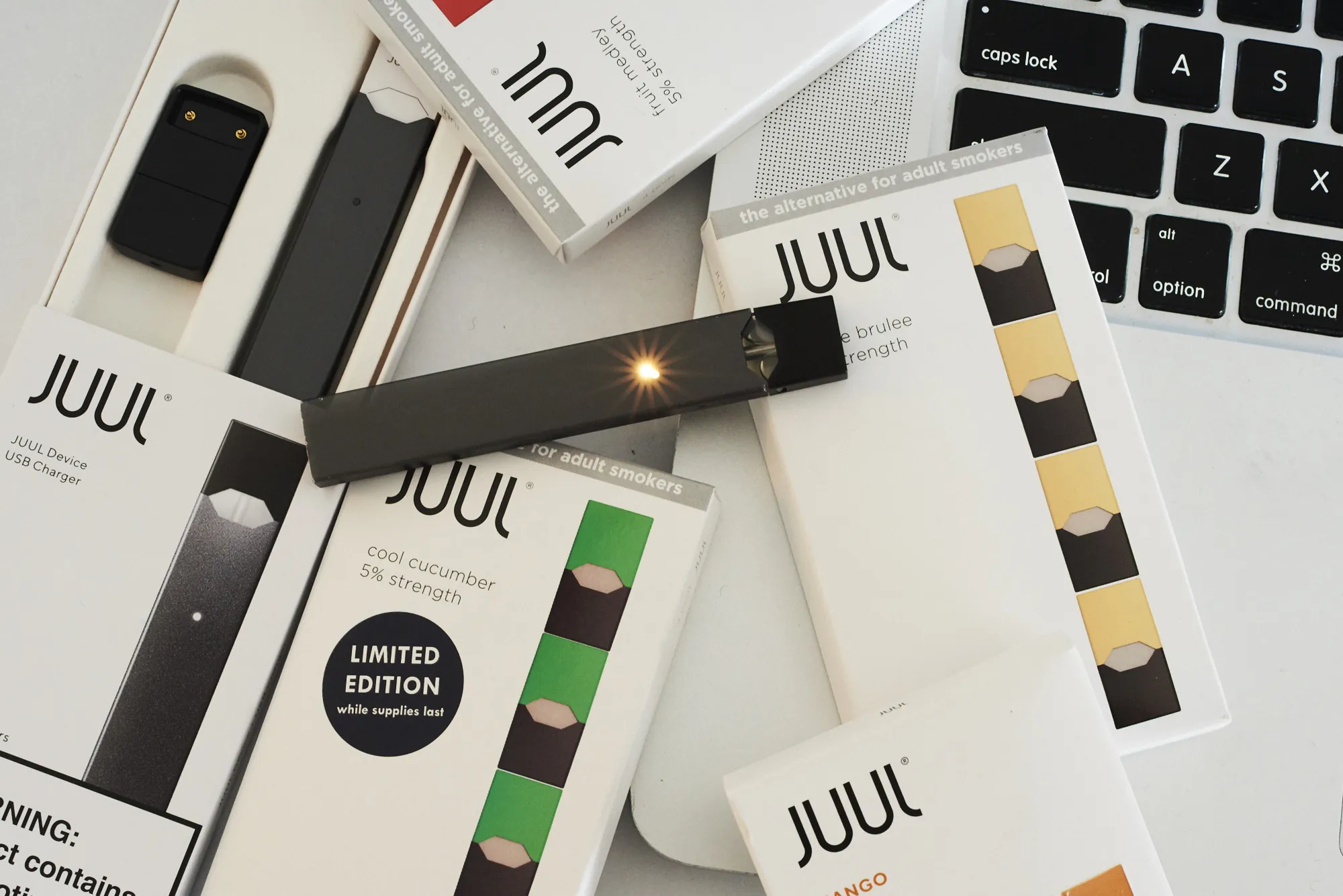
- Domestic U.S. Core Sales: Operating strictly within FDA-compliant parameters, Juul sells its original hardware device alongside Virginia Tobacco and Menthol refill pods through convenience stores, gas stations, and authorized tobacco outlets.
- International Markets: In regions such as the United Kingdom and parts of Europe, Juul markets its Juul2 platform. This next-generation system features technology designed to block counterfeit pods, age-verification connectivity, and updated dosage tracking.
- Intellectual Property Licensing: Juul retains patents covering micro-heating elements, vapor temperature control algorithms, and nicotine-salt delivery matrices, which provide secondary licensing and defensive portfolio value.
Key Valuation Drivers Moving Forward
Evaluating Juul Labs' current and future net worth requires weighing lingering operational headwinds against potential capital catalysts:
Enterprise Risk Factors (Valuation Drag)
- Pending PMTA Determinations: Juul's core U.S. product portfolio remains under FDA scientific review. A permanent administrative denial would eliminate its primary domestic revenue engine.
- Settlement Escrow Commitments: Long-term cash flow is encumbered by structured annual settlement payments extending across the decade.
- Market Share Competition: Disposable e-cigarettes and alternative nicotine delivery systems have captured market share previously dominated by pod-based devices.
Potential Catalysts (Valuation Growth)
- FDA Authorization of Next-Gen Platforms: Securing formal PMTA authorization for Juul2 or updated age-gated technology in the U.S. market would significantly de-risk the operating model and restore investor confidence.
- Strategic M&A Interest: With Altria’s non-compete restrictions removed, global consumer goods or international tobacco enterprises seeking a established vaping infrastructure could view Juul as a target.
- International Expansion: Broader distribution of Juul2 across European and Asia-Pacific markets where regulatory frameworks permit standardized e-vapor products.
Frequently Asked Questions (FAQ)
What is Juul Labs' estimated net worth today?
Juul Labs is estimated to have a private enterprise valuation between $700 million and $1 billion. This figure represents a major decline from its 2018 peak of $38 billion, reflecting regulatory enforcement, product restrictions, and over $2 billion in legal settlement commitments.
Did Juul Labs file for bankruptcy?
No. While Juul prepared for a potential Chapter 11 filing in late 2022 amid FDA regulatory challenges, the company avoided bankruptcy by securing private emergency equity funding, implementing cost reductions, and negotiating structured multi-year settlements with state attorneys general and private litigants.
How much did Altria lose on its Juul investment?
Altria Group invested $12.8 billion for a 35% stake in December 2018. Over the next four years, Altria wrote down the value of its holding by over 98%, eventually surrendering its entire equity stake in March 2023 in exchange for non-exclusive rights to Juul's heating technology IP.
What are Juul's founders (Adam Bowen and James Monsees) worth?
During the December 2018 Altria transaction, co-founders Adam Bowen and James Monsees each achieved paper net worths estimated above $1.1 billion due to a $2 billion liquidity dividend payout distributed to founders and employees. However, subsequent declines in Juul’s private stock value have reduced the value of their remaining equity holdings.
Is Juul Labs a publicly traded stock?
No, Juul Labs remains a privately held corporation. Its equity is held by founders, early-stage venture capital firms (such as Tao Capital and RRE Ventures), and current or former employees. There is no public stock ticker symbol for Juul.
How does the FDA PMTA process affect Juul's financial value?
The FDA's Pre-Market Tobacco Application (PMTA) process is the primary factor affecting Juul's valuation. If the FDA grants authorization for Juul's products or next-generation devices, the reduced regulatory risk would increase company value. Conversely, an adverse regulatory decision would restrict commercial operations in the U.S. market.
Financial Outlook and Summary
Juul Labs' financial journey illustrates the extreme volatility associated with disruptive consumer technology operating in complex regulatory environments. The company's decline from a $38 billion peak enterprise value to a restructured valuation of $700 million to $1 billion reflects the impact of mass-tort litigation, strict marketing enforcement, and intensive regulatory review under the FDA.
For financial analysts and industry observers tracking Juul Labs, key metrics to watch include progress on pending PMTA decisions, commercial performance of the Juul2 platform in international markets, and the company's ability to maintain cash flow while fulfilling its long-term settlement obligations.
Financial Disclaimer: This article is for informational and educational purposes only and does not constitute financial, legal, or investment advice. Corporate enterprise valuations for private companies are estimates based on secondary market transactions, regulatory disclosures, and historical filings, and are subject to change.
EDITORIAL CATEGORY METADATA:
Image Gallery