The Ultimate Guide to the 2026 Dining Hall Menu: Nutrition, Technology, and Culinary Trends
Navigating the campus or corporate dining hall menu in 2026 requires understanding how modern institutional food service balances advanced nutritional tracking, dietary inclusivity, and digital ordering ecosystems. Whether you are a un...
Navigating the campus or corporate dining hall menu in 2026 requires understanding how modern institutional food service balances advanced nutritional tracking, dietary inclusivity, and digital ordering ecosystems. Whether you are a university student managing a meal plan, a facility administrator updating culinary offerings, or an employee looking for healthy mid-day fuel, modern dining hall operations have evolved far beyond traditional cafeteria lines. This guide explores the structure of contemporary dining hall menus, technological integrations, dietary accommodations, and operational strategies defining the current landscape.
Contents
The Evolution of Institutional Dining in 2026
Modern dining halls have undergone a radical transformation. Driven by consumer demand for transparency, sustainability, and global flavors, the traditional static weekly rotation has been replaced by dynamic, data-driven culinary frameworks. Today's menus are engineered to cater to diverse demographic profiles while maintaining rigorous nutritional standards and minimizing food waste.
Institutional kitchens now operate under strict procurement guidelines that prioritize local sourcing, regenerative agriculture, and plant-forward menu engineering. Rather than treating alternative diets as an afterthought, contemporary chefs design core dishes to be naturally inclusive of major allergens and lifestyle preferences.
Key Drivers of Modern Menu Design
- Data-Driven Forecasting: Kitchen management software tracks consumption patterns in real time to adjust batch cooking quantities, drastically reducing food waste.
- Hyper-Localization: Partnerships with regional farms ensure seasonal produce dictates weekly specials rather than rigid corporate supply chains.
- Culinary Authenticity: Menus feature authentic regional and international dishes developed in collaboration with diverse student and staff advisory boards.
- Functional Nutrition: Ingredients are selected not just for flavor, but for cognitive enhancement, sustained energy, and immune support.
Digital Integration: Apps, Kiosks, and Real-Time Menus
The way diners interact with the dining hall menu has shifted entirely to digital platforms. In 2026, paper menus are relics of the past. Diners rely on mobile applications and interactive digital displays located at the entrance of each dining facility to make informed nutritional choices before stepping into the serving area.
Advanced campus dining apps provide real-time updates on crowd density, station wait times, and exact ingredient breakdowns. Diners can filter the entire daily offering based on their specific dietary restrictions, instantly highlighting gluten-free, vegan, halal, or nut-free options across all active stations.
Operational Transparency: Digital menu boards are mandated by many institutional health frameworks to display precise allergen warnings and comprehensive macronutrient breakdowns. Diners with severe allergies can scan QR codes at individual serving stations to cross-reference batch ingredients against facility cross-contamination logs.
Nutritional Transparency and Dietary Accommodations
Navigating dietary restrictions within a large-scale institutional kitchen demands strict protocols to prevent cross-contact and ensure accurate labeling. The modern dining hall menu categorizes offerings through standardized labeling systems that align with global health and wellness metrics.
Common Dietary Classifications on Modern Menus
- Plant-Forward & Vegan: Dishes containing zero animal products, utilizing whole proteins like lentils, quinoa, and ancient grains.
- Vegetarian: Meat-free options that may incorporate dairy and eggs, clearly separated from plant-based alternatives.
- Certified Gluten-Free: Prepared in designated zones or utilizing pre-packaged protocols to protect individuals with celiac disease.
- Allergen-Smart Zones: Dedicated stations completely free from the top nine major food allergens, including peanuts, tree nuts, shellfish, and soy.
| Dietary Category | Primary Protein Sources | Cross-Contamination Risk Level | Kitchen Handling Protocol |
|---|---|---|---|
| Standard / Omnivore | Poultry, Beef, Pork, Seafood | Moderate | Standard separation of raw and cooked inventory. |
| Plant-Based / Vegan | Legumes, Tofu, Seitan, Seeds | Low | Dedicated prep counters and color-coded utensils. |
| Gluten-Free | Quinoa, Rice, Certified Oats, Beans | Strict Zero-Tolerance | Isolated storage, dedicated fryers and ovens. |
| Halal / Kosher | Certified Poultry, Beef, Lamb | High Vigilance | Sourced from certified vendors, distinct preparation schedules. |
Comparing Traditional Dining Halls vs. Modern Food Halls
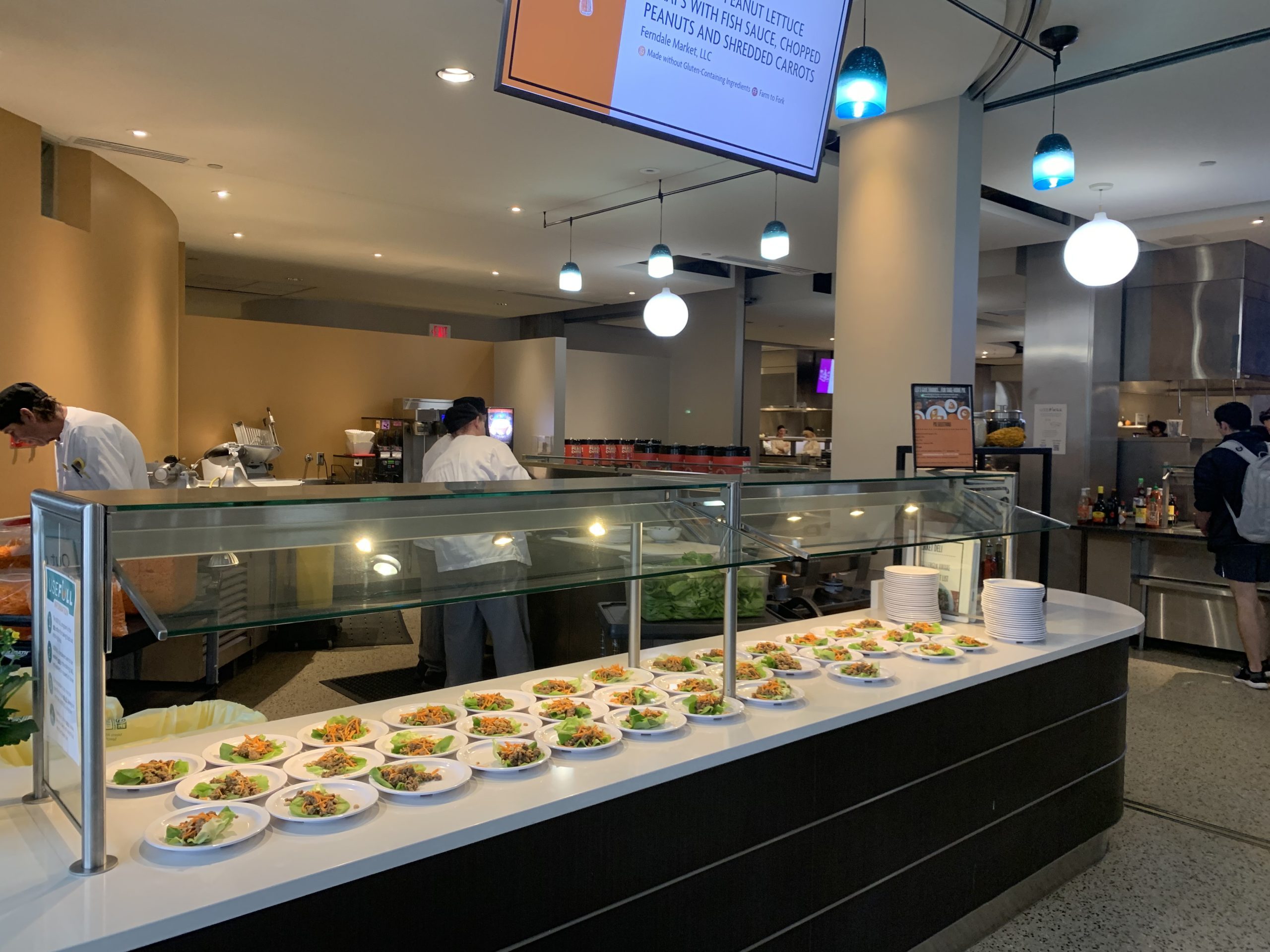
The architectural and operational layout of dining facilities directly impacts how menus are executed. The table below outlines the structural differences between legacy cafeterias and modern 2026 food hall ecosystems.
| Operational Feature | Legacy Cafeteria Model | Modern 2026 Food Hall Model |
|---|---|---|
| Service Style | Linear serving lines with pre-portioned trays. | Decentralized micro-stations (e.g., wok, grill, deli, bowls). |
| Menu Flexibility | Static 3-week or 4-week repeating cycles. | Dynamic daily updates based on inventory and seasonal availability. |
| Nutritional Access | Basic calorie counts posted on overhead boards. | Granular digital breakdowns via mobile apps with customized filtering. |
| Waste Management | High post-consumer plate waste due to fixed portions. | Pay-by-weight salad bars, customizable portions, and composting programs. |
Practical Strategies for Maximizing Your Dining Hall Experience
Making the most of a institutional meal plan requires a strategic approach to timing, menu navigation, and customization. Whether you are aiming to optimize athletic performance, maintain a balanced diet, or simply avoid peak-hour crowds, applying tactical habits transforms the dining experience.
- Review the Digital Menu in Advance: Check the mobile application during your morning routine to map out your meals and avoid impulse selections driven by hunger.
- Build Balanced Plates: Utilize the plate method by dedicating half your tray to colorful vegetables and fruits, a quarter to lean proteins, and a quarter to complex carbohydrates.
- Communicate with Culinary Staff: Do not hesitate to ask chefs or station attendants about preparation methods or hidden ingredients, especially if you manage severe food allergies.
- Target Off-Peak Hours: Visit dining halls during shoulder hours (e.g., between peak lunch rushes) to enjoy fresher batches of food and shorter wait times at customized stations.
Frequently Asked Questions
How can I view the daily dining hall menu in advance?
Most institutions publish their daily and weekly menus through dedicated mobile apps or official dining services websites that update in real time. These digital platforms allow users to filter items by meal period, location, and specific nutritional preferences.
Are dining hall menus accommodating to severe food allergies?
Yes, modern dining facilities operate under strict cross-contact protocols and frequently feature dedicated allergen-free stations. Staff members receive specialized training in food safety, and detailed ingredient lists are accessible via digital menu boards.
Can I customize my meals at the dining hall?
Most contemporary dining halls feature interactive stations—such as custom grain bowl bars, made-to-order stir-fry lines, and customizable sandwich counters—allowing you to select your exact ingredients.
How are nutritional values calculated for menu items?
Nutritional data is formulated using standardized recipe cards, precise ingredient weights, and nutritional analysis software managed by registered dietitians on the dining services team.
What should I do if an ingredient label seems inaccurate?
Immediately notify the station manager, executive chef, or dining hall supervisor on duty. Institutional dining teams prioritize food safety and will verify the batch recipe and update the digital menu display instantly.
Optimizing Your Nutrition Through Smart Menu Choices
Mastering the dining hall menu in 2026 is an exercise in utilizing available digital tools, understanding nutritional labeling, and communicating effectively with culinary teams. By leveraging mobile applications, targeting customized stations, and prioritizing whole, nutrient-dense foods, you can maintain a healthy, satisfying, and diverse diet within any institutional setting. Review your campus or facility app today, plan your meals ahead, and take full control of your daily dining experience.
Image Gallery