How to Apply for Free Health Insurance in 2026: A Step-by-Step Guide
To apply for free health insurance in 2026, you must typically enroll in Medicaid or a $0-premium Marketplace plan via HealthCare.gov or your state’s health exchange. Eligibility is primarily based on your household size and Modified A...
To apply for free health insurance in 2026, you must typically enroll in Medicaid or a $0-premium Marketplace plan via HealthCare.gov or your state’s health exchange. Eligibility is primarily based on your household size and Modified Adjusted Gross Income (MAGI) relative to the 2026 Federal Poverty Level (FPL) guidelines.
Contents
In the United States, "free" health insurance generally refers to two distinct types of coverage: Medicaid/CHIP for low-income individuals and families, and subsidized private plans through the Affordable Care Act (ACA) Marketplace that result in a $0 monthly premium after tax credits are applied. Navigating these systems requires a clear understanding of current federal regulations, state-specific expansion rules, and the specific documentation required to prove eligibility.
Understanding the Two Primary Paths to Free Coverage
Before beginning an application, it is essential to distinguish between the two mechanisms that provide no-cost health coverage. While both are accessed through similar portals, they operate under different legal frameworks and offer different levels of benefits.
Medicaid and the Children’s Health Insurance Program (CHIP)
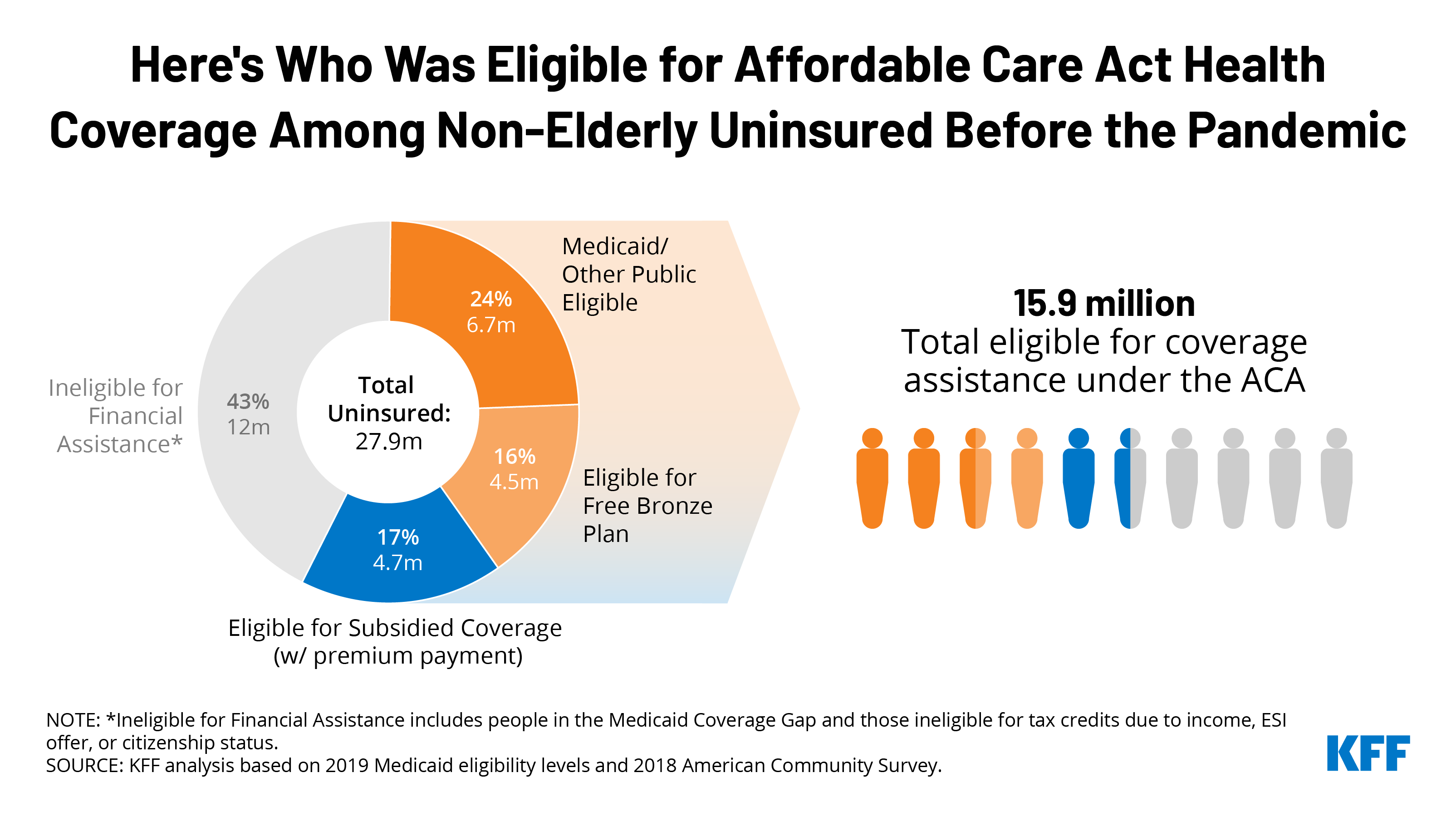
Medicaid is a joint federal and state program that provides health coverage to millions of Americans, including eligible low-income adults, children, pregnant women, elderly adults, and people with disabilities. As of 2026, a majority of states have adopted Medicaid expansion, which simplifies eligibility by focusing almost entirely on income rather than specific categorical requirements (like being a parent or having a disability).
CHIP provides low-cost or free health coverage to children in families that earn too much money to qualify for Medicaid but not enough to afford private insurance. In many states, CHIP is integrated into the Medicaid application process, meaning one application determines eligibility for both programs.
Subsidized Marketplace Plans ($0 Premium)
For those who earn too much to qualify for Medicaid, the ACA Marketplace offers premium tax credits. Depending on your income level—specifically if you fall between 100% and 150% of the Federal Poverty Level—you may qualify for "Silver" plans with a $0 monthly premium. These plans also often include Cost-Sharing Reductions (CSRs), which lower out-of-pocket costs like deductibles and co-pays, making the insurance nearly free to use as well as free to own.
Eligibility Requirements for 2026
Eligibility for free health insurance is not universal; it is strictly regulated based on financial and residency criteria. In 2026, these thresholds are adjusted based on the updated Federal Poverty Level (FPL) figures.
Income Thresholds and MAGI
The most critical factor is your Modified Adjusted Gross Income (MAGI). This is not just your take-home pay; it includes your adjusted gross income from your tax return plus any tax-exempt interest and foreign earned income.
- Medicaid Expansion States: In states that have expanded Medicaid, you generally qualify if your household income is at or below 138% of the FPL. For a single individual in 2026, this typically hovers around $20,780 annually, though this varies slightly by state and family size.
- Non-Expansion States: In states that have not expanded Medicaid, eligibility is much tighter. You often must be pregnant, a parent of a minor, or have a disability, in addition to having a very low income (often well below 100% of the FPL).
- Marketplace Subsidies: If your income is between 100% and 400% of the FPL, you are eligible for sliding-scale subsidies. The "Enhanced Subsidies" originally introduced in 2021 have largely influenced the 2026 landscape, allowing many individuals earning up to 150% of the FPL to access $0-premium plans.
Residency and Immigration Status
To apply for free health insurance through federal or state exchanges, you must live in the United States and be a U.S. citizen or a national. Lawfully present immigrants are generally eligible for Marketplace plans and, in many cases, Medicaid (though some states impose a five-year waiting period for Medicaid for certain non-citizens). Undocumented immigrants are generally ineligible for federal Medicaid or Marketplace subsidies, though some states have established state-funded programs for specific groups, such as children or seniors.
Documents Needed for the Application
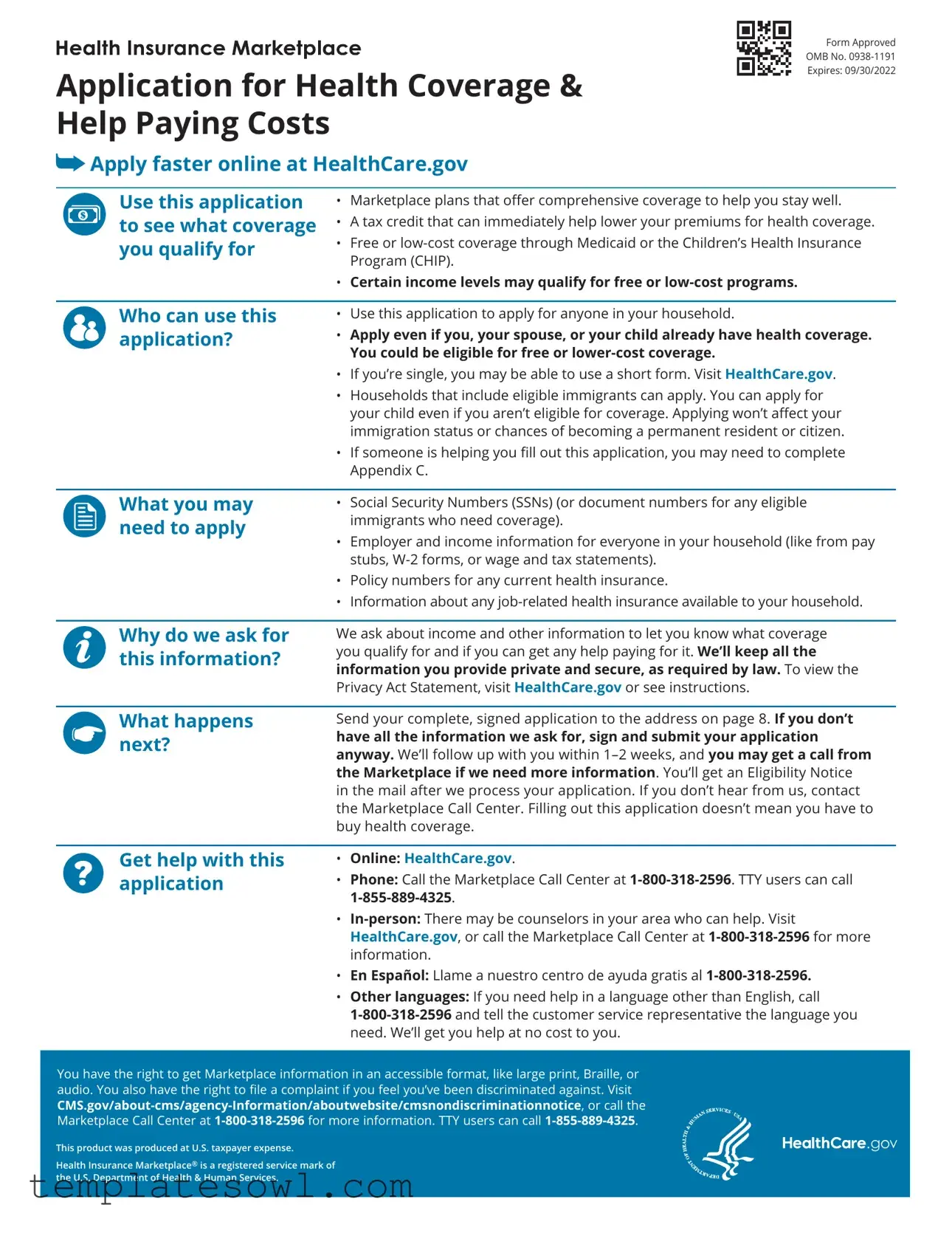
Gathering the correct documentation beforehand is the most effective way to prevent delays or "Data Matching Inconsistencies" (DMIs) that could suspend your coverage.
- Proof of Identity: A valid driver's license, state ID, or passport.
- Social Security Numbers: Required for everyone in the household applying for coverage.
- Income Verification: Recent pay stubs, W-2 forms, or your 2025 tax return. If you are self-employed, you will need a ledger or a 1040-ES (Estimated Tax) form.
- Immigration Documents: If applicable, green cards, work permits, or visa information including Alien Registration Numbers.
- Current Policy Information: If anyone in your household currently has insurance through an employer, you need the policy numbers and information about what the employer offers (even if you aren't enrolled in it).
How to Apply: A Step-by-Step Sequence
The application process can be completed online, by phone, via mail, or in person. For the 2026 coverage year, the online method remains the fastest and most reliable.
Step 1: Visit HealthCare.gov or Your State Exchange
The federal portal, HealthCare.gov, serves as the gateway for most states. If your state operates its own exchange (e.g., Covered California, NY State of Health), the federal site will automatically redirect you to the correct local portal.
Step 2: Create or Update Your Profile
If you have applied in previous years, log in to your existing account. It is vital to update your profile rather than creating a new one to ensure your history and tax credit data remain synchronized. If you are new, you will create a username and password and complete a series of security questions.
Step 3: Enter Household and Income Details
The system will ask who is in your "tax household." This includes you, your spouse, and any dependents you claim on your tax return, even if they do not need insurance. You must provide an accurate estimate of your projected income for the entire year of 2026. This is a common point of error; if you underestimate your income and receive too much in subsidies, you may have to pay them back when you file your 2026 taxes.
Step 4: Review Your Eligibility Results
After submitting your details, the system will provide an "Eligibility Notice." This document will state clearly whether you qualify for Medicaid, CHIP, or Marketplace premium tax credits. If you qualify for Medicaid, your information will be sent to your state agency for final processing. If you qualify for a Marketplace plan, you can proceed to "Plan Selection."
Step 5: Filter for $0 Premium Plans
When browsing Marketplace plans, use the filter tools to sort by "Monthly Premium." If your income falls within the subsidized range, you will see several plans listed with a $0 premium. Focus on Silver-level plans; while Bronze plans might also be free, Silver plans are the only ones that allow you to use Cost-Sharing Reductions to lower your out-of-pocket costs.
Comparison of Free Coverage Options in 2026
The following table compares the two primary ways to obtain free health insurance to help you understand what to expect from each.
| Feature | Medicaid / CHIP | Subsidized Marketplace ($0 Plan) |
|---|---|---|
| Primary Eligibility | Household income < 138% FPL (in expansion states) | Household income 100% - 150% FPL |
| Monthly Premium | $0 | $0 (after tax credits) |
| Deductibles | Typically $0 or very low | Varies; can be high unless using Silver CSRs |
| Provider Network | Limited to providers accepting Medicaid | Varies by carrier (HMO, PPO, EPO) |
| Enrollment Period | Year-round; no deadline | Open Enrollment or Special Enrollment Period |
| Drug Coverage | Mandatory coverage; small co-pays possible | Included; subject to plan formulary |
| Dental/Vision | Often included for children; varies for adults | Usually a separate add-on for adults |
Enrollment Deadlines and Timing
Timing is a critical factor when applying for free health insurance. Missing a window can result in being uninsured for the remainder of the year.
Open Enrollment Period (OEP)
For Marketplace plans in 2026, the Open Enrollment Period typically runs from November 1, 2025, to January 15, 2026.
- To have coverage start on January 1, 2026, you must enroll by December 15, 2025.
- Applications submitted between December 16 and January 15 result in a February 1 start date.
Medicaid is Year-Round
Unlike private plans, there is no "Open Enrollment" for Medicaid or CHIP. If you are eligible, you can apply and enroll at any time during the year. Your coverage often begins on the first day of the month you applied, and in some cases, it can be backdated up to three months if you were eligible during that time.
Special Enrollment Periods (SEP)
If you miss the OEP for a Marketplace plan, you can only apply if you experience a Qualifying Life Event (QLE). Common events include:
- Losing existing health coverage (e.g., job loss or aging out of a parent's plan).
- Getting married or divorced.
- Having a baby or adopting a child.
- Permanently moving to a new ZIP code or county.
Common Mistakes to Avoid
- Reporting Individual Income Instead of Household Income: The IRS and insurance exchanges look at the "tax household." If you live with a partner you aren't married to, their income usually doesn't count unless you claim them as a dependent. Conversely, you must include a spouse's income even if they are not applying for coverage.
- Ignoring the "Silver Loading" Effect: Many people choose the "cheapest" Bronze plan because the premium is $0. However, for those with low incomes, a Silver plan might also be $0 and offer much lower deductibles. Always check the Silver plans first.
- Failing to Report Income Changes: If your income increases during 2026, you must update your application. If you continue to receive subsidies based on a lower income, you will likely owe a "reconciled" amount to the IRS when you file your taxes the following year.
- Missing the Verification Deadline: After you apply, the Marketplace may ask for proof of income or citizenship. You usually have 90 days to upload these documents. If you fail to do so, your "free" insurance will be terminated or your subsidies will be removed, leaving you with a high bill.
Frequently Asked Questions
Can I get free health insurance if my employer offers a plan?
Generally, no. If your employer offers coverage that is considered "affordable" and meets "minimum value" standards under the ACA, you are ineligible for Marketplace subsidies, even if your income is low. Coverage is considered affordable in 2026 if the employee's share of the premium for the lowest-cost self-only plan does not exceed a specific percentage (approximately 8.3-9%) of their household income.
What happens if I live in a state that did not expand Medicaid?
If your income is below 100% of the FPL and you live in a non-expansion state, you may fall into the "coverage gap." This means you earn too much for Medicaid but not enough to qualify for Marketplace subsidies. In this scenario, you should look for Federally Qualified Health Centers (FQHCs) which offer sliding-scale fees based on income, or check if your state has specific local programs.
Is Medicaid really "free," or are there hidden costs?
For the vast majority of recipients, Medicaid is free. There are no monthly premiums. However, some states may charge very small co-payments (e.g., $1 to $5) for brand-name prescriptions or non-emergency visits to the ER. These are capped by federal law to ensure they do not create a financial barrier to care.
Can I have "free" health insurance and a Health Savings Account (HSA)?
To contribute to an HSA, you must be enrolled in a High Deductible Health Plan (HDHP). While some $0-premium Marketplace plans are HDHPs, Medicaid is not. Therefore, you cannot contribute to an HSA if you are on Medicaid.
Does "free" insurance cover dental and vision?
Medicaid and CHIP always cover dental and vision for children. For adults, dental and vision coverage in Medicaid is optional for states. Some states provide comprehensive dental, while others provide only emergency dental. Marketplace plans usually require a separate premium for adult dental and vision coverage.
Final Recommendation
If you believe you qualify for free health insurance, the first and most important step is to visit HealthCare.gov immediately to check your eligibility. If you are currently uninsured or expect an income change in 2026, do not wait for the next Open Enrollment Period; check now to see if you qualify for Medicaid or a Special Enrollment Period. For the best balance of cost and coverage, prioritize Silver plans on the Marketplace, as these maximize the Cost-Sharing Reductions that make healthcare truly affordable beyond just the monthly premium.
Image Gallery