Understanding the Workers’ Compensation Board Post-Traumatic Stress Disorder (PTSD) Guidelines
The Workers’ Compensation Board guidelines for Post-Traumatic Stress Disorder (PTSD) establish the medical and legal criteria required to qualify for benefits following a work-related psychological injury. To secure a claim in 2026, an...
The Workers’ Compensation Board guidelines for Post-Traumatic Stress Disorder (PTSD) establish the medical and legal criteria required to qualify for benefits following a work-related psychological injury. To secure a claim in 2026, an individual must provide a formal diagnosis from a licensed psychologist or psychiatrist based on the DSM-5-TR criteria and demonstrate a direct causal link between their employment and a specific traumatic event or series of events.
Contents
Post-Traumatic Stress Disorder has transitioned from a frequently misunderstood "invisible injury" to a cornerstone of modern occupational health and safety law. As of 2026, most Workers’ Compensation Boards (WCB) have refined their mental health policies to better accommodate the complexities of psychological trauma. These guidelines are designed to ensure that workers who experience or witness harrowing events on the job receive the same medical and financial support as those suffering from physical ailments. However, because psychological claims are subject to high levels of scrutiny, understanding the specific evidentiary requirements and procedural hurdles is essential for a successful claim.
The Evolution of Mental Health Coverage in Workers' Compensation
Historically, workers' compensation systems were built around the "physical-mental" model, meaning a psychological injury was generally only compensable if it stemmed from a physical trauma, such as a head injury or a limb loss. Over the last decade, and solidifying by 2026, the shift toward "mental-mental" coverage has become the standard. This allows workers to file claims for psychological injuries resulting from workplace trauma even in the absence of physical harm.
The primary objective of the current Board guidelines is to provide a structured framework for adjudicators to distinguish between general workplace stress—which is often excluded from coverage—and clinical PTSD. Most jurisdictions now explicitly state that "normal" workplace pressures, such as disciplinary actions, performance reviews, or terminations, do not qualify as traumatic events under the PTSD guidelines. Instead, the focus is on extraordinary circumstances that exceed the standard stressors of a given occupation.
The "Presumptive" Legislation Framework
One of the most significant developments in WCB PTSD guidelines is the implementation of presumptive legislation. In 2026, this framework applies to a broad range of "high-risk" occupations. Under a presumptive rule, if a worker in a designated profession is diagnosed with PTSD, the Board presumes the condition is work-related unless proven otherwise. This shifts the burden of proof from the employee to the employer or the insurance carrier.
Occupations Often Covered by Presumptive Clauses:
- First Responders: Police officers, firefighters, and emergency medical technicians (EMTs).
- Healthcare Workers: Doctors and nurses working in emergency departments or intensive care units.
- Correctional Officers: Staff working within the penal system who witness violence or threats.
- Emergency Dispatchers: 911 operators who experience vicarious trauma through emergency calls.
- Public Safety Personnel: Wildlife officers, paramedics, and certain transit safety officers.
For workers not covered by these presumptive clauses, the "standard" burden of proof applies. This requires the worker to provide comprehensive evidence that their PTSD was "arising out of and in the course of employment."
Medical Requirements: Adhering to the DSM-5-TR
The Workers’ Compensation Board does not accept a self-diagnosis or a general note from a primary care physician as sufficient evidence for a PTSD claim. The guidelines strictly require a diagnosis that aligns with the Diagnostic and Statistical Manual of Mental Disorders, 5th Edition, Text Revision (DSM-5-TR).
To meet the Board's medical threshold, the diagnostic report must typically address the following "Criteria":
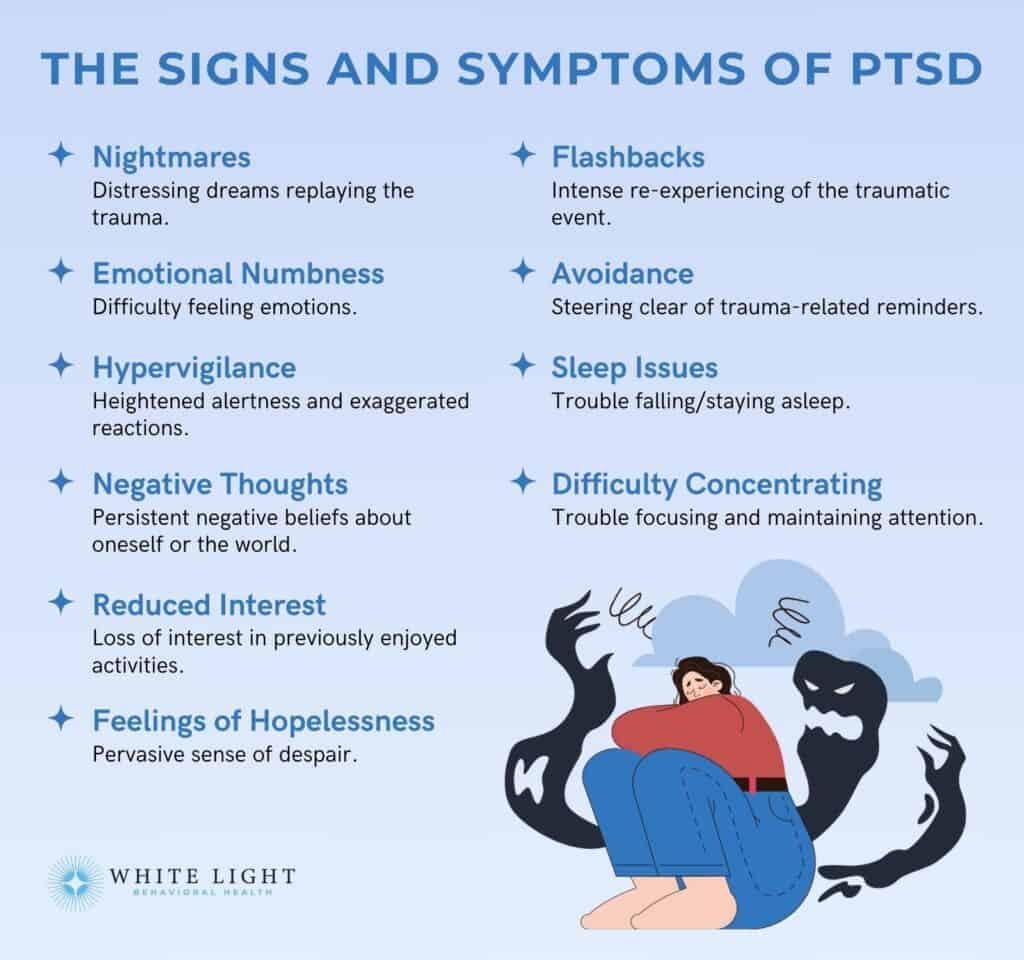
- Criterion A (Stressor): The person was exposed to: death, threatened death, actual or threatened serious injury, or actual or threatened sexual violence. This exposure can be direct, witnessed in person, or learned about (if the event happened to a close family member or friend).
- Criterion B (Intrusion Symptoms): The traumatic event is persistently re-experienced through distressing memories, nightmares, or flashbacks.
- Criterion C (Avoidance): The individual makes persistent efforts to avoid distressing memories, thoughts, feelings, or external reminders (people, places, conversations) associated with the event.
- Criterion D (Negative Alterations in Cognition and Mood): This includes an inability to remember key aspects of the event, persistent negative beliefs about oneself or the world, or a diminished interest in significant activities.
- Criterion E (Alterations in Arousal and Reactivity): Irritable behavior, hypervigilance, exaggerated startle response, or sleep disturbances.
The Board requires that these symptoms persist for more than one month and cause significant distress or impairment in social, occupational, or other important areas of functioning.
The Role of the Independent Medical Examination (IME)
Even with a diagnosis from a personal psychologist, the Workers' Compensation Board or the employer’s insurance carrier often requests an Independent Medical Examination (IME). This is a pivotal moment in the claims process. The IME is conducted by a Board-certified psychiatrist or psychologist who has no prior relationship with the worker.
The purpose of the IME is to verify the diagnosis and determine the degree of disability. The examiner will review medical records, conduct a clinical interview, and potentially administer psychological testing (such as the MMPI-3). It is important to note that "independent" is a legal term; these examiners are often contracted by insurance companies, and their findings can sometimes conflict with the treating physician’s assessment. Board guidelines specify that if there is a conflict in medical testimony, the Workers' Compensation Law Judge or adjudicator will weigh the evidence based on the credibility and thoroughness of the reports.
Filing a Claim: Procedural Steps and Timelines
Navigating a PTSD claim requires strict adherence to timelines. Failure to report the injury or file the paperwork within the statutory limits can result in a permanent loss of benefits.
Step 1: Immediate Reporting
The worker should notify their employer in writing as soon as they realize their psychological symptoms are related to a workplace event. Most jurisdictions require this within 30 days of the incident or 30 days from the date the worker became aware of the injury.
Step 2: Seeking Qualified Medical Care
The worker must seek treatment from a provider authorized by the Workers' Compensation Board. Not all psychologists or psychiatrists are authorized to treat WCB patients. The provider must submit medical reports (such as the Form C-4 in some U.S. jurisdictions) directly to the Board.
Step 3: Filing the Employee Claim Form
The formal claim (often referred to as a C-3 or similar form) must be filed with the Board. This form details the nature of the trauma and the symptoms being experienced. In 2026, most Boards offer an online portal for expedited filing.
| Component | Standard Claim Requirement | Presumptive Claim Requirement |
|---|---|---|
| Burden of Proof | Worker must prove work-causation. | Employer must disprove work-causation. |
| Diagnosis | Must meet DSM-5-TR standards. | Must meet DSM-5-TR standards. |
| Witness Evidence | Often required to corroborate the event. | Less critical if the event is inherent to the job. |
| Common Denials | "Pre-existing condition" or "General stress." | "Evidence that trauma occurred outside of work." |
| Authorized Provider | Psychologist or Psychiatrist. | Psychologist or Psychiatrist. |
Evidentiary Standards for "Mental-Mental" Claims
For claims involving "mental-mental" injuries (psychological stimulus causing psychological injury), the Board looks for "extraordinary" stress. In many jurisdictions, the worker must prove that the stress they experienced was greater than what a typical colleague in a similar position would face.
For example, a bank teller who is present during an armed robbery has a clear path to a PTSD claim because an armed robbery is an extraordinary event. Conversely, a retail worker who experiences anxiety due to an increased workload may find their claim denied under the "ordinary business stress" exclusion.
However, the 2026 guidelines also recognize cumulative trauma. This applies to workers who may not have experienced one single catastrophic event but were exposed to a series of smaller, highly distressing incidents over time. For these claims, the medical documentation must clearly map the progression of the disorder and link it to the specific workplace exposures.
Benefits and Treatment Guidelines
Once a PTSD claim is established, the worker is entitled to two primary types of benefits:
1. Medical Benefits
The Board guidelines mandate coverage for all "necessary and reasonable" medical care related to the PTSD. This typically includes:
- Evidence-Based Psychotherapy: Cognitive Behavioral Therapy (CBT), Prolonged Exposure (PE), and Eye Movement Desensitization and Reprocessing (EMDR) are the gold standards.
- Pharmacotherapy: Medications prescribed by a psychiatrist to manage symptoms of anxiety, depression, or sleep disturbances.
- Inpatient Treatment: In severe cases where the worker is a danger to themselves or others, acute stabilization may be covered.
2. Indemnity Benefits (Wage Replacement)
If the PTSD prevents the worker from returning to their job, they may receive weekly cash benefits. These are usually calculated as a percentage (often two-thirds) of the worker’s average weekly wage, subject to a statutory maximum. In 2026, Boards are increasingly focused on "Return to Work" programs, which may provide vocational rehabilitation or modified duty assignments to help the worker reintegrate into the workforce safely.
Common Challenges and Claim Denials
PTSD claims are among the most frequently contested in the workers' compensation system. Employers and insurers may use several strategies to deny a claim:
- Pre-existing Conditions: The insurer may argue that the PTSD is a result of childhood trauma or a previous non-work-related incident.
- Delayed Reporting: If a worker waits months to report the symptoms, the Board may question the causal link to the workplace.
- Alternative Stressors: The insurer might point to personal issues, such as a divorce or financial problems, as the "true" cause of the psychological distress.
To counter these challenges, it is vital to have a consistent medical history. Workers should be honest with their therapists about their history but ensure that the specific impact of the workplace trauma is clearly documented as the precipitating factor for their current functional impairment.
Frequently Asked Questions
Can I file a PTSD claim if the trauma happened years ago? In most jurisdictions, there is a statute of limitations (often two years) from the date of the accident or the date you knew the injury was work-related. However, for "occupational diseases" or latent psychological injuries, the clock may start from the date of diagnosis. You should consult the specific NYS Workers' Compensation Board or your local provincial authority for exact deadlines.
What if my PTSD was caused by workplace bullying or harassment? Guidelines regarding harassment vary significantly by region. While some Boards now recognize chronic harassment as a source of compensable stress, many still require a specific "frightening or shocking" event. If the harassment led to a formal diagnosis of PTSD, you may have a claim, but it often requires a higher level of documentation than a single-event trauma.
Do I have to see the doctor my employer chooses? Generally, no. You have the right to see any doctor who is authorized by the Workers' Compensation Board to treat injured workers. However, you must attend the Independent Medical Examination (IME) scheduled by the insurance carrier, or your benefits may be suspended.
Is my PTSD claim confidential from my employer? While the details of your therapy sessions are protected by HIPAA or similar privacy laws, the fact that you have filed a claim for PTSD and the general nature of your work restrictions will be shared with your employer. The Board's medical reports will summarize your functional limitations to determine your ability to work.
What happens if my PTSD claim is denied? If your claim is denied, you have the right to a hearing before a Workers' Compensation Law Judge. You will likely need a legal representative to present medical testimony and cross-examine the insurance company’s medical experts.
Practical Recommendations for Workers
If you believe you are suffering from work-related PTSD, your first priority must be health, followed closely by legal protection. Ensure you are seeing a specialist who understands the DSM-5-TR and is familiar with the Workers' Compensation Board’s reporting requirements. Keep a personal log of your symptoms and how they interfere with your daily life, as this can be invaluable during an IME. Finally, because the laws surrounding psychological injuries are technically dense and vary by jurisdiction, seeking a consultation with an attorney who specializes in workers' compensation is highly recommended to ensure your rights are protected under the 2026 guidelines.
Disclaimer: This article provides general information regarding workers' compensation guidelines and does not constitute legal or medical advice. Jurisdictional laws vary; please consult with a qualified professional regarding your specific case.
Image Gallery