Understanding Warranty for Used Cars with High Mileage in 2026
Finding a reliable warranty for used cars with high mileage involves selecting a vehicle service contract (VSC) specifically designed for vehicles with over 100,000 miles. These plans prioritize essential mechanical components like the...
Finding a reliable warranty for used cars with high mileage involves selecting a vehicle service contract (VSC) specifically designed for vehicles with over 100,000 miles. These plans prioritize essential mechanical components like the engine and transmission, providing a financial safety net against the increased frequency of mechanical breakdowns common in aging vehicles.
Contents
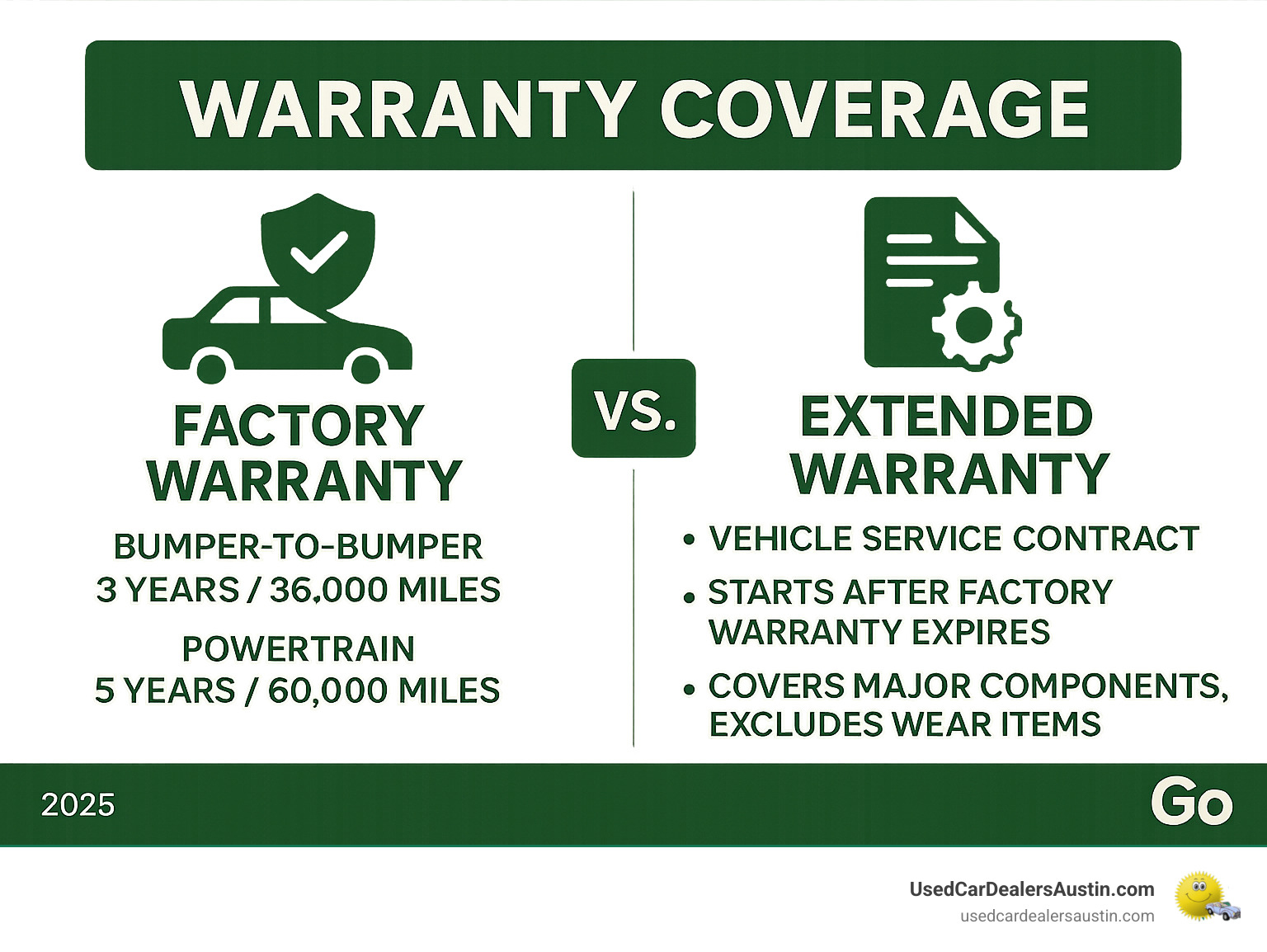
As vehicles age and their odometers climb, the risk of mechanical failure increases exponentially. By 2026, the average age of cars on the road has continued to rise, making high-mileage protection a critical consideration for owners of pre-owned vehicles. While a manufacturer’s bumper-to-bumper warranty typically expires after 36,000 or 60,000 miles, third-party providers now offer specialized coverage that can extend well past 200,000 miles. This guide examines the nuances of securing coverage for high-mileage vehicles, the types of plans available, and how to verify the value of a contract.
The Difference Between Warranties and Service Contracts
In the context of used cars, the term "warranty" is often used colloquially to describe what is legally a Vehicle Service Contract (VSC). A true warranty is a guarantee provided by the manufacturer at the time of sale, included in the purchase price. For a used car with high mileage, that original warranty has almost certainly expired.
Third-party providers sell VSCs that function similarly to insurance for mechanical repairs. In 2026, the distinction remains important for legal and regulatory reasons. When you purchase a "warranty" for a car with 120,000 miles, you are entering into a contract where the provider agrees to pay for specific repairs in exchange for a premium and a deductible. These contracts are regulated by state insurance commissioners in many jurisdictions, ensuring that providers maintain enough capital to pay out claims even as the vehicle's reliability declines.
Evaluating Eligibility for High-Mileage Coverage
Not every high-mileage vehicle qualifies for every type of plan. Providers generally categorize eligibility based on two primary factors: the current odometer reading and the vehicle's age.
Mileage Thresholds
In 2026, most specialized high-mileage providers offer tiered entry points. Many "standard" extended warranties stop accepting new contracts once a vehicle passes 80,000 or 100,000 miles. However, high-mileage specialists often have programs designed for vehicles up to 150,000 or even 200,000 miles at the time of enrollment. Once enrolled, some contracts can keep a vehicle covered until it reaches 250,000 or 300,000 miles, provided the owner adheres to strict maintenance schedules.
Pre-Existing Conditions and Inspections
The most significant hurdle for high-mileage coverage is the pre-existing condition clause. Providers will not cover a part that was already failing or broken before the contract began. Some companies require a professional inspection before the policy becomes active. Others implement a "waiting period"—typically 30 days and 1,000 miles—before any claims can be filed. This ensures that the vehicle was in good working order when the contract was signed.
Maintenance Requirements
To keep a high-mileage warranty valid, owners must document all routine maintenance. For a car with 150,000 miles, a provider may request records of oil changes, transmission fluid flushes, and timing belt replacements. If a failure occurs and the owner cannot prove the vehicle was maintained according to the manufacturer's 2026 guidelines, the claim may be denied due to "negligence."
Types of High-Mileage Coverage Plans
When dealing with older vehicles, the breadth of coverage typically narrows to ensure the premiums remains affordable. High-mileage plans generally fall into three categories.
| Plan Type | Ideal Mileage Range | Core Coverage | Common Exclusions |
|---|---|---|---|
| Powertrain | 150,000+ Miles | Engine, Transmission, Drive Axle | AC, Electrical, Sensors |
| Stated Component | 100,000 - 150,000 | Engine, Tranny, AC, Steering, Fuel | High-tech infotainment, Trim |
| Exclusionary | Under 100,000 | Everything except "wear items" | Brakes, Tires, Wipers, Belts |
Powertrain Coverage
This is the most common and essential plan for high-mileage vehicles. It covers the "internally lubricated parts" of the engine and transmission. Because a transmission replacement on a 2020s-era vehicle can exceed $5,000, this plan protects against catastrophic financial loss while ignoring smaller, non-essential repairs.
Stated Component Coverage
A step above powertrain, this plan lists every single part that is covered. If a part isn't on the list, it isn't covered. This is often the best balance for cars with 120,000 miles that still have functional modern conveniences like dual-zone climate control or power-adjustable seats, which are prone to failure but expensive to fix.
Exclusionary Coverage
Rarely available for vehicles over 100,000 miles, exclusionary coverage is the most comprehensive. It covers every mechanical part on the vehicle except for a short list of excluded items (mostly maintenance and wear-and-tear parts). In 2026, some premium providers offer this to high-mileage vehicles that pass a rigorous multi-point inspection.
Key Factors Influencing Cost in 2026
The cost of a high-mileage warranty is not fixed; it is a calculation of risk. Several factors drive the monthly or total premium of these contracts.
- Vehicle Make and Model Reliability: Some brands are known for longevity (e.g., Toyota, Honda), while others have higher repair costs for specialized parts (e.g., BMW, Land Rover). A powertrain warranty for a luxury SUV will cost significantly more than one for a domestic sedan with the same mileage.
- Deductible Structure: Most plans offer deductibles ranging from $0 to $500. Choosing a $250 deductible can lower the annual premium significantly, which is often a wise move for high-mileage owners who are primarily worried about "total loss" mechanical failures.
- Contract Term: You can often choose between a "month-to-month" subscription model, which has become more popular by 2026, or a fixed-term contract (e.g., 3 years/36,000 miles). Subscription models offer more flexibility for owners who might sell the car soon.
- Labor Rates: As of 2026, labor rates at dealerships have risen. Ensure the VSC covers the "going rate" for labor in your specific zip code, or you may be forced to pay the difference out of pocket.
Common Pitfalls and How to Avoid Them
The high-mileage warranty industry is frequently scrutinized for complex contracts and aggressive marketing. Avoiding common mistakes is essential for ensuring the coverage actually works when needed.
Vague "Wear and Tear" Definitions Many basic contracts exclude repairs necessitated by "gradual reduction in operating performance" (wear and tear). On a car with 160,000 miles, nearly every failure could be argued as wear and tear. Look for contracts that specifically include "wear and tear" coverage to ensure that a worn-out piston ring or bearing is covered even if it didn't catastrophically "break" in a single moment.
Unauthorized Repairs You must always receive prior authorization before any work begins. If a mechanic tears down the engine to diagnose a problem before the warranty company’s adjuster gives the green light, the claim will likely be denied. The provider has the right to inspect the failure before it is disturbed.
Overlooking Supplemental Benefits In 2026, high-mileage plans often include 24/7 roadside assistance, towing, and rental car reimbursement. Since older cars are more likely to leave a driver stranded, these "perks" can actually save hundreds of dollars in a single incident, even if the mechanical repair itself is minor.
Verifying Provider Reputation
Before signing a contract, it is vital to verify the financial stability of the administrator. Use resources like AM Best to check the financial strength rating of the insurance company backing the contract. A high-mileage warranty is only as good as the company's ability to pay claims two or three years down the line. Furthermore, check the Better Business Bureau (BBB) for the provider's history of handling disputes and their average "time to claim resolution."
Frequently Asked Questions
Can I get a warranty for a car with over 200,000 miles?
Yes, specialized providers in 2026 offer "High-Mileage" or "Exteme Mileage" plans specifically for vehicles between 150,000 and 250,000 miles. These are almost exclusively powertrain-only plans. They are designed to prevent the vehicle from becoming a total financial loss due to a blown engine or failed transmission, but they will not cover smaller items like power windows or sensors.
Does a high-mileage warranty cover turbochargers and hybrids?
It depends on the plan. In 2026, many high-mileage vehicles are turbocharged or hybrid. You must ensure that the "Turbo/Supercharger" or "Hybrid Components" surcharge is added to your contract. Standard powertrain plans often exclude these unless they are specifically mentioned in the "Stated Components" list. Hybrid battery coverage is usually a separate, specialized add-on.
Is an inspection required before the warranty starts?
Not always, but it is recommended. Many providers use a "waiting period" of 30 days and 1,000 miles as a substitute for a physical inspection. However, if you have a high-value or complex vehicle, opting for a provider that performs an inspection can prevent future claims from being denied on the grounds of "pre-existing conditions."
Will my warranty cover repairs at my local mechanic?
Most reputable third-party VSCs allow you to use any ASE-certified mechanic in the United States or Canada. You are not typically restricted to the dealership. However, you should confirm that your mechanic is willing to work with warranty companies, as the shop will need to submit an estimate and wait for an authorization number before starting the repair.
How do I cancel a high-mileage service contract?
By law in most states as of 2026, you are entitled to a "free look" period (usually 30 days) during which you can cancel for a full refund. After that, you can typically cancel at any time for a pro-rated refund based on the remaining time or mileage on the contract, though a small administrative fee may apply.
Final Recommendation
For owners of used cars with high mileage, a vehicle service contract is most valuable when viewed as catastrophic coverage. Rather than seeking a plan that covers every minor sensor or trim piece, prioritize a robust powertrain or stated component plan from a provider with a high AM Best rating. Ensure you have a complete folder of maintenance records before enrollment. This strategy provides the highest return on investment by protecting against the $3,000 to $7,000 repairs that would otherwise force an aging vehicle into the scrapyard.
Image Gallery