Navigating the Dynamics of Understanding the Malaysian Newspaper Market
Understanding the Malaysian newspaper market requires navigating a complex media landscape defined by multi-ethnic demographics, strict regulatory frameworks, and an accelerating digital transformation. Historically dominated by print...
Understanding the Malaysian newspaper market requires navigating a complex media landscape defined by multi-ethnic demographics, strict regulatory frameworks, and an accelerating digital transformation. Historically dominated by print publications aligned with major political coalitions and language-based communities, the industry now operates in a hybrid environment where legacy broadsheets compete directly with agile digital-native portals for declining advertising revenues and shifting reader attention spans.
Contents
The Historical Evolution of Malaysian Print Media
The roots of the Malaysian newspaper market trace back to the colonial era, which laid the groundwork for a segmented press organized primarily along linguistic lines. Newspapers emerged to serve specific communities—Malay, English, Chinese, and Tamil—creating distinct audience silos that persist to this day. This structural segmentation meant that unlike countries with a singular dominant national language press, Malaysia developed parallel media ecosystems.
Throughout the decades following independence in 1957, the press operated under rigorous state oversight governed by legislation such as the Printing Presses and Publications Act (PPPA). Major publishing houses gradually consolidated under ownership structures linked directly or indirectly to political parties forming the ruling coalitions. This alignment ensured that traditional print outlets functioned not only as commercial enterprises but also as instruments of nation-building and political communication.
However, the turn of the twenty-first century introduced disruptive technological forces. The advent of internet news portals challenged the state-aligned narrative and forced legacy publishers to rethink their distribution models. As internet penetration surged, readers migrated away from physical broadsheets and tabloids toward real-time digital alternatives, setting the stage for a profound structural contraction of the print industry.
Linguistic Segmentation and Audience Demographics
To analyze the Malaysian newspaper market effectively, one must examine its four distinct linguistic segments. Each sector caters to unique cultural nuances, socio-economic brackets, and political interests, preventing a one-size-fits-all approach to media strategy.
The Malay-Language Press
The Malay-language newspaper segment commands the largest share of traditional print readership, driven by the country's Malay majority. Historically, outlets like Utusan Malaysia (which underwent major restructuring and ownership shifts) and Berita Harian served as pillars of the Malay establishment. Today, Berita Harian and Harian Metro (a mass-market tabloid focused on human interest and crime) remain dominant players under the Media Prima Berhad stable. This segment heavily influences national policy discussions, cultural identity, and rural-urban political dynamics.
The English-Language Press
The English-language press, anchored by publications such as The Star and the New Straits Times, serves Malaysia’s urban centers, corporate sector, expatriate community, and educated elite. The Star has historically maintained the highest circulation figures among English dailies, balancing soft news, lifestyle, and comprehensive business reporting. The English press is often viewed by international observers as a key barometer of business sentiment and corporate governance in Malaysia.
The Chinese-Language Press
Malaysia boasts one of the most vibrant and resilient Chinese-language newspaper markets outside of Greater China and Taiwan. Publications like Sin Chew Daily, China Press, and Nanyang Siang Pau—many of which fall under the Media Chinese International Limited (MCIL) umbrella—maintain exceptionally loyal readerships. The Chinese press plays a vital role in preserving cultural heritage, reporting on local Chinese-Malaysian business networks, and covering education and community welfare issues unique to the demographic.
The Tamil-Language Press
Serving the Indian-Malaysian community, Tamil dailies such as Malaysia Nanban and Makkal Osai occupy a smaller market share but serve an essential function in addressing community-specific socioeconomic challenges, labor rights, and cultural events. This sector has faced acute economic pressures in the transition to digital media due to advertising budget constraints.
Regulatory Framework and Media Ownership
Media operations in Malaysia are governed by strict statutory controls that shape editorial independence and market entry. Understanding these regulations is paramount for any stakeholder analyzing the market.
- Key Malaysian Media Regulations
- Printing Presses and Publications Act (PPPA)
- Requires annual operating licenses for all print publishers.
- Historically granted broad ministerial discretion.
- Communications and Multimedia Act (CMA)
- Governs digital broadcasting, online portals, and telecom infrastructure.
- Administered by the Malaysian Communications and Multimedia Commission (MCMC).
- Sedition Act & Penal Code
- Imposes legal boundaries concerning race, religion, and royalty (the "3Rs").
- Printing Presses and Publications Act (PPPA)
Historically, ownership of major media groups was concentrated within political parties or business tycoons closely associated with the ruling government. For instance, Media Prima Berhad controlled several television networks and newspapers, including New Straits Times, Berita Harian, and Harian Metro. Similarly, the Malaysian Chinese Association (MCA) historically held stakes in major Chinese-language dailies.
Following the historic 2018 general election and subsequent political shifts, the media landscape experienced a degree of ownership diversification and editorial loosening. However, structural financial pressures often dictate self-regulation and cautious reporting as much as statutory rules do, given publishers' reliance on government advertising and corporate partnerships.
Digital Transformation and Revenue Pressures
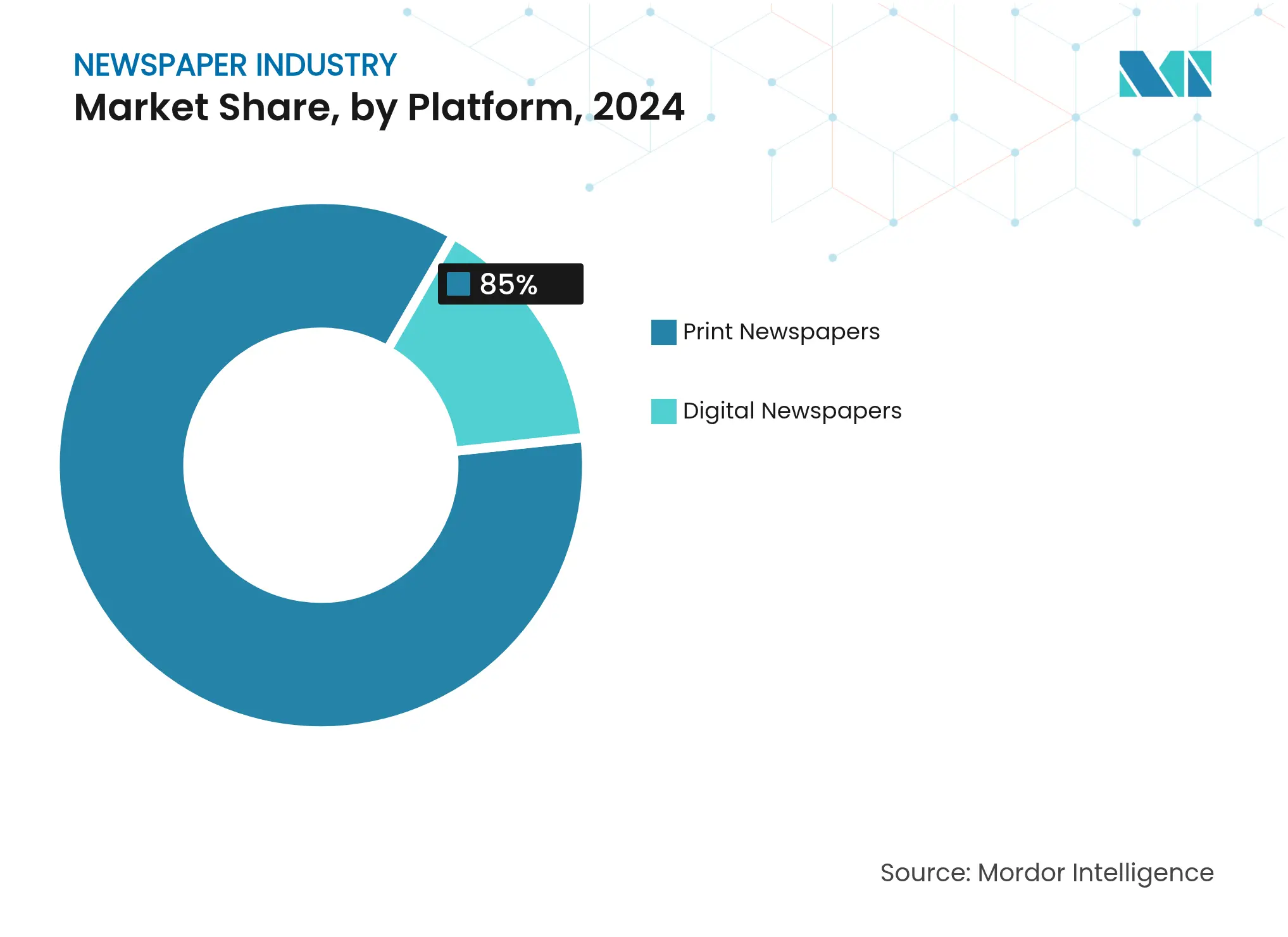
The financial viability of the Malaysian newspaper market has been severely tested by the migration of advertising revenue to global digital platforms like Google and Meta. Print circulation numbers have experienced a secular decline across all language segments over the past fifteen years.
| Newspaper Title | Primary Language | Dominant Format | Key Target Audience | Digital Strategy Status |
|---|---|---|---|---|
| The Star | English | Print & Digital | Urban professionals, corporate sector | Paywall implementation, multimedia focus |
| Berita Harian | Malay | Print & Digital | General public, policymakers | Freemium model, social video integration |
| Sin Chew Daily | Chinese | Print & Digital | Chinese-Malaysian business & community | Aggressive social media distribution |
| Malaysiakini | English/Malay/Chinese/Tamil | Digital-Only | Reform-minded urbanites, youth | Subscription-based paywall, high traffic |
To survive, traditional publishers have executed varying digital transformation strategies:
- Paywalls and Subscription Models: Leading titles have moved away from ad-supported free-access models toward metered or hard paywalls to capture direct reader revenue.
- Multichannel Diversification: Publishers have integrated video production, podcasting, and localized event hosting into their business models to attract diversified corporate sponsorships.
- Programmatic Advertising: Ad operations have shifted toward data-driven programmatic buying to maximize yield from dwindling remnant inventory.
Concurrently, digital-native independent outlets like Malaysiakini and Free Malaysia Today have captured significant market share by offering nimble, multi-lingual reporting that bypasses legacy print overheads.
Challenges and Future Outlook
The Malaysian newspaper market faces several structural hurdles moving into the late 2020s. Chief among these is the erosion of trust in mainstream journalism, fueled by the rapid spread of misinformation and unverified content across social media channels like WhatsApp, TikTok, and Facebook. Traditional newspapers must continuously defend their brand equity through rigorous fact-checking and adherence to journalistic ethics.
Furthermore, economic headwinds, rising newsprint costs, and talent retention challenges continue to squeeze profit margins. Younger demographics increasingly consume news via short-form video and aggregator apps rather than dedicated news websites or physical papers, forcing legacy publishers to continuously adapt their distribution tactics.
Frequently Asked Questions
What are the main language categories in the Malaysian newspaper market?
The market is divided into four primary linguistic segments: Malay, English, Chinese, and Tamil. Each caters to specific cultural, demographic, and socioeconomic groups, requiring tailored content strategies and distinct advertising approaches.
How is the Malaysian newspaper industry regulated?
The industry is primarily regulated by the Printing Presses and Publications Act (PPPA), which requires publishers to hold annually renewable licenses. Digital publications operate under the purview of the Communications and Multimedia Act (CMA), overseen by the Malaysian Communications and Multimedia Commission (MCMC). Content is also subject to laws concerning defamation, sedition, and the protection of national sensitivities regarding race, religion, and royalty.
Are traditional print newspapers still profitable in Malaysia?
Circulation and advertising revenues for physical print editions have experienced sustained structural declines. While major publishing houses maintain legacy print products for brand equity and older demographics, the vast majority of operational focus and revenue growth efforts are directed toward digital subscriptions, web advertising, and diversified multimedia content.
Who are the major media conglomerates in Malaysia?
Key players include Media Prima Berhad (operating titles like Berita Harian, Harian Metro, and New Straits Times), Star Media Group (publisher of The Star), and Media Chinese International Limited (publisher of major Chinese-language dailies such as Sin Chew Daily and China Press).
How have digital-native portals impacted the Malaysian news landscape?
Digital-native outlets like Malaysiakini and Free Malaysia Today broke the monopoly of state-aligned legacy media, introducing real-time reporting, investigative journalism, and multi-lingual accessibility that accelerated the industry's shift toward online publishing.
Next Actions for Media Analysts and Advertisers
For marketers, researchers, and media strategists analyzing the Malaysian newspaper market, success depends on moving beyond aggregate national statistics to examine micro-segments. Evaluate audience engagement metrics across specific language dailies, assess the effectiveness of hybrid digital-print advertising packages, and monitor evolving regulatory guidelines concerning digital broadcasting and online content.
Image Gallery