Understanding First Party and Third Party Auto Insurance Coverage
In auto insurance, first-party coverage pays for your own injuries and vehicle damage, regardless of who caused the accident, through coverages like collision, comprehensive, and Personal Injury Protection. Third-party coverage protect...
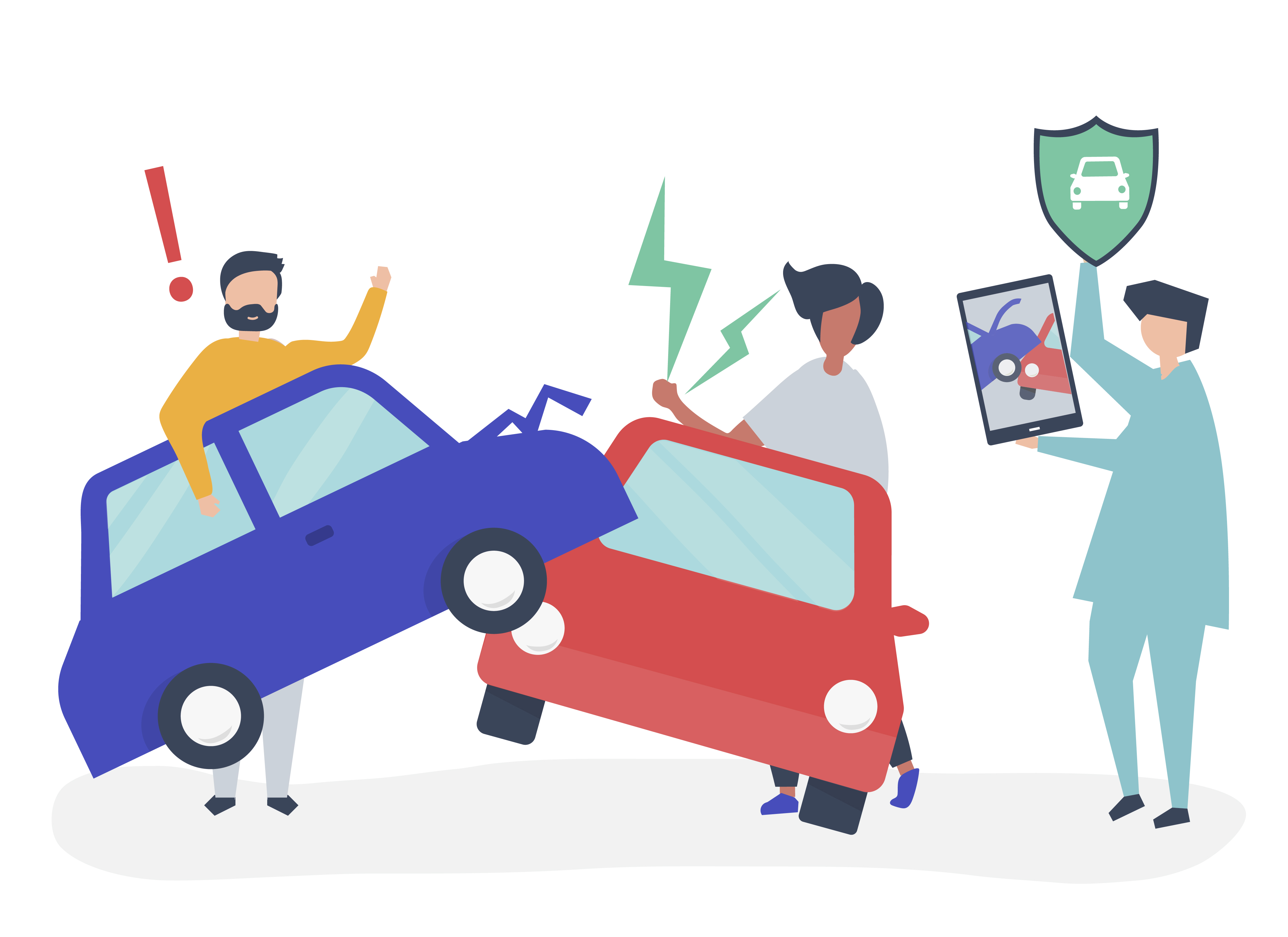
In auto insurance, first-party coverage pays for your own injuries and vehicle damage, regardless of who caused the accident, through coverages like collision, comprehensive, and Personal Injury Protection. Third-party coverage protects you financially when you are at fault, paying for the medical bills and property damage suffered by other people involved in the incident.
Contents
Disclaimer: Auto insurance regulations, mandatory minimums, and claim procedures vary by state and legal jurisdiction. The information in this guide is provided for educational purposes and does not constitute formal legal or financial advice. Policyholders should consult with a licensed insurance agent or legal professional to address specific coverage needs.
The Core Framework: Defining the Parties in Auto Insurance
To understand how auto insurance policies function, you must first clarify the legal terminology surrounding the contracts. Insurance agreements are structured around defined legal entities referred to as "parties."
- The First Party: The policyholder—the individual or entity named on the auto insurance contract—along with covered family members or designated drivers. When you file a claim for your own medical bills or vehicle repairs, you are acting as the first party.
- The Second Party: The insurance company issuing the policy. The second party accepts premium payments from the first party in exchange for assuming specified financial risks outlined in the insurance contract.
- The Third Party: An outside individual or entity that suffers bodily injury or property damage as a result of an auto accident involving the first party's vehicle. Third parties include other motorists, passengers, pedestrians, bicyclists, or owners of damaged real estate and personal property.
Distinguishing between first-party and third-party claims determines which policy responds after a collision, who receives the financial reimbursement, whether a deductible applies, and how fault is evaluated under applicable insurance laws.
First-Party Auto Insurance Coverages Detailed
First-party coverages are designed to cushion the policyholder against direct financial loss. When you utilize first-party coverage, your insurance company reimburses you, your healthcare providers, or your repair shop directly.
- First-Party Coverage Flow:
- Accident or Loss Event
- Policyholder Files Direct Claim With Own Insurer
- Deductible Applied (if applicable)
- Insurer Pays Policyholder or Vendor (Collision, Comp, PIP, MedPay)
Collision Coverage
Collision coverage pays to repair or replace your vehicle if it collides with another car or object (such as a tree, guardrail, or telephone pole), or if it rolls over. Collision coverage applies regardless of who was at fault in the collision. If you finance or lease your vehicle, your lender or leasing company will almost always mandate collision coverage to protect their financial stake in the asset.
Comprehensive Coverage
Comprehensive coverage (often called "other-than-collision" coverage) addresses damage to your vehicle resulting from non-collision events beyond your direct operational control. Covered perils typically include:
- Theft and vandalism
- Contact with animals (such as hitting a deer)
- Weather-related damage (hail, floods, windstorms, lightning)
- Falling objects (tree branches, debris)
- Fire and explosions
- Broken windshields and glass damage
Like collision coverage, comprehensive coverage requires the policyholder to pay an agreed deductible out of pocket before insurance funds are disbursed.
Personal Injury Protection (PIP) and Medical Payments (MedPay)
Medical expenses following an auto accident can escalate rapidly. First-party medical coverages ensure immediate financial access to healthcare:
- Personal Injury Protection (PIP): Mandatory in "no-fault" insurance states and optional in others, PIP pays for reasonable and necessary medical expenses, lost wages, rehabilitation costs, and essential service replacements (such as housekeeping or childcare) for the insured and their passengers, regardless of fault.
- Medical Payments (MedPay): Available in many tort (at-fault) states, MedPay covers direct medical and funeral expenses for the policyholder and passengers. Unlike PIP, MedPay generally does not cover lost wages or non-medical expenses.
Uninsured and Underinsured Motorist (UM/UIM) Coverage
While UM/UIM coverage responds to damages caused by another driver's negligence, it operates as a first-party coverage within your policy. If an uninsured driver hits your vehicle, or if an underinsured driver carries insufficient liability limits to cover your total medical costs and property damage, your own UM/UIM policy steps in to pay the remaining balance up to your selected policy limits.
Third-Party Auto Insurance Coverages Detailed
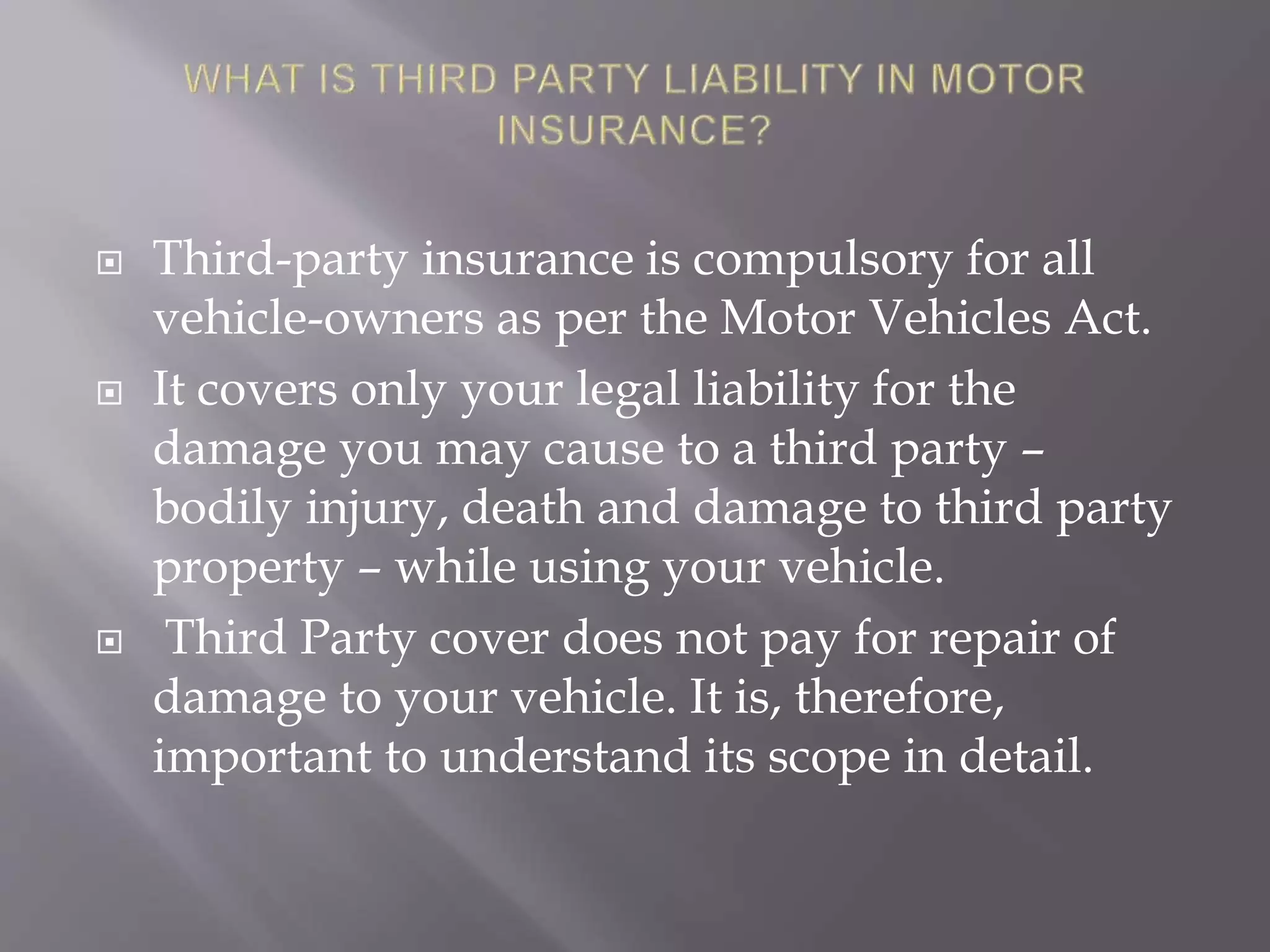
Third-party coverages serve a protective shield function. Instead of compensating you directly, third-party coverage pays damages owed to outside claimants for injuries or property damage for which you are legally responsible. Third-party coverage protects your personal savings and assets from being seized in legal judgments resulting from vehicular negligence.
- Third-Party Coverage Flow:
- At-Fault Accident Caused by Insured
- Third-Party (Victim) Files Claim Against At-Fault Driver
- Fault Verified & Limits Checked
- Insurer Compensates Third Party (Bodily Injury & Property Damage)
Bodily Injury Liability (BI)
If you cause an accident that injures another person, Bodily Injury Liability covers their financial damages. This includes:
- Emergency medical transportation and hospital bills
- Ongoing physical therapy and prescription medications
- Loss of income and earning capacity during recovery
- Compensation for physical pain and emotional suffering
- Funeral costs in fatal accidents
Most state financial responsibility laws require drivers to carry minimum levels of Bodily Injury Liability.
Property Damage Liability (PD)
Property Damage Liability compensates third parties for physical destruction caused by your vehicle. Common payouts under PD coverage extend to:
- Repair or replacement costs for another driver's damaged automobile
- Repair costs for damaged public or private infrastructure (fences, building storefronts, mailboxes, utility poles)
- Compensation for contents damaged inside the third party's vehicle
- Loss-of-use expenses (such as rental car charges while the third party's car is repaired)
Policy Limits and the Duty to Defend
Liability insurance is typically structured around split limits (e.g., $100,000/$300,000/$50,000) or a combined single limit (CSL):
- $100,000 per person for bodily injury
- $300,000 per accident total for bodily injury across all injured parties
- $50,000 per accident for property damage
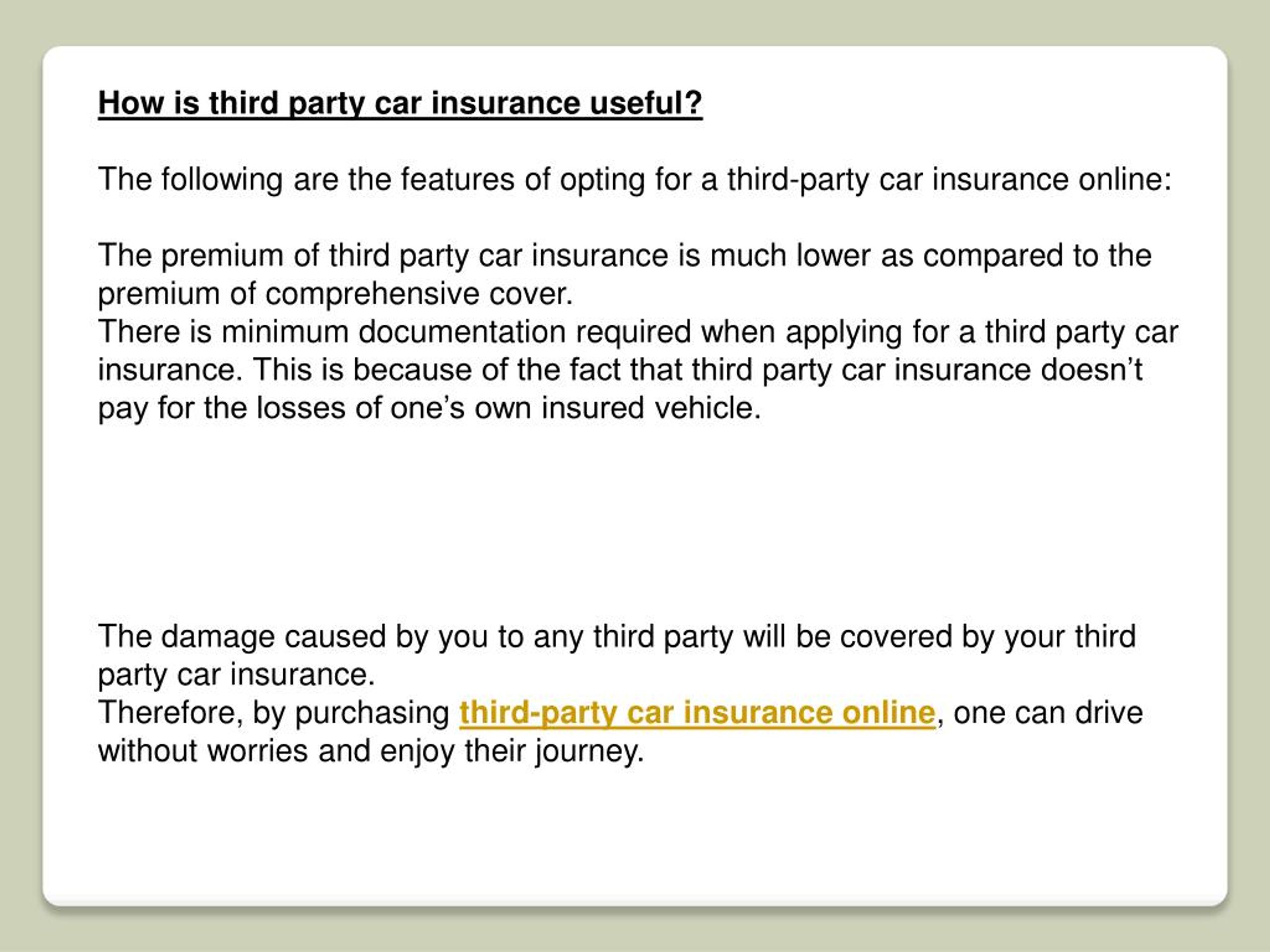
Crucially, third-party liability coverage includes a contractually obligated duty to defend. If an injured third party sues you following a covered accident, your insurer provides legal counsel and pays legal defense costs. Defense expenses are generally paid in addition to your policy limits, meaning legal fees do not erode the pool of money available to pay claims.
First-Party vs. Third-Party Coverage: Key Differences
Understanding the operational differences between these two coverage forms enables policyholders to make informed risk-management choices when structuring auto insurance policies.
| Feature / Dimension | First-Party Coverage | Third-Party Coverage |
|---|---|---|
| Primary Beneficiary | Policyholder, resident family, named insureds | External victims, injured drivers, property owners |
| Primary Coverages Included | Collision, Comprehensive, PIP, MedPay, UM/UIM | Bodily Injury Liability, Property Damage Liability |
| Deductible Obligation | Yes (policyholder pays chosen deductible per claim) | No (third-party claimant receives full assessed value) |
| Fault Requirement | Generally paid regardless of fault (except UM/UIM) | Requires establishing legal fault or negligence |
| Legal Requirement Status | Optional by state law (mandatory if vehicle is financed) | Mandatory in nearly all US states and jurisdictions |
| Insurer's Legal Defense | Not applicable (direct payout to policyholder) | Mandatory obligation to defend policyholder if sued |
| Impact of Policy Limits | Limits cap reimbursement for your own property/health | Limits cap total protection against personal liability |
How Jurisdiction and Fault Mechanics Influence Claims
The structure of auto insurance claims varies significantly based on local legal frameworks and claims recovery mechanisms.
| TORT (AT-FAULT) SYSTEM | NO-FAULT SYSTEM |
|---|---|
| • Fault must be established before payouts.• Third-party liability handles victim costs.• Victim can sue at-fault driver for full damages. | • Initial medical expenses paid via first-party PIP.• Lawsuit access limited to severe injury thresholds. |
Tort (At-Fault) vs. No-Fault Insurance Systems
- Tort Systems: In at-fault jurisdictions, the driver who causes an accident is legally liable for all resulting damages. Injured victims file third-party claims directly against the at-fault driver's insurance carrier or file a lawsuit to collect bodily injury and property damage compensation.
- No-Fault Systems: In states with no-fault insurance statutes, each driver turns to their own first-party coverage (specifically PIP) to pay initial medical bills and lost wages after an accident, regardless of who caused the collision. Third-party liability lawsuits in no-fault states are restricted unless injuries meet statutory severity thresholds (such as permanent disfigurement, severe impairment, or high medical expense benchmarks).
The Subrogation Process
When another driver causes an accident that damages your car, waiting for the at-fault driver's third-party insurer to investigate and approve your claim can take weeks. To expedite repairs, you can file a first-party claim under your own collision coverage.
Your insurer pays for your repairs (minus your deductible) and then initiates subrogation. Subrogation is the legal process where your insurer steps into your shoes to seek reimbursement from the at-fault driver's third-party insurance company. When your insurer successfully recovers the funds, they refund your out-of-pocket deductible proportional to the recovery achieved.
Practical Scenarios: Choosing and Navigating Your Coverage
To contextualize how these insurance mechanisms operate during real-world driving incidents, consider the following scenarios:
Scenario 1: Single-Vehicle Incident (Collision with Stationary Property)
- Incident: Your vehicle slides on black ice and strikes a municipal guardrail, causing $6,000 in vehicle repairs and $2,000 in guardrail damage.
- Coverage Application:
- Your first-party collision coverage pays to repair your vehicle, minus your chosen deductible (e.g., $500 deductible results in a $5,500 payout).
- Your third-party property damage liability coverage pays the municipal government $2,000 for guardrail repairs without requiring any deductible payment from you.
Scenario 2: Multi-Vehicle At-Fault Rear-End Collision
- Incident: You fail to stop in time and rear-end another car carrying a driver and passenger. Both individuals sustain minor injuries requiring emergency room evaluation ($4,000 total), and their car requires $8,000 in repairs. Your car sustains $5,000 in front-end damage.
- Coverage Application:
- Your third-party bodily injury liability covers the $4,000 medical expenses of the other vehicle's occupants.
- Your third-party property damage liability covers the $8,000 vehicle repair bill for the other driver.
- Your first-party collision coverage pays $5,000 to repair your car, less your deductible.
Scenario 3: Hit-and-Run or Uninsured Driver Incident
- Incident: An uninsured driver runs a red light, strikes your car, and flees the scene. You suffer $3,000 in medical bills and $7,000 in vehicle damage.
- Coverage Application:
- If you carry first-party Personal Injury Protection (PIP) or Medical Payments (MedPay), your medical bills are covered immediately.
- Your first-party Uninsured Motorist Bodily Injury (UMBI) coverage can also address pain, suffering, and medical bills beyond MedPay limits.
- Your first-party Uninsured Motorist Property Damage (UMPD) or collision coverage covers vehicle repairs.
Actionable Steps for Structuring Your Auto Insurance Policy
- Evaluate Asset Exposure Against Liability Limits: State minimum liability thresholds (such as 25/50/25 limits) are frequently insufficient to cover multi-car accidents or serious medical injuries. Carrying liability limits of at least $100,000/$300,000/$100,000 or purchasing an umbrella policy protects personal wealth against third-party lawsuits.
- Select Deductibles Based on Emergency Savings: Higher first-party deductibles (e.g., $1,000 instead of $250) lower ongoing annual premiums. However, ensure your liquid cash reserves can comfortably cover the chosen deductible if an emergency claim occurs.
- Review Vehicle Value Relative to Collision/Comprehensive Costs: If an older vehicle's market value drops near or below the cost of annual collision/comprehensive premiums plus the deductible, carrying first-party physical damage coverage may no longer be cost-effective.
- Document Incidents Thoroughly: Following any accident, capture photographs of damage to all vehicles involved, exchange insurance details, and file an official police report. Thorough evidence speeds up both first-party repairs and third-party liability determinations.
Frequently Asked Questions
Does third-party auto insurance pay for repairs to my own vehicle?
No. Third-party liability insurance strictly pays for the financial losses suffered by individuals outside your insurance policy. To cover damage to your own vehicle, you must carry first-party collision or comprehensive coverage, or recover damages from an at-fault driver's third-party policy.
Why should I file a first-party claim if another driver was clearly at fault?
Filing a first-party claim through your own collision coverage gets your vehicle repaired faster because your insurer does not need to finish investigating liability before disbursing funds. Your insurer will subsequently seek subrogation against the at-fault party's insurer to recover repair costs and your deductible.
Are first-party coverages legally required?
It depends on state laws and vehicle financing status. Liability (third-party) coverage is legally mandated in almost all jurisdictions. First-party coverages like PIP are mandatory in no-fault states. Additionally, auto lenders and leasing companies legally require first-party collision and comprehensive coverage until the vehicle loan is paid in full.
What happens if a third-party claim against me exceeds my policy limits?
If damages you cause exceed your liability coverage limits, your insurance company will pay up to the contracted policy limit. You remain personally financially liable for the remaining balance. The injured party can pursue your personal savings, home equity, or future wages through court-ordered judgments unless you carry adequate liability or umbrella coverage.
Does a deductible apply when someone else hits my vehicle?
If you file a claim directly through the at-fault driver's third-party liability insurance, no deductible applies to you. However, if you choose to process the repair through your own first-party collision coverage to speed up repairs, you must pay your deductible upfront; your insurer will attempt to recover and refund that deductible via subrogation.
EDITORIAL CATEGORY METADATA:
Image Gallery