Comprehensive Guide to Financing a Rental Property in 2026
Financing a rental property involves securing capital through traditional mortgages, specialized investment loans, or creative strategies like seller financing. In 2026, success depends on understanding Debt Service Coverage Ratios (DS...
Financing a rental property involves securing capital through traditional mortgages, specialized investment loans, or creative strategies like seller financing. In 2026, success depends on understanding Debt Service Coverage Ratios (DSCR), navigating fluctuating interest rates, and meeting stricter down payment requirements to ensure long-term cash flow and sustainable portfolio growth for real estate investors.
Contents
Understanding the Landscape of Rental Financing in 2026
Financing an investment property differs significantly from securing a mortgage for a primary residence. Lenders view rental properties as higher risk because borrowers are more likely to default on an investment mortgage than on the home they live in during times of financial hardship. Consequently, the requirements for credit scores, down payments, and cash reserves are more stringent.
In the current 2026 market, the focus has shifted toward the income-producing potential of the asset itself. While personal credit remains a factor, professional investors are increasingly utilizing products that weigh the property's projected rent against its monthly debt obligations. Navigating this landscape requires a strategic approach to capital allocation and a deep understanding of the various loan products available to both novice and seasoned landlords.
Core Prerequisites for Rental Property Loans
Before exploring specific loan types, investors must ensure their financial profile meets the baseline standards expected by institutional and private lenders.
Credit Score Requirements
For a standard investment property loan in 2026, a minimum credit score of 620 is typically required, but to secure competitive interest rates, most lenders look for a score of 740 or higher. A lower score often results in "loan-level price adjustments," which can significantly increase your monthly payment and erode your profit margins.
The Down Payment Hurdle
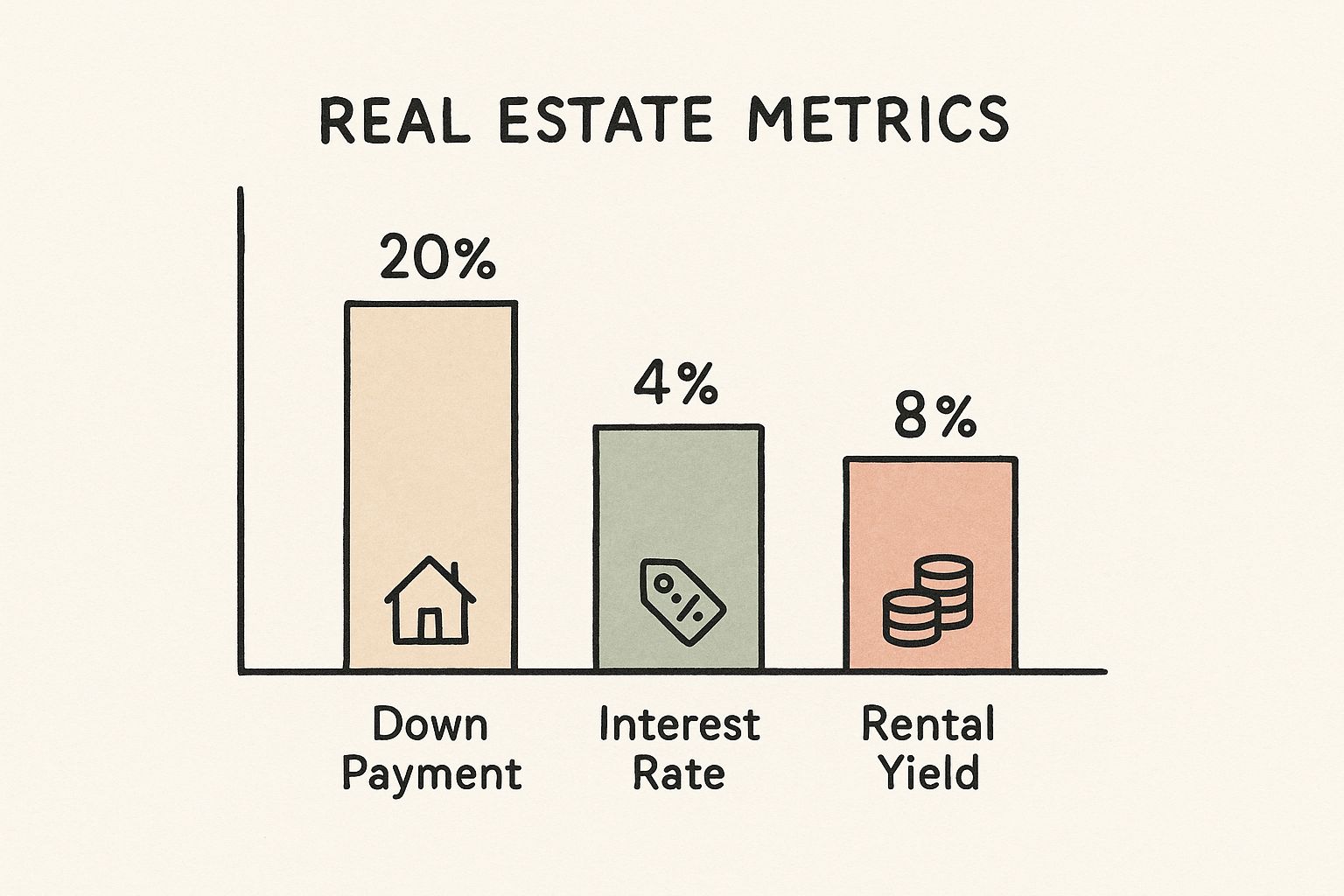
Unlike primary residences, which may allow for down payments as low as 3% or 3.5%, rental properties generally require a minimum of 15% to 25% down. For multi-unit properties (2-4 units), many lenders insist on at least 25% to mitigate the increased risk associated with higher vacancy potential.
Debt-to-Income (DTI) and Reserves
Lenders evaluate your DTI ratio to ensure you can handle your existing debts plus the new mortgage. Most conventional lenders prefer a DTI below 43%, though some flexible programs allow up to 50%. Additionally, you will likely need "cash reserves"—liquid assets covering 6 to 12 months of principal, interest, taxes, and insurance (PITI) for both your primary residence and the new investment.
Primary Financing Options for Investors
1. Conventional Investment Loans
Conventional loans are the most common way to finance a rental property. These are backed by Fannie Mae or Freddie Mac and follow strict federal guidelines.
- Pros: Generally offer the lowest interest rates and longest terms (usually 30-year fixed).
- Cons: Stricter qualification rules; limited to a maximum of 10 financed properties per individual.
- 2026 Outlook: These remains the gold standard for long-term "buy and hold" investors who have strong personal income and high credit scores.
2. DSCR Loans (Debt Service Coverage Ratio)
DSCR loans have become the preferred tool for scaling portfolios in 2026. Unlike conventional loans, these do not require tax returns or W-2 income verification. Instead, the lender focuses on the property's ability to pay for itself.
The DSCR is calculated by dividing the Net Operating Income (NOI) by the Annual Debt Service. A ratio of 1.0 means the property breaks even. Most lenders in 2026 look for a DSCR of 1.2 or higher, meaning the property generates 20% more income than its mortgage payment.
3. FHA and VA Loans (The House Hacking Strategy)
While FHA and VA loans are intended for owner-occupants, they are a powerful entry point for rental investors via "house hacking." By purchasing a 2-to-4 unit property and living in one unit, you can qualify for residential financing.
- FHA Loans: Allow for a 3.5% down payment on multi-family homes.
- VA Loans: Allow for 0% down for eligible veterans and service members.
- Requirement: You must occupy the property for at least one year before moving out and converting it into a full-time rental.
4. Hard Money and Private Money
If you are purchasing a property that needs significant renovation (the "Fix and Flip" or "BRRRR" strategy), conventional lenders may refuse to finance it because the property is not in habitable condition.
Hard money lenders are private companies or individuals who lend based on the After Repair Value (ARV) of the property. These loans are short-term (6 to 24 months) and carry much higher interest rates, often ranging from 10% to 15% in 2026. They are used to acquire and rehab the property quickly before refinancing into a long-term conventional or DSCR loan.
Leveraging Existing Assets to Finance New Rentals
Experienced investors often use the equity in their current holdings to fund the down payment on their next acquisition.
- Home Equity Line of Credit (HELOC): A revolving line of credit secured by your primary residence or another investment property. This allows you to pull cash as needed for renovations or down payments.
- Cash-Out Refinance: Replacing your existing mortgage with a larger one and taking the difference in cash. In 2026, this is most effective if your current interest rate is close to current market rates, or if the property has appreciated significantly.
- Cross-Collateralization: Some portfolio lenders allow you to use the equity in multiple properties as collateral for a new loan, potentially reducing or eliminating the need for a cash down payment.
Comparison of Rental Financing Methods in 2026
| Loan Type | Typical Down Payment | Credit Score Required | Income Verification | Best For |
|---|---|---|---|---|
| Conventional | 15% – 25% | 620+ (740 preferred) | Full (W-2/Tax Returns) | Long-term stability, lowest rates |
| DSCR Loan | 20% – 25% | 660+ | Property Income Only | Scaling a portfolio, self-employed |
| FHA (House Hack) | 3.5% | 580+ | Full (W-2/Tax Returns) | Beginners, low capital |
| Hard Money | 10% – 20% | Varies (Asset-based) | None | Fix and flips, BRRRR strategy |
| Seller Finance | Negotiable | Negotiable | None | Creative deals, credit issues |
The BRRRR Method: A Financing Cycle
The BRRRR method (Buy, Rehab, Rent, Refinance, Repeat) is a specific financing strategy that allows investors to pull their initial capital back out of a deal.
- Buy: Purchase a distressed property using cash or hard money.
- Rehab: Renovate the property to increase its value.
- Rent: Place a high-quality tenant to establish cash flow.
- Refinance: Secure a long-term loan (Conventional or DSCR) based on the new, higher appraised value.
- Repeat: Use the cash from the refinance to fund the next property.
In 2026, the success of BRRRR depends heavily on accurate appraisals and managing renovation costs, as labor and material prices remain volatile.
Potential Pitfalls in Rental Property Financing
Investors must be wary of several common mistakes that can jeopardize their financing or their long-term profitability.
- Underestimating Expenses: Lenders calculate the "vacancy factor" and "operating expenses," but investors often forget to account for property management fees (usually 8-10%), capital expenditures (roofs, HVAC), and rising insurance premiums.
- Over-Leveraging: While high leverage increases your Return on Equity (ROE), it also increases the risk of foreclosure if the market dips or vacancy rates rise.
- Ignoring Seasoning Requirements: If you plan to refinance a property soon after buying it, be aware that many lenders require a "seasoning period" of 6 to 12 months before they will allow a cash-out refinance based on a new appraisal.
Practical Steps to Secure Your Loan
- Organize Financial Documentation: Gather two years of tax returns, 1099s/W-2s, and three months of bank statements.
- Get a Pre-Approval: In the competitive 2026 market, a pre-approval letter specifically for an investment property is essential before making an offer.
- Analyze the Property's Cash Flow: Use a spreadsheet to calculate the NOI, Cap Rate, and DSCR. Ensure the property makes sense as a business before approaching a lender.
- Shop Multiple Lenders: Compare terms from local credit unions, national banks, and specialized mortgage brokers who focus on investment properties.
Frequently Asked Questions
Can I buy a rental property with 0% down?
In 2026, a 0% down payment is generally only possible through a VA loan, which requires you to live in the property as your primary residence for a period of time. Other "no money down" strategies include finding a partner to provide the capital while you provide the sweat equity, or using seller financing where the owner agrees to carry the note without an upfront payment.
Do I need to form an LLC to finance a rental property?
While not strictly required, many investors choose to buy through a Limited Liability Company (LLC) for asset protection. However, be aware that conventional Fannie Mae/Freddie Mac loans often require the loan to be in an individual's name. If you use a DSCR or commercial loan, you can—and often must—close in the name of an LLC.
How does a 1031 exchange help with financing?
A 1031 exchange allows you to defer capital gains taxes when you sell an investment property and reinvest the proceeds into a new "like-kind" property. While it isn't a loan itself, it provides a massive boost to your available capital, essentially allowing the government's tax money to act as interest-free financing for your next down payment.
What is the difference between a residential and commercial investment loan?
Residential investment loans apply to properties with 1 to 4 units. Anything with 5 or more units is considered commercial real estate. Commercial loans have different underwriting standards, shorter terms (typically 5 to 20 years), and often feature "balloons" where the remaining balance is due at the end of a 5 or 7-year term.
Why are interest rates higher for rental properties than primary homes?
Lenders charge a premium for investment properties because of the increased default risk. Historically and in 2026, interest rates for rentals are typically 0.50% to 1.00% higher than those for owner-occupied residences.
Summary Recommendation
For most investors in 2026, the best path is to start with a Conventional loan for the first few properties to take advantage of lower interest rates. As your portfolio grows and personal DTI becomes a constraint, transition to DSCR loans to scale based on property performance. Always maintain a "liquidity cushion" of at least 10% of the property's value to handle unexpected repairs or market shifts.
Image Gallery