Best Bank Accounts for Social Security Benefits in 2026: A Complete Guide
To receive Social Security benefits, you must use a bank account that supports Direct Deposit or the official Direct Express® Debit Mastercard. Most checking and savings accounts at FDIC-insured banks or NCUA-insured credit unions qual...
To receive Social Security benefits, you must use a bank account that supports Direct Deposit or the official Direct Express® Debit Mastercard. Most checking and savings accounts at FDIC-insured banks or NCUA-insured credit unions qualify. Electronic payment is required by federal law to ensure faster, safer, and more reliable access to your monthly funds.
Contents
Choosing the right bank account for your Social Security payments is no longer just a matter of convenience; it is a federal requirement and a critical component of personal financial security. Since the Department of the Treasury mandated electronic payments for federal benefits, the traditional paper check has become a relic of the past. In 2026, the landscape of banking has evolved to offer beneficiaries more specialized features, ranging from early access to funds to high-yield savings integrated with standard checking.
This guide explores the specific requirements for Social Security bank accounts, the features that provide the most value to beneficiaries, and the step-by-step process for ensuring your payments arrive safely and on time.
Understanding Social Security Direct Deposit Requirements
Federal law, specifically 31 CFR Part 208, requires that all federal benefit payments—including Social Security, Supplemental Security Income (SSI), and Veterans Affairs benefits—be made electronically. This mandate was designed to eliminate the risks associated with paper checks, such as theft, loss, and mail delays.
For a bank account to be eligible for Social Security Direct Deposit, it must be held at a financial institution capable of receiving Electronic Funds Transfers (EFT). This includes virtually all retail banks, credit unions, and many modern "neobank" platforms. The account must be in the name of the beneficiary or a designated representative payee.
Why the SSA Mandates Electronic Payments
The Social Security Administration (SSA) emphasizes security and efficiency. Paper checks are vulnerable to "mailbox theft," a crime that, while declining, still poses a risk in certain regions. Electronic transfers move through the Automated Clearing House (ACH) network, providing an encrypted path from the U.S. Treasury directly to your personal ledger. Furthermore, electronic payments are immune to weather-related postal delays or natural disasters that might disrupt physical mail delivery.
Essential Information for Account Setup
To link your bank account to the SSA, you need three primary pieces of information:
- The Routing Transit Number: A nine-digit code that identifies your specific financial institution.
- The Account Number: Your unique identifier at that bank.
- Account Type: You must specify whether the account is a checking or savings account.
It is vital to distinguish between your "internal" bank account number and the number printed on a debit card. Using a debit card number for Direct Deposit will result in a failed transaction. Always verify these numbers through your bank’s mobile app, a physical check, or by speaking with a bank representative.
Key Features to Look for in a Social Security Bank Account
As we move through 2026, the competition for deposits has led banks to offer specialized perks. For someone living on a fixed income, certain account features are significantly more valuable than others.
Low or No Monthly Maintenance Fees
Many traditional "Big Bank" accounts charge monthly fees ranging from $5 to $15 unless a high minimum balance is maintained. For many Social Security recipients, maintaining a $1,500 or $3,000 daily balance is not feasible. Look for "Basic Checking" or "Senior Checking" accounts that waive fees for those who receive at least one Direct Deposit per month. Many online-only banks have eliminated these fees entirely, which can save a beneficiary over $100 annually.
Early Direct Deposit Access
A feature that has become standard in 2026 is "Early Direct Deposit." While the SSA sends payment instructions to banks days in advance, traditional banks often wait until the official payment date to credit your account. However, many modern banks and credit unions now credit these funds as soon as they receive the notification from the Treasury, often up to two days before the official "check date." This can be a lifesaver for managing mid-month utility bills or unexpected expenses.
Federal Deposit Insurance (FDIC and NCUA)
Never deposit your Social Security benefits into an account that is not federally insured. The Federal Deposit Insurance Corporation (FDIC) covers traditional banks, while the National Credit Union Administration (NCUA) covers credit unions. In 2026, the standard insurance limit remains $250,000 per depositor, per insured bank, for each account ownership category. This insurance ensures that even if the financial institution fails, your benefit money is protected by the full faith and credit of the U.S. government.
Overdraft Protection and Fee Forgiveness
Social Security payments are often the sole source of income for beneficiaries. An accidental overdraft can lead to a cascade of fees that eat into the next month’s payment. Many banks now offer "no-overdraft" accounts, often certified by the "Bank On" national standards. These accounts simply decline transactions if funds are insufficient, preventing the account holder from falling into a cycle of debt.
Comparing Banking Options for Beneficiaries
When selecting an institution, you generally have three paths: traditional brick-and-mortar banks, online-only banks, and credit unions. Each offers distinct advantages depending on your technical comfort level and physical location.
| Account Category | Best For | Typical Monthly Fee | Primary Advantage |
|---|---|---|---|
| Traditional Banks | In-person service and cash deposits | $0 - $15 (often waivable) | Large branch and ATM networks |
| Online Banks | Higher interest rates and lower fees | $0 | Early direct deposit and robust mobile apps |
| Credit Unions | Personalized service and community focus | $0 - $5 | Member-owned; often better loan rates |
| Direct Express Card | Those without a bank account | $0 (standard usage) | No credit check or bank account required |
Traditional Banks vs. Online Banks
Traditional banks are ideal for those who prefer handling transactions in person or frequently need to deposit physical cash. However, they often have more stringent fee structures. Online banks, conversely, typically offer the best interest rates on savings accounts and the fewest fees, but they require a higher level of digital literacy to manage via smartphone or computer.
The Role of Credit Unions
Credit unions are non-profit cooperatives. Because they are owned by their members, they often return profits in the form of lower fees and higher interest on savings. Many credit unions offer "Golden" or "Senior" accounts specifically tailored to retirees, featuring free money orders, discounted safe deposit boxes, and specialized financial planning services.
How to Set Up or Change Your Direct Deposit Information
Once you have selected an account, you must notify the SSA. You do not need to wait for the start of a new year or a specific enrollment period; you can update your information at any time.
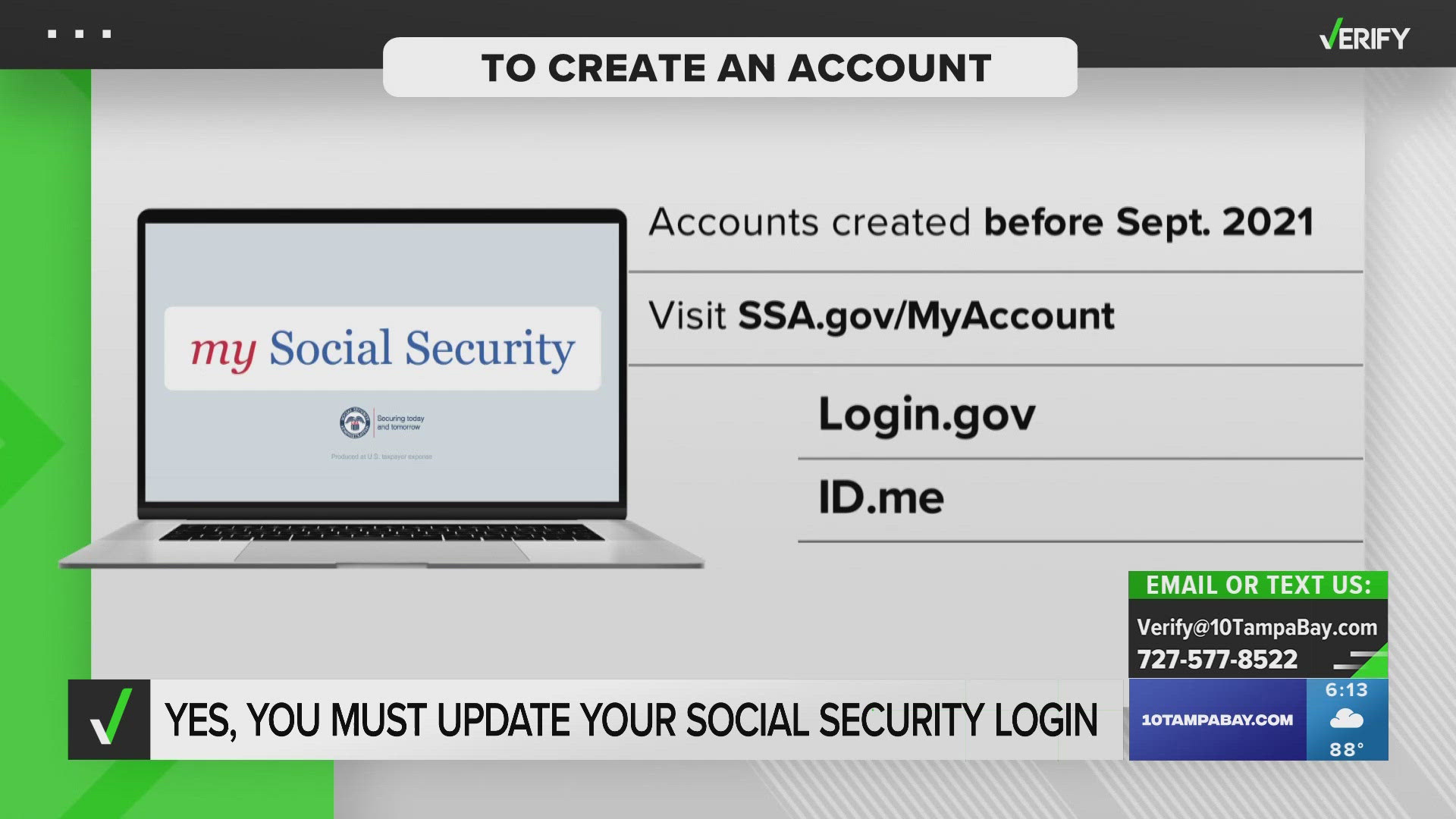
Using the "my Social Security" Portal
The most efficient way to manage your benefits in 2026 is through the "my Social Security" online portal.
- Log in to your account using your secure credentials (likely via Login.gov or ID.me).
- Navigate to the "Benefits & Payments" section.
- Select "Update Direct Deposit."
- Enter your new routing and account numbers.
- Review and submit.
The portal uses multi-factor authentication (MFA) to ensure that your banking details cannot be changed by unauthorized parties. It is highly recommended to keep these credentials private and never share them with anyone claiming to be from the SSA over the phone.
Contacting the SSA by Phone or In-Person
If you are uncomfortable using an online portal, you can call the SSA national toll-free number at 1-800-772-1213 (TTY 1-800-325-0778). Be prepared for potential hold times. Alternatively, you can visit a local Social Security office. If you choose this route, bring a voided check or a formal direct deposit sign-up form from your bank to ensure the numbers are transcribed correctly.
Important Timing Note: It may take one to two billing cycles for the change to take effect. Do not close your old bank account until you see the first deposit arrive in your new account.
Alternatives to Traditional Bank Accounts: The Direct Express Card
For individuals who cannot open a traditional bank account due to credit history (ChexSystems reports) or personal preference, the Treasury offers the Direct Express® Debit Mastercard.
This is a prepaid debit card where your benefits are automatically loaded each month. It does not require a credit check or a minimum balance. While it is a viable alternative, it lacks some of the features of a true bank account, such as the ability to write checks or earn interest on savings. There are also specific fees for certain actions, such as ATM withdrawals after the first free one or receiving paper statements.
Common Challenges and Troubleshooting
Despite the efficiency of the electronic system, issues can occasionally arise. Understanding how to navigate these challenges is essential for maintaining your financial stability.
What to Do if a Payment is Missing
If your Social Security payment does not appear in your account on the scheduled date, wait three business days before contacting the SSA. Often, delays are on the bank's processing end rather than the Treasury's. If the payment is still missing after three days, contact your financial institution first to see if there is a "pending" flag on your account. If the bank has no record of the transfer, contact the SSA to report the missing payment.
Protecting Your Account from Scams
In 2026, "spoofing" scams remain a threat. Scammers may call or text you, pretending to be from the SSA, claiming there is a problem with your bank account and asking for your routing number or login credentials. The SSA will never ask for your bank information over an unsolicited phone call. If you receive such a request, hang up and contact the SSA directly through official channels.
Dealing with Bank Account Closures
If your bank decides to close your account, they are generally required to provide notice. If this happens, you must immediately set up a new account or the Direct Express card. If the SSA attempts to deposit funds into a closed account, the bank will "return to sender" the funds. The SSA will then hold the funds until you provide new banking information, which can cause a significant delay in accessing your money.
Frequently Asked Questions
Can I have my Social Security deposited into someone else's account?
Generally, no. Federal regulations require that the account be held in the name of the beneficiary. The only major exception is for "Representative Payees"—individuals appointed by the SSA to manage the finances of a beneficiary who is incapable of doing so. In these cases, the account must be titled in a way that shows the beneficiary's ownership of the funds, such as "[Representative's Name] for [Beneficiary's Name]."
Does Social Security offer a "preferred" bank?
No. The SSA does not endorse any specific private bank or credit union. While they manage the Direct Express card program through a contract with a specific bank (currently Comerica Bank), you are free to use any financial institution that is FDIC or NCUA insured and supports ACH transfers.
Can I split my Social Security deposit between two different bank accounts?
As of 2026, the SSA typically requires the full monthly benefit to be deposited into a single account. Unlike some private employers who allow split direct deposits (e.g., 80% to checking and 20% to savings), the SSA system is generally designed for a single destination per beneficiary. You can, however, set up an automatic transfer within your bank to move funds to a savings account the day after the deposit arrives.
Is my Social Security safe from bank garnishment?
Social Security benefits are largely protected from garnishment by private creditors (such as credit card companies or hospitals) under Section 207 of the Social Security Act. Banks are required to automatically protect a certain amount of federal benefits in your account. However, your benefits can be garnished for "mandatory" debts like federal delinquent taxes, child support, alimony, or student loans.
Can I receive my Social Security on a retail prepaid card?
You can use certain third-party prepaid cards, provided they meet the Treasury's requirements for "Pass-Through" insurance and are capable of receiving ACH transfers. However, you must ensure the card is registered in your name. Many people find the official Direct Express card or a standard bank account to be more reliable and less expensive than retail prepaid cards.
Practical Recommendation
For the majority of beneficiaries in 2026, the best strategy is to open an online-only checking account or a local credit union account that offers "Early Direct Deposit" and has no monthly maintenance fees. These accounts provide the fastest access to your money while protecting your balance from being eroded by fees.
If you are currently receiving a paper check (which is rare but happens in specific hardship waiver cases) or using a high-fee retail card, your next action should be to open a "Bank On" certified account. Once the account is open, log in to your "my Social Security" portal and update your payment information immediately to ensure your next benefit cycle is secure and accessible.
Image Gallery