When Was the Life Insurance Corporation of India (LIC) Set Up? Historical Context and Development
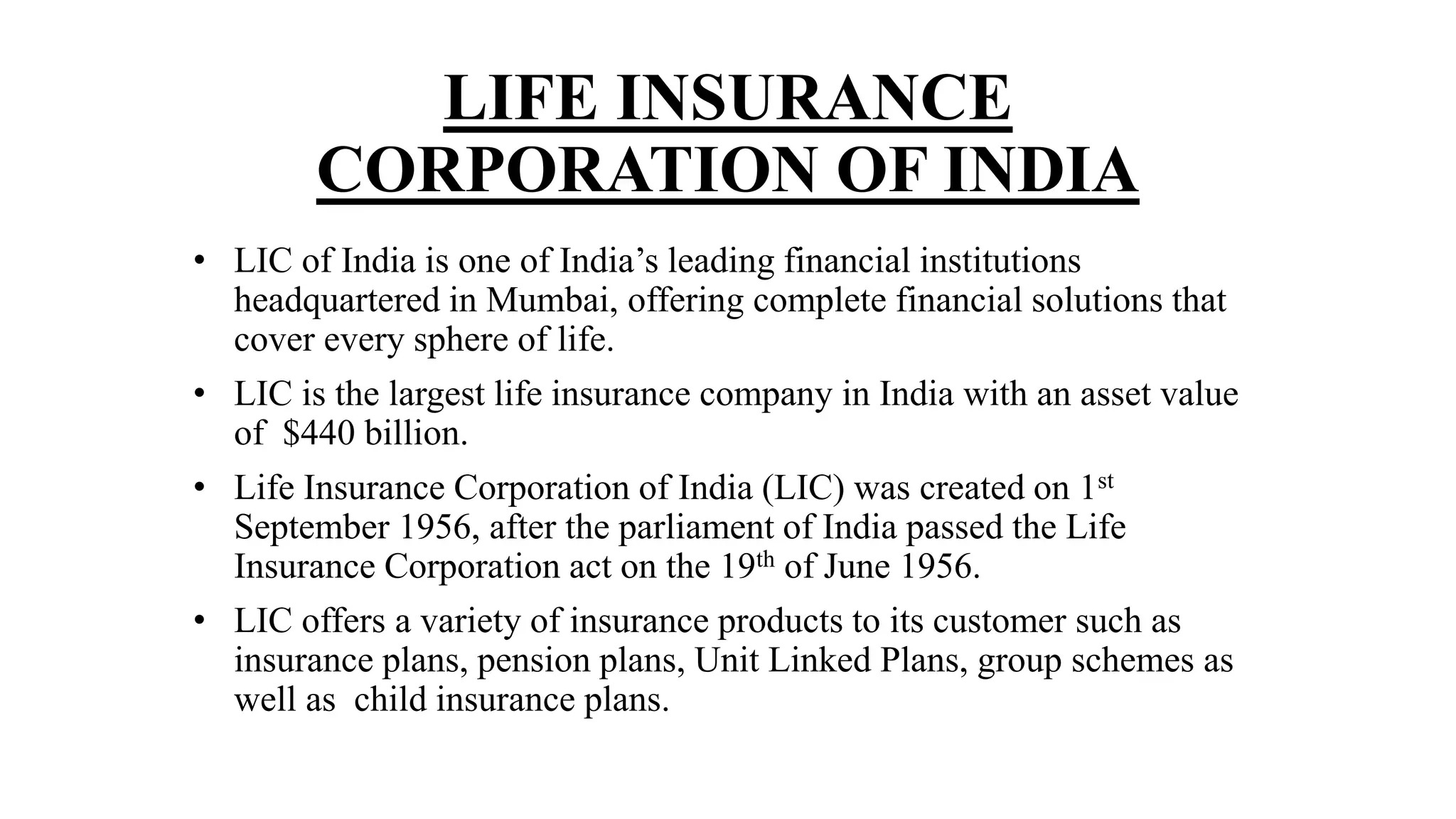
The Life Insurance Corporation of India (LIC) was set up on September 1, 1956, following the passage of the Life Insurance Corporation Act by the Parliament of India in June 1956. Created by nationalizing and merging 245 private insura...
The Life Insurance Corporation of India (LIC) was set up on September 1, 1956, following the passage of the Life Insurance Corporation Act by the Parliament of India in June 1956. Created by nationalizing and merging 245 private insurance companies and provident societies, LIC was established as a state-owned corporation to expand insurance access across rural India.
Contents
Historical Background: Why LIC Was Established in 1956
To understand why the Life Insurance Corporation of India was established in 1956, one must look at the financial landscape of pre-independence and early post-independence India. Life insurance operations in India began in the early 19th century, starting with the establishment of the Oriental Life Insurance Company in Kolkata in 1818. However, during the 19th and early 20th centuries, the sector was dominated by foreign entities, and Indian citizens were often charged higher premiums or denied coverage altogether.
Although indigenous enterprises like the Bombay Mutual Life Assurance Society (founded in 1870) emerged to cater to Indian policyholders, the overall regulatory system remained weak. The Indian Life Assurance Companies Act of 1912 and the comprehensive Insurance Act of 1938 introduced basic supervisory frameworks, but systemic vulnerabilities persisted.
By the mid-20th century, the private life insurance industry suffered from several structural flaws:
- Financial Instability and Insolvencies: Dozens of small, under-capitalized private insurers failed, leaving policyholders without payouts. Between 1940 and 1955, dozens of insurance firms went into liquidation.
- Malpractice and Mismanagement: Financial audits revealed widespread irregularities, unsound investment practices, and speculative deployment of policyholder funds by private promoters.
- Urban-Centric Bias: Private insurers focused almost exclusively on wealthy urban centers, ignoring rural and semi-urban populations where commercial margins were lower.
Following independence in 1947, the Government of India sought to mobilize domestic capital for infrastructure, industrial development, and national planning. On January 19, 1956, Finance Minister C.D. Deshmukh announced the nationalization of the life insurance sector through the Life Insurance (Emergency Provisions) Ordinance. Management of 245 private companies—comprising 154 Indian insurers, 16 non-Indian insurers, and 75 provident societies—was transferred to central custodians, setting the stage for the formal creation of LIC later that year.
The Legislative Foundation: The Life Insurance Corporation Act, 1956
The Parliament of India passed the Life Insurance Corporation Act, 1956 on June 19, 1956, establishing the legal framework for nationalization. The Act officially took effect on September 1, 1956, bringing the statutory body into existence with an initial capital investment of ₹5 crore from the Government of India.
- Private Insurance Landscape (Pre-1956)
- 154 Indian Life Insurers
- 16 Non-Indian Life Insurers
- 75 Provident Societies
- Life Insurance Corporation Act, 1956
- Passed: June 19, 1956 | Effective: Sept 1, 1956
- Consolidated State-Owned Entity:
- Life Insurance Corporation of India (LIC)
Core Objectives Mandated by the 1956 Act
The statutory mandate tasked LIC with specific economic and social objectives:
- Spreading Life Insurance Broadly: Reaching rural areas and economically disadvantaged citizens to provide affordable life cover against unexpected death.
- Mobilizing Public Savings: Channeling household savings into government securities, public infrastructure, and national developmental projects.
- Ensuring Policyholder Security: Offering unmatched security through legislative backing, contrasting with the high risk associated with private insurers in previous decades.
The Section 37 Sovereign Guarantee
A fundamental component of the 1956 Act is Section 37, which established a government guarantee for all policies issued by LIC. Under this provision, the sum assured under every policy issued by the corporation, along with declared bonuses, is guaranteed for payment in cash by the Central Government. This statutory guarantee reinforced public trust, allowing LIC to rapidly accumulate capital during its early decades.
Evolution of LIC: Key Historical Milestones
From its origin as a monolithic state monopoly to its public listing, LIC’s operational model has adapted alongside reforms in the Indian financial sector.
| Year | Key Milestone | Significance & Historical Context |
|---|---|---|
| 1956 | Statutory Setup | Established on Sept 1, 1956, unifying 245 entities under the LIC Act. |
| 1970 | Rural & Social Targeting | Expanded regional branch networks into Tier-3 and Tier-4 towns across India. |
| 1989 | Formation of LIC Housing Finance | Diversified operations into retail home loans via LIC Housing Finance Limited (LIC HFL). |
| 1999 | IRDA Act Passed | End of monopoly; the Insurance Regulatory and Development Authority of India (IRDAI) was created, reopening the market to private firms. |
| 2000 | Market Liberalization | Private insurance companies entered the market, forcing LIC to modernize its policy management and technology infrastructure. |
| 2021 | Legislative Amendments | The LIC Act was amended via the Finance Act 2021 to restructure its capital base and enable public shareholding. |
| 2022 | Initial Public Offering (IPO) | Government divested a 3.5% stake, raising over ₹21,000 crore; LIC listed on the BSE and NSE in May 2022. |
Economic and Structural Impact of Nationalization
The establishment of LIC in 1956 fundamentally altered the structure of capital formation in post-independence India. Rather than operating strictly as a commercial enterprise, LIC functioned as a major institutional investor supporting long-term economic development.
- Policyholder Premiums
- Life Insurance Corporation of India (LIC)
- Social & Infra Sec.
- Power & Energy
- Housing & Water
- Railways & Roads
- Public Capital Market
- Equity Investments
- Govt Securities
- Corporate Debt
- Social & Infra Sec.
Savings Mobilization and Capital Formation
Prior to 1956, domestic household savings were largely kept in physical assets like gold and real estate or deposited in local banks. LIC established an extensive agency workforce—comprising millions of tied agents—who introduced life insurance as a formal financial savings instrument across rural and semi-urban India.
The pooled capital collected via insurance premiums was allocated into government-backed securities, municipal infrastructure (such as water supply, sewerage, and electrification schemes), and housing programs. LIC served as a primary funding pillar for successive Five-Year Plans administered by the Government of India.
Employment and Distribution Networks
The structural consolidation of 1956 required building a vast administrative architecture. Over the decades, LIC built a multi-tiered administrative structure:
- Central Office: Based in Mumbai, overseeing corporate governance, asset management, and actuarial policy.
- Zonal Offices: Situated in key regional hubs (e.g., Mumbai, Delhi, Kolkata, Chennai, Kanpur, Hyderabad, Bengaluru, Patna).
- Divisional Offices: Managing policy issuance, claims processing, and field oversight across geographic clusters.
- Branch & Satellite Offices: Serving as front-line touchpoints for policy servicing and premium collection in smaller towns.
This expansive network turned LIC into one of India's largest non-banking financial employers, supporting millions of agents, administrative staff, and development officers.
Regulatory Shift: Transition from Monopoly to Competitive Market
For 44 years—from 1956 to 2000—LIC was the sole life insurance provider in India. However, broad financial sector reforms initiated in the 1990s led to significant regulatory restructuring.
The Malhotra Committee Recommendations
In 1993, the Indian Government set up the Committee on Reforms in the Insurance Sector, chaired by former Reserve Bank of India Governor R.N. Malhotra. The committee recommended breaking state monopolies, allowing private players to enter, and establishing an independent regulator to protect policyholder interests.
These findings resulted in the passage of the Insurance Regulatory and Development Authority Act in 1999. In 2000, the market reopened to private companies, including joint ventures with international insurers.
Adapting to Competition
Despite the entry of well-capitalized private insurers, LIC maintained a dominant market share in individual policy issuance and overall premium collections. To remain competitive, LIC modernized its legacy framework by:
- Digitizing Operations: Launching online portals, self-service mobile applications, and digital premium collection infrastructure.
- Product Diversification: Introducing Unit Linked Insurance Plans (ULIPs), joint annuities, and specialized health cover alongside traditional participating endowment plans.
- Corporate Governance: Upgrading financial reporting and actuarial valuation standards to match international norms in preparation for its 2022 public listing.
The 2022 IPO and Present-Day Governance
The setup of LIC underwent its most significant corporate restructuring in 2021–2022. To prepare for its Initial Public Offering, the Government of India amended the original Life Insurance Corporation Act of 1956.
- Pre-2021 Capital Structure
- 100% Wholly Owned by Government of India
- Initial Capital Base: ₹5 Crore
- Finance Act 2021 Statutory Amendments to LIC Act 1956
- Post-2022 Listed Structure
- Authorised Capital Raised to ₹25,000 Crore
- Board Structure Aligned with SEBI Guidelines
- Majority Control Retained by Govt (>90%)
- Publicly Traded on BSE and NSE
Key structural changes introduced during this transition included:
- Capital Base Expansion: The authorized share capital was increased to ₹25,000 crore divided into paid-up equity shares.
- Board Restructuring: The board of directors was reorganized to meet Securities and Exchange Board of India (SEBI) guidelines, incorporating independent directors and dedicated audit and risk committees.
- Public Ownership: In May 2022, the Government of India sold a 3.5% stake through an IPO, raising approximately ₹21,000 crore ($2.7 billion), making it the largest equity offering in Indian capital market history at the time.
The Central Government retains majority ownership, preserving LIC's role as a systemically important financial institution under IRDAI oversight.
Consumer and Investor Takeaways
Whether reviewing legacy policies, considering new coverage, or evaluating LIC shares, understanding its background helps put its operational model into perspective.
1. Sovereign Guarantee Verification
Policyholders should distinguish between traditional participating/non-participating plans (which carry the Section 37 sovereign guarantee for sum assured and accrued bonuses) and Unit-Linked Insurance Plans (ULIPs), where investment risks are borne entirely by the buyer based on market performance.
2. Policy Servicing and Authentication
Policyholders can manage servicing, claim settlement processes, address updates, and nominee details directly through the official LIC Digital Portal or designated branch offices. Policyholders should avoid unverified third-party portals to protect sensitive financial records.
3. Investor Information
Investors evaluating LIC stock should review official financial disclosures, embedded value (EV) updates, and solvency ratio reports released quarterly on the Bombay Stock Exchange (BSE) and National Stock Exchange of India (NSE).
Frequently Asked Questions
Which act was passed to establish the Life Insurance Corporation of India?
LIC was established under the Life Insurance Corporation Act, 1956, which was passed by the Parliament of India on June 19, 1956, and took effect on September 1, 1956.
How many companies were nationalized to set up LIC in 1956?
A total of 245 entities were nationalized and merged to form LIC. This included 154 Indian insurance companies, 16 non-Indian insurers operating in India, and 75 provident societies.
Who was the Finance Minister of India when LIC was set up?
Chintaman Dwarkanath (C.D.) Deshmukh was India's Finance Minister during the nationalization decision and the introduction of the Life Insurance (Emergency Provisions) Ordinance in early 1956.
Does the Government of India still guarantee LIC policies?
Yes. Under Section 37 of the LIC Act, 1956, the sum assured under policies issued by LIC, including declared bonuses, retains a statutory performance guarantee backed by the Central Government of India.
Is LIC fully state-owned today?
No. While the Government of India remains the majority owner holding over 90% of equity, LIC became a publicly listed entity in May 2022 after an Initial Public Offering (IPO) on the BSE and NSE.
Recommended Next Actions
To review an existing policy or confirm details related to LIC's operational guidelines:
- Verify Active Policies: Access the official portal at
licindia.into link your policy number with your PAN and Mobile number for direct servicing and claim settlement alerts. - Examine Policy Documentation: Check policy schedules for the explicit inclusion of Section 37 terms or market-linked risk disclosures depending on product type.
- Review Statutory Regulations: Consult the official IRDAI Regulatory Framework for current policyholder protection guidelines, consumer grievance mechanisms, and surrender value standards.
Disclaimer: This article provides historical, educational, and legal background regarding the establishment of the Life Insurance Corporation of India. It does not constitute formal financial, investment, or insurance advice. Readers should verify specific policy terms directly with authorized insurance representatives or financial advisors.
EDITORIAL CATEGORY METADATA:
Image Gallery