Gangnam Style When Did It Come Out: The History of the Global Phenomenon
"Gangnam Style" was officially released on July 15, 2012, as the lead single of the South Korean musician Psy's sixth studio album, Psy 6 (Six Rules), Part 1. The track quickly transcended its domestic market to become a defining cultu...
"Gangnam Style" was officially released on July 15, 2012, as the lead single of the South Korean musician Psy's sixth studio album, Psy 6 (Six Rules), Part 1. The track quickly transcended its domestic market to become a defining cultural watershed of the early 2010s, fundamentally shifting how internet virality, music streaming, and global media consumption operated.
Contents
Understanding the historical timeline, cultural impact, and structural mechanics behind the release of "Gangnam Style" provides crucial insight into the modern digital entertainment landscape. Long before short-form video algorithms dominated social media, Psy’s infectious track demonstrated how a non-English language song could capture the global consciousness through sheer novelty, high-production music videos, and early viral mechanics.
The Genesis and Release Timeline of "Gangnam Style"
Psy, legally named Park Jae-sung, was already an established and controversial hip-hop artist in South Korea for over a decade prior to the release of "Gangnam Style." Known for his satirical lyrics, eccentric stage presence, and countercultural persona, he signed with the prominent entertainment agency YG Entertainment in 2010. This partnership provided him with the institutional backing necessary to craft a mainstream crossover hit without sacrificing his trademark comedic flair.
The recording sessions for Psy 6 (Six Rules), Part 1 took place throughout early 2012. Psy collaborated closely with producer Yoo Gun-hyung to create a high-tempo electronic dance beat featuring heavy basslines and an addictive brass hook. The lyrics were written by Psy himself, designed as a satirical commentary on the opulent, superficial lifestyle associated with Gangnam, an affluent, trendsetting district in Seoul.
On July 15, 2012, YG Entertainment released both the single on South Korean streaming portals and the music video on YouTube. While the song debuted at number one on the Gaon Digital Chart in South Korea, its true trajectory was determined by the visual accompaniment rather than traditional radio airplay or international promotional tours.
The Cultural Satire and Musical Composition
To fully grasp why "Gangnam Style" struck such a powerful chord, one must examine the socio-economic context of the track. The word "Gangnam" translates literally to "South of the River," referring to a wealthy region of Seoul characterized by high-end luxury shops, expensive apartments, and elite social circles.
In the song, Psy portrays a poser—a man who desperately tries to project an image of wealth, sophistication, and belonging to the Gangnam elite, yet repeatedly reveals his unrefined, comical nature through his actions and appearance. The core refrain, "Oppa is Gangnam style" (loosely translating to "Your big brother is Gangnam style"), serves as a humorous declaration of false confidence.
Musically, the track relies on several deliberate structural choices:
- Tempo: Operating at roughly 132 beats per minute, the song matches the energetic pacing of contemporary Western electronic dance music (EDM) popular in the early 2010s.
- Instrumentation: A blend of synthesized brass hooks, driving house beats, and repetitive vocal chants that eliminate language barriers.
- Contrast: The juxtaposition of Psy’s deadpan, serious delivery with absurdly comical visual scenarios.
The Viral Explosion and YouTube Milestones
The meteoric rise of "Gangnam Style" remains one of the most studied case studies in digital media history. The track did not achieve global recognition through traditional American or European record label promotion. Instead, it spread organically through a combination of social media sharing, celebrity endorsements, and fan-made parodies.
Throughout August 2012, Western celebrities—including Justin Bieber’s manager Scooter Braun, pop star Katy Perry, and rapper T-Pain—began tweeting links to the music video. This endorsement exposed the video to millions of English-speaking users who could not understand the Korean lyrics but were instantly captivated by the humor and the iconic horse-riding dance.
| Milestone / Metric | Date Achieved | Significance |
|---|---|---|
| YouTube Release | July 15, 2012 | Official debut of the music video on the platform. |
| 100 Million Views | September 4, 2012 | Marked rapid international crossover appeal. |
| Broke YouTube View Counter | December 21, 2014 | Forced YouTube to upgrade its view counter architecture from a 32-bit integer to a 64-bit integer after surpassing 2,147,483,647 views. |
| Billboard Hot 100 Peak | September/October 2012 | Reached Number 2 for seven consecutive weeks, the highest chart position for a K-pop song at that time. |
The Mechanics of the Horse-Riding Dance
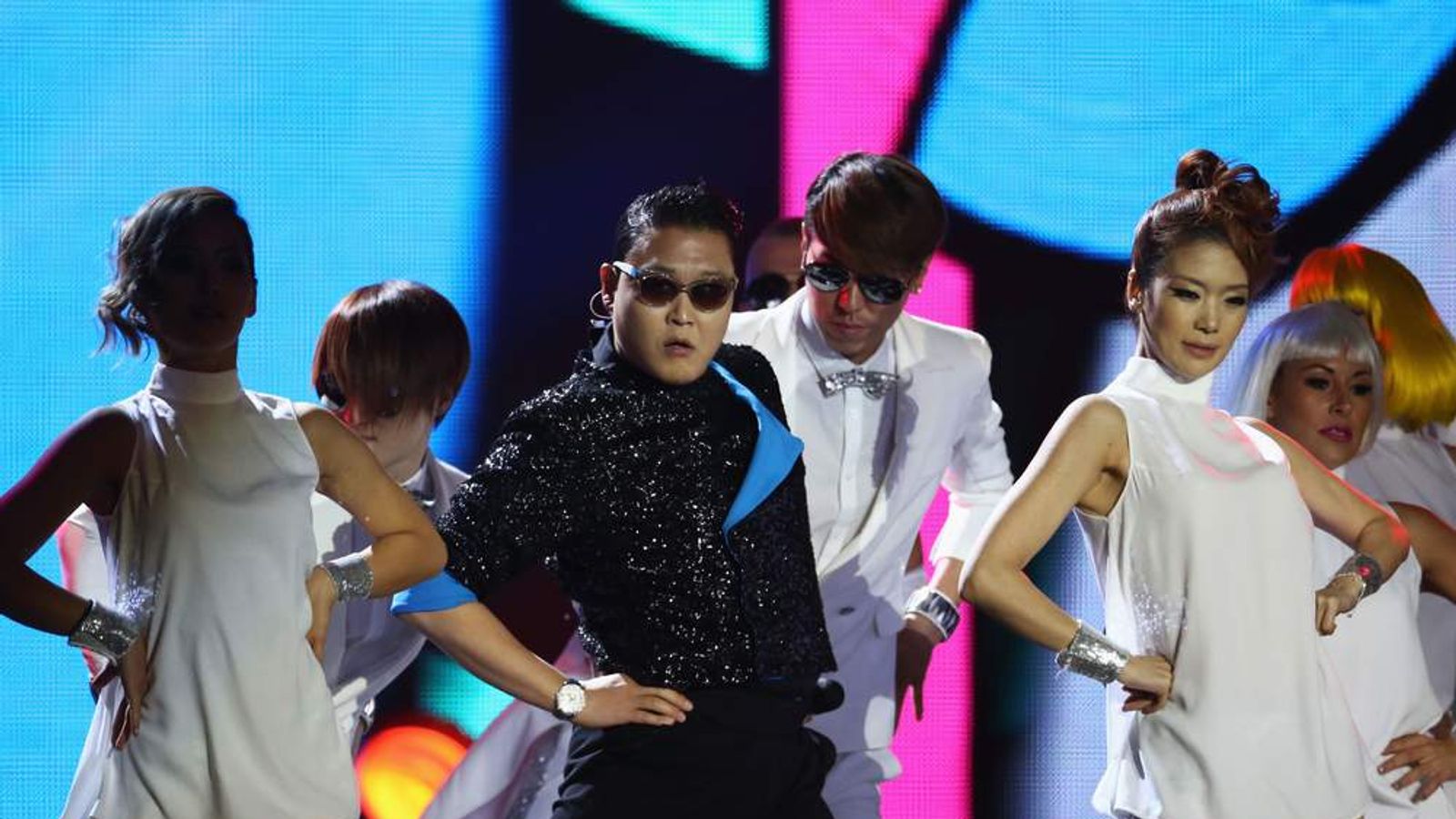
A critical component of the song's enduring success was the choreography created by Psy and his team in consultation with South Korean dance directors. The central move—the iconic "horse-riding dance"—involved bouncing up and down while crossing one's hands in front, mimicking the motion of holding reins and spurring an imaginary horse.
This dance was deliberately designed to be accessible, repeatable, and humorous. Unlike complex K-pop choreography that required years of rigorous training to execute, anyone could imitate the horse-riding steps at a party, sporting event, or wedding. This democratization of the dance fueled thousands of user-generated content (UGC) videos on YouTube, ranging from flash mobs in university campuses to parodies by military personnel and news anchors.
Global Economic and Cultural Impact
The release of "Gangnam Style" shattered long-standing industry assumptions regarding language barriers in the global music market. Prior to 2012, non-English language tracks rarely crossed over into mainstream Western charts unless they relied on specific niche genres or novelty loops (such as "Macarena" in 1995).
The success of the song generated several direct cultural and economic outcomes:
- K-Pop Globalization: Industry analysts credit "Gangnam Style" with opening the floodgates for subsequent Korean Wave (Hallyu) successes, most notably laying the groundwork for groups like BTS and BLACKPINK to achieve mainstream Western chart dominance later in the decade.
- Streaming Metrics: The financial tracking of music consumption shifted definitively away from physical sales and paid downloads toward digital streaming, view counts, and viral algorithmic reach.
- South Korean Soft Power: The South Korean government recognized the economic value of cultural exports, leading to increased institutional support for the entertainment sector.
Frequently Asked Questions
Who wrote and composed "Gangnam Style"?
The song was written by Psy himself, while the composition, arrangement, and production were handled collaboratively by Psy and South Korean producer Yoo Gun-hyung. They spent weeks experimenting with different electronic beats and satirical lyrical concepts before finalizing the track in mid-2012.
Why did the music video go viral?
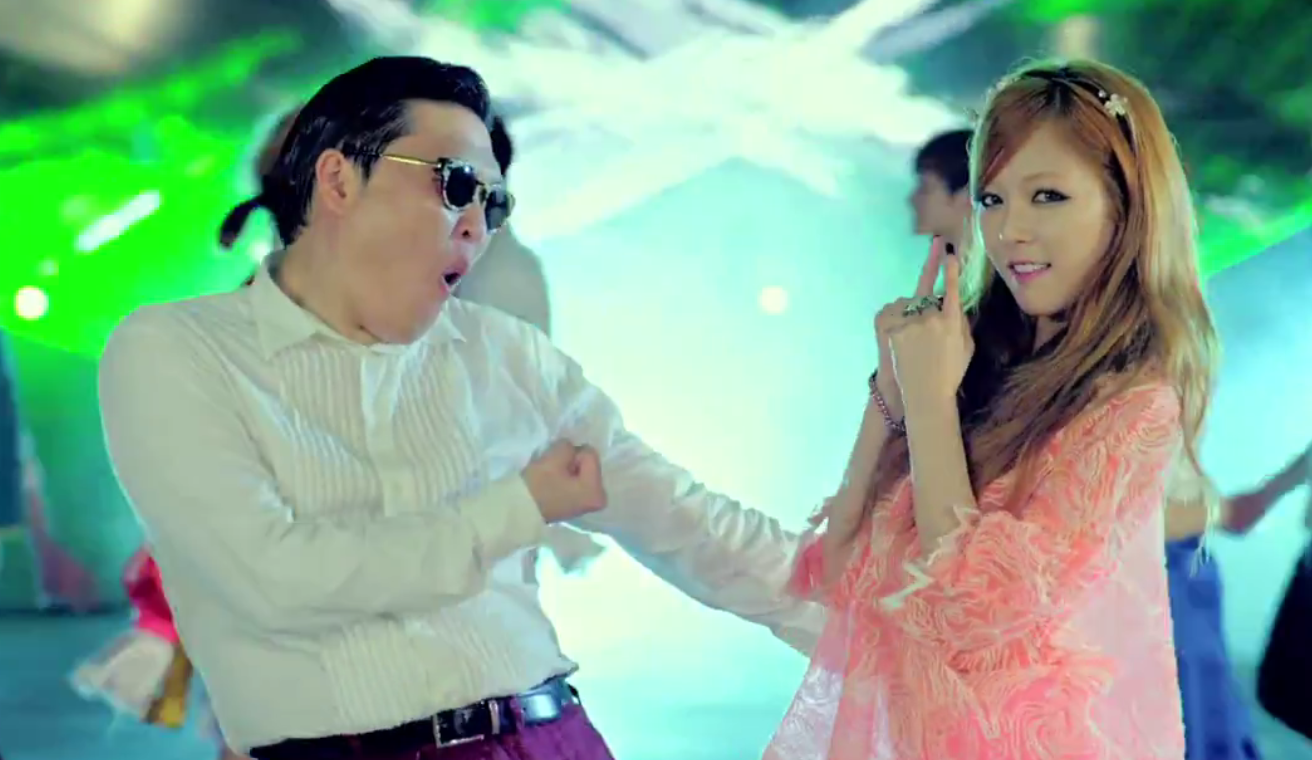
The video went viral due to its high-contrast visual humor, colorful settings, memorable supporting characters (such as comedian Yoo Jae-suk dancing in yellow elevator gear), and the infectious, easy-to-learn horse-riding dance. Early amplification by prominent Western pop stars and athletes on Twitter further accelerated its global reach.
Did "Gangnam Style" reach Number 1 on the Billboard Hot 100?
No. Despite massive global popularity, record-breaking streaming numbers, and reaching Number 1 in over 30 countries, the track peaked at Number 2 on the US Billboard Hot 100 chart for seven consecutive weeks. It was blocked from the top spot by Maroon 5's "One More Night."
How many views did "Gangnam Style" get on YouTube?
"Gangnam Style" made history by becoming the first YouTube video to surpass one billion views in December 2012. It went on to hold the record for the most-watched YouTube video for over four years, accumulating billions of views and fundamentally altering how video metrics are monitored.
What genre of music is "Gangnam Style"?
Musically, "Gangnam Style" is categorized as K-pop (Korean pop), electronic dance music (EDM), and dance-pop. It incorporates elements of house music, hip-hop beats, and traditional comedic novelty songs popular in Korean television entertainment.
Conclusion and Next Actions
The release of "Gangnam Style" on July 15, 2012, marked a definitive turning point in music history, proving that digital platforms could bypass traditional geographic and linguistic gatekeepers. For media scholars, digital marketers, and entertainment professionals, studying its rollout offers valuable lessons in the power of visual storytelling, participatory culture, and meme-driven distribution. When analyzing modern digital marketing or the globalization of entertainment, examining the architecture of Psy's breakout hit remains an essential baseline exercise.
Image Gallery