Best Way to Use Chase Sapphire Reserve Points in 2026
The best way to use Chase Sapphire Reserve points is by transferring them to high-value travel partners like World of Hyatt or international airline programs for premium cabin bookings. While the Chase Travel portal offers a guaranteed...
The best way to use Chase Sapphire Reserve points is by transferring them to high-value travel partners like World of Hyatt or international airline programs for premium cabin bookings. While the Chase Travel portal offers a guaranteed 1.5 cents per point, strategic transfers often yield values exceeding 2.0 or 3.0 cents.
Contents
The Chase Sapphire Reserve (CSR) remains the cornerstone of the "Ultimate Rewards" ecosystem in 2026. For cardholders paying a premium annual fee, maximizing the value of every point earned is not just a hobby—it is a financial necessity to offset the cost of the card. Understanding the hierarchy of redemption options is the first step toward professional-grade travel hacking.
Understanding the Ultimate Rewards Valuation Hierarchy
Before diving into specific transfer strategies, it is essential to establish a baseline for point value. Chase Ultimate Rewards (UR) points are exceptionally flexible, but not all redemption paths are created equal. As a Sapphire Reserve cardholder, you have a unique advantage: your points are worth a minimum of 1.5 cents each when redeemed for travel through the Chase portal.
This 1.5-cent "floor" is significantly higher than the 1.25 cents offered to Sapphire Preferred holders or the 1.0 cent offered to those with only Chase Freedom-branded cards. However, the most experienced travelers view this 1.5-cent valuation as a backup plan rather than the primary goal. The true "best way" to use these points involves leveraging Chase’s network of 1:1 transfer partners to unlock outsized value, particularly for luxury stays and long-haul international flights.
The Value Tiers for CSR Holders:
- High Value (2.0+ cpp): Transferring to partners like Hyatt, Air France-KLM, or Virgin Atlantic for business/first-class seats.
- Solid Value (1.5 cpp): Booking flights, hotels, or car rentals directly through the Chase Travel℠ portal.
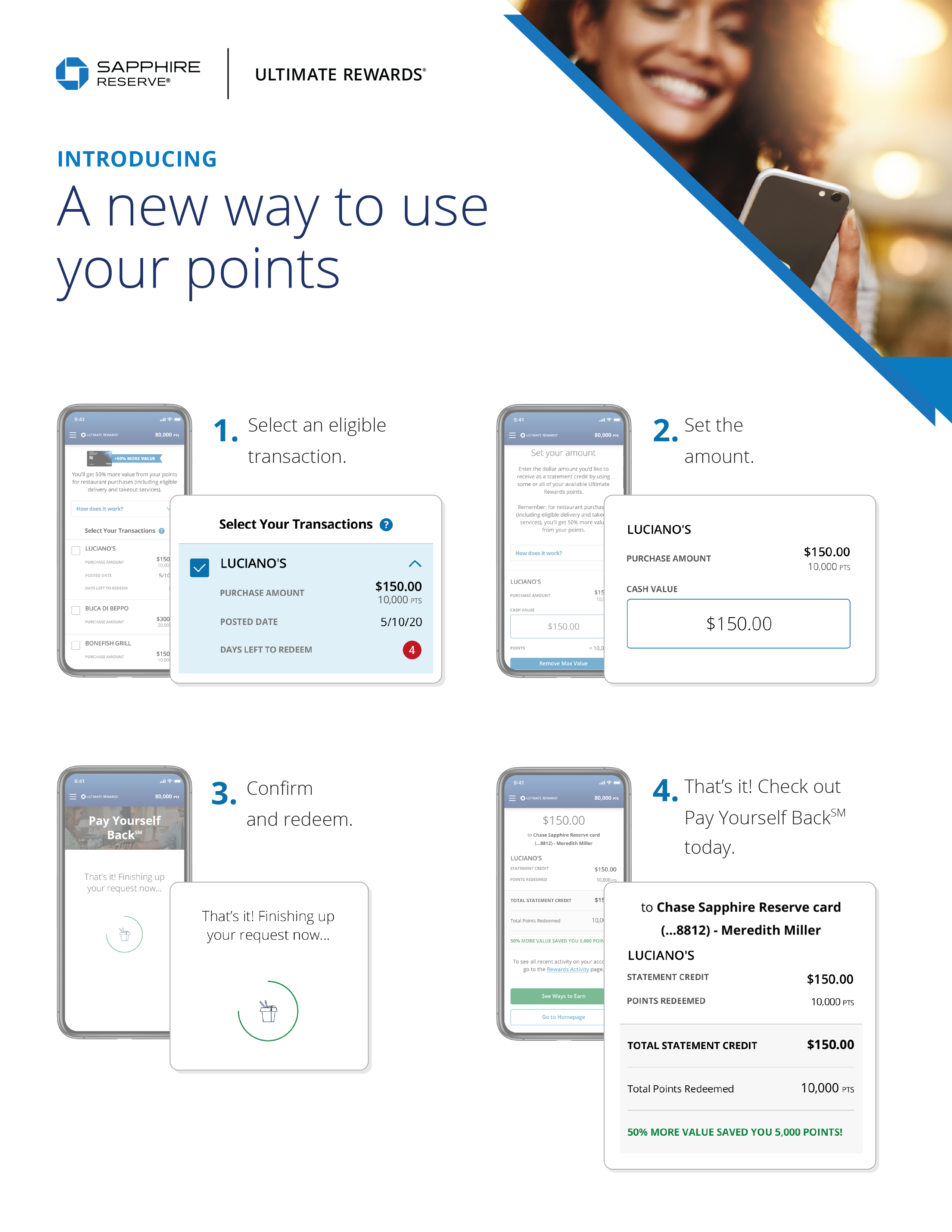
- Standard Value (1.25 - 1.5 cpp): Utilizing the "Pay Yourself Back" feature for rotating categories.
- Low Value (1.0 cpp): Statement credits, cash back, or gift cards.
- Poor Value (<1.0 cpp): Using points for Amazon purchases or Apple products via the Chase storefront.
The Gold Standard: Transferring Points to Travel Partners
Transferring points 1:1 to Chase’s airline and hotel partners is the most complex redemption method, but it offers the highest potential return on investment. In 2026, Chase maintains a robust list of partners across all three major airline alliances (Star Alliance, SkyTeam, and Oneworld), as well as key hotel brands.
World of Hyatt: The Best Hotel Transfer Partner
In the world of hotel redemptions, World of Hyatt remains the undisputed champion for Chase point transfers. Unlike Marriott or Hilton, which have seen significant devaluations in recent years, Hyatt maintains a transparent award chart.
A high-end "Category 7" or "Category 8" Hyatt property, such as a Park Hyatt or an Alila resort, might cost $800 to $1,200 per night. Often, these same rooms can be booked for 30,000 to 45,000 Hyatt points. By transferring your Ultimate Rewards points to Hyatt, you are effectively achieving a valuation of 2.5 to 3.5 cents per point, far exceeding the 1.5-cent portal rate. Even mid-tier "Category 4" properties offer excellent value for family travel.
Maximizing Airline Transfers for Premium Cabins
To get the absolute maximum value—sometimes exceeding 5.0 cents per point—you must look toward international business and first-class flights.
- Air France-KLM (Flying Blue): This program is excellent for "Promo Rewards" and trans-Atlantic business class. It is often possible to find one-way business class seats from the U.S. to Europe for 50,000 to 70,000 points.
- British Airways Executive Club: While known for high fuel surpluses on its own metal, British Airways points (Avios) are incredibly valuable for short-haul "sweet spots" on American Airlines or Alaska Airlines domestic flights.
- Virgin Atlantic Flying Club: Virgin points are a favorite for booking ANA (All Nippon Airways) First Class or Business Class to Japan. While award availability is tight, the point requirements are among the lowest in the industry.
- United Airlines MileagePlus: While United has moved toward dynamic pricing, it remains a reliable option for domestic flights and Star Alliance partner bookings without the heavy taxes and fees seen in some European programs.
Using the Chase Travel Portal for Maximum Convenience
While transfer partners offer more value, the Chase Travel portal is the best option for certain scenarios. When you book through the portal as a Sapphire Reserve holder, your points are worth a fixed 1.5 cents each. This is a "cash-like" redemption, meaning you don't have to worry about "award availability" or "blackout dates." If a seat is for sale on the airline's website, you can buy it with points via Chase.
When to Use the Portal:
- Low-Cost Carriers: If you are booking a flight on a budget airline that isn't a Chase partner (like JetBlue or Southwest, though Southwest is a partner, portal prices can sometimes be lower), the 1.5-cent fixed rate is often better than the transfer rate.
- Economy Domestic Flights: If a domestic flight costs $150, it would cost 10,000 points via the portal. A transfer partner might charge 12,500 or 15,000 points for the same flight.
- Boutique Hotels: If you prefer staying at independent or boutique hotels that aren't part of Hyatt, Marriott, or IHG, the portal allows you to use points at the 1.5-cent rate for these stays.
- Earning Elite Status: Generally, when you book a flight through the Chase portal, the airline treats it as a "cash" ticket. This means you will typically earn airline miles and elite status credits for the flight, which does not happen on traditional award tickets transferred to partners.
Comparative Redemption Analysis
To visualize the difference in value, consider a hypothetical $1,000 travel expense across different redemption methods available to a Chase Sapphire Reserve cardholder in 2026.
| Redemption Method | Points Required | Estimated Value Per Point | Best Used For... |
|---|---|---|---|
| Transfer to Hyatt | 33,000 - 40,000 | 2.5¢ - 3.0¢ | Luxury resorts and high-end city hotels. |
| Intl. Business Class Transfer | 20,000 - 50,000 | 2.0¢ - 5.0¢+ | Long-haul flights to Europe, Asia, or Oceania. |
| Chase Travel Portal | 66,667 | 1.5¢ | Domestic economy, boutique hotels, car rentals. |
| Pay Yourself Back | 66,667 - 80,000 | 1.25¢ - 1.5¢ | Offsetting specific grocery, dining, or charity spend. |
| Cash Back / Statement Credit | 100,000 | 1.0¢ | Emergency liquidity (not recommended for value). |
| Amazon / Apple Store | 125,000+ | 0.8¢ | Impulse buys (avoid if possible). |
Strategic Considerations: The "Chase Trifecta"
To truly master the use of Chase Sapphire Reserve points, you must understand how to earn them efficiently. Most experienced users do not put all their spending on the Reserve card. Instead, they use the Chase Trifecta strategy.
This involves pairing the Sapphire Reserve with the Chase Freedom Flex and the Chase Freedom Unlimited.
- Use the Freedom Flex for its 5% rotating quarterly categories.
- Use the Freedom Unlimited for a flat 1.5% on all non-category spending.
- Use the Sapphire Reserve for travel and dining (3x) and to act as the "hub."
Because you hold the Sapphire Reserve, you can move points earned on the Freedom cards (which are normally worth 1.0 cent) to your Reserve account. Once moved, those points immediately gain the 50% value boost in the portal or the ability to be transferred to 1:1 partners. This effectively turns a 5% cash-back category into a 7.5% travel-back category.
Common Pitfalls and How to Avoid Them
Even with a premium card like the Sapphire Reserve, it is easy to lose value if you aren't careful.
1. Speculative Transfers
Never transfer points to a partner until you have confirmed that the award space you want is actually available. Transfers are one-way and irreversible. If you move 100,000 points to British Airways and the flight you wanted disappears, those points are stuck in the British Airways ecosystem forever.
2. Ignoring Taxes and Fees
Some airline partners, particularly those in Europe like British Airways or Lufthansa (via United or Air Canada), charge massive "carrier-imposed surcharges" on award tickets. A "free" flight might still cost you $800 in cash. Always check the cash component of an award booking before transferring points.
3. Forgetting the $300 Travel Credit
Each year, Chase Sapphire Reserve provides a $300 annual travel credit. This credit is applied automatically to the first $300 in travel purchases charged to your card. Do not use points for your first $300 of travel each year; use the card to pay for it so you can be reimbursed in cash, then use points for expenses beyond that.
Frequently Asked Questions
Can I transfer Chase points to someone else?
You can generally transfer Ultimate Rewards points to one member of your household who is also listed as an authorized user on your account. Chase has strict rules regarding these transfers to prevent the unauthorized sale of points, so ensure the addresses on both accounts match before attempting a transfer.
Do Chase Sapphire Reserve points expire?
As long as your account remains open and in good standing, your points do not expire. If you decide to close your Sapphire Reserve card, you must either spend the points, transfer them to a partner, or move them to another Chase card (like a Freedom or Sapphire Preferred) before closing the account, or you will lose them.
Is the 1.5 cent portal rate always better than a transfer?
No. While 1.5 cents is a great floor, it is often a "ceiling" for simple domestic flights. However, for a $500 Hyatt stay that only costs 15,000 points, the transfer value is 3.3 cents per point. In that case, transferring is more than twice as valuable as using the portal.
Should I use "Pay Yourself Back" instead of travel?
In 2026, the "Pay Yourself Back" (PYB) feature remains a viable alternative if travel is not a priority. However, the eligible categories and redemption rates (1.25x vs 1.5x) change frequently. Check your current Chase app dashboard to see if your points qualify for the higher 1.5x rate on categories like wholesale clubs, charities, or dining before choosing this route.
How do I find "Award Space" for transfers?
Finding award space requires using search tools. Websites like Point.me or Seats.aero can help aggregate availability across multiple airlines. Alternatively, you can search directly on the websites of partners like Air France, United, or Hyatt to see if a "Points" booking option is available for your desired dates.
Final Recommendation
For most Chase Sapphire Reserve cardholders in 2026, the most balanced strategy is to look for Hyatt stays first. Hyatt consistently provides the highest "ease-of-use to value" ratio. If a hotel stay isn't needed, use the Chase Travel portal for domestic flights where the 1.5-cent valuation is simple and earns you frequent flyer miles. Only dive into international airline transfers if you are willing to spend time researching "sweet spots" and booking several months in advance to secure business class availability. By avoiding cash-back redemptions and Amazon purchases, you ensure that your premium card's annual fee is being offset by high-value, luxury experiences.
Image Gallery