Comprehensive Guide to Los Angeles Arrest Lookup Procedures in 2026
Navigating the criminal justice records system in Los Angeles County requires an understanding of municipal, county, and state databases. Whether you are conducting an arrest lookup for legal verification, background checks, or persona...
Navigating the criminal justice records system in Los Angeles County requires an understanding of municipal, county, and state databases. Whether you are conducting an arrest lookup for legal verification, background checks, or personal awareness, the procedures in 2026 involve distinct digital portals and physical record repositories. Because Los Angeles spans dozens of municipal jurisdictions and unincorporated areas, the agency responsible for an arrest determines where and how records are archived and accessed.
Contents
Understanding the Los Angeles Arrest Records Landscape
The infrastructure governing public safety records in Southern California involves multiple intersecting agencies. The Los Angeles Police Department (LAPD) handles incidents within city limits, while the Los Angeles County Sheriff's Department (LASD) manages jails and patrols unincorporated regions and contracted municipalities. Furthermore, independent cities like Long Beach, Pasadena, and Santa Monica maintain their own independent police departments and local holding facilities.
When an individual is taken into custody, their information flows through a centralized booking system before being transmitted to the Los Angeles County Superior Court for arraignment. Understanding this lifecycle ensures that searchers query the correct database based on the elapsed time since the incident occurred.
- Initial Booking Phase: Handled by the arresting local police department or LASD station jail. Records here are dynamic and update in real-time.
- Holding and Transfer Phase: Inmates may be transferred to central county facilities, such as the Inmate Reception Center (IRC) or Century Regional Detention Facility (CRDF), managed by the LASD.
- Court Filing Phase: Once charges are filed by the Los Angeles County District Attorney or City Attorney, the case transitions to the California Superior Court system.
Step-by-Step Guide to Performing an Inmate and Arrest Lookup
Executing an efficient arrest lookup requires utilizing official state and municipal portals while avoiding third-party data brokers that often display outdated or inaccurate information. Follow this step-by-step workflow to locate an individual detained within Los Angeles County in 2026.
- Identify the Arresting Agency: Determine whether the arrest was executed by the LAPD, LASD, or a smaller municipal force. If unknown, check the LASD Inmate Information Center first, as it aggregates custody data for most county jail facilities.
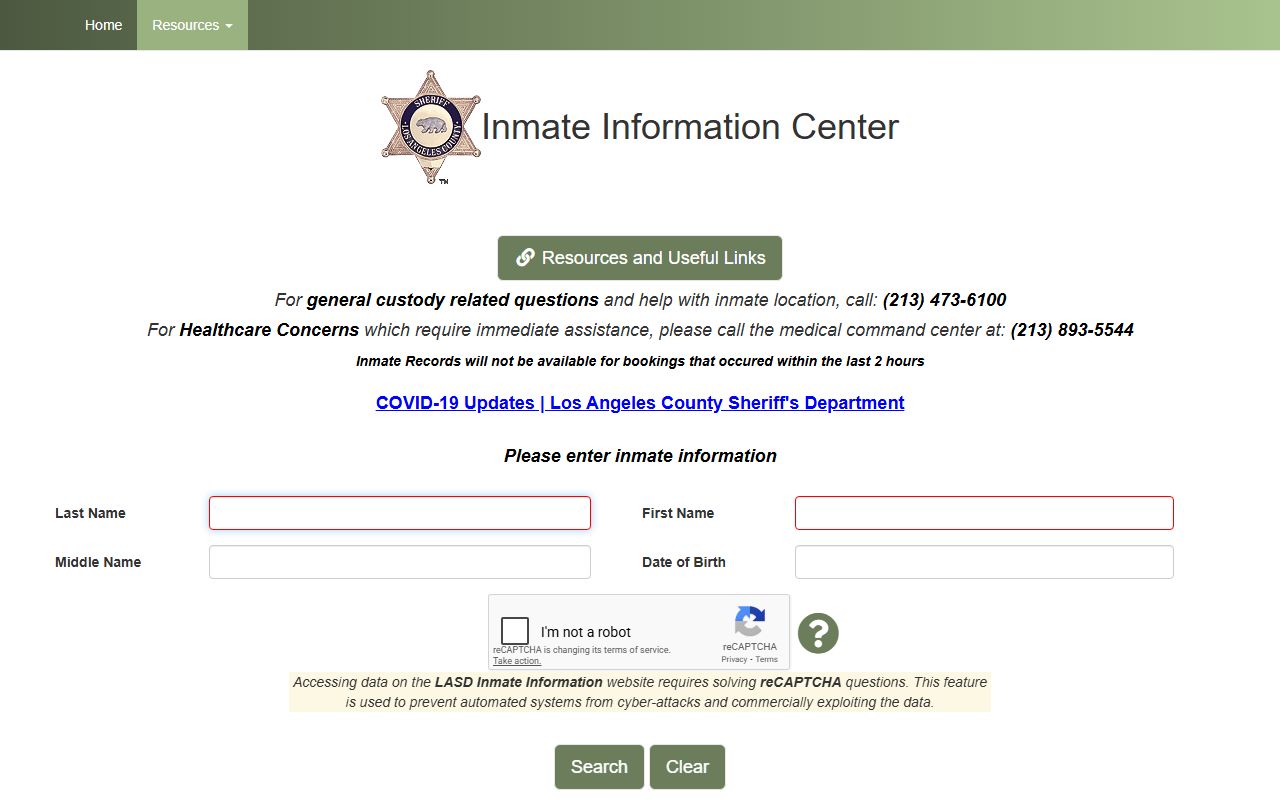
- Access the Official LASD Inmate Information Portal: Navigate to the official Sheriff's Department online inmate search tool. Input the subject's exact legal first name, last name, and date of birth to narrow down common names.
- Review Booking Details: Examine the returned profile for critical data points, including the booking number, current facility location, bail amount, scheduled court date, and pending charges.
- Check Municipal Alternatives: If the LASD database yields no results and the arrest occurred recently within city limits, visit the LAPD online arrest records portal or contact the specific LAPD division station directly.
- Transition to Superior Court Records: If the individual has already been arraigned or released on bond, transition the search to the Los Angeles County Superior Court criminal case portal to review minute orders, upcoming hearings, and case dispositions.
Operational Tip for 2026 Searches
Official law enforcement databases frequently undergo routine system maintenance during off-peak hours. If an online portal returns an error or fails to load active booking records, utilize the dedicated telephone help lines provided by the LASD Watch Commander or the local station holding facility to verify custody status directly.
Comparison of Los Angeles Arrest Search Methods
Different search avenues offer varying degrees of detail, cost, and processing speeds. The following matrix compares the primary methods available for looking up arrest information in Los Angeles.
| Search Method | Governing Authority | Data Accuracy | Processing Speed | Cost |
|---|---|---|---|---|
| LASD Inmate Locator | Los Angeles County Sheriff's Department | High (Real-time jail data) | Instant (Online) | Free |
| LAPD Arrest Records Portal | Los Angeles Police Department | High (City jurisdiction) | Instant (Online) | Free |
| LA Superior Court Portal | California Judicial Branch | Very High (Official legal files) | Instant to 24 Hours | Free basic / Fee for docs |
| California DOJ Background Check | California Department of Justice | Definitive (Statewide fingerprint) | 3 to 10 Business Days | Statutory Fingerprint Fee |
| Commercial Data Brokers | Third-Party Aggregators | Variable (Often outdated) | Instant | Subscription or Pay-per-search |
Legal Framework and Privacy Rights in California
Conducting an arrest lookup in California is subject to strict state regulations, including the California Public Records Act (CPRA) and specific guidelines enforced by the Department of Justice. Law enforcement agencies are required to make arrest logs publicly accessible, typically including the name, age, occupation, and physical description of the individual, as well as the time, date, and location of the arrest and the charges filed.
However, certain protections apply to juvenile records, sealed files, and cases where an arrest did not result in a criminal conviction. Under California penal code enhancements, individuals whose arrests did not lead to convictions may have their records automatically sealed or restricted from public view, altering what appears in standard background checks.
- Right to Know: The public retains the legal right to inspect current booking logs and public jail records without demonstrating a specialized need.
- Sealing and Expungement: Arrests without convictions are increasingly protected under automated relief laws, limiting public visibility on commercial databases.
- Prohibition of Misuse: Utilizing public arrest data to harass, stalk, or discriminate against individuals in employment or housing violates state and federal consumer protection guidelines.
Frequently Asked Questions
How can I find someone who was just arrested in Los Angeles?
You can search the Los Angeles County Sheriff's Department Inmate Information Center online or call the Inmate Reception Center directly to locate individuals booked into county custody within the last 24 hours. For arrests made strictly within city limits, check the Los Angeles Police Department custody records database.
Are all Los Angeles arrest records completely free to access?
Official government portals, such as the LASD inmate search and the Los Angeles Superior Court case portal, provide basic record searches at no cost. However, obtaining certified copies of court documents or requesting comprehensive statewide criminal history reports through the California Department of Justice requires statutory processing fees.
What information is required to perform an accurate arrest lookup?
To ensure precise results, you should have the subject's full legal first and last name, date of birth, and, if possible, their booking number or the exact date and location of the arrest. Common names often yield multiple results, making secondary identifiers like date of birth essential.
Why is an arrest record not showing up in online databases?
If an arrest occurred very recently, law enforcement agencies may still be processing the booking paperwork into the digital system. Additionally, if the individual was released quickly on citation, juvenile records were involved, or the record was sealed by a court order, it will not appear in public databases.
How long do arrest records remain public in Los Angeles County?
While physical jail bookings and police logs are archived by municipal agencies, public accessibility on court portals depends on the legal outcome of the case. Dismissed charges or arrests without convictions follow specific statutory timelines for restriction, whereas convictions remain part of the public criminal history unless formally expunged.
Secure Professional Guidance
Navigating the criminal justice system and verifying custody statuses requires reliance on verified government frameworks rather than unverified third-party aggregators. For official assistance regarding inmates currently housed in county facilities, utilize the verified contact channels provided by the Los Angeles County Sheriff's Department or consult with a qualified legal professional licensed in the State of California to understand your rights and obligations.
Image Gallery