Understanding the Different Types of Bankruptcy: A Comprehensive Guide
Bankruptcy is a legal process, overseen by federal courts, that allows individuals and businesses to eliminate or repay their debts under the protection of the law. In the United States, the system is governed by the Bankruptcy Code, w...
Bankruptcy is a legal process, overseen by federal courts, that allows individuals and businesses to eliminate or repay their debts under the protection of the law. In the United States, the system is governed by the Bankruptcy Code, which categorizes proceedings based on the debtor’s financial situation, organizational structure, and the intended outcome—whether that is liquidation of assets or the implementation of a long-term repayment plan.
Contents
The Federal Bankruptcy Framework
The U.S. bankruptcy system is established under Title 11 of the United States Code. While the laws are federal, they are administered through regional bankruptcy courts. The primary objective of these statutes is twofold: to provide the "honest but unfortunate debtor" with a fresh start through the discharge of debts, and to ensure an equitable distribution of assets to creditors.
It is critical to distinguish between individuals, who may seek relief for personal financial distress, and businesses, which may need to reorganize operations to avoid closure. Because bankruptcy involves complex legal filings, mandatory credit counseling, and potential long-term impacts on credit reporting and asset ownership, it is generally treated as a measure of last resort.
Chapter 7: Liquidation Bankruptcy
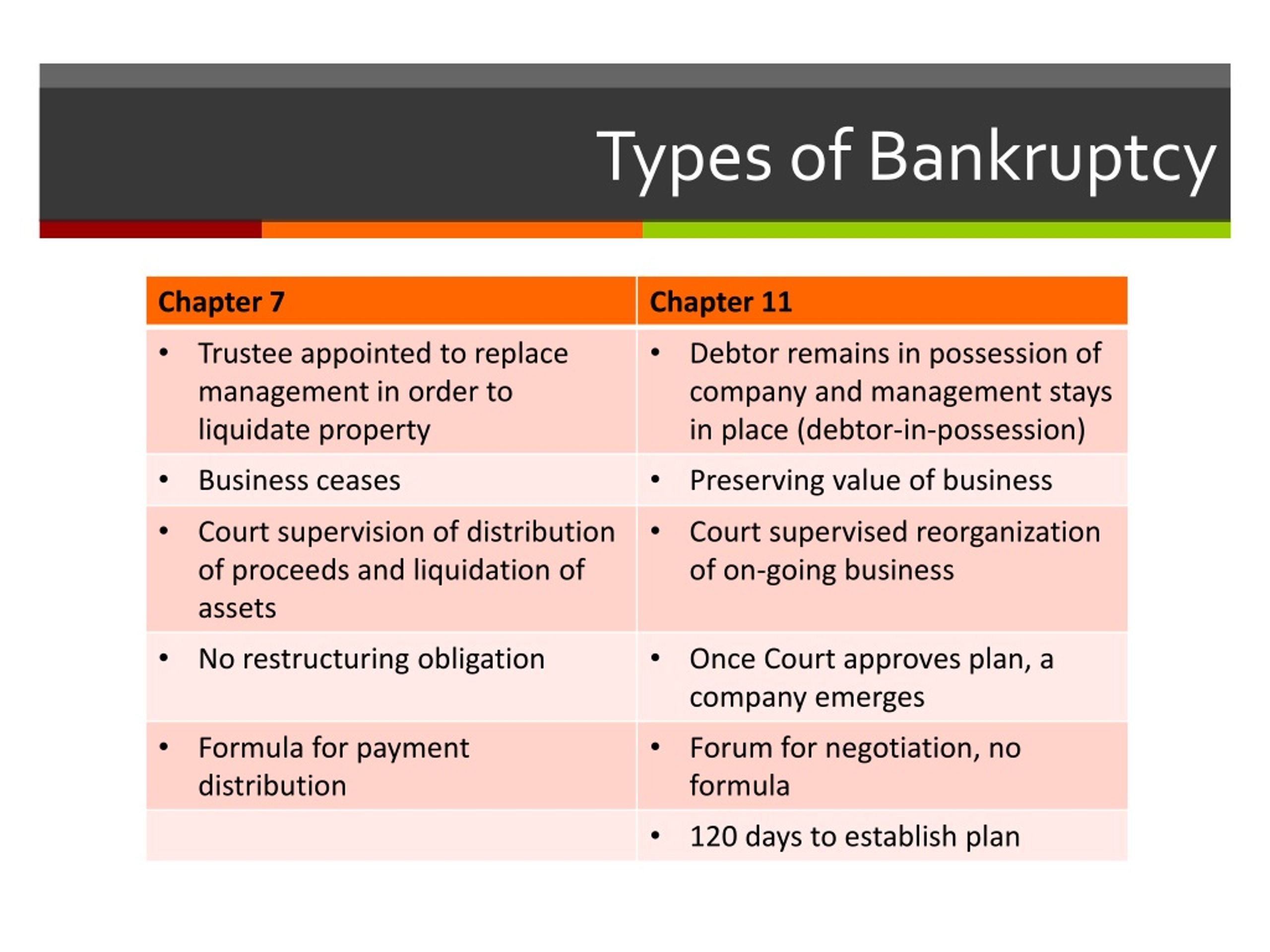
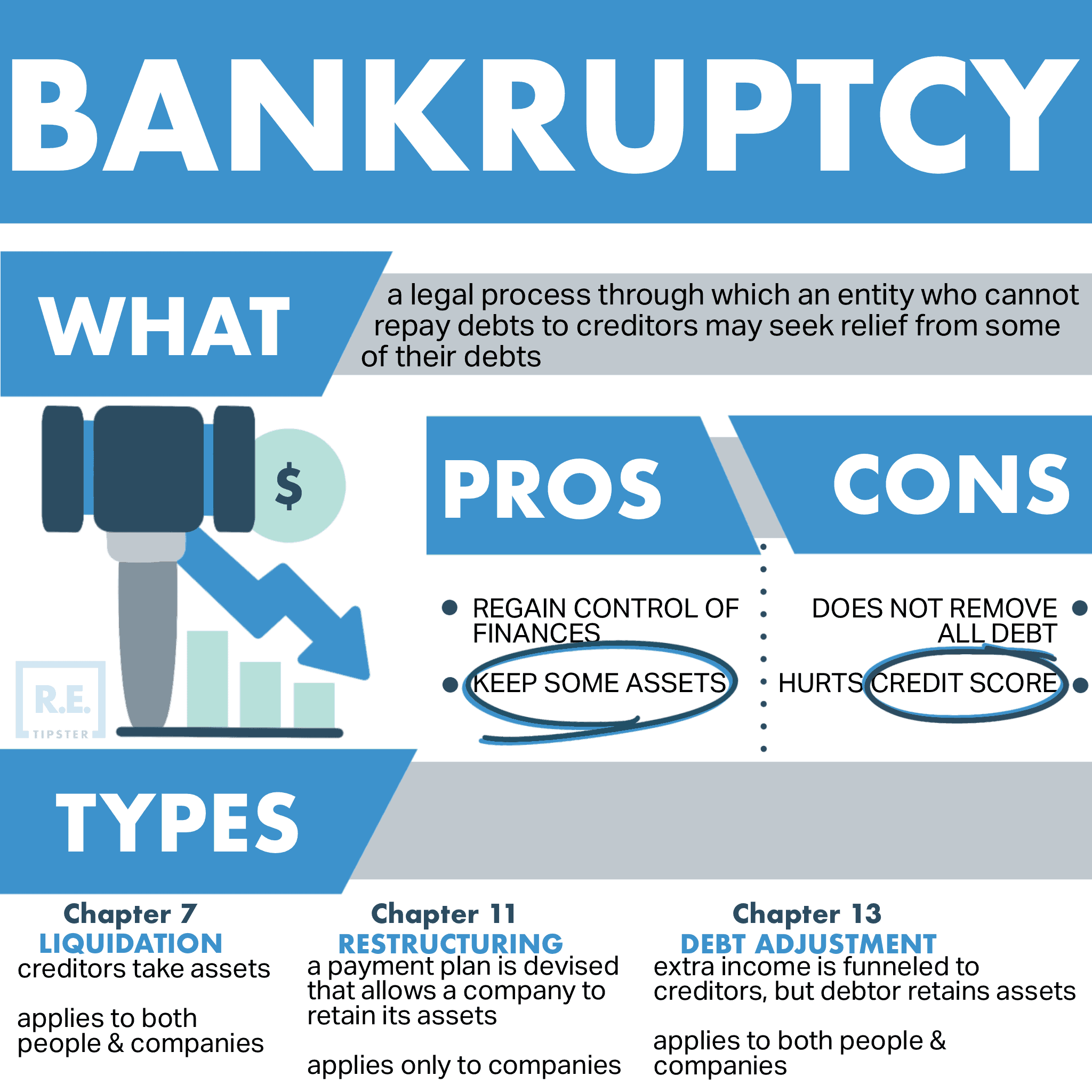
Chapter 7 is the most common form of bankruptcy for individuals and is often referred to as "liquidation" bankruptcy.
How it works: In a Chapter 7 case, a court-appointed trustee gathers the debtor’s non-exempt assets and sells them. The proceeds are then distributed to creditors according to priority rules established by law. In exchange, the debtor receives a discharge—a court order that releases them from personal liability for most unsecured debts, such as credit card balances and medical bills.
Key considerations:
- The Means Test: To qualify for Chapter 7, individual debtors must pass a "means test." This calculation compares the debtor's monthly income against the median income for a household of the same size in their state. If income is significantly above the median, the debtor may be disqualified from Chapter 7 and directed toward Chapter 13.
- Exemptions: Not all assets are sold. Federal and state laws provide "exemptions" that allow debtors to keep essential items, such as household goods, clothing, a vehicle up to a certain value, and tools used for work.
- Timeframe: A typical Chapter 7 case is relatively fast, often concluding within four to six months.
Chapter 13: Wage Earner’s Reorganization
Chapter 13 is designed for individuals who have a regular source of income but are struggling to meet their debt obligations. Unlike Chapter 7, it does not involve the liquidation of assets.
How it works: Under Chapter 13, the debtor proposes a repayment plan to pay back all or a portion of their debts over three to five years. During this period, the debtor makes monthly payments to a bankruptcy trustee, who then distributes the funds to creditors.
Key benefits:
- Retention of Assets: Debtors can usually keep all of their property, including their home, provided they continue to make payments on the mortgage and fulfill the bankruptcy plan.
- Foreclosure Prevention: Filing a Chapter 13 petition triggers an "automatic stay," which halts foreclosure proceedings and collection actions while the court reviews the repayment plan.
- Consolidation: It essentially acts as a court-mandated consolidation of debt, often reducing interest rates or the total amount owed on unsecured claims.
Chapter 11: Business Reorganization
Chapter 11 is primarily utilized by businesses—or occasionally high-net-worth individuals whose debts exceed the limits for Chapter 13—to restructure their financial affairs.
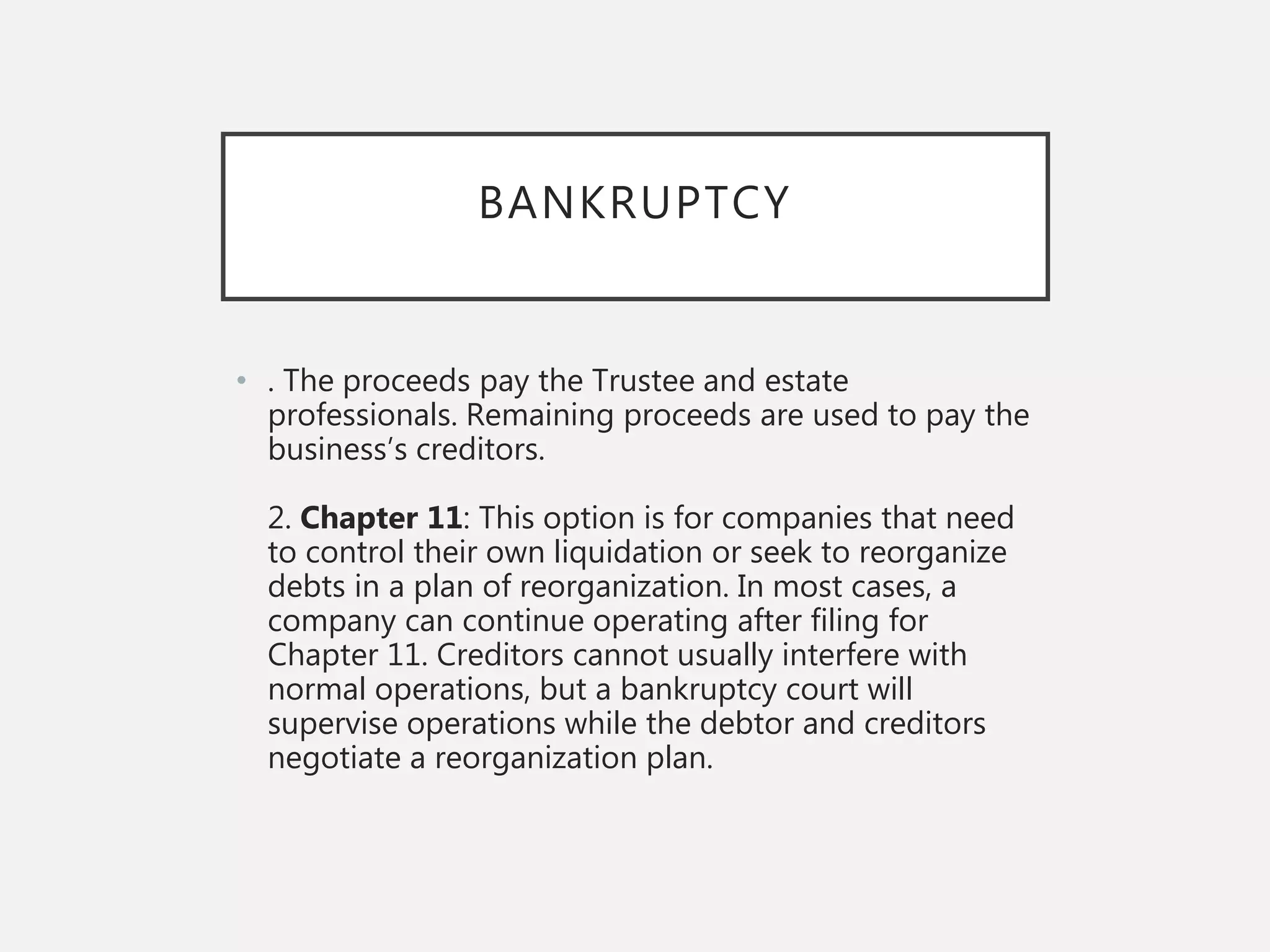
How it works: The debtor, often referred to as a "debtor in possession," continues to operate the business while developing a plan to reorganize debts. This plan must be approved by the court and often requires the consent of creditors. The goal is to keep the business operational while negotiating more favorable terms with lenders, suppliers, and tax authorities.
Complexity and cost: Chapter 11 is notoriously expensive and time-consuming. Because it involves complex legal filings and professional fees for attorneys, accountants, and consultants, it is typically reserved for large-scale corporate entities.
Chapter 12: Family Farmers and Fishermen
Chapter 12 is a specialized, streamlined version of Chapter 13 designed specifically for "family farmers" or "family fishermen" with regular annual income.
How it works: It allows these entities to restructure their debt over a period of time, similar to Chapter 13, but with more flexibility regarding debt limits and repayment structures that account for the seasonal nature of agricultural and maritime income.
Comparison of Bankruptcy Chapters
| Chapter | Primary User | Goal | Asset Impact |
|---|---|---|---|
| 7 | Individuals/Businesses | Liquidation | Non-exempt assets sold |
| 11 | Businesses | Reorganization | Retain assets; debt restructuring |
| 12 | Farmers/Fishermen | Reorganization | Retain assets; seasonal repayment |
| 13 | Individuals | Reorganization | Retain assets; 3-5 year payment plan |
Legal and Financial Implications
Filing for bankruptcy is a significant decision with lasting consequences. Once a bankruptcy petition is filed, an automatic stay immediately goes into effect. This prevents most creditors from taking further action to collect debts, including filing lawsuits, garnishing wages, or initiating foreclosure.
However, the discharge is not universal. Certain debts are generally non-dischargeable, including:
- Most student loans (unless undue hardship is proven).
- Recent tax obligations.
- Child support and alimony payments.
- Debts incurred through fraud.
- Fines or penalties resulting from criminal activities.
Furthermore, bankruptcy appears on credit reports for seven to ten years, which can significantly influence the ability to obtain new credit, secure housing, or, in some sectors, obtain employment.
Frequently Asked Questions
Does bankruptcy eliminate all of my debt? No. While bankruptcy provides a fresh start by discharging many unsecured debts, it does not wipe out everything. Secured debts—such as mortgages or car loans—usually must be paid if you intend to keep the collateral. Furthermore, specific obligations like court-ordered support payments and most student loans typically remain your responsibility.
What is the "automatic stay"? The automatic stay is a powerful legal injunction that takes effect the moment a bankruptcy petition is filed. It stops creditors from contacting you, seizing your property, or continuing legal proceedings against you. It is intended to provide a "breathing spell" for the debtor to work through the bankruptcy process without the pressure of active collection efforts.
How do I know which chapter is right for me? Determining the appropriate chapter depends on your total debt, your income level, whether you possess non-exempt assets you wish to protect, and whether you are filing as an individual or a business. Because each situation is unique, consulting with a qualified bankruptcy attorney is highly recommended to assess your eligibility and potential outcomes.
Does my spouse have to file with me? Not necessarily. You can file individually. However, if you and your spouse share significant debt, filing jointly may be more efficient. A joint filing can consolidate debts and simplify the process, but it is important to consider how a joint filing might affect each spouse’s credit and assets.
What happens to my property in Chapter 7? In a Chapter 7 case, you do not automatically lose everything. Most states have exemptions that protect essential property, such as your home (up to a certain equity amount), your primary vehicle, and basic household goods. If your property exceeds the exemption limits, it may be liquidated to pay your creditors.
Recommended Next Steps
If you are considering bankruptcy, prioritize gathering comprehensive financial records, including tax returns, proof of income, recent bills, and a full list of all creditors. Because bankruptcy is governed by strict procedural rules and jurisdictional requirements, seeking guidance from a licensed bankruptcy attorney in your state is the most reliable way to understand your options and the impact on your specific financial profile.
Image Gallery