The Legacy of Philip de France: Shaping the French State, Monarchy, and National Identity
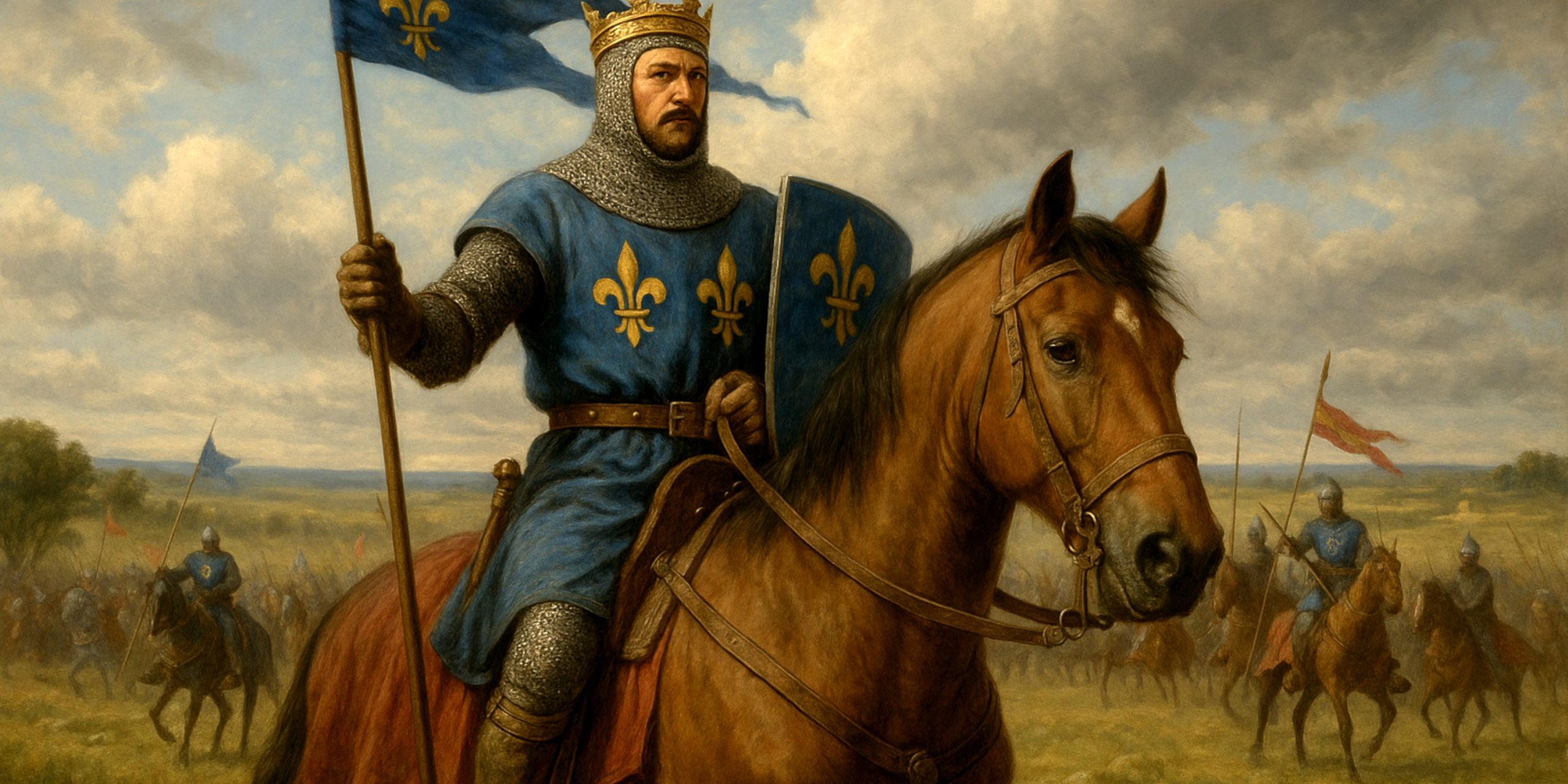
The legacy of Philip de France—most prominently Philip II Augustus (r. 1180–1223)—centers on transforming the French monarchy from a localized feudal kingdom into a centralized, powerful European state. By expanding royal territory, in...
The legacy of Philip de France—most prominently Philip II Augustus (r. 1180–1223)—centers on transforming the French monarchy from a localized feudal kingdom into a centralized, powerful European state. By expanding royal territory, instituting administrative reforms, establishing Paris as the permanent capital, and adopting the title Rex Franciae (King of France), Philip laid the structural foundation for modern France.
Contents
Disambiguating "Philip de France": Key Historical Figures
When examining the historical footprint of "Philip de France" (Philippe de France), historians and researchers encounter several prominent royals who held the name across different eras of French history. Disambiguating these figures is essential for understanding their distinct contributions to European history and statecraft.
Philip II Augustus (1165–1223)
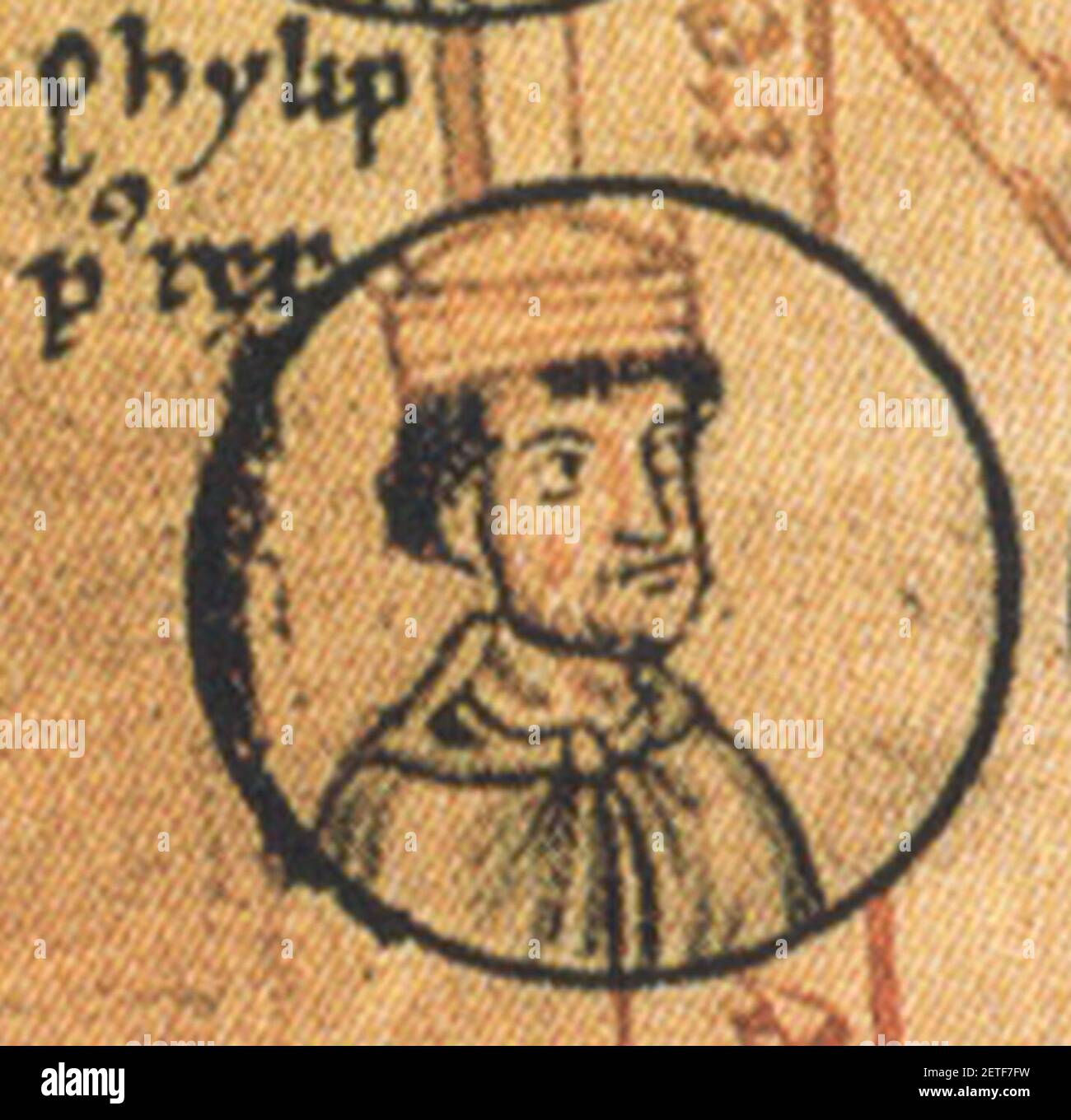
Philip II, known as Philip Augustus (Philippe Auguste), was the seventh king of the Capetian dynasty. Ascending the throne in 1180 at age fifteen, he inherited a royal domain (domaine royal) that was territorially smaller than the holdings of several of his own vassals, particularly the Anglo-Norman Angevin realm ruled by King Henry II of England. Over his 43-year reign, Philip quadrupled the royal territory, created a professional administrative apparatus, fortified Paris, and redefined royal authority. He was the first ruler to formally title himself Rex Franciae (King of France) rather than Rex Francorum (King of the Franks), signaling a shift from ruling a tribe of people to governing a defined territorial sovereign state.
Philip IV "the Fair" (1268–1314)
Grandson of King Louis IX (Saint Louis), Philip IV (Philippe IV le Bel) extended the centralization of the French state. His reign is best remembered for his fierce struggle against Papal authority (leading to the Avignon Papacy), the suppression of the Knights Templar in 1307, and the establishment of the Etats-Généraux (Estates-General) in 1302 to rally public support for royal taxation. Philip IV strengthened judicial and financial state institutions, cementing royal supremacy over both secular nobility and ecclesiastical powers.
Philippe I, Duke of Orléans (1640–1701)
In the early modern period, "Philippe de France" referred to the younger brother of King Louis XIV, styled as Monsieur, Duke of Orléans. While not a reigning King of France, he founded the cadet branch of the House of Bourbon-Orléans, which later produced King Louis-Philippe I (r. 1830–1848). A capable military commander who won the Battle of Cassel in 1677, his legacy lives on through his dynastic lineage and his artistic patronage of the Château de Saint-Cloud.
Because Philip II Augustus represents the foundational figure whose policies defined the territorial, legal, and institutional identity of France, he remains the primary focal point when evaluating the lasting historical legacy of Philip de France.
Territorial Expansion and the Dismantling of the Angevin Empire
At the start of Philip II’s reign in 1180, the Kingdom of France was heavily eclipsed by the Angevin Empire—a vast collection of territories held by the Plantagenet kings of England, including Normandy, Anjou, Maine, Touraine, and Aquitaine. The French king directly controlled only the Île-de-France region surrounding Paris and Orléans.
Philip systematically worked to destabilize Plantagenet authority by exploiting familial rivalries among Henry II and his sons, Richard the Lionheart and John Lackland. Following the accession of King John in 1199, Philip utilized feudal legal mechanisms to declare John's continental fiefs forfeit after John failed to appear before the French royal court to answer charges brought by his vassal, Hugh IX of Lusignan.
- 1180: Localized Domain
- Île-de-France & Orléans surrounded by fiefs
- 1204: Annexation of Normandy
- Normandy, Anjou, Maine, Touraine brought under direct crown control
- 1214: Bouvines
- Continental hegemony secured
Between 1202 and 1206, Philip launched decisive military campaigns that seized Normandy, Maine, Anjou, and Poitou. The conquest of Normandy in 1204 was a watershed moment: it denied English monarchs their ancestral homeland and doubled royal revenues.
The Battle of Bouvines (1214)
The culmination of Philip’s territorial campaigns occurred on July 27, 1214, at the Battle of Bouvines in Flanders. Philip faced a formidable coalition comprising Holy Roman Emperor Otto IV, Count Ferrand of Flanders, Count Renaud of Boulogne, and English forces funded by King John.
Despite being outnumbered, Philip’s cavalry and urban militia contingents achieved a decisive victory. The geopolitical consequences were immediate and far-reaching:
- In France: Sovereign royal authority was secured, solidifying Crown control over northern France and crushing feudal coalitions against the king.
- In Germany: Emperor Otto IV was deposed and replaced by Frederick II, a Capetian ally.
- In England: King John’s defeat stripped him of military prestige and financial resources, forcing him to sign the Magna Carta in 1215 at Runnymede under pressure from rebellious English barons.
Institutional and Administrative Innovations
Beyond military conquest, the legacy of Philip de France rests on his pioneer work as an administrative reformer. Prior to his reign, feudal monarchies relied on local hereditary lords (châtelains) who often acted independently of royal will, diverting tax revenues and dispensing local justice without oversight.
The Creation of Baillis and Sénéchaux
To overcome feudal insubordination, Philip established a professional, salaried civil service answerable directly to the crown:
- Baillis (Bailiffs): Deployed in the northern royal domains, baillis were educated bourgeois or minor nobles appointed by the king. They moved between districts on regular circuits to administer justice, collect royal taxes, audit municipal accounts, and muster military forces.
- Sénéchaux (Seneschals): Deployed in newly annexed southern territories (such as Poitou and Saintonge), sénéchaux performed similar functions to baillis but possessed broader military authority adapted to regional border conditions.
Crucially, these officials were prohibited from acquiring property, marrying local women, or engaging in commerce within their assigned jurisdictions. This prevented the re-emergence of hereditary office-holding and ensured strict loyalty to the crown.
- KING OF FRANCE (Philip II Augustus)
- BAILLIS (Northern France)
- Tax Collection
- Judicial Courts
- Royal Audits
- SÉNÉCHAUX (Southern France)
- Border Defense
- Feudal Audits
- Local Justice
- BAILLIS (Northern France)
Financial Modernization and Record-Keeping
Philip revolutionized royal record-keeping after losing his personal archive at the Battle of Fréteval in 1194 against Richard the Lionheart. Following this defeat, Philip ordered the establishment of permanent central archives, known as the Trésor des Chartes (Treasury of Charters), stored permanently in Paris.
He also mandated written financial accounting. The Registre du Roi (King’s Register) tracked royal income, feudal obligations, municipal charters, and military rolls. By replacing oral custom with written legal documentation, Philip established legal precedents that underpinned absolute monarchy in later centuries.
Architectural and Cultural Transformation of Paris
Under Philip II, Paris transitioned from an administrative encampment into the permanent capital of France. Recognizing the strategic importance of the city along the Seine river trade routes, Philip initiated major urban infrastructure projects.
The Wall of Philip Augustus
Between 1190 and 1215, Philip commissioned a massive stone defensive wall encircling Paris on both the Right and Left Banks of the Seine. Spanning over 5 kilometers with dozens of towers and fortified gates, the wall protected the expanding urban population from Anglo-Norman invasions and clearly defined the municipal boundaries of the capital. Remnants of this wall remain visible today in the Marais district and the Latin Quarter.
Construction of the Original Louvre Fortress
To defend Paris from western approaches along the Seine, Philip built the original fortress of the Louvre around 1190. Featuring a central 30-meter keep (Donjon) surrounded by a fortified moat, the castle served as an armory, treasury, and royal vault. Though later converted into a Renaissance palace by Francis I and eventually a public museum, the medieval foundations of Philip’s fortress are exposed and preserved in the Musée du Louvre.
Paris Urban Infrastructure Under Philip II
| Project | Historical Function & Impact |
|---|---|
| Wall of Philip II | Encircling 253 hectares; fortified Left and Right Banks. |
| Louvre Fortress | Strategic western riverside stronghold and royal treasury. |
| Street Paving | Replacing mud tracks with stone cobbles (Pavé de Paris). |
| Les Halles Market | Establishing central covered market halls for civic trade. |
| Royal Charter | Granting legal autonomy to University of Paris (1200). |
Support for the University of Paris
In 1200, following a violent dispute between townspeople and foreign students, Philip issued a royal charter granting scholars imperial protection and privilegium fori (exemption from municipal courts, placing students strictly under ecclesiastical jurisdiction). This legal protection allowed the University of Paris (the Sorbonne) to flourish as the premier center of scholastic philosophy, theology, and canon law in medieval Europe, attracting scholars such as Thomas Aquinas.
Comparative Analysis of French Monarchs Named Philip
To contextualize how different rulers named Philip contributed to the French state, the following table summarizes the key milestones, administrative mechanisms, and long-term historical impacts of the major French kings and princes bearing the name.
| Ruler | Reign / Dates | Key Accomplishments | Administrative Legacy | Primary Historical Impact |
|---|---|---|---|---|
| Philip I | 1060–1108 | Annexed the Vexin and Bourges; defended early Capetian domain against William the Conqueror. | Expanded direct royal domain modestly through purchase and feudal escheat. | Secured early Capetian survival despite papal excommunication. |
| Philip II Augustus | 1180–1223 | Defeated Angevin Empire; won Battle of Bouvines (1214); fortified Paris; built Louvre. | Created baillis and sénéchaux; established Trésor des Chartes; instituted written accounting. | Created the unified French state; first to use title Rex Franciae. |
| Philip III "the Bold" | 1270–1285 | Annexed Languedoc; led Aragonese Crusade; maintained Capetian territorial gains. | Expanded royal justice oversight across southern France. | Consolidated southern territories following the Albigensian Crusade. |
| Philip IV "the Fair" | 1285–1314 | Dissolved Knights Templar; established Estates-General (1302); moved Papacy to Avignon. | Bureaucratized the Parlement de Paris and the Chambre des Comptes. | Established absolute royal sovereignty over ecclesiastical and noble institutions. |
| Philip V "the Tall" | 1316–1322 | Applied Salic Law to royal succession; standardized weights and measures. | Formalized treasury audits; reformed municipal militias. | Established dynastic precedents excluding female succession to the French throne. |
| Philip VI | 1328–1350 | First king of the House of Valois; began Hundred Years' War against Edward III. | Expanded gabelle (salt tax) to finance war efforts. | Transitioned monarchical line from House of Capet to House of Valois. |
| Philippe I, Duke of Orléans | 1640–1701 | Won Battle of Cassel (1677); established Bourbon-Orléans dynastic branch. | Managed extensive appanages; patronized Baroque arts and architecture. | Founded the Orléans line, which ruled France from 1830 to 1848 under Louis-Philippe I. |
Long-Term Impact on European Statehood and Sovereign Power
The broader significance of Philip de France extends beyond medieval warfare to foundational concepts of political science, international law, and state sovereignty.
From Tribal Kingship to Territorial Sovereignty
Before Philip II, Western European kingship was primarily personal and tribal. Monarchs ruled over populations (Rex Francorum—King of the Franks; Rex Anglorum—King of the English) rather than defined physical borders. Philip’s adoption of Rex Franciae established the concept of territorial sovereignty, asserting that all individuals, noble or peasant, residing within defined geographic borders were subjects of the French Crown.
Precedent for Absolute Monarchy
The administrative mechanisms designed by Philip II—and later expanded by Philip IV—severed the reliance of the monarchy on feudal noble levies. By building a professional bureaucracy reliant on royal salaries rather than land grants, the French monarchy laid the groundwork for the centralized administrative absolutism later exemplified by King Louis XIV.
Influence on European Geopolitics
The territorial changes effected by Philip reshaped Western Europe:
- The extraction of Normandy, Anjou, and Poitou from English control forced the Plantagenet kings to focus inward on England, accelerating the development of English parliamentary institutions.
- The victory at Bouvines established France as the dominant military and geopolitical power in Western Europe throughout the 13th century, creating a political equilibrium that endured until the outbreak of the Hundred Years' War in 1337.
Frequently Asked Questions
Why was Philip II given the title "Augustus"?
Philip II was given the cognomen "Augustus" (Auguste) by his chronicler, the monk Rigord of Saint-Denis. Rigord bestowed the title because Philip was born in the month of August, but more importantly because he expanded (augeo, meaning "to augment" or "increase") the royal domain and kingdom of France through territorial conquests.
How did Philip II differ from Philip IV in their governance styles?
While Philip II focused primarily on territorial conquest, military strategy, and building the core administrative infrastructure (baillis and written archives), Philip IV ("the Fair") focused on legalist centralization, financial extraction, and institutional supremacy. Philip IV expanded administrative bodies like the Parlement de Paris and used legal scholars (legistes) to assert sovereign authority over the Church and the nobility.
What was the relationship between Philip II and Richard the Lionheart?
Philip II and Richard I (the Lionheart) had a complex, shifting relationship. Early on, they allied against Richard’s father, King Henry II of England. Later, they jointly led the Third Crusade (1189–1192) to recapture Jerusalem. However, personal friction and territorial rivalries led Philip to return to France early, where he conspired against Richard’s continental lands during Richard's captivity in Germany. Upon Richard’s return, the two fought wars across Normandy until Richard's unexpected death in 1199.
What is the origin of the Louvre, and how does it relate to Philip de France?
The Louvre was originally built by King Philip II Augustus around 1190 as a medieval defense fortress to guard the western approaches of Paris against Anglo-Norman invasions along the Seine river. It was not built as a residential palace, but as a military stronghold, armory, and site for the royal treasury. Over subsequent centuries, later monarchs renovated and expanded the castle into a royal residence, which eventually opened as a public art museum during the French Revolution in 1793.
How did the legacy of Philip de France affect the signing of the Magna Carta?
Philip II’s decisive victory over King John of England and Emperor Otto IV at the Battle of Bouvines in 1214 stripped King John of his continental lands and ruined his military prestige. Upon returning to England bankrupt and humiliated, John faced open rebellion from his Anglo-Norman barons, who forced him to sign the Magna Carta in June 1215 to limit monarchical power.
Recommended Next Steps for Researchers and Historians
To further explore the legacy of Philip de France and examine primary medieval source material:
- Examine Primary Medieval Chronicles: Read translated contemporary accounts by Rigord (Gesta Philippi Augusti) and William the Breton (Philippide), available through digital repositories such as the Bibliothèque nationale de France (Gallica).
- Visit Historical Monuments in Paris: Tour the exposed medieval foundations of Philip Augustus’s 1190 keep in the Lower Level of the Sully Wing at the Musée du Louvre, and inspect surviving sections of the 12th-century Wall of Philip Augustus on Rue des Jardins-Saint-Paul in the Marais district of Paris.
- Analyze Legal and Financial Records: Consult historical studies on the Trésor des Chartes and the early Capetian registers housed at the Archives Nationales in Paris to understand the bureaucratic development of medieval European statecraft.
EDITORIAL CATEGORY METADATA:
Image Gallery