Why Choosing a Vermont Credit Union Beats Big National Banks for Local Membership
Choosing a Vermont credit union over a major national bank offers significant advantages, including lower fee structures, personalized local customer service, community-focused reinvestment, and competitive rates on loans and savings p...
Choosing a Vermont credit union over a major national bank offers significant advantages, including lower fee structures, personalized local customer service, community-focused reinvestment, and competitive rates on loans and savings products tailored specifically to the regional economy.
Contents
For residents and businesses across the Green Mountain State, everyday financial decisions often come down to a choice between massive, multi-state banking conglomerates and hyper-localized financial institutions. While large national banks offer ubiquitous ATM networks and sprawling corporate footprints, they frequently impose steep maintenance fees, automated customer support channels, and rigid lending criteria that fail to account for the unique economic landscape of Vermont. Credit unions, by contrast, operate as member-owned cooperatives. This structural difference fundamentally alters how profits are distributed, how customer service is delivered, and how capital is deployed within local communities. Understanding the operational and financial mechanics of choosing a local credit union helps members maximize their personal wealth while supporting the regional economy.
The Structural Difference: Cooperatives Versus Corporate Banks
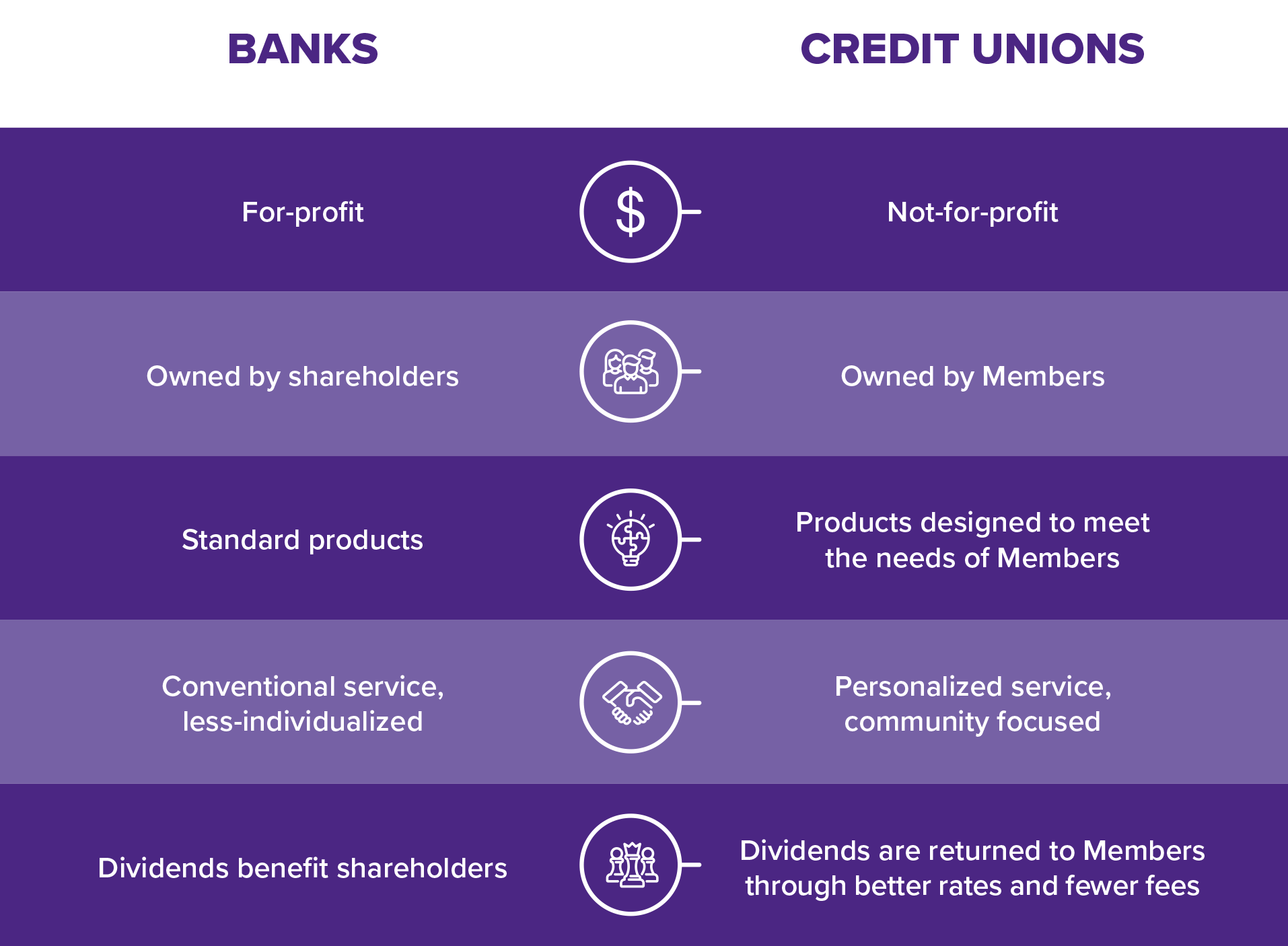
To understand why local credit unions often outperform big banks, one must examine their fundamental business models. National banks are investor-owned corporations. Their primary fiduciary responsibility is to maximize returns for shareholders and corporate executives. This structure frequently results in aggressive fee policies, cross-selling quotas for frontline staff, and strict centralization of decision-making authority. When a loan application requires manual underwriting or special consideration, files are typically sent to an out-of-state automated processing center where algorithmic scoring replaces human judgment.
Conversely, credit unions are financial cooperatives owned entirely by their members. Every person who opens a share savings account and maintains a qualifying minimum balance is technically a co-owner of the institution. Credit unions do not issue public stock; instead of generating profits to enrich outside investors, they return earnings to their members in the form of higher yields on savings accounts, lower interest rates on loans, and significantly reduced fee schedules. This cooperative structure ensures that the financial incentives of the institution align directly with the financial well-being of the membership base.
Financial Advantages: Lower Fees and Better Rates
One of the most immediate and tangible benefits of moving funds from a big national bank to a Vermont credit union is the reduction in routine banking costs. National banks frequently levy monthly maintenance fees unless customers maintain high minimum balances or establish direct deposits above specific thresholds. They also rely heavily on overdraft fees, out-of-network ATM surcharges, and inactivity penalties to bolster corporate revenue streams.
Vermont credit unions generally operate with much leaner fee structures. Many offer free checking accounts without stringent balance requirements, lower overdraft or courtesy pay charges, and free access to extensive cooperative ATM networks that rival those of major banks. Furthermore, because credit unions are exempt from federal income taxes due to their non-profit cooperative status, they can afford to pass those tax savings directly to consumers. This translates into consistently higher annual percentage yields (APY) on certificates of deposit (CDs) and savings accounts, alongside lower annual percentage rates (APR) on personal loans, auto loans, and mortgages.
| Financial Feature | Typical Big National Bank | Typical Vermont Credit Union |
|---|---|---|
| Ownership Structure | Investor-owned corporation | Member-owned cooperative |
| Monthly Checking Fees | Frequent, requires high balances to waive | Rare, often free or easily waived |
| Savings Interest Rates | Generally minimal (near zero) | Consistently higher yields |
| Loan Approval Process | Automated, centralized out-of-state | Local underwriting with human review |
| Community Reinvestment | Global or national portfolios | Local mortgages, small business, and community projects |
Local Economic Impact and Community Reinvestment
Financial institutions do not operate in a vacuum; they absorb capital from a geographic region and deploy it elsewhere. Big national banks routinely siphon deposits from rural and suburban communities in Vermont and channel that liquidity into global financial markets, high-risk commercial real estate ventures in major metropolitan areas, or corporate stock buybacks.
When you deposit money into a Vermont credit union, that capital remains within the state. Credit unions use those local deposits to fund mortgages for local families, issue small business loans to independent shopkeepers, and finance agricultural ventures that sustain the state's rural economy. This localized recycling of capital strengthens the regional economic ecosystem. Furthermore, Vermont credit unions frequently sponsor local charities, educational initiatives, and community development projects, ensuring that corporate citizenship extends far beyond a marketing slogan.
Personalized Customer Service and Local Decision-Making
Anyone who has attempted to resolve a complex banking dispute with a national institution understands the frustration of navigating automated phone trees, offshore call centers, and inflexible corporate bureaucracy. When a fraudulent charge occurs or an unexpected financial hardship arises, getting a direct answer from a national bank can take hours of waiting and multiple escalations.
Vermont credit unions pride themselves on localized customer service. Members interact with branch staff who live in the same towns, understand local economic conditions, and possess the authority to solve problems directly. This localized approach is particularly evident in lending. If a self-employed Vermonter, a dairy farmer, or a seasonal worker applies for a mortgage or a business loan, a credit union loan officer can evaluate the applicant’s complete financial picture rather than relying strictly on an automated credit score. Local loan committees review unique situations with nuance, making homeownership and business expansion more accessible for regional residents.
Understanding Membership Eligibility Requirements
Unlike commercial banks that accept business from any member of the general public, federal and state regulations require credit unions to establish a "field of membership." This means prospective members must meet specific qualifying criteria to join. Historically, these requirements were quite restrictive, but modern credit unions have expanded their definitions significantly.
In Vermont, eligibility is typically granted based on broad geographic, occupational, or associational ties. You may qualify for membership if you:
- Live, work, worship, or attend school in specific Vermont counties or municipalities.
- Work for designated partner employers, healthcare networks, or educational institutions throughout the state.
- Belong to specific non-profit organizations, labor unions, or community groups associated with the credit union.
- Are an immediate family member of an existing credit union member.
Checking eligibility requirements takes only a few minutes on a credit union's website, and the vast majority of Vermont residents easily qualify for at least one local institution.
Technological Capabilities and Modern Convenience
A common misconception is that choosing a local credit union means sacrificing modern banking conveniences such as mobile apps, digital wallets, and remote check deposit. While credit unions historically lagged behind mega-banks in technological infrastructure, competitive pressure and member demand have driven massive investments in digital banking platforms.
Today, major Vermont credit unions offer robust online banking portals, highly-rated mobile applications, peer-to-peer payment integration, and seamless card management features. Furthermore, through shared branching networks—an alliance of credit unions nationwide—members can conduct standard financial transactions at thousands of participating credit union locations across the United States, providing a physical footprint that matches or exceeds many regional banks.
Frequently Asked Questions
Are my deposits safe in a Vermont credit union?
Yes. Deposits in federally chartered credit unions are protected by the National Credit Union Administration (NCUA), an independent federal agency backed by the United States government. State-chartered credit unions are typically insured by the NCUA as well. This federal insurance covers member accounts up to $250,000 per individual depositor, providing the exact same level of security as the Federal Deposit Insurance Corporation (FDIC) provides for commercial banks.
Can I use ATMs without paying high fees if I join a credit union?
Yes. While individual credit unions maintain their own ATM networks, most belong to large surcharge-free cooperatives, such as the CO-OP ATM network. This grants members fee-free access to tens of thousands of ATMs nationwide, often including machines located in major convenience stores, pharmacies, and partner credit union branches.
Is it difficult to switch my accounts from a big bank to a credit union?
Switching financial institutions is straightforward, though it requires some upfront organization. Most credit unions provide comprehensive "switch kits" or automated transfer services to help new members move direct deposits, automatic bill payments, and recurring transfers. It is recommended to keep the old bank account open for at least 30 days after initiating the switch to ensure all pending checks and automated clearing house (ACH) transactions clear successfully.
Do credit unions offer the same variety of financial products as big banks?
For the vast majority of consumers, yes. Vermont credit unions offer checking and savings accounts, money market accounts, certificates of deposit, auto loans, personal loans, home equity lines of credit (HELOCs), and first mortgages. Some larger credit unions also provide wealth management, investment services, and commercial banking solutions, though ultra-complex international corporate banking services remain the domain of major multinational banks.
Next Actions for Prospective Members
Transitioning away from a national banking conglomerate to a local financial institution requires minimal effort and yields immediate long-term dividends. Start by reviewing your current banking statements to identify how much you pay annually in maintenance fees, out-of-network ATM charges, and other incidental banking costs. Next, research credit unions operating in your specific Vermont county or town, verifying their membership eligibility criteria and comparing their current savings yields and loan rates against your existing accounts. Once you select an institution that aligns with your financial goals, open your primary share account with a small opening deposit, transition your recurring direct deposits and automatic bill payments, and close your high-fee commercial bank account. By making this deliberate shift, you retain more of your hard-earned money while actively investing in the economic health and stability of the local Vermont community.
Image Gallery