The Best Auto Insurance Choice for Denver Drivers: Rates, Rules, and Local Coverage Guide
Finding the best auto insurance choice for Denver drivers requires balancing competitive pricing with specific local protections against Front Range hailstorms, high vehicle theft rates, and mountain driving hazards. For most Denver re...
Finding the best auto insurance choice for Denver drivers requires balancing competitive pricing with specific local protections against Front Range hailstorms, high vehicle theft rates, and mountain driving hazards. For most Denver residents, State Farm offers the best overall combination of competitive rates and local agent support, while USAA delivers unmatched value for military families, and Progressive provides optimal pricing for drivers with prior violations or non-traditional profiles.
Contents
Colorado Auto Insurance Requirements and Local Legal Standards
Driving in the Mile High City requires compliance with Colorado state insurance statutes. The Colorado Department of Regulatory Agencies (DORA) Division of Insurance mandates minimum financial responsibility limits, known colloquially as 25/50/15 coverage:
- Bodily Injury Liability: $25,000 per person for injuries sustained in an accident you cause.
- Total Bodily Injury Liability: $50,000 per accident involving multiple injured parties.
- Property Damage Liability: $15,000 per accident for damage caused to another vehicle or property.
While carrying state-minimum limits satisfies legal obligations, carrying only $15,000 in property damage liability exposes drivers to severe financial risk in the Denver metro area, where repair costs and average vehicle values routinely exceed that threshold.
In addition to mandatory liability limits, Colorado law mandates that insurers automatically include two critical options in every policy quote unless the applicant explicitly rejects them in writing:
- Medical Payments (MedPay): Colorado law requires insurers to include a minimum of $5,000 in MedPay coverage. MedPay covers immediate medical expenses for you and your passengers regardless of fault, helping pay deductibles and copays without waiting for claims litigation to resolve.
- Uninsured/Underinsured Motorist (UM/UIM) Coverage: Insurers must offer UM/UIM limits equal to your bodily injury liability limits. Given that roughly 15% to 18% of drivers on Colorado roads operate without valid insurance, maintaining robust UM/UIM protection is vital for Denver commuters.
Disclaimer: Auto insurance regulations, policy terms, and individual rates vary based on personal underwriting criteria. This guide provides general informational coverage and does not constitute formal legal or financial advice.
Unique Denver Driving Risks Affecting Your Insurance Needs
Denver presents a distinct set of geographical and environmental challenges that directly influence insurance claims, rate structures, and necessary policy endorsements.
Denver Metro Risk Exposure:
- Weather Risks: Severe Hail Alley Damage + Rapid Freeze/Thaw Cycles
- Theft & Vandalism: High Metro Stolen Vehicle Rates & Catalytic Converter Theft
- Mountain Commuting: Gravel/Rock Windshield Chips + I-70 Traction Law Compliance
- Traffic & Uninsured Drivers: Urban Density + ~16% Uninsured Motorist Rate
1. Front Range Hailstorms ("Hail Alley")
Denver sits directly in the heart of "Hail Alley," an area spanning Colorado, Nebraska, and Wyoming that experiences some of the most severe hailstorms in North America. A single afternoon storm can produce golf-ball to baseball-sized hail, resulting in thousands of dollars in dent repairs and shattered glass. To protect against weather damage, Denver drivers must carry Comprehensive Coverage with a deductible they can afford on short notice.
2. Vehicle Theft and Vandalism Rates
The Denver metropolitan area consistently ranks among the higher regions nationally for auto theft per capita. Catalytic converter theft and vehicle break-ins also remain persistent concerns. Comprehensive insurance covers theft of the vehicle itself as well as repairs required following an attempted theft or break-in.
3. Mountain Driving, Gravel, and I-70 Commuting
Navigating Interstate 70 toward the Rocky Mountains exposes vehicles to road magnesium chloride, sand, and flying gravel, making chipped or cracked windshields an almost annual occurrence. Adding Full Glass Coverage or lowering your comprehensive deductible ensures windshield repairs do not trigger steep out-of-pocket expenses.
Furthermore, Colorado's Traction Law (Code 15) requires all motorists traveling on designated corridors during winter weather to maintain adequate tire tread (at least 3/16 inch) or approved traction devices. Accidents caused during active traction law enforcement due to non-compliant tires can lead to severe civil fines and potential insurance liability complications.
Top Auto Insurance Providers for Denver Drivers
Selecting an auto insurance carrier in Denver depends heavily on your driver profile, vehicle type, and preferred balance between digital management and local agency interaction.
State Farm: Best Overall Choice for Denver Drivers
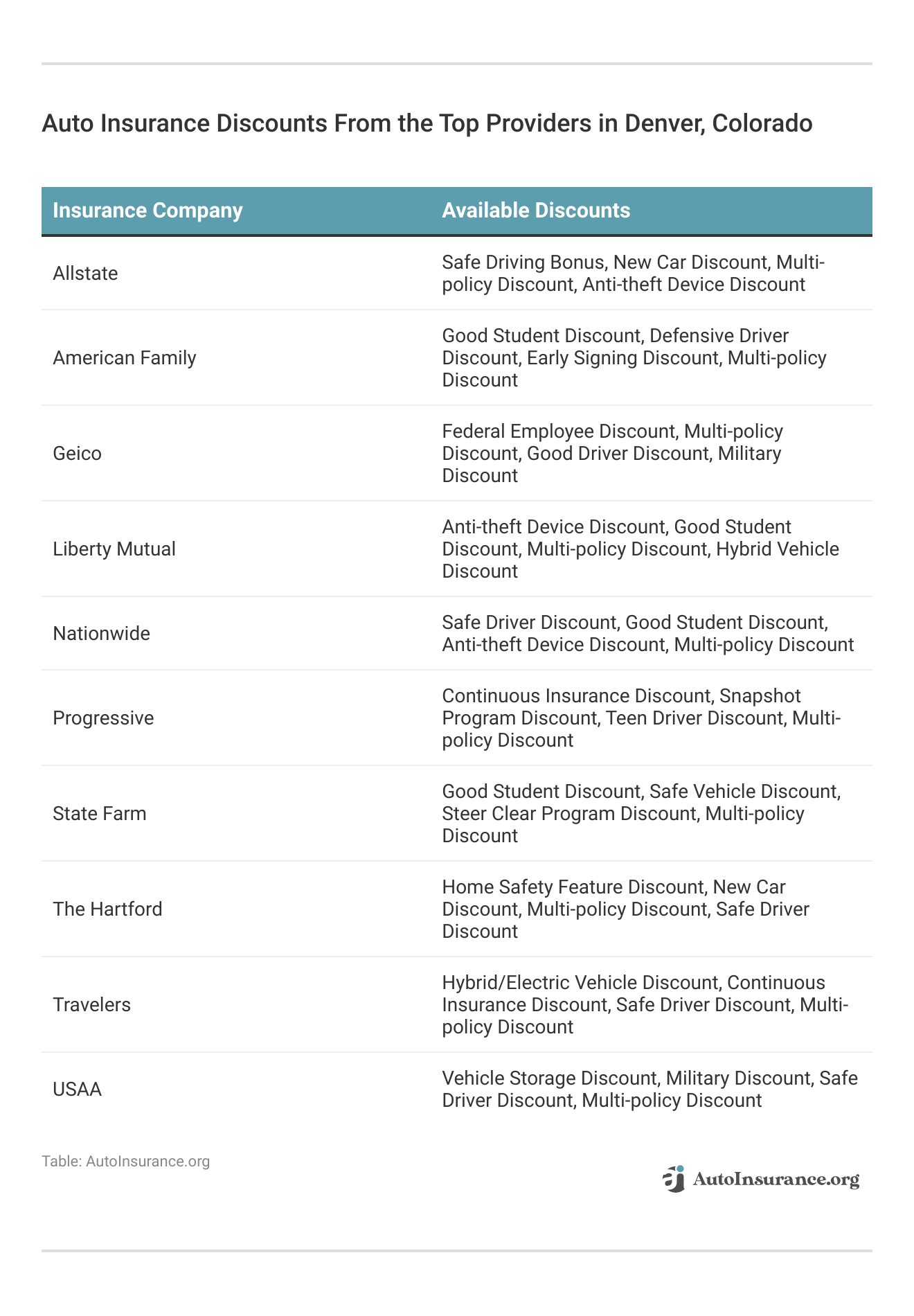
State Farm holds significant market share across Colorado and consistently offers some of the lowest average rates for both full coverage and minimum liability policies.
- Key Strengths: Expansive network of local agents throughout Denver neighborhoods (from Cherry Creek to Highlands), efficient handling of hail damage claims through dedicated mobile assessment centers, and competitive multi-policy discount structures.
- Best Suited For: Homeowners and families seeking localized service, physical agent representation, and competitive rates when bundling auto and home insurance.
USAA: Best for Military Members and Veterans
USAA consistently achieves top satisfaction scores across customer service, claims processing, and price transparency.
- Key Strengths: Industry-leading customer satisfaction, low average premiums, tailored coverage options for military deployments, and exceptional claims processing speed during widespread weather events.
- Eligibility Limit: Restricted strictly to active-duty military service members, veterans, and their eligible family members.
Progressive: Best for High-Risk Drivers and Tech-Minded Commuters
Progressive offers highly flexible pricing and powerful digital tools, making it a strong competitor for urban drivers in Denver.
- Key Strengths: The Name Your Price tool helps budget-conscious drivers find workable policy limits, while the Snapshot telematics program rewards defensive drivers who avoid peak Denver rush-hour traffic. Progressive also provides competitive rates for drivers with prior traffic tickets, accidents, or lapse-in-coverage records.
- Best Suited For: Drivers seeking robust online policy management or those recovering from past driving infractions.
American Family Insurance (AmFam): Best for Customized Regional Coverage
American Family maintains a strong presence across the Mountain West and provides specialized add-on protections suited for Colorado lifestyles.
- Key Strengths: Offers customizable coverage packages, including specialized roadside assistance for mountain travel, OEM (Original Equipment Manufacturer) parts replacement options, and solid multi-policy discounts.
- Best Suited For: Regional drivers looking for personalized policy riders and strong local customer service.
Geico: Best Budget Choice for Clean Records
Geico remains one of the most cost-effective direct-to-consumer insurers for Denver drivers who have a clean driving history and prefer digital policy administration.
- Key Strengths: Easy-to-use mobile app, quick online quote setup, and competitive entry-level rates for drivers without recent moving violations or claims.
- Best Suited For: Tech-savvy drivers with clear driving histories looking for straightforward coverage without an agent intermediary.
Average Cost of Auto Insurance in Denver
In 2026, auto insurance rates in Denver reflect elevated vehicle replacement costs, severe weather claim frequency, and regional medical inflation. On average, full coverage auto insurance in Denver costs approximately $2,150 to $2,600 per year ($179 to $216 per month), while state-minimum liability coverage averages $650 to $850 per year.
Denver rates are generally 10% to 20% higher than the broader Colorado state average due to urban traffic density and elevated theft metrics within city limits.
Denver Auto Insurance Provider Comparison
The following table summarizes key aspects of the leading insurance carriers operating in the Denver metropolitan area:
| Insurance Carrier | Target Driver Profile | Regional Coverage Strengths | Hail & Glass Claims Handling | Telematics Program Available |
|---|---|---|---|---|
| State Farm | Families, bundled home/auto | Comprehensive agent network, regional drive-in claim sites | Highly efficient mobile hail response units | Yes (Drive Safe & Save) |
| USAA | Active military, veterans, families | Elite service scores, specialized military deployment options | Rapid digital claims submission and direct payout | Yes (Noblr) |
| Progressive | High-risk, budget-conscious | Strong online portal, flexible payment and coverage tools | Standard claim processing; glass coverage optional | Yes (Snapshot) |
| American Family | Homeowners, regional commuters | Custom Colorado riders, OEM parts options | Dedicated Midwest/Mountain regional adjusters | Yes (KnowYourDrive) |
| Geico | Clean records, direct buyers | Streamlined digital claims, cheap baseline rates | Third-party glass repair network integration | Yes (DriveEasy) |
Actionable Strategies to Lower Insurance Premiums in Denver
Managing car insurance expenses in Denver does not require sacrificing necessary coverage. Drivers can apply several targeted strategies to reduce monthly premiums while maintaining protection against local hazards:
Cost-Reduction Blueprint for Denver:
- Adjust Deductibles: Balance Comprehensive ($250-$500 for Hail) vs Collision ($1,000)
- Enroll in Telematics: Save up to 10-30% for Safe Off-Peak Driving
- Bundle Policies: Combine Auto with Home/Renters for Multi-Policy Discounts
- Anti-Theft Protection: Install Tracking Systems to Offset High Metro Theft Rates
1. Split Your Deductibles Intentionally
Many drivers assume their Collision deductible and Comprehensive deductible must match, but this is rarely required. Consider setting your Collision deductible at $1,000 to lower your base premium, while keeping your Comprehensive deductible at $250 or $500. Because Denver experiences frequent hail and glass claims, keeping the comprehensive deductible lower reduces out-of-pocket costs when severe weather strikes.
2. Leverage Telematics and Usage-Based Programs
If your daily commute does not involve heavy stop-and-go travel along I-25 or I-70 during peak rush hours, telematics programs (such as State Farm's Drive Safe & Save or Progressive's Snapshot) can generate immediate discounts ranging from 10% to 30% based on your actual driving habits.
3. Secure Anti-Theft Discounts and Garaged Parking
Insurers frequently offer premium reductions for vehicles equipped with active anti-theft tracking systems (such as LoJack or factory GPS tracking), steering wheel locks, or alarm systems. If you park your vehicle in a locked garage rather than on the street in high-density neighborhoods like Capitol Hill or Five Points, ensure your insurer updates your vehicle storage location accordingly.
4. Review Colorado-Specific Exclusions and Discounts
- Defensive Driving Courses: Drivers aged 55 and older can complete an state-approved defensive driving course to earn a mandatory multi-year discount under Colorado law.
- Bundle Homeowners or Renters Coverage: Bundling auto coverage with a primary home policy or a Denver renters policy can yield savings of 15% to 25% across combined premiums.
Steps to Choose and Activate Your Denver Auto Policy
Switching carriers or purchasing a new policy in Denver involves four main steps:
- Assess Your Local Risk Needs: Determine whether your parking situation exposes your vehicle to outdoor hail or street theft. If parking outdoors, prioritize full comprehensive coverage with low deductibles and glass replacement endorsements.
- Request Quotes with Identical Limits: Gather quotes from at least three top carriers (e.g., State Farm, Progressive, and Geico or USAA). Ensure every quote specifies matching liability limits (such as 100/300/50), identical deductibles, and included MedPay ($5,000 baseline).
- Confirm Roadside Assistance Details: Verify that roadside assistance coverage extends to mountain travel and includes winch-out services in snow conditions if you frequently travel through mountain passes. Drivers can review regulatory guidelines and public carrier complaint ratios directly through the Colorado Division of Insurance.
- Finalize Policy and Cancel Old Coverage: Set the effective start date of your new policy to overlap by one day with your existing coverage to prevent any coverage gap. Provide your new proof of insurance to the Colorado Department of Revenue Division of Motor Vehicles (DMV) during registration or renewal. Details on winter driving regulations and traction laws can be reviewed via the Colorado Department of Transportation.
Frequently Asked Questions
Is auto insurance more expensive in Denver than in other parts of Colorado?
Yes. Rates in the Denver metro area are generally higher than in rural areas or smaller cities across Colorado. This price difference is driven by higher urban traffic density, higher localized auto theft rates, and a high volume of comprehensive hail damage claims filed along the Front Range.
What insurance coverage do I need for Denver hailstorms?
Hail damage is covered strictly under Comprehensive Coverage. Liability-only policies do not cover hail damage. To protect your vehicle against hail severe enough to dent body panels or shatter glass, you must carry comprehensive insurance and choose a deductible you can afford to pay on short notice.
Should I keep Medical Payments (MedPay) coverage in Colorado?
Keeping MedPay ($5,000 statutory default) is strongly recommended. MedPay covers medical bills for you and your passengers immediately after an accident, regardless of who caused it. It applies before health insurance deductibles kick in and does not require subrogation repayment from your health insurer.
What happens if I am involved in an accident with an uninsured driver in Denver?
If you carry Uninsured/Underinsured Motorist (UM/UIM) coverage, your own insurer will pay for your bodily injuries, lost wages, and pain and suffering up to your policy limits. If you decline UM/UIM coverage, you must rely on your health insurance for injuries or pursue personal legal claims against the uninsured driver.
Does basic car insurance cover driving over mountain passes during winter?
Basic auto insurance policies cover accidents that occur on mountain roads, provided you are operating your vehicle legally. However, if you cause an accident during an active Traction Law enforcement period while driving on non-compliant tires or without mandated traction gear, you can face severe state fines, and liability adjustments may apply depending on law enforcement findings.
Final Recommendation
The optimal auto insurance carrier in Denver varies by driver profile, but State Farm remains the premier overall choice for most residents due to its competitive pricing, strong local agent network, and robust hail claims infrastructure along the Front Range. Active-duty military, veterans, and eligible family members should prioritize USAA for its top customer service rating and pricing structure. Before finalizing a policy, gather quotes using matching 100/300/50 coverage limits, retain your MedPay options, and select a comprehensive deductible tailored for Front Range weather conditions.
Image Gallery