Eating Disorder Treatment in Arizona: A Comprehensive Guide to Recovery Options
In 2026, Arizona continues to serve as a premier national hub for eating disorder recovery, offering a sophisticated spectrum of care ranging from 24-hour medical stabilization to flexible outpatient support. Whether in the specialized...
In 2026, Arizona continues to serve as a premier national hub for eating disorder recovery, offering a sophisticated spectrum of care ranging from 24-hour medical stabilization to flexible outpatient support. Whether in the specialized residential corridors of Wickenburg or the clinical centers of Phoenix and Scottsdale, patients can access evidence-based interventions for anorexia, bulimia, binge eating disorder, and ARFID.
Contents
The Continuum of Care: Navigating Arizona’s Treatment Levels
Understanding the appropriate level of care is the first step toward effective recovery. Eating disorders are complex bio-psychosocial illnesses that require different intensities of intervention based on the individual's medical stability and psychological needs. In Arizona, the treatment landscape is categorized into four primary tiers, each regulated by the Arizona Department of Health Services (ADHS).
Inpatient Medical Stabilization
Inpatient care is the most intensive level, typically situated within a hospital or a specialized acute care wing. This is reserved for individuals whose vitals—such as heart rate, blood pressure, or electrolyte levels—are dangerously unstable. In Arizona, several major medical centers in the Phoenix metropolitan area partner with specialized eating disorder programs to provide this 24/7 monitoring. The primary goal here is not long-term psychological work, but physical stabilization to ensure the patient is strong enough for the next phase of treatment.
Residential Treatment Centers (RTC)
Arizona is nationally recognized for its residential "ranch-style" facilities. Located often in serene, secluded environments like Wickenburg or the outskirts of Tucson, these centers provide a live-in environment where recovery is the sole focus. Patients receive 24-hour supervision and a highly structured schedule that includes supervised meals, individual therapy, group sessions, and medical check-ins. This level is essential for those who have failed to make progress in less intensive settings or who require a total removal from their current triggering environment to break the cycle of disordered behaviors.
Partial Hospitalization Programs (PHP)
Often referred to as "day treatment," PHP in Arizona typically operates five to seven days a week for approximately six to eight hours per day. This is a critical step-down phase. Patients spend their days at the treatment center participating in intensive therapy and supervised meals but return home or to a transitional living facility at night. This allows individuals to practice recovery skills in the "real world" while still maintaining a significant safety net of clinical support.
Intensive Outpatient Programs (IOP)
IOP is designed for individuals who are medically stable and can maintain some level of daily functioning, such as attending school or work. Programs usually meet three to four days a week for three hours per session. Arizona's IOP providers often focus on relapse prevention, meal planning, and continued psychological processing. It serves as a vital bridge between intensive treatment and full autonomy.
Evidence-Based Modalities Used in Arizona Facilities
In 2026, the clinical standard for eating disorder treatment in Arizona emphasizes "evidence-based" practices—modalities that have been scientifically proven to be effective. These are not one-size-fits-all; rather, they are integrated into a personalized treatment plan.
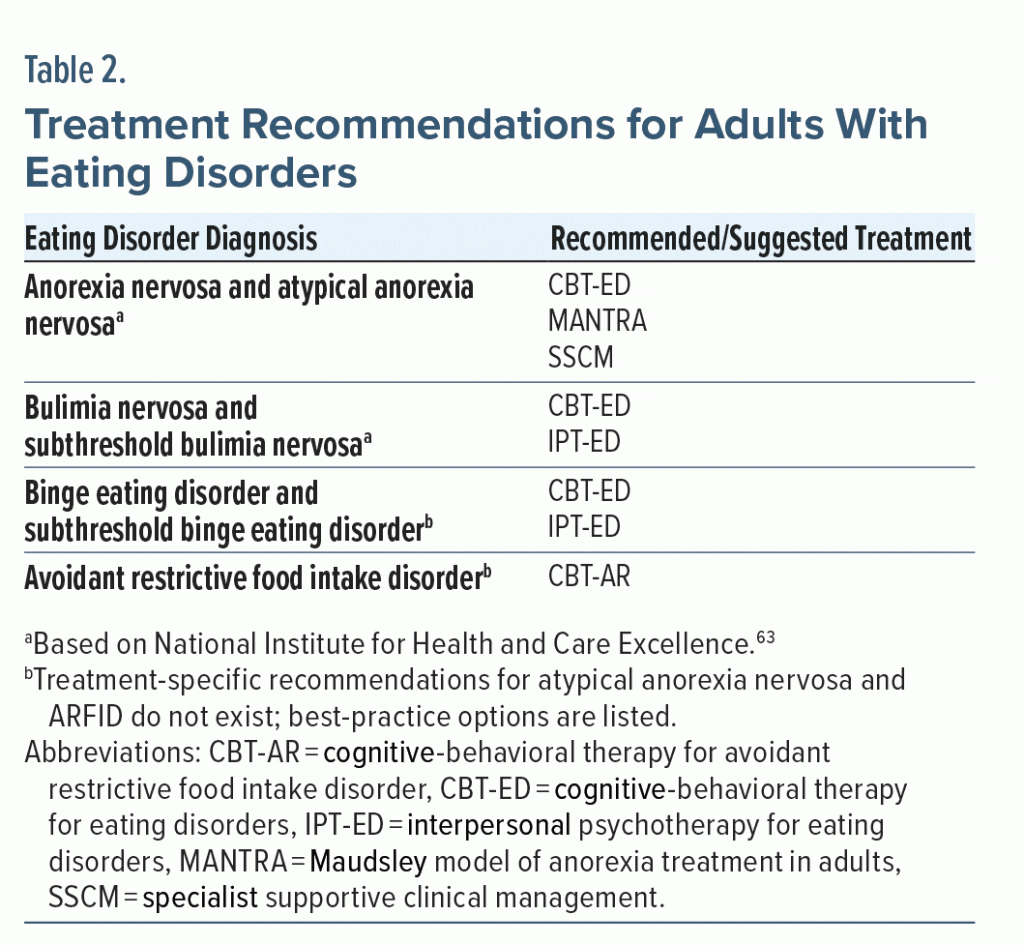
Cognitive Behavioral Therapy-Enhanced (CBT-E)
CBT-E is the "gold standard" for treating many eating disorders, particularly bulimia and binge eating disorder. Unlike standard CBT, the "enhanced" version focuses specifically on the psychopathology of the eating disorder, targeting the over-evaluation of shape and weight. Arizona clinicians use CBT-E to help patients identify the cognitive distortions that drive restrictive or compensatory behaviors.
Dialectical Behavior Therapy (DBT)
Originally developed for personality disorders, DBT has been adapted effectively for eating disorders, especially when emotional dysregulation is a core component. Arizona programs frequently use DBT to teach patients four key skill sets: mindfulness, distress tolerance, emotion regulation, and interpersonal effectiveness. This is particularly useful for individuals who use eating disorder behaviors as a way to cope with intense, overwhelming emotions.
Family-Based Treatment (FBT)
Also known as the Maudsley Approach, FBT is the leading modality for adolescents struggling with anorexia nervosa. Many Arizona-based pediatric programs prioritize FBT, which empowers parents to take an active role in their child's refeeding and recovery. Rather than viewing the family as the "cause" of the disorder, FBT treats the family as the primary resource for the cure.
Acceptance and Commitment Therapy (ACT)
ACT is widely utilized in Arizona’s residential centers to help patients develop psychological flexibility. Instead of fighting against difficult thoughts or feelings, ACT encourages patients to accept them while committing to actions that align with their core values. This helps individuals move toward a "value-driven" life rather than a "disorder-driven" one.
Comparing Treatment Tiers in Arizona
| Level of Care | Typical Duration | Medical Supervision | Meals Provided | Best Suited For |
|---|---|---|---|---|
| Inpatient | 5–14 days | 24/7 Physician/Nursing | All (Medical/Tube) | Acute medical crisis, severe bradycardia. |
| Residential | 30–90 days | 24/7 Nursing/Daily MD | All (Supervised) | Chronic behaviors, need for 24-hour structure. |
| PHP | 4–8 weeks | Weekly MD/Daily Nursing | 2 meals + snacks | Stepping down from RTC; need for day structure. |
| IOP | 8–12 weeks | Monthly MD check-in | 1 meal or snack | High functioning but requiring accountability. |
| Outpatient | Ongoing | Primary Care Physician | None | Long-term maintenance and relapse prevention. |
Specialized Care for ARFID and Co-occurring Disorders
As of 2026, Arizona has seen a significant increase in specialized tracks for Avoidant/Restrictive Food Intake Disorder (ARFID). Unlike anorexia, ARFID is not driven by body image concerns but by sensory sensitivities, fear of aversive consequences (like choking), or a general lack of interest in eating. Arizona facilities specializing in ARFID often employ occupational therapists alongside dietitians to address the sensory components of the disorder.
Furthermore, "dual diagnosis" or "co-occurring disorder" treatment is a hallmark of the Arizona landscape. Many individuals struggling with eating disorders also face challenges with substance abuse, PTSD, or major depressive disorder. Leading centers in the state integrate trauma-informed care—including EMDR (Eye Movement Desensitization and Reprocessing)—to address the underlying trauma that often fuels the eating disorder.
Arizona Health Care Cost Containment System (AHCCCS) and Private Insurance
Accessing treatment requires a clear understanding of the financial landscape. Arizona’s Medicaid program, known as AHCCCS, provides coverage for eating disorder treatment, though the network of private residential centers that accept it may be limited. Most residents utilize private commercial insurance (such as Blue Cross Blue Shield of Arizona, Cigna, or UnitedHealthcare).
Under the Mental Health Parity and Addiction Equity Act, insurers are required to provide coverage for mental health conditions, including eating disorders, at the same level they cover physical ailments. However, "medical necessity" remains the hurdle for many. Arizona facilities often employ dedicated utilization review teams who work directly with insurance companies to advocate for the patient's continued stay based on clinical data.
Cost Considerations and Out-of-Pocket Expenses
When insurance does not cover the full cost, or for those seeking "out-of-network" elite residential care, daily rates in Arizona can range from $800 to $2,000. Many facilities offer financing plans or sliding scale fees based on income. It is vital to verify whether a facility is "in-network" before admission to avoid unexpected balance billing.
Licensing, Accreditation, and Safety Standards
When selecting a facility in Arizona, verification of credentials is non-negotiable. Reputable centers should be licensed by the Arizona Department of Health Services (ADHS). Furthermore, look for accreditation from independent, non-profit organizations such as:
- The Joint Commission (TJC): A "Gold Seal of Approval" indicating the facility meets rigorous performance and safety standards.
- CARF International: The Commission on Accreditation of Rehabilitation Facilities, which focuses on the quality of services and results.
Checking these credentials ensures that the facility adheres to strict protocols regarding patient safety, medication management, and clinical outcomes.
Frequently Asked Questions
How long does eating disorder treatment in Arizona typically last?
Treatment duration is highly individualized. While inpatient stabilization may last only a week, residential programs often span 30 to 90 days. The goal is not just weight restoration but the development of sustainable coping mechanisms. Most experts suggest that a full "continuum of care" (stepping down from residential to PHP to IOP) provides the best long-term prognosis, which may take six months or longer.
Are there male-specific eating disorder programs in Arizona?
Yes. While eating disorders are often stereotyped as female-centric, a significant percentage of those struggling are male. Arizona hosts several facilities that offer gender-specific programming or all-male tracks to address the unique pressures and physiological needs of men in recovery, including focus on muscle dysmorphia and athletic-related triggers.
Can I attend treatment in Arizona if I live out of state?
Absolutely. Arizona is a destination state for behavioral health. Many facilities provide concierge services for out-of-state families, including airport transport from Phoenix Sky Harbor International (PHX) and local lodging recommendations for family therapy weekends.
What is the role of a dietitian in Arizona treatment centers?
Registered Dietitians (RDs) are central to the treatment team. In Arizona facilities, RDs do more than just create meal plans; they conduct "exposure therapy" through grocery store outings and restaurant challenges. They work to neutralize "fear foods" and help patients move toward "intuitive eating," which is the long-term goal of nutritional rehabilitation.
Does Arizona offer telehealth options for eating disorder therapy?
As of 2026, telehealth has become a permanent fixture in Arizona’s healthcare system. Many outpatient providers and IOPs offer virtual platforms, which is particularly beneficial for residents in rural parts of the state or those who need to maintain their work schedules while receiving professional support.
Final Recommendation for Seeking Help
If you or a loved one is struggling, the first step is a professional assessment. You do not need to have a "severe" case to seek help; early intervention is the most significant predictor of full recovery. Contact a licensed Arizona provider for a clinical intake assessment. Most major facilities offer these assessments free of charge to help determine the appropriate level of care. For immediate resources, the National Eating Disorders Association (NEDA) provides a wealth of information and a helpline for those in crisis.
Medical Disclaimer: The information provided in this article is for educational purposes only and does not constitute medical advice. Always seek the advice of a physician or other qualified health provider with any questions regarding a medical condition or treatment plan.
Image Gallery