Legacy iOS Modernization Development Services: Enterprise Strategies for 2026
Enterprise software architectures face a critical inflection point as the mobile landscape enters 2026. Organizations relying on aging iPhone and iPad applications built years ago encounter severe operational friction, security vulnera...
Enterprise software architectures face a critical inflection point as the mobile landscape enters 2026. Organizations relying on aging iPhone and iPad applications built years ago encounter severe operational friction, security vulnerabilities, and compatibility failures with modern iOS releases and device hardware. Legacy iOS modernization development services provide the systematic pathway required to transform outdated Objective-C or early Swift codebases into resilient, high-performing applications. Modernization is no longer a cosmetic upgrade; it is an essential operational strategy to secure user data, leverage native hardware capabilities, and align with current Apple software engineering standards.
Contents
The True Cost and Technical Risks of Maintaining Unmodified Legacy iOS Code
Operating an enterprise-grade iOS application built on outdated frameworks introduces substantial technical debt. As Apple continuously refines iOS, deprecated APIs are systematically removed from the SDK, causing application crashes upon OS updates. Furthermore, older codebases typically rely on third-party libraries and CocoaPods that have been abandoned by their maintainers, exposing the organization to unpatched security vulnerabilities.
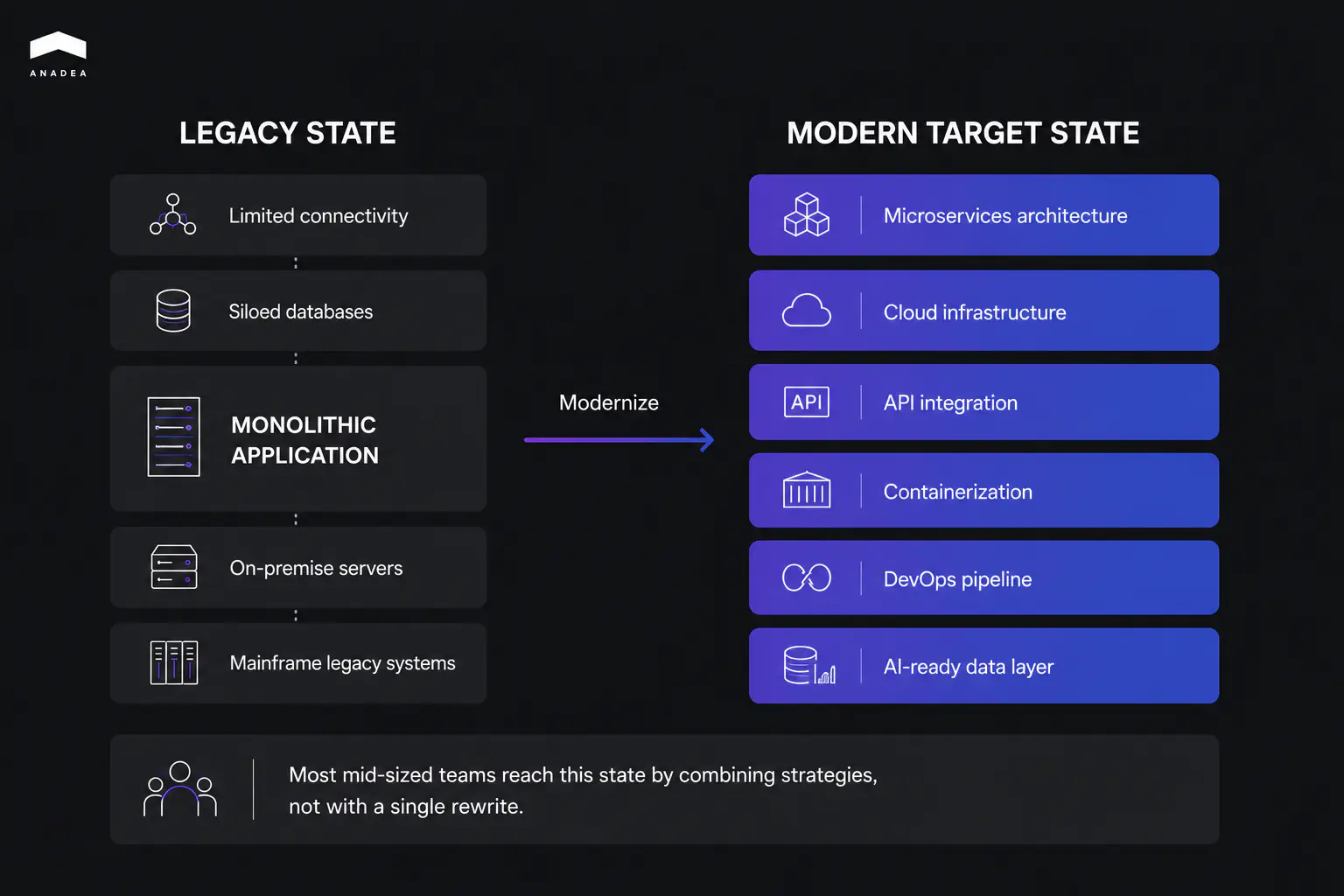
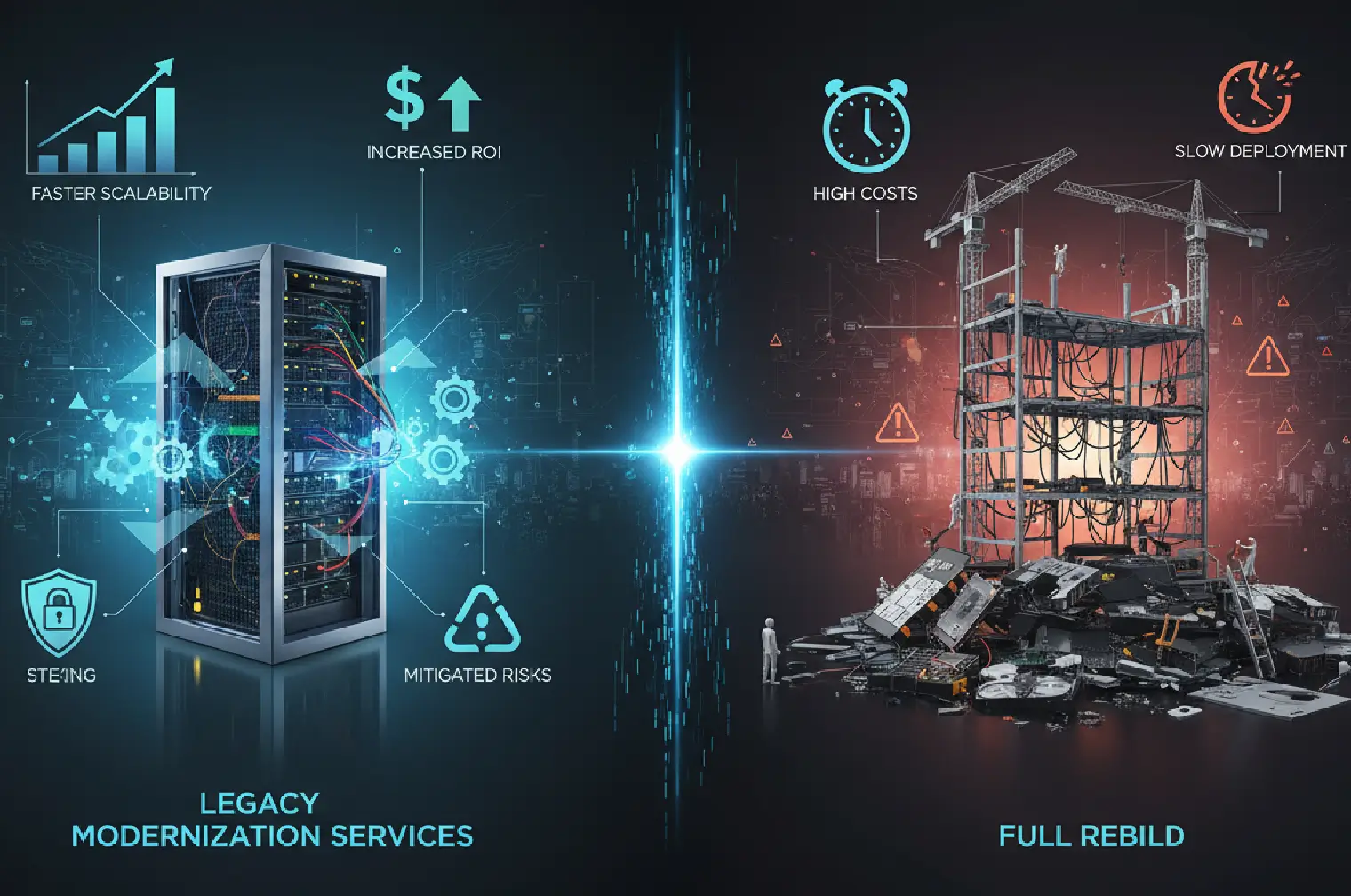
Organizations attempting to sustain legacy software face mounting maintenance expenditures that consistently outpace the cost of a structured modernization initiative. The following table contrasts the operational realities of maintaining an un-updated legacy application versus investing in professional modernization services.
| Evaluation Metric | Un-Updated Legacy iOS Application | Modernized Enterprise iOS Application |
|---|---|---|
| API Compatibility | High failure rate with new iOS versions due to deprecated methods. | Fully optimized for current iOS SDKs and framework standards. |
| Security Posture | Vulnerable to reverse engineering, weak encryption, and outdated transport security protocols. | Complies with modern App Transport Security (ATS) and enterprise keychain protocols. |
| Developer Productivity | Onboarding takes weeks due to undocumented legacy architecture and spaghetti code. | Streamlined workflow utilizing modern dependency managers and clear modular design. |
| User Experience (UX) | Non-standard navigation patterns, slow rendering, and lack of support for modern form factors. | Fluid interactions leveraging native SwiftUI layouts and accessibility standards. |
| Long-Term Total Cost of Ownership (TCO) | Escalating due to emergency patches, frequent bug fixes, and lost user productivity. | Predictable maintenance cycles with high ROI and scalable feature expansion. |
Core Technical Drivers Propelling Modernization Initiatives
Navigating the shift from legacy code to a modern architecture requires addressing foundational layers of software engineering. Modernizing an enterprise application involves a deliberate evaluation of programming languages, user interface frameworks, and backend integration protocols.
Transitioning from Objective-C to Modern Swift
The vast majority of legacy enterprise applications were constructed using Objective-C. While Objective-C remains functional, it lacks the safety guarantees, memory management features, and concise syntax of modern Swift. Modernization services execute controlled, incremental or complete rewrites into Swift, drastically reducing runtime crashes caused by nil-pointer exceptions and null dereferencing. Swift concurrency models, introduced and refined through recent iOS iterations, allow developers to write asynchronous code that is safer and significantly easier to debug than traditional Grand Central Dispatch (GCD) patterns.
Adopting SwiftUI and Modern Layout Engines
Legacy interfaces built with UIKit or manual frame calculations often break when rendered on modern screen sizes, dynamic islands, and foldable form factors. Modernization services refactor user interfaces using SwiftUI and modern Auto Layout constraints. This shift ensures dynamic type support, seamless Dark Mode integration, and native accessibility compliance, fulfilling both corporate usability mandates and legal accessibility standards.
Rewiring Networking and Data Layer Architectures
Older applications frequently depend on synchronous networking calls, custom JSON parsing wrappers, and unencrypted local data storage solutions like outdated SQLite implementations or plain-text property lists. Modern development teams replace these legacy patterns with modern Combine or async/await networking layers, integrated with secure local persistence mechanisms such as SwiftData or encrypted Core Data configurations.
Strategic Framework for Executing an iOS Modernization Project
Successfully migrating a mission-critical mobile application requires a disciplined engineering roadmap. Attempting to overhaul an entire enterprise application in a single deployment cycle often introduces critical regressions. Professional development partners deploy structured, multi-phase modernization methodologies.
Comprehensive Codebase Audit and Dependency Analysis
- Execute static code analysis to catalog every third-party dependency, deprecated API call, and architectural bottleneck.
- Evaluate the business logic complexity to determine whether a complete rewrite or a modular refactoring strategy is optimal.
API and Backend Contract Verification
- Assess existing backend endpoints to ensure they support modern RESTful or GraphQL standards, OAuth 2.0 authentication, and secure token management.
- Update networking layers to handle modern transport security requirements without disrupting active enterprise users.
Incremental Modularization and Refactoring
- Isolate core business domains into independent Swift packages or frameworks using a modular architecture.
- Gradually replace legacy ViewControllers and Objective-C classes with modern SwiftUI views and Swift-based business logic controllers.
Automated Testing and Continuous Integration Setup
- Implement robust unit, integration, and UI test suites using XCTest and XCUITest to validate functional parity between the legacy and modernized components.
- Establish automated CI/CD pipelines via Xcode Cloud or GitHub Actions to streamline build distribution and TestFlight deployments.
Gradual Staged Rollout and Telemetry Monitoring
- Deploy the modernized application through phased rollouts or internal enterprise distribution channels.
- Monitor performance metrics, crash logs, and network latency using modern application performance monitoring (APM) tools to catch edge cases immediately.
Evaluating Rewrite versus Refactor: A Strategic Decision Matrix
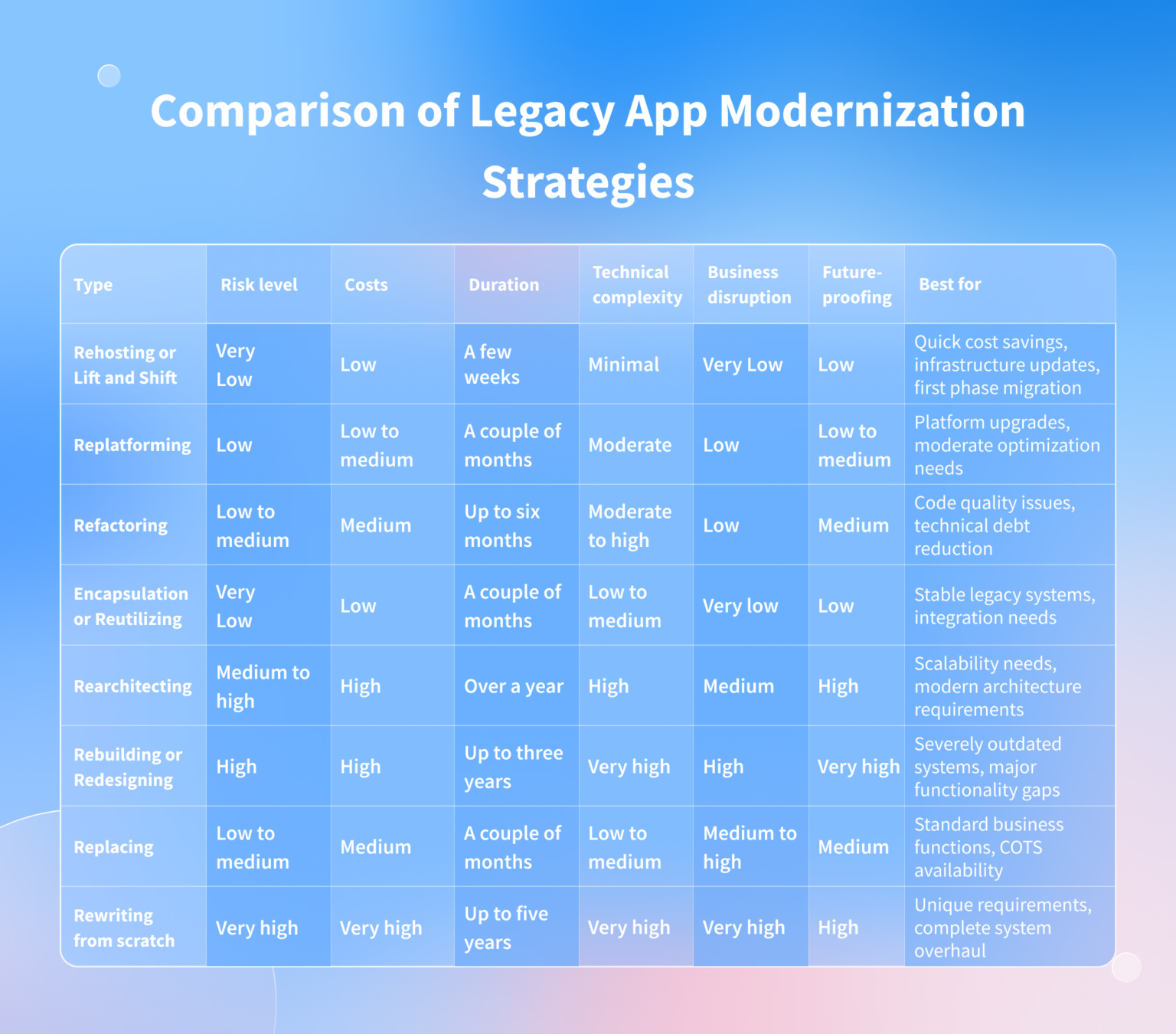
Enterprise stakeholders often debate whether to refactor existing code incrementally or initiate a greenfield rewrite. The optimal choice depends on the age of the codebase, business agility requirements, and available technical documentation.
- The Incremental Refactoring Approach: Ideal for large, complex codebases with well-defined business logic where dropping support for the application during a long rewrite cycle is unacceptable. Developers refactor module by module while the legacy application remains operational.
- The Greenfield Rewrite Approach: Recommended when the underlying architecture is fundamentally flawed, the original developers are unavailable, and the technology stack is more than seven years old. A clean rewrite allows the team to leverage the absolute latest software design patterns without legacy baggage.
Frequently Asked Questions Regarding Legacy iOS Modernization
What are the primary indicators that an enterprise iOS application requires modernization?
Key indicators include frequent crashes on new iOS versions, inability to integrate modern third-party SDKs, lengthy onboarding times for new developers, and failure to pass enterprise security audits. Addressing these symptoms prevents catastrophic user abandonment and severe security breaches.
How long does a typical enterprise iOS modernization project take to complete?
Project timelines vary based on application scope, database complexity, and codebase size, generally ranging from three to nine months. Modular refactoring can yield incremental updates within weeks, whereas complete rewrites require structured multi-phase execution.
Does modernizing an iOS application require updating the backend infrastructure?
Not strictly, but modernization often coincides with backend optimization to take advantage of modern API protocols, improved payload security, and faster response times. Aligning mobile frontends with modern backend services maximizes overall system performance.
How do development teams ensure zero downtime for enterprise users during migration?
Teams utilize feature flagging, modular architecture phasing, and robust API versioning to run legacy and modernized components concurrently until the new version achieves full production stability.
What is the financial impact of delaying legacy iOS modernization?
Delaying modernization leads to compounding maintenance costs, exponential accumulation of technical debt, increased risk of security exploits, and sudden application breakage upon major iOS platform releases.
Partnering with Expert iOS Modernization Specialists
Modernizing aging enterprise applications demands specialized engineering expertise in both legacy code preservation and modern Apple framework integration. To protect your capital investment, ensure enterprise-grade security compliance, and deliver an exceptional user experience on current hardware, align your organization with seasoned professionals capable of navigating complex software migrations. Contact our technical strategy team today to schedule a comprehensive codebase audit and discover a tailored modernization roadmap designed for your enterprise infrastructure.
Image Gallery