How to Choose Income Generating ETFs: A Complete Guide for 2026
To choose income-generating ETFs, investors must evaluate three primary factors: the fund’s yield type (SEC vs. distribution), the sustainability of the underlying assets, and the total cost of ownership, including expense ratios and t...
To choose income-generating ETFs, investors must evaluate three primary factors: the fund’s yield type (SEC vs. distribution), the sustainability of the underlying assets, and the total cost of ownership, including expense ratios and tax implications. Selecting the right fund in 2026 involves balancing immediate cash flow needs against long-term capital preservation.
Contents
Income-generating Exchange-Traded Funds (ETFs) have become a cornerstone for investors seeking passive cash flow without the administrative burden of managing individual stocks or bonds. As we navigate the economic landscape of 2026, the variety of income-focused products—ranging from traditional dividend-growers to complex derivative-income funds—requires a sophisticated selection framework. This guide provides a technical deep dive into the selection process, ensuring you can distinguish between sustainable yields and high-risk "yield traps."
Understanding the Landscape of Income ETFs
Before selecting a specific fund, it is essential to categorize the types of income ETFs available in 2026. Not all income is created equal; the source of the cash flow dictates the risk profile and tax treatment of your distributions.
Equity Dividend ETFs
These funds invest in stocks that pay regular dividends. They generally fall into two sub-categories:
- Dividend Appreciation/Growth: These funds focus on companies with a history of increasing their dividends year over year. While the starting yield may be lower (often 1.5% to 2.5%), the potential for capital appreciation and future income growth is higher.
- High Dividend Yield: These funds prioritize current income by selecting stocks with the highest yields in the market. While attractive for immediate cash flow, these funds may have slower growth and higher exposure to sensitive sectors like utilities or telecommunications.
Fixed-Income (Bond) ETFs
Bond ETFs provide income through interest payments (coupons). In 2026, with interest rates having stabilized following the volatility of the mid-2020s, bond ETFs are once again a primary source of portfolio stability. They are categorized by the issuer (Government vs. Corporate) and duration (Short-term vs. Long-term).
Alternative Income ETFs
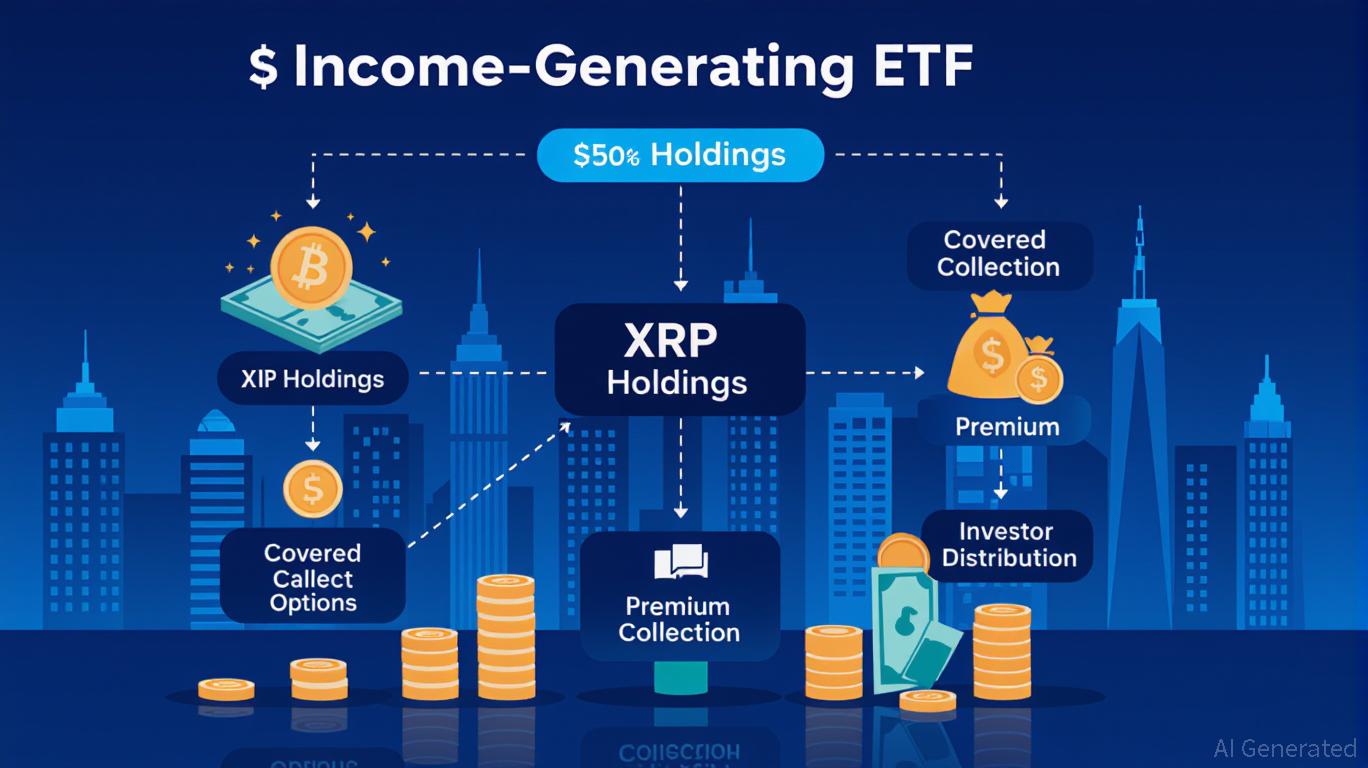
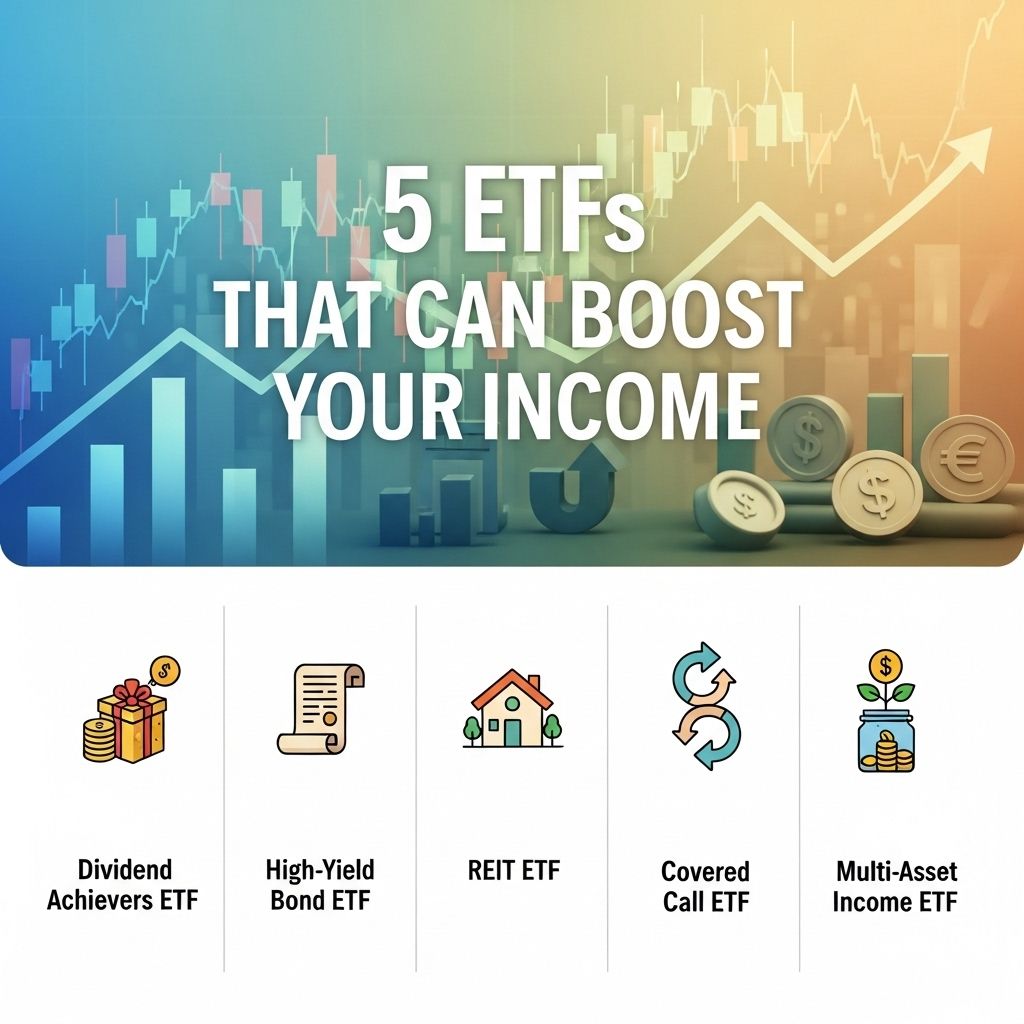
This category has seen significant growth through 2026. It includes Covered Call ETFs, which generate income by selling call options on their underlying holdings, and REIT (Real Estate Investment Trust) ETFs, which pass through rental income from commercial and residential properties. These products often offer the highest nominal yields but come with unique risks, such as capped upside in bull markets or sensitivity to property values.
Step 1: Evaluating Yield Metrics and Sustainability
The most common mistake investors make is choosing an ETF based solely on the "Distribution Yield" shown on a brokerage app. To choose effectively, you must look deeper into how the yield is calculated and whether it is sustainable.
30-Day SEC Yield vs. Distribution Yield
The 30-day SEC yield is a standardized calculation developed by the Securities and Exchange Commission. It reflects the dividends and interest earned during the past 30 days after deducting fund expenses. This is often the most accurate representation of what an investor can expect to earn moving forward.
The Distribution Yield, conversely, is based on the actual payments made to shareholders over the past 12 months. This can be misleading if the fund recently paid out a large one-time capital gain or if the underlying holdings have recently cut their dividends. In 2026, always prioritize the SEC yield for fixed-income funds and the "Yield on Cost" projections for dividend-growth equity funds.
The Payout Ratio of Underlying Holdings
An ETF is only as strong as the companies it owns. When evaluating an equity-income ETF, examine the average payout ratio of the top 10 holdings. If the underlying companies are paying out more than 75–80% of their earnings as dividends, they have little room for error. A sustainable income ETF focuses on companies that generate enough free cash flow to cover dividends while still reinvesting in the business.
Step 2: Analyzing the Total Cost of Ownership
Fees are the "silent killer" of income portfolios. Because income-generating ETFs often have higher turnover or use complex strategies (like options overlay), their expense ratios can be significantly higher than a standard S&P 500 index fund.
The Impact of Expense Ratios
In a 2026 market where a "good" yield might range from 3% to 5%, an expense ratio of 0.60% represents a massive portion of your expected income. For example, if you invest $100,000 in a fund yielding 4%, you expect $4,000 in annual income. An expense ratio of 0.75% takes $750 of that income, effectively reducing your yield to 3.25%.
Standard Fee Benchmarks for 2026:
- Passive Dividend Index ETFs: 0.06% – 0.15%
- Active Bond ETFs: 0.35% – 0.50%
- Covered Call/Derivative ETFs: 0.60% – 1.00%
Tax Efficiency and Location
How you hold your ETF is as important as which ETF you choose. Dividends from U.S. corporations are often "qualified," meaning they are taxed at lower long-term capital gains rates (0%, 15%, or 20%). However, interest from bond ETFs and distributions from REITs or many covered-call ETFs are often taxed as ordinary income, which can be as high as 37% depending on your bracket.
For maximum efficiency in 2026, place high-yield ordinary income funds in tax-advantaged accounts like an IRA or 401(k), while keeping qualified dividend-growth funds in taxable brokerage accounts.
Step 3: Assessing Risk and Diversification
High yield is almost always a compensation for higher risk. When choosing an income ETF, you must identify where that risk is hidden.
Interest Rate Sensitivity (Duration)
For fixed-income ETFs, duration is the most critical metric. It measures how much the ETF’s price will change if interest rates move. An ETF with a duration of 10 years will drop approximately 10% in value if interest rates rise by 1%. In the 2026 environment, investors seeking stable income often prefer "intermediate" duration (3–7 years) to balance yield and price volatility.
Sector Concentration
Many high-yield ETFs are heavily weighted in specific sectors like Energy, Utilities, or Financials. While these sectors are traditional "cash cows," they can be volatile. A well-constructed income ETF should have caps on sector exposure (usually no more than 20–25% in a single sector) to prevent a localized industry downturn from devastating the entire portfolio's income stream.
Credit Quality
In the bond space, verify the credit rating of the underlying holdings. "Investment Grade" (BBB- and above) offers lower yields but higher safety. "High Yield" or "Junk Bonds" (BB+ and below) offer higher income but carry a significant risk of default during economic contractions.
Comparative Analysis of Income ETF Strategies
The following table compares the primary characteristics of the most popular income ETF strategies available in 2026.
| ETF Strategy Type | Typical Yield Range (2026) | Risk Level | Primary Income Source | Tax Treatment (U.S.) |
|---|---|---|---|---|
| Dividend Growth | 1.8% – 2.5% | Moderate | Qualified Dividends | Mostly Qualified |
| High Yield Equity | 3.5% – 5.0% | Moderate/High | Qualified Dividends | Mostly Qualified |
| Corporate Bond | 4.0% – 5.5% | Low/Moderate | Interest (Coupons) | Ordinary Income |
| Covered Call | 7.0% – 12.0% | High | Option Premiums | Mixed/Ordinary |
| REIT ETFs | 3.5% – 6.0% | Moderate/High | Rental Income | Mostly Ordinary (199A) |
| Treasury ETFs | 3.0% – 4.5% | Very Low | Government Interest | Ordinary (State Tax Exempt) |
Step 4: Practical Selection Workflow
To implement these concepts, follow this four-step screening process when evaluating a new fund:
- Define the Objective: Are you seeking immediate high income for retirement expenses, or are you looking to grow your future income? Use Covered Call or Bond ETFs for the former; use Dividend Growth ETFs for the latter.
- Screen for Expenses: Use a screener to filter out any fund with an expense ratio higher than its peer group average. In 2026, there is rarely a reason to pay over 0.50% for a standard dividend or bond strategy.
- Analyze the "Yield Trap" Potential: Look at the 1-year and 3-year total return of the fund. If the yield is 8% but the share price has dropped by 10% annually, the "income" is effectively just a return of your own capital. A healthy income ETF should have a stable or rising Net Asset Value (NAV) over long periods.
- Check Volume and Liquidity: Ensure the ETF has at least $100 million in Assets Under Management (AUM) and sufficient daily trading volume. This ensures that the "bid-ask spread" is tight, meaning you won't lose money just by entering or exiting a position.
Common Pitfalls to Avoid in 2026
Chasing the Highest Number: The "yield at any cost" mentality often leads to funds that hold distressed companies. These companies are often forced to cut dividends, leading to a "double whammy" of lost income and collapsing share prices.
Ignoring Reinvestment Risk: For bond ETFs, when the underlying bonds mature, the manager must buy new bonds. If interest rates have fallen by that time, the ETF's income will drop. This is known as reinvestment risk.
Forgetting the "Total Return" Perspective: Income is only one part of the equation. If an ETF pays you $5,000 in dividends but the value of your shares drops by $7,000, you have lost $2,000 in total wealth. Always evaluate income in the context of the fund's total performance.
Frequently Asked Questions
What is a "good" yield for an ETF in 2026?
A "good" yield depends on the asset class and current interest rates. In the 2026 economic environment, a yield of 2% to 3% for dividend growth and 4.5% to 5.5% for investment-grade corporate bonds is considered competitive and sustainable. Yields exceeding 8% generally signal higher risk or the use of complex option strategies.
Should I choose an actively managed or passively indexed income ETF?
Passive index ETFs are generally better for broad equity dividends because they have lower fees. However, active management is often preferred for bond ETFs and covered-call strategies in 2026. Active managers can better navigate credit risks and adjust option strike prices in volatile markets, which can justify the slightly higher expense ratio.
How often do income ETFs pay out?
Most income ETFs pay distributions either monthly or quarterly. Monthly-pay ETFs are popular for retirees who use the income to cover monthly bills. You can find this information in the fund’s prospectus or on the "Distributions" tab of major financial websites.
Can an ETF's dividend be cut?
Yes. An ETF does not guarantee a specific dividend amount. The ETF simply passes through the income it receives from its underlying holdings. If the companies or bonds within the ETF's portfolio stop paying, the ETF's distribution will decrease accordingly. This is why diversification within the ETF is so important.
What is the difference between a REIT ETF and a Dividend ETF?
A Dividend ETF typically holds C-corporations across various sectors. A REIT ETF specifically holds Real Estate Investment Trusts. REITs are legally required to pay out 90% of their taxable income to shareholders, often resulting in higher yields, but they are taxed differently (often as ordinary income) and are more sensitive to interest rate changes and the real estate market.
Final Recommendation
For most investors in 2026, the optimal approach is a barbell strategy. Allocate 60–70% of your income sleeve to low-cost Dividend Growth ETFs and Intermediate Bond ETFs to provide a stable, growing foundation. Allocate the remaining 30–40% to higher-yielding "satellite" positions like REITs or Covered Call ETFs to boost current cash flow. Always prioritize funds with expense ratios below 0.40% and ensure your highest-yielding assets are held in tax-advantaged accounts to protect your net income from the "tax drag."
Image Gallery